

Navigating the World of Personal Electric Transport
Choosing your personal electric vehicle is a practical decision that impacts your daily routine. The core dilemma often comes down to a fundamental choice: the nimble, compact hoverboard or the stable, capable electric scooter. This isn't just about picking a gadget; it's about selecting the right tool for your specific mobility needs, terrain, and lifestyle.
The hoverboard vs scooter: which personal electric ride is right for you? question hinges on concrete factors like commute distance, storage space, and the surfaces you'll traverse. A casual rider on smooth campus paths has different requirements than an urban commuter navigating potholes and longer distances.
As a leading brand with over 100,000 riders across North America and Europe, Gyroor understands these nuances. We engineer both electric scooters and hoverboards with a focus on safety, reliability, and real-world performance. This guide provides the data-driven comparison you need to make an informed choice.
We'll break down the specs, analyze use cases, and translate features into tangible benefits. By the end, you'll know exactly which type of vehicle aligns with your journey.
Defining the Contenders: Hoverboards vs. Electric Scooters
Before diving into comparisons, let's establish clear definitions. These are two distinct categories of personal electric vehicles (PEVs), each with unique operational mechanics and design philosophies.
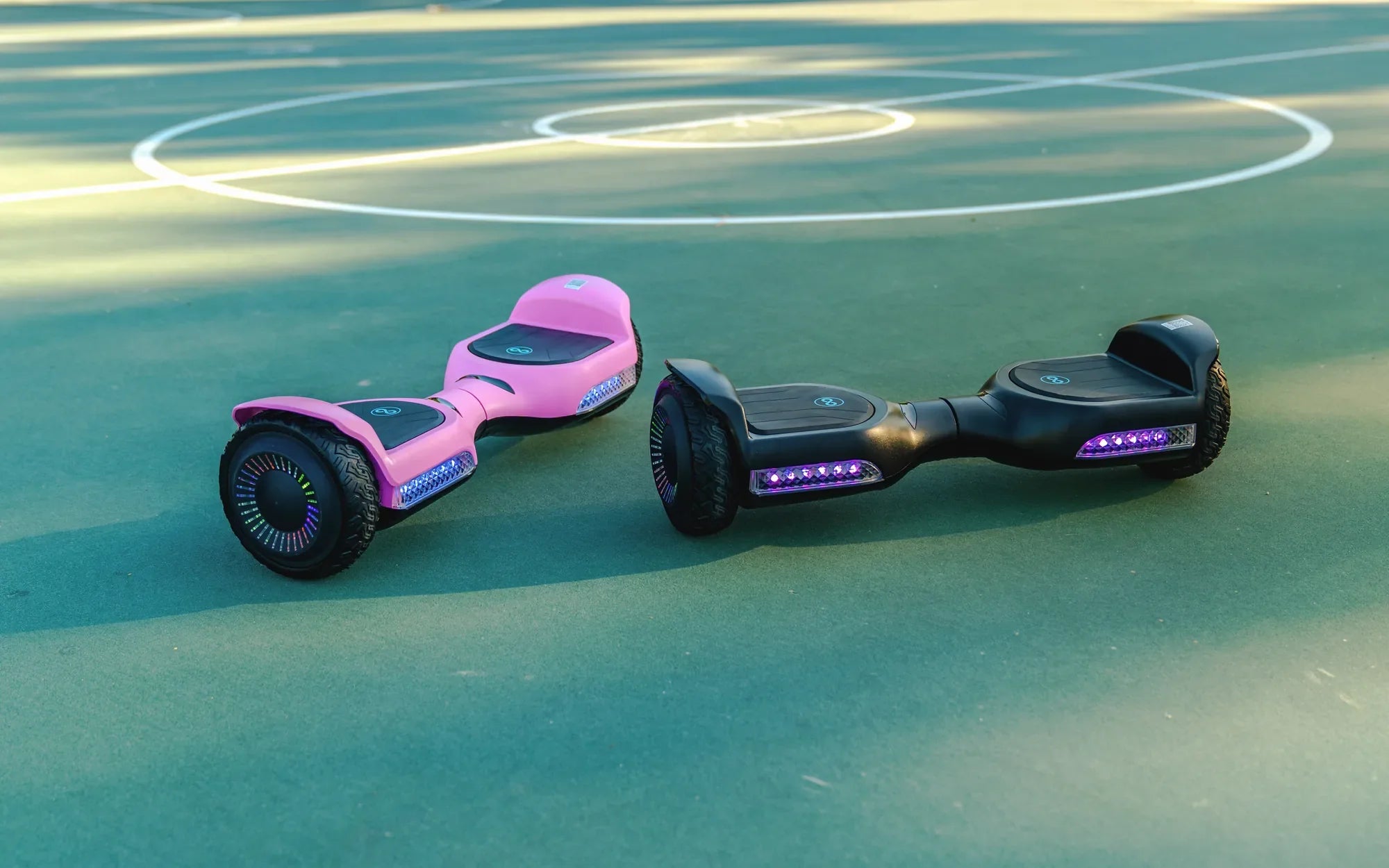
An electric hoverboard, or self-balancing scooter, is a two-wheeled, motorized platform. Riders stand on a narrow deck between two wheels, controlling speed and direction by leaning forward, backward, or shifting weight side-to-side. It's a hands-free experience that relies on gyroscopic sensors and internal motors for balance and propulsion.
An electric scooter features a classic design with handlebars, a standing deck, and typically a folding mechanism. Steering is direct via the handlebars, acceleration is controlled by a thumb throttle or button, and braking is achieved via a hand lever, often with electronic and mechanical systems. This design offers inherent stability and a more traditional riding posture.
The fundamental difference is control: hoverboards require your body to steer, while scooters use your hands. This distinction shapes the learning curve, safety profile, and ideal applications for each vehicle, forming the core of the hoverboard vs scooter debate.
Hoverboards: Agility and Compact Fun
Hoverboards excel in portability and maneuverability. Their compact, wheel-to-wheel design allows for incredibly tight turns and a small footprint. They are the quintessential last-mile solution or fun recreational device for smooth, controlled environments.
The learning curve is steeper than for a scooter. New riders need 30 to 60 minutes to master the intuitive yet unfamiliar leaning controls. Once mastered, the riding feels fluid and responsive. Top speeds typically range from 6 to 10 mph, with ranges between 6 and 12 miles on a single charge, suitable for short trips.
Their primary terrain is smooth, paved surfaces. While some models have all-terrain tires, the small wheel size and lack of suspension make them less comfortable on rough pavement, gravel, or cracks. They are incredibly easy to carry, often weighing under 30 lbs, and can be tucked under a desk or in a car trunk with ease.
For the right user, a hoverboard offers a unique, engaging ride. It's perfect for quick errands in a pedestrian area, navigating a large office or campus indoors, or simply enjoying a smooth park path. The fun factor is high, but its utility is defined by its compact nature.
Electric Scooters: Stability and Practical Range
Electric scooters are built for utility and longer-distance travel. The presence of handlebars provides immediate, natural stability that most adults and teens grasp instantly. This design allows for higher performance specs and greater comfort over varied terrain.
Commuter-focused models from reputable brands like Gyroor offer speeds of 15 to 20+ mph and real-world ranges from 15 to over 40 miles. This makes them viable replacements for short car trips or full-length commutes. The standing deck provides space for a backpack or small bag, adding to their practicality.
Key advantages include larger wheels (often 8.5 to 10 inches), pneumatic tires, and frequently, front or dual suspension. This combination absorbs bumps from cracks and uneven pavement, providing a smoother, safer ride. The higher deck clearance and more powerful motors also handle mild inclines much more effectively than most hoverboards.
While foldable and portable, scooters are larger and heavier than hoverboards, usually between 30 and 50 lbs. The trade-off is clear: you gain significant range, speed, stability, and terrain capability, making the electric scooter the workhorse of personal electric mobility.
Head-to-Head Comparison: Breaking Down the Key Factors
To move beyond generalizations, we need a side-by-side, data-driven analysis. The following table and breakdown will help you match technical specifications and performance characteristics to your personal requirements.
| Comparison Factor | Typical Hoverboard | Typical Electric Scooter |
|---|---|---|
| Primary Control | Body leaning / weight shift | Handlebars & thumb throttle |
| Top Speed | 6 - 10 mph | 15 - 25+ mph |
| Real-World Range | 6 - 12 miles | 15 - 40+ miles |
| Average Weight | 22 - 28 lbs | 30 - 50 lbs |
| Portability | Extremely high (carry like a suitcase) | High (folds, but bulkier) |
| Terrain Handling | Smooth pavement, indoors | Pavement, cracks, light gravel, inclines |
| Learning Curve | Moderate (30-60 min practice) | Low (most can ride immediately) |
| Ideal User | Last-mile traveler, recreational rider | Daily commuter, practical errand-runner |
Commute & Range: Getting From A to B
Range is often the deciding factor. If your daily travel exceeds 5-6 miles roundtrip, a hoverboard's battery may leave you anxious. Electric scooters, with their larger battery capacities, are designed for this purpose. A Gyroor commuter scooter with a 15-20 mile range comfortably covers most urban commutes with a safety margin.
Speed directly impacts travel time. At 10 mph on a hoverboard, a 3-mile trip takes 18 minutes. At 18 mph on a scooter, it takes 10 minutes. For longer commutes, this time savings is significant. Furthermore, scooter motors (often 350W-500W+) maintain speed better on slopes, a common urban challenge.
Battery technology is crucial for both. All Gyroor models use UL-certified battery packs, ensuring they meet stringent safety standards for charge cycles and stability. This certification is non-negotiable for reliable range and long-term battery health, whether you're on a scooter or a hoverboard.
When evaluating the hoverboard vs scooter: which personal electric ride is right for you? for commuting, honestly assess your roundtrip distance, need for speed, and route elevation. The scooter is the unequivocal choice for consistent, longer, or faster travel.
Portability & Storage: The Logistics of Daily Use
If you need to carry your vehicle onto a bus, into an office, or up a flight of stairs, weight and form factor are paramount. Hoverboards are the undisputed champion of pure portability. Their compact, rectangular shape makes them easy to grab and carry, similar to a medium suitcase.
Electric scooters leverage folding mechanisms. A quality scooter folds at the stem and sometimes at the handlebars, reducing its footprint significantly. While the folded package is larger than a hoverboard, it can be rolled on one wheel, stored in a car trunk, or placed in a designated corner at work.
The decision here is about compromise. Are you willing to trade some portability for vastly increased range and stability? For a student carrying a device between classes, a hoverboard might win. For a commuter who folds their scooter at their desk, the scooter's slight bulk is a fair trade for the ride home.
Consider your entire journey: final storage destination, multi-modal transit needs, and physical ability to lift the device. A hoverboard's light weight is a major advantage for many, but a well-designed folding scooter remains highly practical.
Terrain & Stability: Conquering Your Urban Landscape
City streets are rarely perfectly smooth. This is where the engineering differences between these vehicles become critically apparent. Hoverboards, with small, solid rubber tires (usually 6.5-8.5 inches), transmit every crack and pebble directly to the rider. They can be unstable on uneven surfaces.
Electric scooters are built for the real world. Gyroor models feature larger pneumatic (air-filled) tires, typically 8.5 or 10 inches, which provide crucial shock absorption. Many also incorporate front or dual suspension systems. This combination glides over imperfections that would stop a hoverboard dead or throw the rider.
Stability is also a function of design. The wide, planted stance on a scooter deck, combined with handlebars for steering and balance, inspires confidence. On a hoverboard, stability is dynamically maintained by the motors and your own micro-adjustments, which can be challenged by sudden bumps.
For riding on sidewalks, bike lanes, or paved park paths with occasional imperfections, a scooter is the safer, more comfortable choice. If your environment is exclusively smooth indoor floors or pristine pavement, a hoverboard's terrain limitation is less of a concern.
Safety & Learning Curve: Confidence on the Go
Safety encompasses the vehicle's features, the learning process, and rider behavior. Electric scooters have a lower initial barrier. The handlebars provide a natural point of balance, making them accessible to almost anyone within minutes. Braking is intuitive with a hand lever.
Hoverboards require practice in a safe, open area. Learning to mount, dismount, and steer smoothly is essential before hitting public paths. Braking is done by leaning back, which must become second nature. Protective gear—helmets, wrist guards—is non-negotiable for both, but especially critical during the hoverboard learning phase.
Built-in safety features differ. Quality scooters have bright headlights, brake lights, and reflectors for visibility, along with electronic and disc brakes. Hoverboards have LED wheel lights but rarely have dedicated brake lights. This makes the scooter a more visible vehicle in traffic or at night.
Ultimately, a safe ride depends on a reliable vehicle. This is where Gyroor's engineering principles directly address safety concerns. The use of UL-certified batteries in all products mitigates the primary risk of lithium-ion devices. A comprehensive 1-year warranty and accessible support provide long-term peace of mind, ensuring your chosen ride remains safe and functional.
The Gyroor Advantage: Engineering Peace of Mind
Beyond specifications, choosing a personal electric vehicle is about trust. With over 100,000 riders and a 4.5/5 average rating, Gyroor builds that trust through engineering standards that directly impact performance, safety, and durability, whether you choose a scooter or a hoverboard.
Our commitment to UL-certified batteries is fundamental. This independent certification means every battery pack has passed rigorous tests for electrical, mechanical, and environmental safety. It's your assurance against overheating and a guarantee of achieving the advertised range and lifespan through 500+ charge cycles.
Real weather happens. Gyroor's IPX5 water-resistant rating on key models means neither a sudden rain shower nor wet pavement should cause panic. This rating signifies protection against water jets from any direction, allowing you to ride confidently in damp conditions, a critical feature for a daily commuter vehicle.
Investing in PEVs should be worry-free. Our standard 1-year warranty on the vehicle, coupled with accessible customer support, covers manufacturing defects and provides assistance. This comprehensive support reduces the long-term cost of ownership and ensures you get the most out of your Gyroor ride, solidifying the value proposition in the hoverboard vs scooter decision.
Decision Guide: Which Electric Ride Matches Your Lifestyle?
Let's synthesize the data into clear, actionable recommendations. Your primary use case is the ultimate decider in the hoverboard vs scooter: which personal electric ride is right for you? dilemma.
The Urban Commuter: You travel 5-20 miles daily, navigate city streets with cracks and curbs, need to carry a laptop, and value speed for efficiency. Recommendation: A Gyroor Electric Scooter. Its range, stability, suspension, and speed turn a tedious commute into an efficient, enjoyable journey. Models with longer range and enhanced suspension are ideal.
The Campus or Last-Mile Traveler: Your trips are under 3 miles, you need to carry the device into buildings or onto public transit, and you primarily travel on smooth, pedestrian pathways. Recommendation: A Gyroor Hoverboard. Its ultra-portability and agility make it perfect for bridging the gap between the bus stop and the office or traversing a large university campus quickly.
The Recreational Rider & Family User: Fun and agility are the top priorities. You ride in parks, on boardwalks, or around the neighborhood. For teens or adults seeking playful mobility, a hoverboard is engaging. For families or those wanting to explore longer trails together, a scooter offers more versatility and easier sharing due to its simpler learning curve.
There is also a hybrid case: owning both. A hoverboard for ultra-convenient short trips and a scooter for longer adventures. For many, starting with the vehicle that matches their most frequent need is the wisest path.
Frequently Asked Questions (FAQ)
Q: Are hoverboards still popular and safe to use in 2024?
A: Absolutely. Their popularity has evolved from a trend to a stable niche in personal mobility. Safety is directly tied to brand quality. Reputable brands like Gyroor, which use UL-certified batteries, quality components, and adhere to strict manufacturing standards, produce safe and reliable hoverboards. Always avoid uncertified, generic models.
Q: Can I legally ride a hoverboard or electric scooter on the road?
A: Laws vary significantly by city, state, and country. Generally, electric scooters are more widely recognized and often allowed in bike lanes or on streets with speed limits under 25 mph. Hoverboards are frequently restricted to sidewalks or private property. It is your responsibility to check and comply with all local regulations, which may include age limits, helmet laws, and speed restrictions.
Q: Which is genuinely easier to learn: a hoverboard or an electric scooter?
A> For the vast majority of teens and adults, an electric scooter is easier to learn instantly. The handlebars provide immediate balance. Most people can ride competently within minutes. A hoverboard requires a dedicated 30-60 minute practice session in a safe area to feel comfortable with the balancing mechanics. For young children, adult supervision and significant practice are essential for either device.
Q: How important is water resistance (IP rating) for daily use?
A> It is one of the most important yet overlooked features. IPX5 resistance, like on Gyroor models, means the vehicle is protected from water spray from any direction. This allows you to ride through puddles, in light rain, or on wet roads without fear of immediate damage to the electronics. It's a critical feature for a practical, all-weather vehicle and greatly enhances its utility and longevity.
Q: What maintenance do hoverboards and electric scooters require?
A> Both require basic care. Regularly check tire pressure on scooters with pneumatic tires. Ensure all bolts and folding mechanisms are tight. Keep both devices clean and dry, and store them in a cool, dry place. The most important maintenance is battery care: avoid completely draining the battery, don't leave it fully charged for weeks unused, and use only the provided, correct charger. Gyroor's 1-year warranty supports you against manufacturing issues.
Your Journey Awaits: Choose Your Ride Confidently
The hoverboard vs scooter debate resolves into a clear dichotomy of purpose. Hoverboards deliver unparalleled portability and agile fun for short, smooth trips. Electric scooters offer practical, stable, and capable transportation for longer commutes and varied urban terrain. Your daily needs, not just your wants, should guide this investment.
By prioritizing factors like real-world range, terrain handling, and portability logistics, you can move beyond hype and select a vehicle that genuinely enhances your mobility. Remember that safety and reliability are not optional features; they are the foundation of a good experience, which is why engineering standards from trusted brands matter so much.
Whether you envision a quick, fun glide across campus or a reliable, efficient commute across town, there is a Gyroor model engineered for that journey. Our focus on UL-certified batteries, water-resistant designs, and comprehensive support ensures your ride is as safe and dependable as it is enjoyable.
Ready to transform your daily travel? Explore the full range of performance-engineered electric scooters and hoverboards designed for real riders. Browse the full Gyroor collection at gyroorboard.com and find the perfect electric ride to start your journey.
Electric Scooter Safety for Kids: A Complete Guide for Parents
Scooter Self Balancing Scooter: The Future of Urban Mobility