


Introduction: Your First Step to Hoverboard Mastery
Learning how do you use a hoverboard unlocks a world of fun, efficient personal transportation. This guide is your definitive roadmap from complete novice to a confident rider. We will cover every critical step, from pre-ride safety checks to advanced maneuvers, ensuring you build skills on a foundation of safety and control.
Mastering the hoverboard is about understanding its intuitive self-balancing technology and developing the right muscle memory. Unlike traditional scooters, it responds to subtle shifts in your body weight. This guide breaks down that process into clear, actionable steps anyone can follow.
We will also integrate essential maintenance tips to keep your device in peak condition. As a brand trusted by over 100,000 riders across North America and Europe, Gyroor designs its hoverboards with rider safety as the top priority, featuring UL-certified batteries and robust construction, making them an excellent platform for learning.
Before You Ride: Essential Safety and Preparation
Your first ride begins long before you step on the board. Proper preparation is non-negotiable for safety and success. This phase involves gathering the right gear, selecting an optimal practice area, and performing a thorough device inspection.
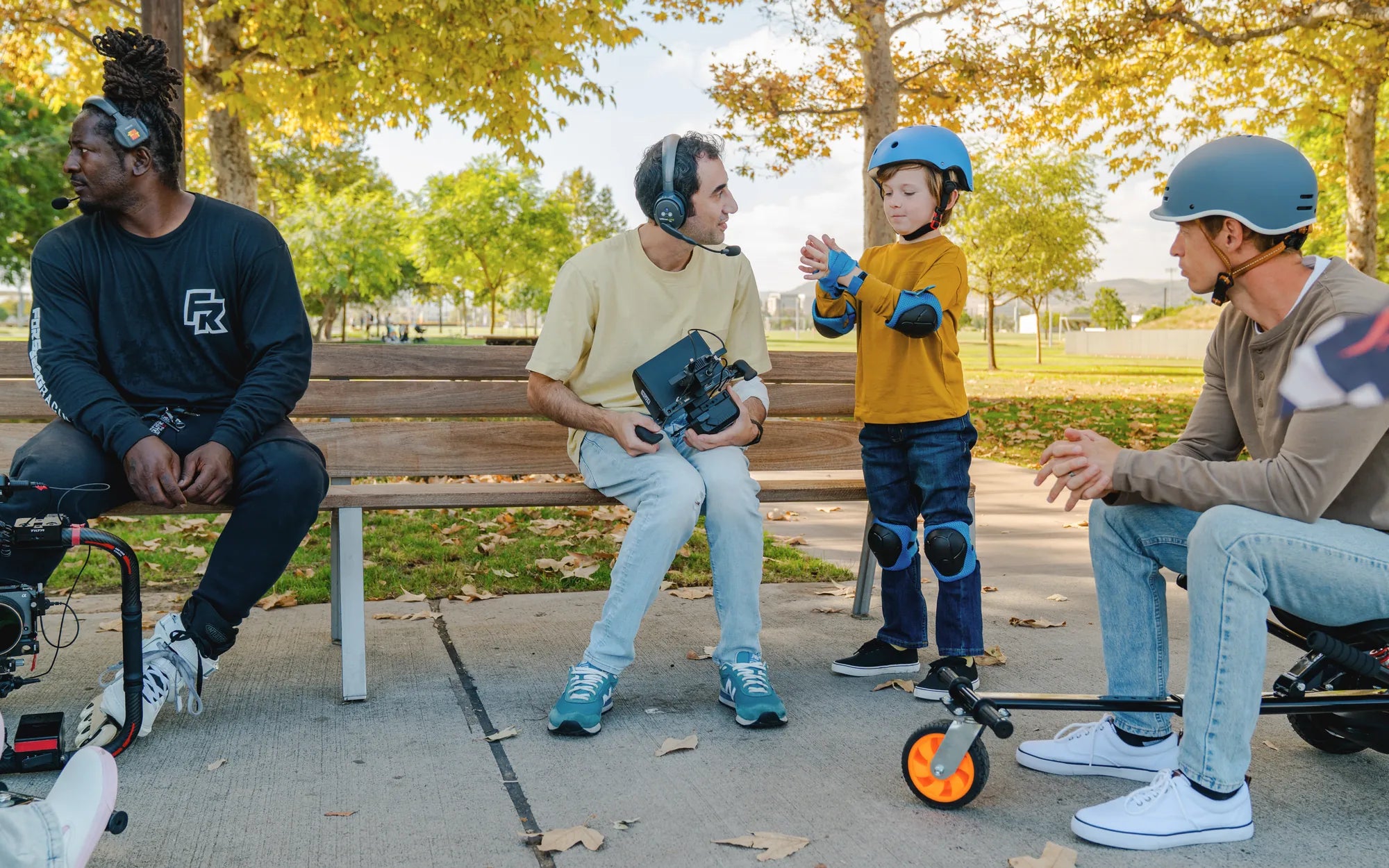
Safety gear is your primary defense against falls. A certified helmet is mandatory. Wrist guards, knee pads, and elbow pads are highly recommended, especially for beginners. This protective equipment can prevent the most common injuries associated with learning how do you use a hoverboard.
Choose your practice area wisely. You need a large, flat, smooth, and open space free of traffic, pedestrians, and obstacles. A clean concrete driveway, empty parking lot, or smooth garage floor is ideal. Avoid hills, gravel, sand, or wet surfaces during your initial learning phase.
Conduct a pre-ride inspection of your hoverboard. Ensure it is fully charged using its original charger. Check that both tires are properly inflated for stability. Wipe the footpads clean of any dirt or moisture to prevent slipping. Verify that all lights are functional if riding in low-light conditions.
The Fundamentals: Mounting, Dismounting, and Basic Stance
Mastering the mount and dismount is the first physical skill in learning how do you use a hoverboard. Always start with the hoverboard powered off and on a level surface. Place it directly in front of you, aligned with your shoulders.
To mount, place your dominant foot firmly on the footpad, keeping it as close to the wheel as possible for maximum control. Use a wall, railing, or sturdy chair for support. Slowly shift your weight onto this foot while lifting your other foot quickly and placing it symmetrically on the opposite pad. The board will power on and balance.
Your stance is critical. Keep your feet shoulder-width apart, positioned near the wheel arches—not on the very ends of the board. Slightly bend your knees to act as natural shock absorbers and maintain a low center of gravity. Keep your back straight and your eyes looking forward, not down at your feet.
To dismount safely, come to a complete stop. Choose which foot will step off first (backwards is often easier). Shift your weight to the opposite foot, then deliberately step backwards off the board with your chosen foot, followed immediately by the other. Practice mounting and dismounting repeatedly until it feels natural and secure.
Mastering Movement: How to Go, Stop, and Turn
Starting and Accelerating Smoothly
Acceleration is controlled by leaning forward. The key is to lean from your ankles, not your waist. Imagine pressing the front of your shins gently against an imaginary wall. This subtle forward tilt signals the hoverboard to move forward.
Start with tiny, incremental movements. A slight lean should result in a slow, walking-pace movement. Avoid jerky, sudden leans, as this will cause the board to lurch and destabilize you. Smooth, controlled input is the secret to maintaining balance while you learn how do you use a hoverboard.
Practice moving in a straight line for short distances, focusing on maintaining your centered stance. The goal is to make the board an extension of your body. Gyroor hoverboards are known for their responsive yet smooth acceleration curves, which are forgiving for beginners while still offering performance.
Controlled Braking and Slowing Down
To slow down or stop, reverse the acceleration process. Gently lean back from your ankles, applying pressure to your heels. The board will decelerate smoothly. Come to a complete stop before attempting to dismount.
For a gradual stop, ease into the backward lean. For a quicker stop, apply more pronounced pressure. Always anticipate your stop, giving yourself plenty of room. Never try to jump off a moving hoverboard forward, as this is a common cause of falls.
Practice accelerating to a slow speed and then braking to a stop repeatedly. This builds essential muscle memory for speed control, a core component of safe riding. Mastering this control is a significant milestone in understanding how do you use a hoverboard responsibly.
The Art of Turning and Steering
Turning is achieved by applying differential pressure with your feet. To turn right, gently push your left toe forward (or your right heel back). To turn left, push your right toe forward (or your left heel back). The board will pivot in the direction of the forward foot.
Start with wide, sweeping turns. Keep your upper body facing your direction of travel and use your feet to steer. Your head and shoulders should lead the turn. Avoid twisting your torso independently from your hips, as this can throw off your balance.
As you gain confidence, practice making tighter turns and then figure-eights. This exercise is excellent for developing fine control. Remember, steering is subtle; over-rotating your feet will result in a sharp, unstable spin. Smooth, incremental input is the key to graceful navigation.
Leveling Up: Advanced Maneuvers and Riding Etiquette
Once you are comfortable with basic movement, you can progress to more advanced skills. Practice riding in a perfectly straight line over longer distances. Then, learn to navigate very gentle slopes, remembering to lean into the incline when going up and using controlled braking when going down.
Advanced mounting and dismounting involve getting on and off without external support and handling low curbs. Approach a curb slowly at a 90-degree angle, give a slight forward lean to climb it, and use a controlled backward lean to step off the other side. Always inspect the height first.
Riding etiquette is crucial for shared spaces. On paths, maintain a safe, predictable speed—typically walking or jogging pace. Use a bell or your voice to alert pedestrians before passing, always yielding the right of way. Ride single file in groups and never weave unpredictably.
Know and follow local regulations. Many areas have rules about where hoverboards can be used, age restrictions, and speed limits. Riding responsibly protects you, others, and the reputation of the micro-mobility community. Understanding how do you use a hoverboard includes knowing where and when it is appropriate to ride.
Hoverboard Care 101: Maintenance for Longevity and Safety
Proper usage is intrinsically linked to proper care. Regular maintenance ensures your hoverboard remains safe, reliable, and fun to ride for years. A simple weekly checklist can prevent most issues and extend the life of your device significantly.
Keep your hoverboard clean. Wipe down the body and footpads with a slightly damp cloth after riding, especially if you've been on dusty or salty paths. Avoid direct water jets or submerging the board. Gyroor's IPX5 water-resistant rating offers protection against light splashes, but it is not waterproof.
Perform regular tire checks. For air-filled tires, maintain the manufacturer's recommended PSI for optimal ride comfort and battery efficiency. Inspect treads for wear or embedded debris. Check all screws and fittings for tightness every few weeks, as vibration from riding can loosen them.
Battery care is paramount. Always use the original UL-certified charger provided. Avoid leaving the board plugged in for extended periods after it reaches 100%. Store the hoverboard in a cool, dry place away from direct sunlight and extreme temperatures. For long-term storage, keep the battery charge between 40-60%.
Hoverboard Comparison: Key Features for Different Riders
Choosing the right hoverboard can impact your learning curve and long-term enjoyment. The table below compares general hoverboard types and highlights how Gyroor's design philosophy addresses key needs for beginners and experienced riders alike.
| Feature / Rider Type | Beginner Focus | All-Terrain Focus | Performance & Range Focus | Gyroor Design Highlights |
|---|---|---|---|---|
| Wheel Type & Size | 6.5" - 8.5" air-filled (smoother ride) | 8.5"+ all-terrain treaded tires | 8.5" - 10" for stability at speed | Optimized air-filled tires for comfort and control; all-terrain models available. |
| Motor Power | Dual 250W - 350W (forgiving control) | Dual 400W+ (torque for obstacles) | Dual 500W+ (higher top speed) | Precisely tuned motors offering smooth acceleration ideal for learning how do you use a hoverboard. |
| Battery & Range | Standard (6-10 miles) | Standard to High Capacity | High Capacity (12+ miles) | UL-certified battery packs, tested for 500+ cycles, ensuring safety and longevity. |
| Key Safety Features | Beginner mode, robust footpads | Enhanced frame, waterproofing | Advanced braking systems | UL certification, IPX5 water resistance, reliable 1-year warranty, and sturdy construction. |
| Best For | Learning basics, paved paths | Grass, dirt trails, light gravel | Long commutes, experienced riders | Riders valuing safety, reliability, and a trusted brand with a proven track record. |
Frequently Asked Questions (FAQ) for New Riders
Q: How long does it take to learn how do you use a hoverboard?
A: Most people gain basic competency—mounting, moving in a straight line, and stopping—within 30-60 minutes of focused practice in a safe area. Feeling completely confident with turns and varied terrain may take a few days of consistent short sessions. Patience and proper safety gear are key.
Q: Can I ride a hoverboard on grass or gravel?
A: Standard hoverboards with smaller, smooth tires are designed for hard, flat surfaces like pavement. Riding on grass, gravel, or rough terrain requires a specific all-terrain model with larger, knobby tires and more powerful motors. Even then, it requires more skill and is not recommended for absolute beginners.
Q: What's the proper way to charge my hoverboard?
A: Always use the manufacturer's original charger. Plug the charger into the wall outlet first, then connect it to the hoverboard. Charge on a non-flammable surface in a well-ventilated area. Unplug it once fully charged. Never leave it charging unattended for extremely long periods or overnight as a regular habit.
Q: What do I do if I feel like I'm going to fall?
A: The safest reaction is to step/jump off backwards, away from the direction of travel. Try to land on your feet and run it out. If that's not possible, aim to tuck and roll, using your protective gear. Never try to catch yourself with your hands straight out, as this can lead to wrist injuries.
Q: Are Gyroor hoverboards suitable for beginners?
A: Absolutely. Gyroor hoverboards are engineered with features that benefit beginners, such as smooth and predictable acceleration curves, stable footpad design, and robust construction that inspires confidence. Their commitment to safety with UL-certified batteries and a reliable 1-year warranty makes them a trustworthy choice for new riders.
<Q: How much weight can a hoverboard hold?
A: Weight limits vary by model but typically range from 44 lbs (20 kg) minimum to 220-265 lbs (100-120 kg) maximum. Always check your specific model's manufacturer specifications. Exceeding the weight limit can damage the motors, battery, and frame, and will void the warranty.
Conclusion: Ride with Confidence and Responsibility
Learning how do you use a hoverboard is an accessible and rewarding skill that opens up new possibilities for short-distance travel and recreation. The journey from tentative first steps to fluid riding is built on three pillars: prioritizing safety with the right gear, methodically practicing the fundamentals of movement, and committing to regular device maintenance for long-term reliability.
Your hoverboard is a sophisticated piece of personal technology. Treating it with care and respect ensures it provides years of service. Choosing a device from a reputable brand like Gyroor, known for its UL-certified safety standards and durable construction, provides a solid foundation for your riding journey.
Now that you possess the complete knowledge to ride safely and skillfully, the path forward is clear. Practice consistently, ride respectfully in shared spaces, and enjoy the unique sense of freedom that comes with mastering this modern mode of transport. Embrace the ride with confidence and responsibility.
Ready to start your journey? Browse the full Gyroor collection of reliable, safety-focused hoverboards, electric scooters, and e-bikes at gyroorboard.com. Find the perfect model to match your skill level and adventure style, backed by the trust of over 100,000 riders.
Hoverboard Key: Unlocking the Future of Personal Transportation
How Long Can a Hoverboard Last on a Full Charge: The Ultimate Guide to Range & Battery Life