


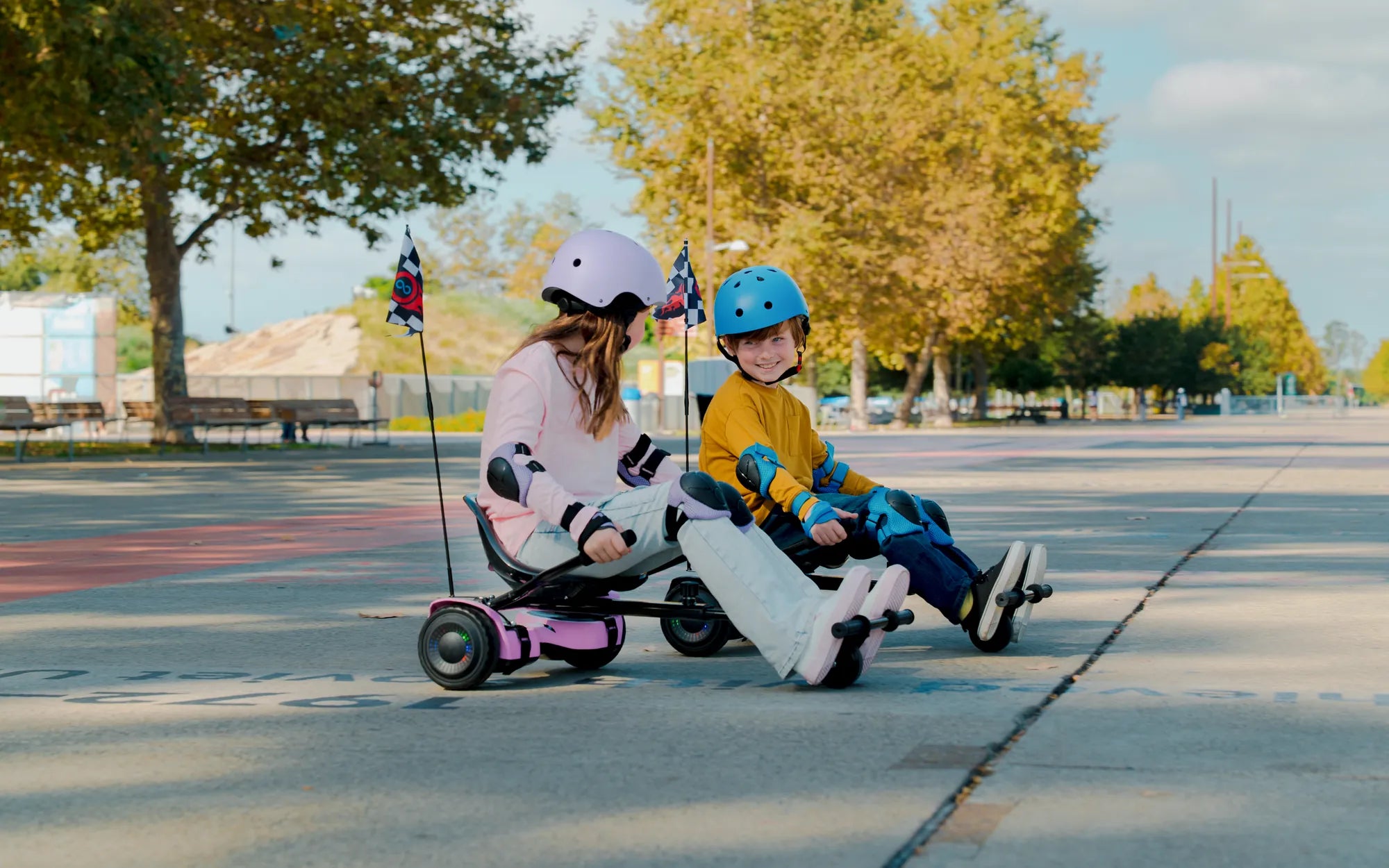
Imagine a device that defies gravity, staying perfectly upright without any external support. Self-balancing technology seems almost magical, but it's rooted in precise engineering and physics principles that make the impossible possible. From hoverboards to advanced robotics, this innovation is changing how we move and interact with machines. Let's peel back the layers to understand exactly how self-balancing works.
The Core Principles of Self-Balancing
At its heart, self-balancing relies on three key components: sensors, a control system, and actuators. These elements work in harmony to detect imbalances and correct them in real time. The most common sensors used are accelerometers and gyroscopes, which measure tilt and angular velocity. When the system detects a deviation from the upright position, it triggers the actuators (usually motors) to counteract the movement and restore balance.
Gyroscopes and Accelerometers: The Eyes of the System
Gyroscopes measure rotational movement, providing data on how fast and in which direction the device is tilting. Accelerometers, on the other hand, detect linear acceleration and tilt relative to gravity. Together, these sensors create a comprehensive picture of the device's orientation in space. This data is fed into the control system, which processes it at lightning speed to determine the necessary corrective actions.
The Role of Control Algorithms
The real magic happens in the control algorithms. These sophisticated mathematical models take the sensor data and calculate the exact amount of force needed to maintain or restore balance. One of the most common algorithms used is the Proportional-Integral-Derivative (PID) controller, which adjusts the motor output based on the current error (proportional), the accumulation of past errors (integral), and the predicted future errors (derivative). This ensures smooth and precise adjustments.
Actuators: The Muscles of the System
Once the control system has determined the necessary corrections, it sends signals to the actuators—typically electric motors—to execute the movements. In a self-balancing scooter, for example, the motors adjust the speed of the wheels to shift the center of gravity back to a stable position. The speed and precision of these actuators are crucial; even a slight delay can result in a loss of balance.
The Physics Behind Self-Balancing
Self-balancing devices operate on the principles of dynamic stability. Unlike static stability, where an object remains balanced without movement, dynamic stability requires continuous adjustments. This is similar to how a cyclist maintains balance by making tiny steering corrections while moving. The faster the device can make these adjustments, the more stable it appears.
Real-World Applications
Personal Transportation
Self-balancing technology has become synonymous with personal transportation devices like hoverboards and electric unicycles. These devices allow users to glide effortlessly by simply leaning in the desired direction. The system detects the lean and adjusts the wheel speed to move the device forward or backward while keeping the rider upright.
Robotics
In robotics, self-balancing is used to create bipedal robots that can walk or stand without toppling over. This is particularly challenging because robots have a higher center of gravity and fewer points of contact with the ground. Advanced control systems and actuators enable these robots to mimic human balance, opening doors for applications in healthcare, manufacturing, and even space exploration.
Industrial Equipment
Self-balancing technology is also making waves in industrial settings. For example, self-balancing cranes and platforms can adjust their position to compensate for uneven loads or external forces like wind. This not only improves safety but also enhances efficiency by reducing the need for manual adjustments.
Challenges and Limitations
While self-balancing technology is impressive, it's not without its challenges. Power consumption is a significant concern, as the constant adjustments require substantial energy. Additionally, the system's effectiveness depends on the quality of the sensors and actuators; low-quality components can lead to instability or even failure. Environmental factors like uneven terrain or strong winds can also pose difficulties.
The Future of Self-Balancing Technology
As sensors and control algorithms become more advanced, we can expect self-balancing technology to become even more reliable and widespread. Innovations like AI-driven predictive balancing and energy-efficient actuators are on the horizon, promising to overcome current limitations. From personal mobility to advanced robotics, the potential applications are limitless.
Self-balancing technology is no longer a futuristic concept—it's here, and it's transforming the way we live and work. Whether you're gliding down the street on a hoverboard or watching a robot perform complex tasks, you're witnessing the incredible power of physics and engineering working in perfect harmony. The next time you see a self-balancing device in action, you'll know exactly how it works—and why it's so revolutionary.
Hoverboard Competition: The Ultimate Battle of Speed, Skill, and Innovation
Good Electric Scooters for Sale: Top Picks and Buying Guide