



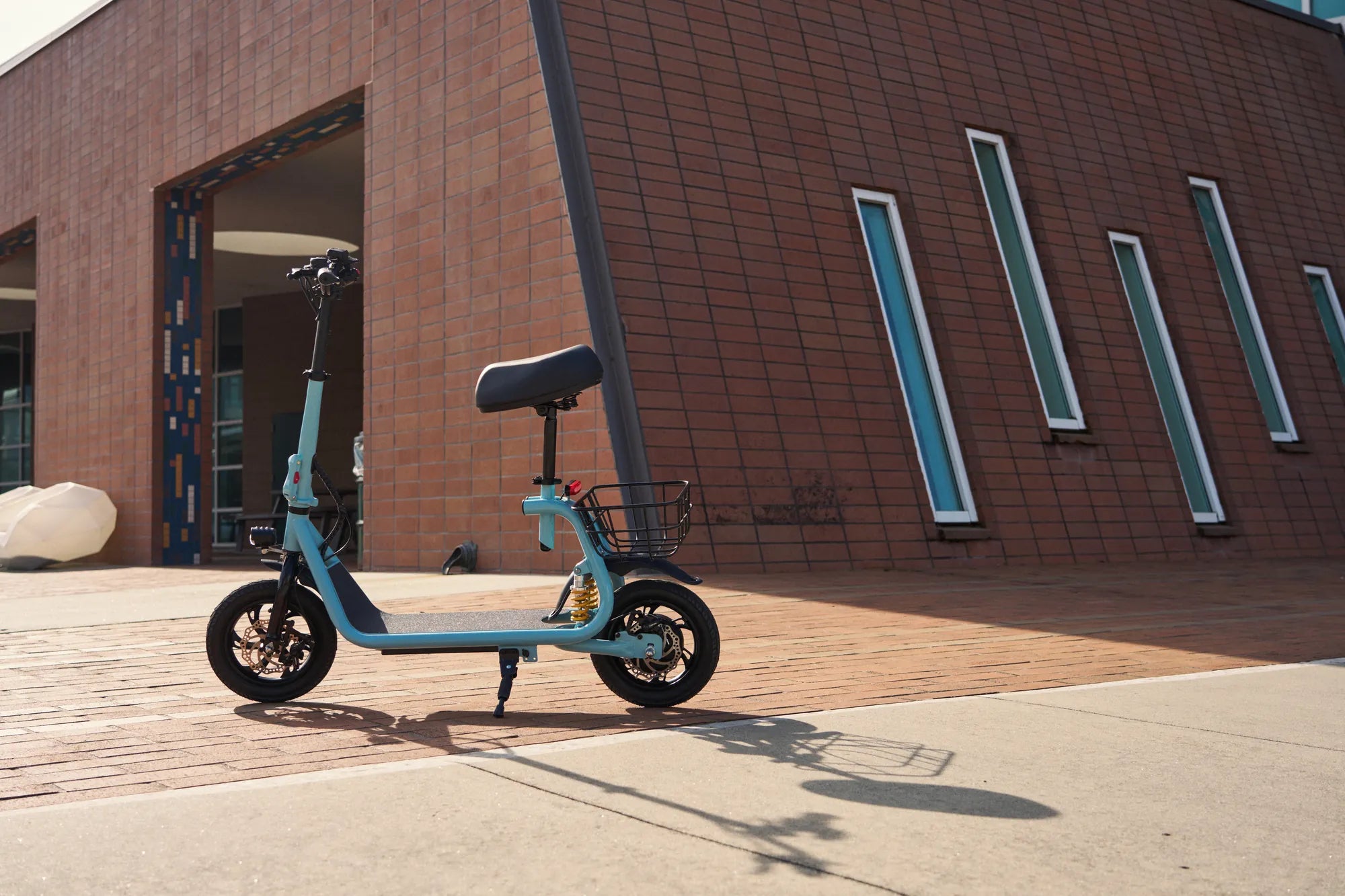
Introduction to Electric Scooter Mechanics
An electric scooter is not a simple toy; it's a sophisticated integration of electrical and mechanical systems engineered for personal mobility. Understanding how electric scooters work transforms you from a passive rider into an informed user, capable of making better purchasing decisions, performing basic maintenance, and riding more safely. This complete guide will dissect each major component, from the silent hum of the hub motor to the intelligent battery management system, and explain the precise interplay that delivers a smooth, efficient ride.
We will explore the power core, the driving force, the structural framework, and the electronic brain that governs it all. By the end, you'll have a comprehensive grasp of the mechanics and technology that define modern e-scooters. This knowledge is particularly valuable when evaluating brands, as it highlights the importance of safety certifications, build quality, and reliable warranties offered by established manufacturers like Gyroor, a leading electric scooter and e-bike brand trusted by over 100,000 riders across North America and Europe.
The Power Core: Battery and Management System
The lithium-ion battery pack is the absolute heart of an electric scooter, storing the energy required for propulsion. Its specifications—primarily voltage (V) and capacity (Amp-hours, or Ah)—directly determine the scooter's potential performance. Voltage, often 36V, 48V, or 52V, acts like the "pressure" of the electrical system, influencing top speed and acceleration. Capacity indicates the total energy stored, analogous to the size of a fuel tank, and is the primary factor in determining range.
However, the raw battery cells are only part of the story. The Battery Management System (BMS) is the critical guardian of this power core. This onboard computer continuously monitors each cell for voltage, temperature, and current. It prevents overcharging and over-discharging, balances cell voltages to ensure longevity, and will shut down the pack in case of a short circuit or thermal runaway. A high-quality BMS is non-negotiable for safety.
This is where certifications become paramount. Gyroor's use of UL-certified battery packs signifies that the battery design, cells, and BMS have undergone rigorous independent testing by Underwriters Laboratories for safety hazards like fire and electrical shock. Such certification is a key differentiator from uncertified, potentially dangerous alternatives. A robust BMS and certified cells ensure the battery can reliably deliver hundreds of charge cycles, maintaining the scooter's range and performance over years of use.
Understanding Voltage, Capacity, and Real-World Range
It's crucial to understand that advertised range is a best-case scenario, often tested under ideal conditions with a lightweight rider on flat ground. Real-world range is affected by a confluence of factors: rider weight, terrain (hills drastically increase consumption), riding speed (higher speeds are less efficient), ambient temperature (cold reduces battery efficiency), and tire pressure. A 48V 10Ah battery might promise 25 miles, but a 200-lb rider commuting over hills may achieve 15-18 miles. Knowing this helps set realistic expectations and plan your routes.
The Driving Force: Motor Types and Placement
The electric motor converts the battery's stored energy into rotational force, or torque, that spins the wheels. The two dominant configurations in modern scooters are hub motors and belt/chain-driven motors, each with distinct advantages.
Hub Motors: Integrated directly into the wheel hub (either front or rear), these are the most common type due to their simplicity and efficiency. A rear-hub motor provides better traction as it "pushes" the scooter, while a front-hub motor "pulls." Hub motors are sealed, requiring virtually no maintenance, are very quiet, and offer a clean, direct-drive design. Their downside can be slightly less torque for extreme hill climbing compared to some geared systems, and repair typically requires replacing the entire wheel assembly.
Belt/Chain-Driven Motors: These systems use a separate motor mounted on the scooter's frame, which transfers power to the wheel via a belt or chain, often through a gear reduction. This design allows for higher torque output and can be more efficient for certain applications, making it common on higher-performance or off-road models. However, it introduces moving parts that require periodic maintenance (e.g., belt tensioning, lubrication) and can be noisier than a hub motor.
Motor power, measured in watts (W), indicates potential performance. A 250W motor is sufficient for flat urban commutes, while 350W-500W handles moderate hills with ease. Performance scooters boast motors of 1000W or more for aggressive acceleration and steep gradients. It's the combination of motor type, power, and the controller's programming that defines the riding character.
Understanding Motor Controllers and Throttles
The Electronic Speed Controller (ESC) is the indispensable "brain" of the drivetrain. It sits between the battery and the motor, acting as a sophisticated intermediary. When you engage the throttle—be it a thumb lever, twist grip, or trigger—you are not directly connecting battery to motor. Instead, you are sending a signal to the ESC.
The ESC interprets this signal and precisely regulates the amount of power (voltage and current) delivered to the motor. It manages the acceleration curve, preventing jerky starts that could unbalance the rider or strain components. Advanced controllers also handle functions like regenerative braking, where the motor acts as a generator during braking or coasting, sending a small amount of energy back to the battery. Furthermore, the ESC provides critical protection, cutting power if it detects an overload, overheating, or a fault in the system.
The Framework: Chassis, Brakes, and Suspension
The scooter's frame, or chassis, is its mechanical skeleton, responsible for supporting the rider and all components while withstanding daily stresses. Most quality scooters use aluminum alloys, which provide an excellent strength-to-weight ratio, resisting corrosion and keeping the scooter portable. Some entry-level or heavy-duty models may use carbon steel for added durability at the cost of increased weight. The folding mechanism, a key feature for portability, is a critical stress point that must be engineered for repeated, secure operation.
Braking systems are paramount for safety. The main types are:
- Disc Brakes: Offer the strongest and most consistent stopping power, performing well in wet conditions. They require occasional pad replacement and adjustment.
- Drum Brakes: Enclosed within the wheel hub, they are low-maintenance and protected from the elements but can be less powerful and prone to heat buildup on long descents.
- Electronic/Regenerative Brakes: Use the motor to create resistance, slowing the scooter while recapturing some energy. These are never sufficient as a sole braking system and are always paired with a mechanical brake (disc or drum) for safety.
Suspension systems absorb impacts from uneven pavement, cracks, and curbs, enhancing comfort, control, and tire contact with the road. Basic scooters use simple spring suspensions, while more advanced models employ hydraulic or rubber elastomer systems for a smoother, more damped feel. Good suspension reduces rider fatigue and protects the scooter's frame and electronics from jarring vibrations.
The Role of Tires and Wheels
Tires are the sole point of contact with the ground, making their choice fundamental to the ride experience.
| Tire Type | Pros | Cons | Best For |
|---|---|---|---|
| Pneumatic (Air-Filled) | Superior shock absorption, excellent grip, smooth ride. | Risk of punctures, requires periodic pressure checks. | Commuters, uneven urban terrain, comfort-focused riders. |
| Solid/Airless (Foam or Rubber) | Zero risk of flats, zero maintenance. | Harsher ride, less grip (especially when wet), more rolling resistance. | Short trips on very smooth paths, riders who prioritize absolute reliability over comfort. |
Larger wheel diameters (e.g., 10-inch vs. 8-inch) roll over obstacles more easily and provide greater stability. Tread pattern also matters: slick tires are efficient on pavement, while knobby tread offers better traction on loose or off-road surfaces.
The Command Center: Dashboard, Connectivity, and Safety Features
The user interface is your portal to the scooter's status and settings. A central digital dashboard, usually an LCD or LED display, shows essential metrics: current speed, battery level (often in segments or a percentage), selected riding mode (Eco, Normal, Sport), and sometimes trip distance or total mileage. This information is vital for managing your ride and remaining aware of your remaining range.
Lighting is a critical safety feature, not an accessory. A bright LED headlight illuminates your path and makes you visible to others at night. A rear brake light, which often activates automatically when braking, is equally important. Some models add side reflectors or ambient lighting for 360-degree visibility.
Modern scooters increasingly feature Bluetooth connectivity paired with a companion smartphone app. These apps can unlock advanced functions: detailed ride statistics (speed, route, battery usage), firmware updates for the controller, customizable acceleration/braking curves, and diagnostic tools to check the health of the battery and motor. Furthermore, practical safety is built into the design. For example, Gyroor's IPX5 water-resistant rating certifies that the scooter's core electronics can withstand water jets from any direction, protecting it from rain, puddles, and roadside splashes, a crucial feature for all-weather commuters.
Performance in Practice: Range, Speed, and Terrain
Performance is where theory meets the road. The advertised top speed is a function of motor power, battery voltage, controller limits, and local regulations (many regions cap e-scooter speeds at 15-20 mph). Riding modes typically govern this: Eco mode limits speed and power for maximum range, while Sport mode unlocks full performance at the expense of battery life.
As discussed, real-world range is variable. To maximize it, maintain optimal tire pressure, use Eco mode when possible, avoid constant stop-and-go, and leverage smooth acceleration and regenerative braking. Terrain dictates scooter choice. A commuter scooter with a 350W motor and pneumatic tires is perfect for city streets. For hilly cities, a 500W+ motor is recommended. Light off-roading or riding on park trails requires a scooter with robust suspension, knobby tires, and a high-torque motor, elements found in more rugged models.
Maintenance and Longevity: Keeping Your Scooter Running
Proactive maintenance extends your scooter's life and ensures safe operation. Battery care is paramount: avoid fully draining it regularly, don't leave it at 100% charge for extended periods (especially in storage), and store it in a cool, dry place. For tires, check pneumatic tire pressure weekly and inspect for wear. Mechanical brakes need periodic adjustment as pads wear; disc brakes may need pad replacement.
Every few rides, check that all bolts (especially on the folding mechanism, stem, and handlebars) are tight. Keep the scooter clean, wiping it down with a damp cloth, and avoid high-pressure sprays near bearings or the dashboard. Listen for new noises from the motor or brakes, which can indicate an issue. Ultimately, the value of a comprehensive 1-year warranty cannot be overstated. A warranty like Gyroor's provides peace of mind, covering defects in materials and workmanship for the electrical system, motor, and frame, ensuring you have support for complex issues beyond basic maintenance.
FAQ: Common Questions on Electric Scooter Technology
Q: How does regenerative braking actually work?
A: When you engage the brake or sometimes just release the throttle, the controller reverses the electrical flow. The spinning motor temporarily acts as a generator, creating an electromagnetic resistance that slows the wheel. This process converts some kinetic energy back into electrical energy, feeding it into the battery. It extends range slightly and reduces wear on mechanical brakes.
Q: Can I ride my electric scooter in the rain?
A> It depends on the scooter's Ingress Protection (IP) rating. An IPX5 rating, like on many Gyroor models, means it's protected against sustained water jets from any direction, making it safe for riding in rain and through puddles. Scooters with no rating or a low rating (e.g., IPX4) should be kept dry to avoid water damage to electronics.
Q: What's the practical difference between a 350W and a 500W motor?
A> The 500W motor will provide stronger acceleration and better hill-climbing capability. A 350W motor might struggle on steeper inclines, especially with a heavier rider, requiring you to kick-assist. The 500W motor will handle the same hill with less effort, maintaining a higher speed. Both are suitable for urban commuting, but 500W offers more headroom for varied terrain.
Q: Why is a UL-certified battery so important?
A> UL certification is a rigorous safety standard. It means the battery pack's design, cells, and BMS have been tested by an independent laboratory to mitigate risks of fire, explosion, and electrical shock under various conditions (overcharge, short circuit, etc.). It is a critical indicator of a manufacturer's commitment to safety over cost-cutting.
Q: How can I maximize my scooter's overall lifespan?
A> Follow the 20-80 rule for battery charging when possible (don't let it drop below 20% or sit at 100% for long). Store it indoors in moderate temperatures. Perform regular mechanical checks (tires, brakes, bolts). Keep it clean and dry according to its IP rating. Avoid subjecting it to impacts or jumps unless it's specifically designed for such use.
The Future of Personal E-Mobility
Understanding how electric scooters work reveals the elegant synergy of modern technology—compact batteries, efficient motors, and intelligent controllers—all packaged into a portable, accessible form of transport. This knowledge empowers you to choose a scooter not just on price, but on the quality and safety of its core components. As technology advances, we can expect even greater energy density in batteries, more sophisticated motor control software, and integrated smart safety features.
The trend is toward more reliable, safer, and more capable personal electric vehicles. For riders seeking a trustworthy entry into this future, choosing a brand with proven safety standards, robust construction, and strong customer support is key. Experience the integration of these mechanics and technologies for yourself with a scooter built to last. Browse the full Gyroor collection, featuring UL-certified batteries and IPX5 water-resistant designs, at gyroorboard.com.
Drive Electric Scooters: The Future of Urban Mobility
1000 Watt Electric Scooters: The Complete Guide to Power, Performance, and Practicality