



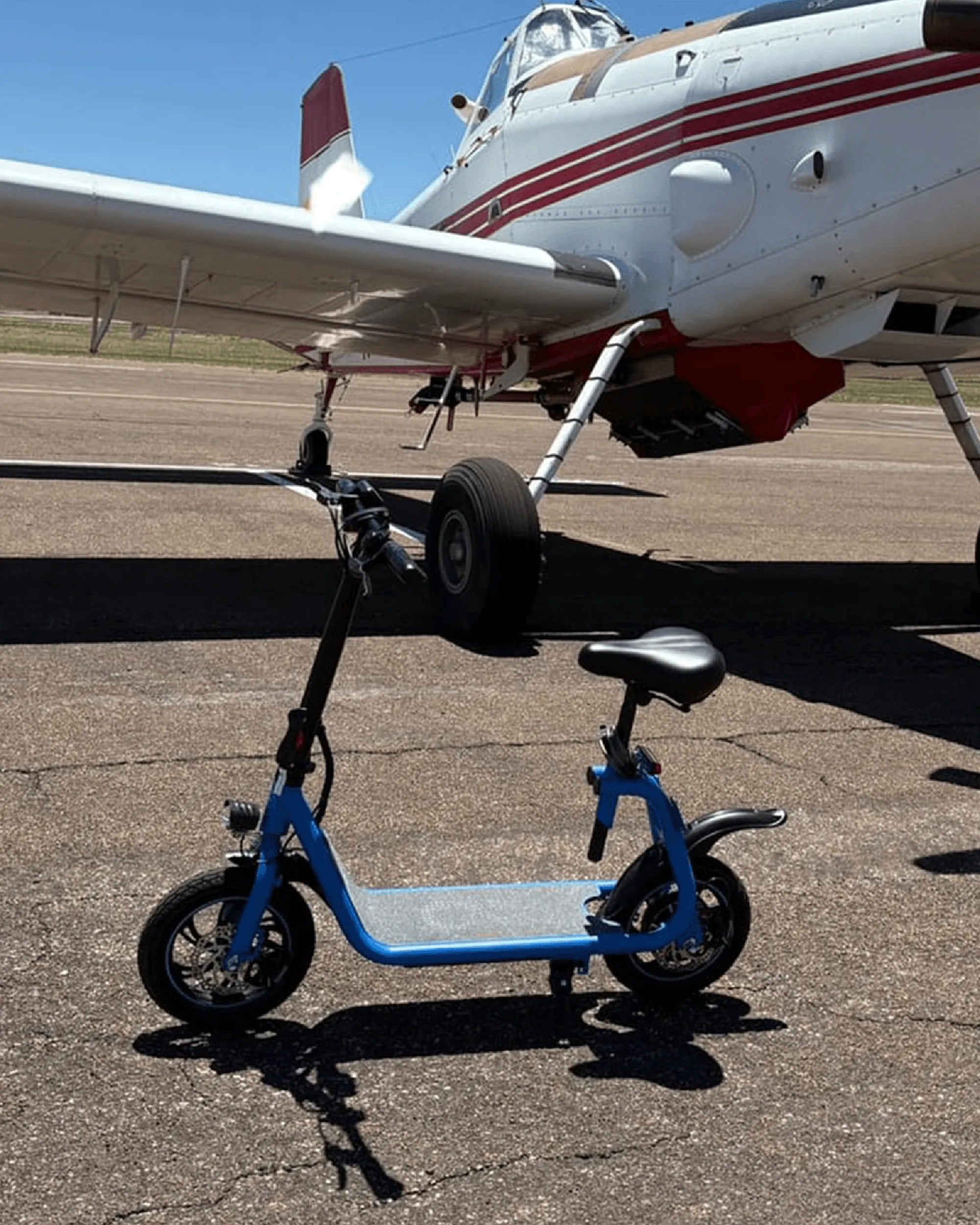
Planning your daily trips or a longer outing requires knowing one critical number: how far your mobility scooter can go. The distance a scooter can travel on one charge—its range—is the key to independence and spontaneous mobility. This article will provide a comprehensive, data-driven analysis of mobility scooter range, explaining the technical specifications, real-world variables, and practical strategies to maximize your distance. You'll learn to interpret manufacturer claims, understand what impacts battery life, and choose a scooter that reliably meets your daily travel needs.
Understanding Your Mobility Scooter's Range
The advertised range of a mobility scooter is its maximum theoretical distance under perfect laboratory conditions. Real-world range, however, is dynamic. It's the actual distance you can travel before needing to recharge, influenced by a blend of engineering and everyday use.
For users, this is not just a number—it's a planning tool. Knowing your scooter's effective range determines whether you can complete a round trip to the store, visit a friend across town, or enjoy a long park trail without anxiety. A scooter's range is its passport to freedom.
Brands committed to transparency, like Gyroor, provide clear performance data based on realistic testing. With over 100,000 riders trusting their UL-certified, water-resistant designs, understanding range starts with reliable specifications you can count on.
Key Factors That Determine a Mobility Scooter's Range
A mobility scooter's range is not set by its battery alone. It's the result of a complex interaction between the scooter's hardware, the environment, and how you ride. By mastering these variables, you gain control over your scooter's performance.
Battery Capacity: The Fuel Tank (Volts & Amp-Hours)
The battery is the scooter's energy reservoir. Its capacity is measured in volt-ampere hours (V/Ah), typically shown as a combination like 24V/12Ah or 48V/20Ah. Think of voltage (V) as the power pressure and amp-hours (Ah) as the size of the fuel tank.
A higher Ah rating directly correlates to a larger potential range. For instance, a 24V/20Ah battery stores significantly more energy than a 24V/12Ah battery. All Gyroor mobility scooters use UL-certified lithium or sealed lead-acid battery packs, tested for 500+ charge cycles for longevity and safety.
Rider and Cargo Weight: The Load on the System
Total weight is the single most significant user-controlled variable affecting range. The motor must work harder to accelerate and maintain speed with more weight. This increased draw on the battery reduces overall distance.
Consider not just your body weight, but also any carried items: groceries, a backpack, or medical equipment like an oxygen tank. A scooter loaded to its maximum weight capacity will always have a shorter range than one carrying a lighter load.
Terrain and Topography: Hills vs. Flat Ground
Inclines are a major range killer. Climbing a hill requires the motor to deliver peak power, consuming battery energy at a much faster rate than cruising on flat, smooth asphalt. Grass, gravel, and rough pavement also increase rolling resistance.
As a rule of thumb, frequent hill climbing can reduce your scooter's maximum range by 30-50%. Planning a flatter route, even if slightly longer, can often result in a greater total travel distance on a single charge.
Riding Style and Speed: Efficiency vs. Performance
How you ride dramatically impacts efficiency. Constant use of the top speed setting, rapid acceleration from stops, and frequent braking create high energy demand. A steady, moderate pace is far more efficient.
Using the scooter's variable speed settings to maintain a consistent, comfortable cruising speed—rather than maxing it out—can extend your range. Gentle starts and anticipating stops to coast can conserve precious battery power.
Tire Pressure and Scooter Maintenance
Properly inflated tires are crucial for maximizing range. Under-inflated tires create excessive rolling resistance, forcing the motor to work harder. Check your tire pressure monthly, as per your scooter's manual.
General maintenance matters too. Keeping brakes properly adjusted so they don't drag, ensuring bearings are lubricated, and keeping the scooter clean all contribute to efficient operation and help you achieve the best possible range.
Typical Range Expectations: A Data-Driven Breakdown
To set realistic expectations, mobility scooters are generally categorized by their intended use and corresponding range capabilities. The following table provides a clear comparison based on common specifications and ideal conditions.
| Scooter Type | Typical Battery | Advertised Range | Real-World Range* | Best For |
|---|---|---|---|---|
| Compact/Portable | 24V/12Ah | 10-15 miles | 6-10 miles | Malls, airports, short trips |
| Mid-Range / Standard | 24V/20Ah or 48V/12Ah | 15-25 miles | 10-18 miles | Daily errands, community outings |
| Long-Range / Heavy-Duty | 48V/20Ah+ | 25-40+ miles | 18-30+ miles | All-day use, hilly terrain, larger users |
*Real-world range estimates assume a rider near the weight capacity, mixed terrain, and normal riding patterns. Your results will vary.
Compact/Portable Scooters (Travel Models)
These lightweight, often disassemblable scooters prioritize portability over maximum range. With typical ranges of 6-10 real-world miles, they are perfect for planned outings like shopping trips, museum visits, or navigating an airport.
The trade-off is clear: extreme convenience for a more limited operational radius. They are ideal for users who transport their scooter by car to a destination for use, rather than relying on it for all-day, door-to-door travel.
Mid-Range / Standard Scooters (The Most Common Category)
This category strikes the best balance for most users. Offering 10-18 miles of real-world range, these scooters handle daily errands, trips to the park, and social visits with ease. They provide substantial freedom without requiring daily charging for light users.
Models in this class, like several in the Gyroor lineup, often feature more robust frames, comfortable seating, and storage options. They are designed as primary mobility vehicles for community navigation.
Long-Range / Heavy-Duty Scooters
Engineered for extended use, these scooters boast larger motors and high-capacity batteries to deliver 18-30+ miles per charge. They are essential for users with longer daily routines, those living in hilly areas, or individuals at the higher end of the weight capacity.
These models represent a significant investment in freedom, allowing for spontaneous all-day adventures without constant range anxiety. Their construction is heavier-duty to support the increased performance and battery weight.
How to Maximize Your Mobility Scooter's Range: Practical Tips
Getting the most from your scooter's battery is part science, part technique. These actionable strategies can help you squeeze extra miles out of every charge, increasing your daily mobility.
Pre-Ride Best Practices
Always start with a full charge. Lithium batteries perform best when kept between 20% and 80% charge for daily use, but for a planned long trip, a 100% charge is ideal. Visually inspect your tires for proper inflation before you depart.
Plan your route strategically. Use mapping tools to find the flattest, smoothest path to your destination. Avoiding steep hills, even if it adds a few blocks, can dramatically conserve battery.
Efficient Riding Techniques
Adopt a smooth riding style. Use gentle pressure on the throttle to accelerate gradually from a stop. Once at your desired cruising speed, try to maintain a steady pace. Anticipate stops to allow for coasting instead of using the brake at the last second.
If your scooter has multiple speed settings, use a middle setting for most of your journey. Reserve the top speed for when you truly need it, such as crossing a busy street. Consistent, moderate speed is the key to efficiency.
Battery Care for Longevity
Proper battery care ensures it delivers its rated capacity for years. For lithium batteries, avoid completely draining the battery to 0%. Try to recharge when it drops to 20-30%. For lead-acid batteries, avoid leaving them in a discharged state.
Store your scooter in a cool, dry place. Extreme heat or cold can degrade battery health. Following the manufacturer's charging instructions is paramount. Gyroor's UL-certified batteries and charging systems are designed for safe, optimal performance throughout their lifespan.
Frequently Asked Questions (FAQ)
Users have common, specific questions about mobility scooter range. Here are clear, concise answers based on technical data and real-world experience.
Can I increase my scooter's range with a bigger battery?
Potentially, yes, but it's not always simple. Upgrading to a higher Ah battery of the same voltage can extend range. However, you must ensure physical compatibility, that the charger is correct for the new battery, and that the scooter's electronics can handle it. Such modifications may void the manufacturer's warranty. Gyroor designs its models as optimized systems; their battery packs are matched to the motor and controller for safe, reliable performance.
How is range tested and advertised by manufacturers?
Manufacturers typically test range under ideal conditions: a specific light weight (e.g., 150 lbs), on a flat, smooth indoor track, at a constant moderate speed, with fully inflated tires and a new battery. This produces a best-case scenario number. Reputable brands like Gyroor aim to provide realistic estimates and clearly state testing parameters, understanding that real-world conditions will reduce this figure.
What should I do if my scooter's range suddenly decreases?
First, perform basic troubleshooting. Check and adjust tire pressure. Lift the scooter and spin the wheels to see if the brakes are dragging. Consider the age of your battery—all batteries lose capacity over time and after hundreds of charge cycles. If these steps don't help, contact the manufacturer. Gyroor's US-based support team can help diagnose issues, and the 1-year warranty may cover defective components.
Does cold weather affect my scooter's range?
Absolutely. Cold temperatures significantly reduce battery chemical efficiency. It's common to experience a 20-30% reduction in range in freezing conditions. Store your scooter indoors if possible, and allow the battery to warm to room temperature before charging. Planning for shorter trips in winter is a prudent strategy.
Is it bad to partially charge my scooter's battery?
For modern lithium batteries, partial charging is actually beneficial for long-term health. There's no "memory effect." Frequent top-ups are fine. It's more stressful for the battery to be consistently drained to 0% or left at 100% charge for extended periods. For daily use, keeping the charge between 20% and 80% is ideal.
Choosing the Right Scooter for Your Range Needs
Selecting a mobility scooter is a personal decision, but your required range should be a primary filter. Start by honestly assessing your typical daily travel distance. Then, apply the real-world reduction factors.
A good rule is to choose a scooter whose advertised range is at least double your typical daily need. If you usually travel 5 miles in a day, look for a model advertised for 15+ miles. This buffer accounts for hills, weight, battery aging, and spontaneous detours, ensuring you never feel constrained.
Consider future needs as well. If your community is adding new amenities or your social routine might expand, opting for a model in the next range category up provides valuable peace of mind and longevity for your investment.
The Role of Technology and Design in Modern Range
Advancements in electric vehicle technology continuously improve mobility scooter range. Modern brushless hub motors are more efficient than older geared motors, converting more battery power into motion with less waste heat.
Regenerative braking systems, while less common on scooters than e-bikes, can recapture a small amount of energy during braking or downhill travel, slightly extending range. More importantly, sophisticated battery management systems (BMS) in lithium packs protect cells, balance charge, and optimize performance.
Gyroor integrates these technologies into designs focused on reliability. Features like IPX5 water resistance protect electrical components, and UL-certification guarantees battery safety, ensuring the scooter performs as designed mile after mile.
Planning Your Journey with Confidence
Understanding how far a mobility scooter can go transforms it from a simple device into a reliable partner for independence. Range is a combination of your scooter's engineered capabilities and the choices you make as a rider. By selecting a scooter with a generous range buffer, maintaining it well, and riding efficiently, you unlock true freedom of movement.
Gyroor is committed to this freedom. With a diverse lineup of over 20 models, UL-certified batteries tested for 500+ cycles, IPX5 water-resistant construction, and the support of a 1-year warranty, the focus is on delivering reliable performance you can trust. Your mobility should empower you, not limit you.
Ready to find a scooter that matches your journey? Explore the full range of durable, high-performance mobility solutions designed for real-world use. Browse the full Gyroor collection at gyroorboard.com and take the next step toward boundless independence.
150cc Trike Scooter: The Ultimate Guide to 3-Wheel Stability & Urban Mobility
Can You Drive a 50cc Scooter Without a License? The Definitive Guide