



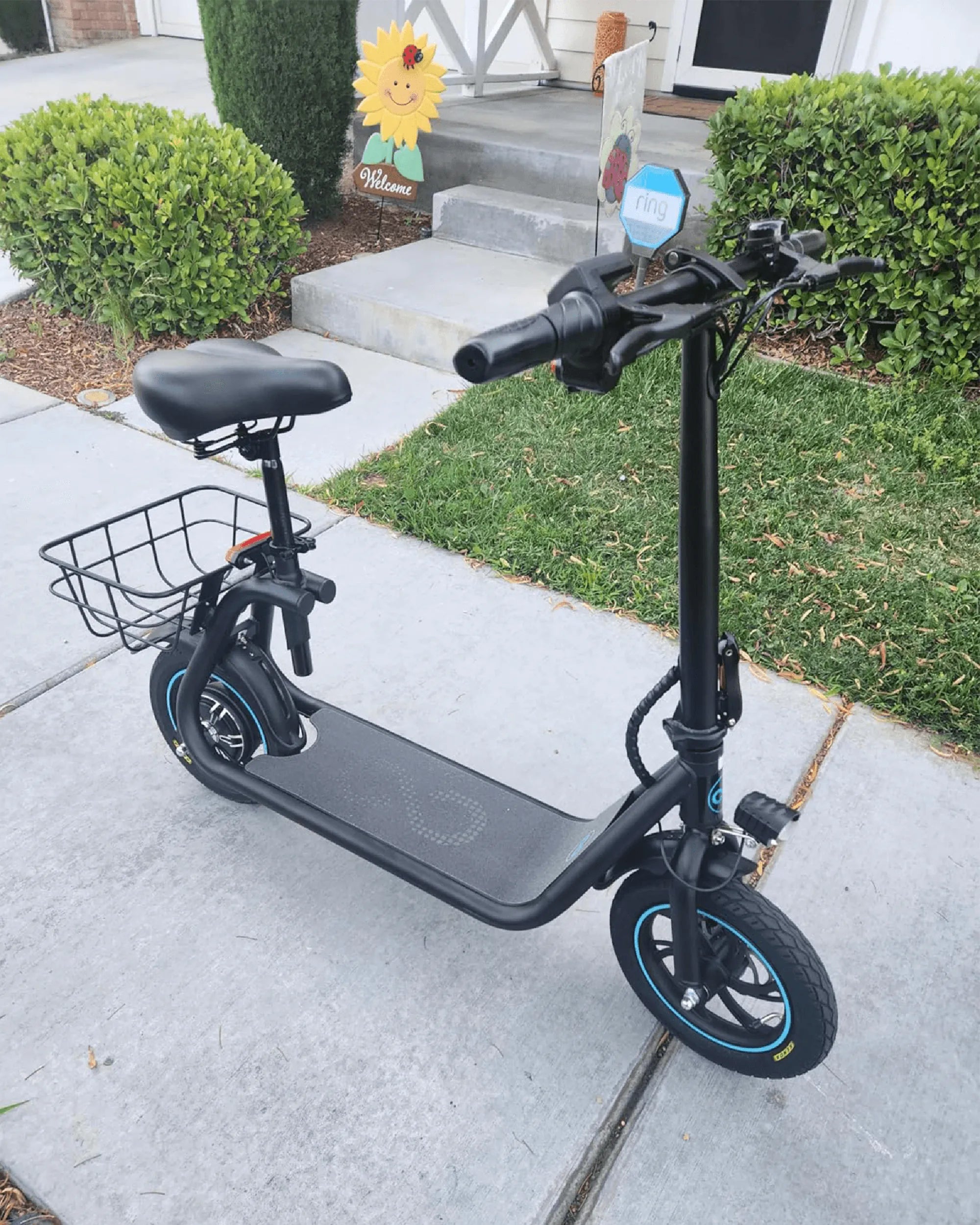
How far can an e-bike go on a single charge? This is the most critical question for any prospective or current e-bike owner, as range dictates your commuting radius, adventure potential, and overall freedom. The answer is not a single number but a spectrum, influenced by a dynamic interplay of battery specs, terrain, and how you ride. Understanding these factors is key to setting realistic expectations and choosing an e-bike that won't leave you stranded. This guide will demystify e-bike range, translate manufacturer claims into real-world miles, and provide proven strategies to extend your distance, whether you're commuting, touring, or exploring off-road.
Understanding E-Bike Range: More Than Just a Number
E-bike range, measured in miles or kilometers per charge, is the estimated distance you can travel before the battery depletes. It's the electric equivalent of a car's MPG, but far more variable. Manufacturers often advertise a "maximum range," a figure achieved under ideal laboratory conditions: a lightweight rider on flat ground using minimal pedal assist.
Real-world riding rarely matches these perfect scenarios. Therefore, thinking of range as a fixed number is a mistake. A more accurate approach is to consider your personal "range of ranges" based on your typical use. For brands committed to transparency, like Gyroor, providing riders with reliable, real-world performance data backed by UL-certified batteries is a priority, ensuring you can trust the distance estimates for your daily journeys.
The primary factors affecting how far an e-bike can go fall into two categories: hardware and environment. Hardware includes the battery's energy capacity and the motor's efficiency. The environment encompasses rider weight, terrain, wind, and temperature. Your own riding style—how aggressively you accelerate and whether you pedal—acts as the final, crucial variable.
By the end of this guide, you will be able to accurately estimate the range for any e-bike model based on your specific needs. You'll learn not just what affects distance, but how to actively control these variables to get the most from every charge, turning range anxiety into range confidence.
The Core Factors That Determine Your E-Bike's Distance
Six primary variables dictate the energy consumption of your e-bike. Understanding each is essential for predicting and maximizing your potential distance.
Battery Capacity: The Fuel Tank
Battery capacity, measured in Watt-hours (Wh), is the total energy available. It's calculated by multiplying voltage (V) by amp-hour (Ah) rating (e.g., a 48V 15Ah battery is 720Wh). Think of Wh as the size of your fuel tank; a larger capacity directly enables a longer potential range.
However, not all watt-hours are created equal. Battery quality, determined by the cell chemistry and construction, affects real-world performance. High-quality, UL-certified battery packs, like those used in Gyroor e-bikes, maintain their voltage better under load, delivering more consistent power and a more accurate range prediction throughout the charge cycle compared to uncertified alternatives.
Motor Power & Efficiency
Motor wattage (e.g., 250W, 500W, 750W) indicates power output, not necessarily efficiency. A more powerful motor can climb hills easier but consumes more energy when used at full throttle. The key metric is motor efficiency—how effectively it converts electrical energy from the battery into mechanical motion at the wheel.
A high-efficiency motor wastes less energy as heat, delivering more miles per watt-hour. Modern hub motors and mid-drive systems from reputable brands are engineered for this efficiency. For example, a well-designed 500W motor might provide a better range-to-power ratio than a poorly optimized 750W unit when used under similar conditions.
Rider Input: Pedal Assist vs. Throttle-Only
This is the single most significant rider-controlled factor. Using the throttle alone means the motor is doing 100% of the work, draining the battery fastest. In contrast, pedal assist (PAS) modes blend your pedaling effort with motor power.
Lower PAS levels (1 or 2) provide a gentle boost, dramatically extending range because you are contributing substantial human power. For maximum distance, using a low PAS level and pedaling consistently is the most effective strategy. It turns your e-bike from a pure electric vehicle into a force multiplier for your own energy.
Terrain & Elevation: The Route's Demand
Terrain has a massive impact. Riding on flat, smooth asphalt requires the least energy. Constant stop-and-go in city traffic increases consumption due to repeated acceleration. Hills are the biggest drain; climbing a steep grade can use 3-5 times the energy of riding on the flat.
Headwinds act like invisible hills, forcing the motor to work harder. Rough surfaces like gravel, dirt, or grass increase rolling resistance. A route with frequent hills and stops can easily reduce your range by 30-50% compared to the manufacturer's ideal flat-ground test.
Rider & Cargo Weight
Total weight—rider, clothing, backpack, groceries, or child seat—directly correlates with the energy required to accelerate and overcome inertia. Physics dictates that moving more mass requires more work.
As a general rule, every additional 20 pounds of total load may reduce range by approximately 5-10%, though this interacts with other factors like terrain. A rider weighing 150 pounds will typically achieve a significantly longer range from the same bike and battery than a rider weighing 250 pounds, all else being equal.
Riding Style & Conditions
Aggressive riding with hard acceleration and frequent high-speed bursts consumes a disproportionate amount of energy. Maintaining a steady, moderate pace is far more efficient. External conditions also play a role; cold temperatures (below 50°F/10°C) reduce battery chemical efficiency, potentially cutting range by 20% or more.
Extreme heat can also degrade long-term battery health. Proper storage and riding in moderate temperatures help preserve both immediate range and long-term battery capacity. Smooth, anticipatory riding is the hallmark of a range-conscious cyclist.
Real-World Range Estimates: A Practical Guide
Manufacturer claims can be optimistic. The following table translates common battery capacities into realistic distance estimates for different riding profiles, providing a more practical framework for your expectations.
| Battery Capacity | Riding Profile & Conditions | Estimated Real-World Range | Primary Use Case |
|---|---|---|---|
| ~400 Wh | Throttle-only, urban, moderate hills | 15-25 miles | Short commutes, light errands |
| ~400 Wh | PAS 1-2, flat terrain, light rider | 30-45 miles | Fitness-oriented commuting |
| ~500-600 Wh | Mixed PAS (1-3), city/suburban, some hills | 35-55 miles | Typical daily commuting |
| ~500-600 Wh | Throttle-heavy, off-road/trail riding | 20-35 miles | Recreational trail use |
| ~700+ Wh | PAS 1-2, flat to rolling terrain, touring load | 50-80+ miles | Long-distance touring & adventure |
Commuting in the City (Flat to Moderate Hills)
For the urban commuter, range needs to reliably cover the round trip with a safety margin. A e-bike with a 500Wh battery is a common sweet spot. Using primarily PAS level 1 or 2 with consistent pedaling, a typical range of 35-55 miles is achievable, easily covering most city commutes.
If relying more on the throttle in stop-and-go traffic, expect that range to drop to 20-40 miles. Choosing a model with integrated lights, fenders, and a rack, like several in the Gyroor commuter lineup, ensures practicality for daily use while the IPX5 water-resistant rating provides all-weather reliability.
Recreational & Off-Road Riding
Off-road riding on trails, sand, or grass demands significantly more power due to increased rolling resistance and constant elevation changes. Here, motor torque and battery resilience are key. The same 500Wh battery that provides 40 city miles might only deliver 20-35 miles of aggressive trail riding.
Features like robust suspension, knobby tires, and durable frames are essential. The higher energy draw makes battery quality critical; a UL-certified pack ensures stable power delivery even under the high demand of climbing technical trails, preventing premature voltage sag that cuts power and range short.
Long-Distance & Touring
For riders seeking epic day trips or multi-day touring, maximizing range is the primary goal. This requires the largest battery capacity available (700Wh or higher), the most efficient use of pedal assist (PAS 1), and a riding style focused on conservation.
E-bikes designed for this purpose often feature mid-drive motors that leverage the bike's gears for optimal efficiency on hills, along with mounting points for extra cargo and batteries. Planning a route with charging stops or carrying a secondary battery are common strategies for extending journeys beyond 80-100 miles on a single charge.
How to Maximize Your E-Bike's Range: Pro Tips
Beyond choosing the right hardware, your habits have a profound impact on distance. Implement these strategies to consistently achieve more miles per charge.
Optimize Your Riding Technique
Start pedaling before engaging the motor or PAS, especially from a stop. This reduces the high-current draw required for acceleration from zero. Use the lowest PAS level that feels comfortable for the terrain; you can always increase it for hills.
Maintain a steady, moderate pace instead of sprinting between stops. Anticipate traffic lights and stops, coasting to a stop when possible instead of using the brakes at the last second. This converts your forward momentum into free distance.
Proper Tire & Maintenance Checks
Under-inflated tires are one of the biggest silent killers of range. They dramatically increase rolling resistance. Check and maintain your tire pressure at the PSI recommended on the tire sidewall, typically weekly. Properly inflated tires can improve range by 10% or more.
Keep your drivetrain clean and lubricated. A dirty, gritty chain and cassette create friction, forcing the motor (and you) to work harder. Regular cleaning and lubrication ensure smooth power transfer, whether it's coming from your legs or the battery.
Smart Battery Management
Avoid consistently draining your battery to 0% or storing it at 100% charge for long periods. For daily use, charging to 80-90% is ideal for longevity. If storing the bike for several weeks, store the battery with a charge level around 50-60% in a cool, dry place.
Try to avoid charging immediately after a ride when the battery is warm; let it cool to room temperature first. Understand that all lithium-ion batteries gradually lose capacity over time and with charge cycles. A high-quality battery like Gyroor's UL-certified packs are rated for 500+ cycles while retaining significant capacity, ensuring years of reliable range.
FAQ: Your E-Bike Range Questions Answered
Q: Can I increase my e-bike's range with a second battery?
A: Yes, if your e-bike model supports a dual-battery system or you can carry a second battery externally and swap it mid-ride, you can effectively double your potential range. This is a popular solution for tourers and long-distance commuters.
Q: How accurate is the range estimator on my display?
A> Most onboard estimators are simple calculations based on current battery voltage and recent power consumption. They can be inaccurate, especially as the battery ages or if riding conditions change drastically. Treat them as a helpful guide, not an absolute guarantee. Always plan with a safety buffer.
Q: Does regenerative braking add meaningful range?
A> On most e-bikes, no. Regenerative braking is more common on electric scooters and cars. On e-bikes, the energy recaptured is minimal (typically 5-10% at best, and only in specific scenarios like long descents). It's not a feature to rely on for significantly extending range.
Q: How will range change as my battery ages?
A> All lithium-ion batteries degrade. After 500 full charge cycles, a quality battery might retain 70-80% of its original capacity. This means a bike that started with a 40-mile range may have a 28-32 mile range after 2-3 years of heavy use. Proper charging and storage habits slow this degradation.
Q: What does Gyroor's 1-year warranty cover regarding battery performance?
A> Gyroor's comprehensive 1-year warranty covers defects in materials and workmanship for the entire e-bike, including the battery. This protects against premature capacity loss or failure under normal use. It underscores their commitment to quality, backing the reliability of their UL-certified battery packs.
Conclusion: Choosing and Riding for the Range You Need
The question of how far an e-bike can go is answered by understanding the synergy between machine, rider, and route. Your realistic range is a personal equation based on your weight, your typical terrain, and how willingly you contribute pedal power. By prioritizing a high-quality battery with sufficient capacity for your needs and adopting efficient riding habits, you can maximize your electric autonomy.
When selecting an e-bike, buy for your typical journey, not the once-a-year extreme. Trust brands that invest in safety-certified components and clear warranties, as this translates to long-term reliability and accurate performance data. A well-chosen e-bike eliminates range anxiety and opens up new possibilities for exploration, commuting, and pure riding joy.
Ready to find an e-bike with the reliable range for your lifestyle? Explore a lineup built with performance and safety in mind. Browse the full Gyroor collection, featuring UL-certified batteries, IPX5 water-resistant designs, and a trusted 1-year warranty, at gyroorboard.com.
Most Powerful Dirt Bike Ever: Engineering, Legends & Raw Power
Can a Kid Ride a Dirt Bike on the Road? Laws, Safety & Alternatives