



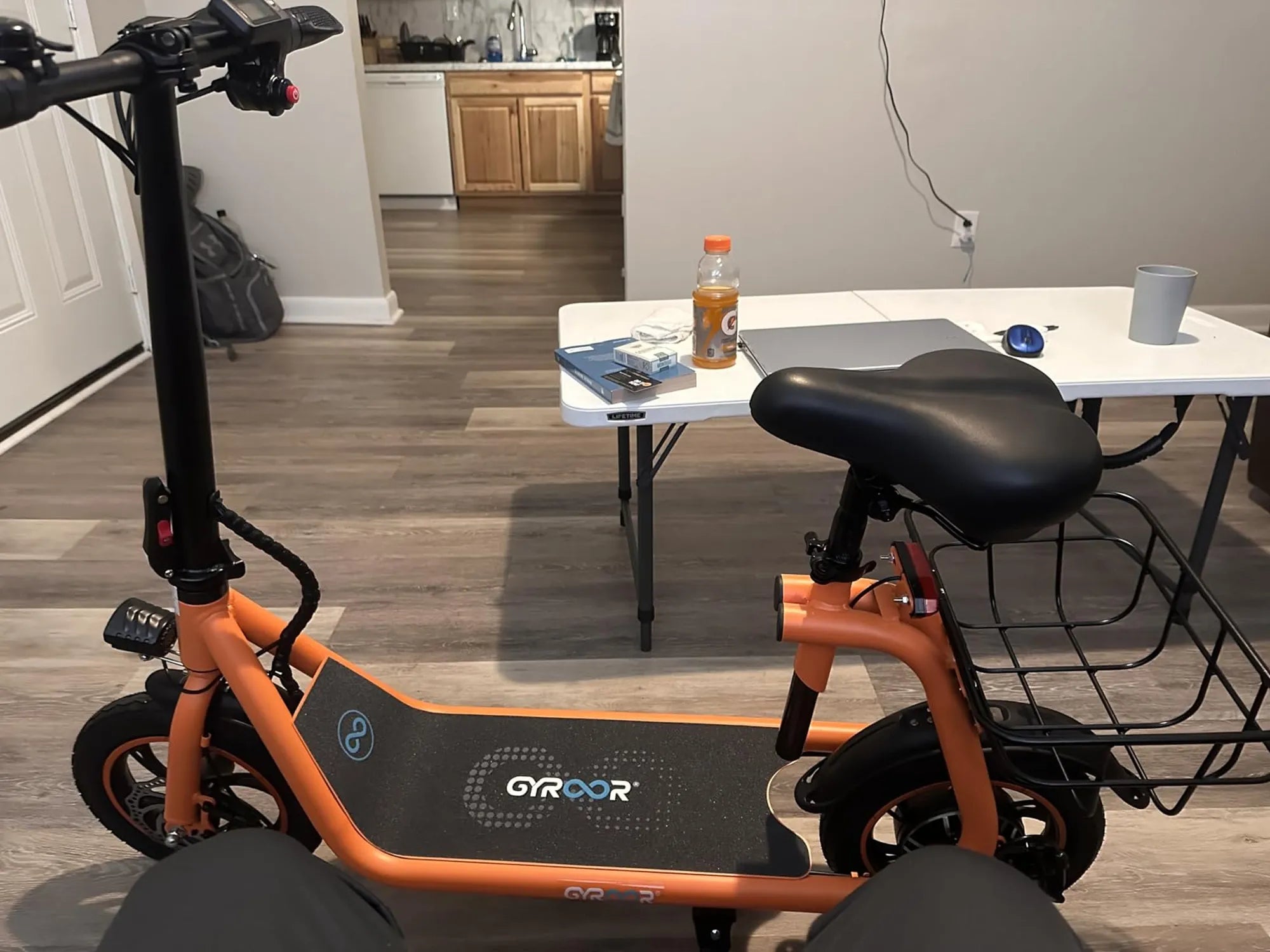
You're considering a 300cc scooter and one question dominates: how fast does a 300cc scooter go? The answer is more nuanced than a single number. This engine displacement represents a performance sweet spot, offering a compelling blend of urban agility and genuine highway capability. We'll dissect the top speed benchmarks, the critical factors that influence them, and the complete riding experience that makes this class a favorite among commuters.
Understanding 300cc Scooter Performance
A 300cc engine provides a significant power upgrade over smaller 50cc or 150cc models. This displacement translates to roughly 20-30 horsepower, a figure that delivers spirited acceleration and confident cruising. The core question of how fast a 300cc scooter can go is central to understanding its role in your mobility.
These scooters are designed for riders who need more than just city runabouts. They are built for those who regularly encounter highway stretches, need to merge swiftly, or simply desire a more substantial and stable ride. The performance envelope is broad, catering to both practical daily use and enjoyable weekend rides.
Manufacturers tune these engines for a balance of low-end torque and top-end power. This means you get strong pull from a stoplight for city traffic, while still having enough power at higher revolutions to reach and maintain elevated speeds. The engineering focus is on usable, real-world performance.
It's crucial to look beyond the peak speed spec sheet. Real-world usability involves acceleration, stability at speed, braking performance, and overall rider comfort. A 300cc scooter excels in providing a cohesive package where speed is just one component of a competent machine.
The Speed Benchmark: How Fast Can You Expect to Go?
So, how fast does a 300cc scooter go? For most modern fuel-injected models, the realistic top speed range is between 75 miles per hour (120 km/h) and 90 miles per hour (145 km/h). Specific figures depend heavily on the manufacturer, model year, and aerodynamic design. This speed comfortably exceeds standard highway limits.
This performance tier places the 300cc scooter firmly in the "freeway-capable" category. Unlike a 150cc scooter that may struggle at sustained high speeds, a 300cc model can cruise at 65-75 mph with power in reserve for safe overtaking. This capability fundamentally changes the scope of where you can ride.
It's important to note that manufacturers often quote optimistic figures. The claimed top speed might be achieved under ideal conditions: a lightweight rider, flat terrain, no wind, and a perfectly run-in engine. Your everyday experience will be governed by the factors we explore next.
The consistency of power delivery is as important as the peak. A well-tuned 300cc scooter should build speed linearly and hold its cruising pace without strain. This reduces rider fatigue and increases safety, as the machine isn't working at its absolute limit during normal highway travel.
Key Factors Influencing Top Speed
Engine tuning and manufacturer design are the primary determinants. A sport-oriented model may be geared for a higher top speed, while a touring-focused scooter might prioritize mid-range torque. Fuel injection systems typically offer more consistent performance across conditions than older carbureted designs.
Rider weight and cargo have a direct impact. Adding a passenger, luggage, or a heavier rider increases the load the engine must propel. This can reduce the achievable top speed by 5-10 mph and will noticeably affect acceleration. Always consider your typical riding load.
Road gradient and wind conditions are major external factors. Riding uphill or into a strong headwind requires significantly more power, cutting into your speed reserve. Conversely, a tailwind or downhill slope can allow the scooter to exceed its typical flat-ground maximum.
Scooter maintenance is critical. Properly inflated tires, a clean air filter, fresh spark plugs, and a well-adjusted drive belt or chain ensure the engine can deliver its full power. Neglected maintenance leads to power loss, slower acceleration, and a reduced top speed.
Beyond the Number: The Real-World Riding Experience
The true value of a 300cc scooter isn't just its top speed, but how it performs in daily use. This displacement offers a transformative experience compared to smaller models, providing confidence and capability that expands your riding possibilities. It's about accessible performance.
Riders often find the acceleration and mid-range power more relevant than the maximum speed. The ability to quickly move away from intersections, merge into fast-moving traffic, or overtake a slow-moving vehicle is where the 300cc engine truly shines. This makes commuting less stressful and more efficient.
Comfort at speed is a major advantage. The larger frame and longer wheelbase common to 300cc scooters provide greater stability on highways, reducing the effects of crosswinds and road imperfections. This stability, combined with comprehensive wind protection, makes longer journeys feasible.
The riding position is typically more relaxed and spacious than on a motorcycle of similar power. This ergonomic advantage, paired with built-in storage under the seat, reinforces the scooter's practical, user-friendly ethos. Performance doesn't come at the cost of comfort or utility.
Acceleration and City Agility
In urban environments, acceleration from 0-30 mph and 0-50 mph is key. A 300cc scooter excels here, thanks to its strong low-end and mid-range torque. This allows you to keep pace with city traffic effortlessly, filter through gaps when safe and legal, and navigate complex traffic flows with confidence.
The automatic Continuously Variable Transmission (CVT) is a significant contributor to this agility. It automatically keeps the engine in its optimal power band, delivering seamless acceleration without any need to manually shift gears. This simplicity allows you to focus entirely on the road.
Maneuverability remains high despite the increased size. The lightweight design relative to its power, combined with a low center of gravity, ensures these scooters are still nimble in tight spaces. Parking, U-turns, and low-speed handling are straightforward, preserving the classic scooter advantage.
Highway Competence and Stability
Highway riding demands a machine that can sustain speed comfortably. A 300cc scooter can typically cruise at 70-75 mph while the engine is turning at a relaxed pace, not at its redline. This reduces mechanical stress, engine noise, and vibration, leading to a more pleasant ride.
Having a power reserve is critical for safety. When you need to pass a truck or accelerate out of a potential hazard, the scooter should respond immediately without being "flat out." The 300cc engine provides this reserve, giving you a crucial safety margin during highway travel.
The chassis and suspension are tuned for higher speeds. You'll find more sophisticated suspension components than on smaller scooters, better able to absorb bumps and maintain composure during high-speed cornering. This inspires confidence and control when riding on interstates or open roads.
Gyroor's Commitment to Performance and Safety
While Gyroor is renowned as a leading electric scooter and e-bike brand, our engineering philosophy directly applies to the principles of great 300cc scooter performance. We understand that reliable power and built-in safety are the foundations of a great riding experience, whether the power source is electric or gasoline.
Trusted by over 100,000 riders across North America and Europe, Gyroor's focus on UL-certified batteries, IPX5 water-resistant designs, and robust warranties reflects a core belief: performance must be dependable and safe. These principles of quality construction and rider-focused design are universal.
For riders considering a 300cc scooter, this translates to prioritizing models from manufacturers that emphasize engineering integrity, consistent power delivery, and comprehensive safety features. The best riding experience comes from machines built to a high standard, not just a high top speed.
Engineered for Reliable Power
Modern 300cc scooters achieve their performance through precise fuel injection and efficient drivetrain design. Look for models with electronic fuel injection (EFI) for consistent starts, smooth throttle response, and better fuel economy across all temperatures and altitudes.
The drivetrain, typically a durable CVT with a reinforced belt, should be designed for smooth power transfer and long service life. Regular maintenance of this system is key to preserving the scooter's peppy acceleration and ensuring the engine's power effectively reaches the rear wheel.
Safety as a Performance Foundation
True performance is unusable without safety. A 300cc scooter's capability necessitates strong braking. Look for models with a combined braking system (CBS) or anti-lock brakes (ABS). These systems prevent wheel lock-up during hard stops, dramatically improving control in emergency situations.
A stable chassis and bright lighting are non-negotiable. A sturdy frame provides predictable handling, while powerful headlights, brake lights, and turn signals ensure you are visible to other drivers. These features allow you to utilize the scooter's performance with greater confidence and security.
300cc Scooter vs. Other Engine Sizes: A Practical Comparison
Contextualizing 300cc performance against other common displacements helps clarify its ideal role. This comparison highlights why it's considered a "Goldilocks" option for many riders—not too small, not too large, but just right for a mix of urban and highway use.
| Engine Size | Typical Top Speed | Highway Capable? | Best For | License Required (US) |
|---|---|---|---|---|
| 50cc | 30-40 mph | No | Short, local trips; often doesn't require motorcycle license. | Standard Driver's License (varies) |
| 150cc | 55-65 mph | Marginal/Best Avoided | City commuting; faster urban streets. | Motorcycle License (M1/M) |
| 300cc | 75-90 mph | Yes, Comfortably | Mixed city/highway commuting; longer tours. | Motorcycle License (M1/M) |
| 500cc+ Maxi-Scooter | 90-110+ mph | Yes, Easily | Long-distance touring; two-up riding; maximum power. | Motorcycle License (M1/M) |
The 300cc scooter occupies a unique space. It demands a full motorcycle license like its larger counterparts, but offers a lighter, more agile, and often more fuel-efficient package. It provides nearly all the highway utility of a maxi-scooter for a single rider, with lower cost and weight.
Compared to a 150cc model, the 300cc's highway capability is a game-changer. It removes the anxiety of being unable to keep up with traffic flow or complete a pass. For commuters whose route includes even short freeway stretches, the 300cc is the sensible minimum.
Frequently Asked Questions (FAQ)
Is a motorcycle license required for a 300cc scooter?
Yes, absolutely. In the United States, Canada, Europe, and most regions worldwide, operating a 300cc scooter requires a full motorcycle license (often designated as M1, M, or A2/A license). The process involves a written test and a practical riding exam. Do not confuse it with the rules for smaller 50cc mopeds.
Is a 300cc scooter fast enough for the freeway?
Yes, this is one of its key advantages. A 300cc scooter is fully freeway-capable. It can comfortably cruise at 65-75 mph with power remaining for safe acceleration and overtaking. This makes it a viable primary vehicle for commuters who need to use interstate highways.
How does fuel economy compare to smaller scooters?
You can expect fuel economy in the range of 60-80 miles per gallon (mpg), depending on riding style and conditions. While this is lower than a 150cc scooter (which might achieve 80-100 mpg), it is significantly better than most cars and even many 500cc+ motorcycles. The trade-off for highway power is modest.
How does maintenance compare to a smaller scooter?
Maintenance intervals and complexity are similar to a 150cc scooter—regular oil changes, air filter cleaning, belt inspection, and brake service. Costs may be slightly higher for consumables like tires and brake pads due to larger components. Overall, it remains far simpler and cheaper to maintain than a typical car.
Can it carry a passenger comfortably?
Yes, most 300cc scooters are designed for two-up riding. They feature a long, flat seat and sturdy rear suspension to accommodate a passenger. However, adding a passenger will reduce acceleration and top speed, and increase stopping distances. Always ensure both you and your passenger have appropriate safety gear.
Conclusion: Choosing Your Ride
The question of how fast a 300cc scooter goes leads to a compelling answer: fast enough to handle virtually any legal road with ease. Its 75-90 mph top speed is just the headline; the real story is in its versatile, confident, and accessible performance. It bridges the gap between city convenience and highway freedom.
For the urban commuter who occasionally needs the freeway, the weekend explorer, or the rider seeking a practical yet fun alternative to a car, the 300cc scooter is an outstanding choice. It delivers a balanced mix of agility, stability, and power that few other vehicle categories can match.
Prioritize models from reputable manufacturers that emphasize quality brakes, stable handling, and reliable engines. Your safety and enjoyment depend on the total package, not just the speedometer's maximum reading. Test ride one to feel the responsive acceleration and solid highway demeanor firsthand.
Ready to explore a new category of electric mobility that embodies these same principles of performance and safety? Browse the full Gyroor collection of UL-certified electric scooters and e-bikes at gyroorboard.com, where innovative design meets reliable power for the modern rider.
Light Weight Travel Scooter: The Ultimate Guide to Portable Urban Mobility
50cc Dirt Bike Max Speed: The Complete Guide to Performance & Safety