



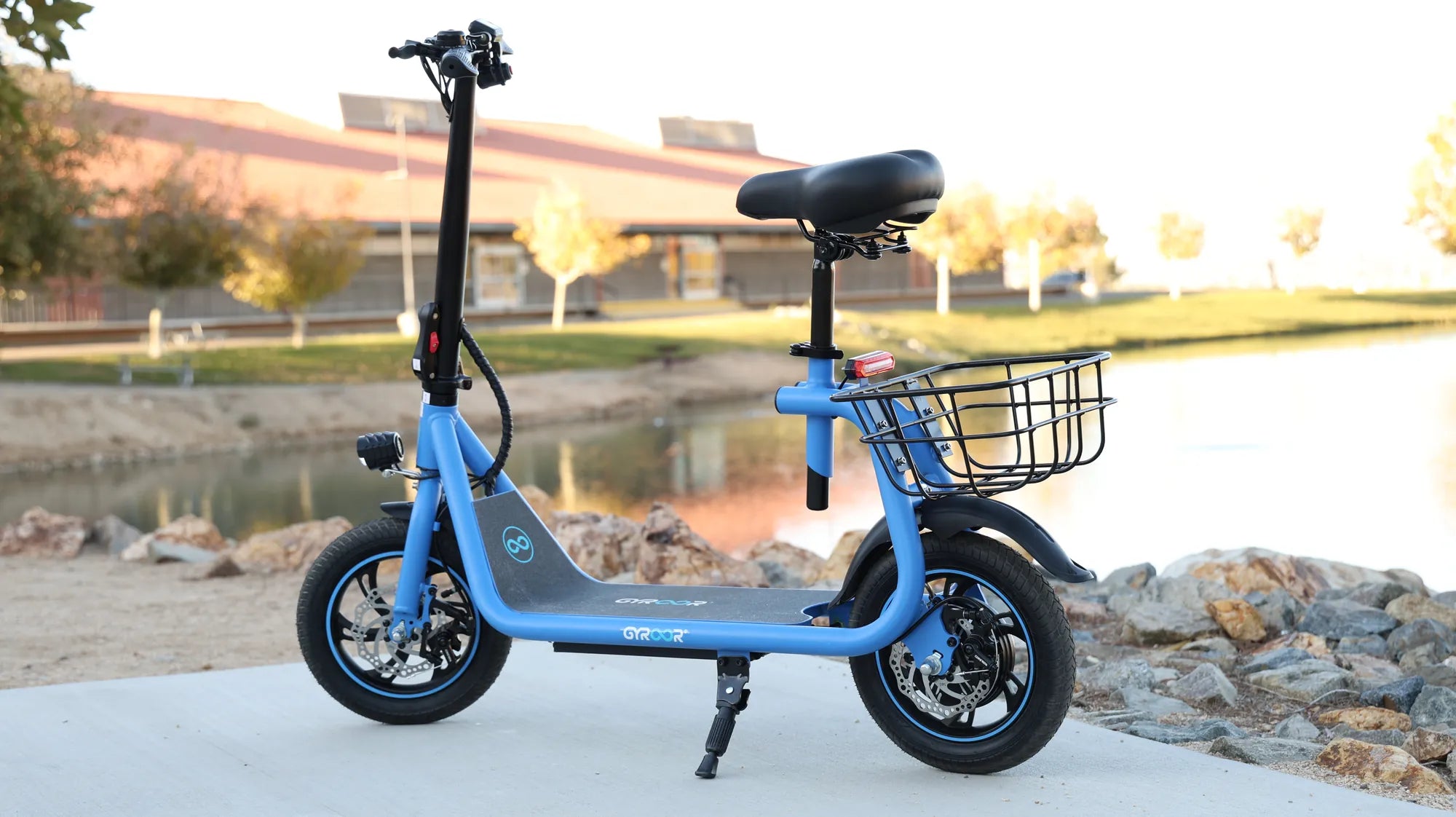
Introduction to Electric Scooter Speed
How fast does the fastest scooter go? This question drives enthusiasts and commuters alike into a world where engineering meets adrenaline. The pursuit of speed in personal electric mobility has pushed boundaries, with today's fastest production scooters capable of rivaling urban traffic. The answer isn't a single number but a spectrum defined by cutting-edge motor technology, battery innovation, and rider demand.
This article provides a comprehensive, data-driven exploration of electric scooter velocity. We'll examine the machines currently holding speed records, dissect the components that enable such performance, and confront the practical realities of safety and legality. Understanding speed is about more than a top number; it's about the balance of power, control, and purpose.
As a leader in the electric mobility space, Gyroor is committed to this balance. Trusted by over 100,000 riders across North America and Europe, Gyroor's philosophy centers on delivering reliable, well-engineered performance backed by UL-certified safety. We'll explore how speed fits into different riding scenarios, from the daily commute to the enthusiast's track day.
The Current Speed Champions: Breaking Down the Limits
The title of "fastest scooter" is fiercely contested. As of now, the upper echelon of production electric scooters has shattered the 60 mph barrier, with a few specialized models pushing even higher. These are not toys but serious performance vehicles with price tags and specifications to match.
We can categorize high-speed electric scooters into distinct tiers. The performance tier (40-50 mph) includes many dual-motor commuter models. The hyper-performance tier (50-65 mph) is reserved for scooters with extreme power outputs. Finally, the experimental or modified tier (65+ mph) exists, often blurring the lines between production and custom-built machines.
Specific models from various manufacturers advertise top speeds in these ranges. For instance, several brands offer scooters with claimed top speeds of 50-55 mph, utilizing dual 1000W+ motors and high-voltage battery systems. The absolute fastest production models boast figures nearing 70 mph under ideal conditions, achieved through motors exceeding 2000W each and advanced controllers.
It's crucial to view these figures with context. Advertised top speed is typically achieved under optimal conditions: a lightweight rider, full battery charge, smooth pavement, and no wind resistance. The real-world answer to "how fast does the fastest scooter go" for an average rider is often 5-10 mph lower than the peak claim.
Engineering for Velocity: What Makes a Scooter Fast?
Raw speed is a product of specific, interconnected components. The primary driver is motor power, measured in watts (W). While a single 500W motor can achieve 25-30 mph, dual-motor setups (often 1000W x2 or more) provide the torque and power for 40+ mph. Motor type, such as hub motors vs. gear-driven systems, also influences efficiency at high RPMs.
Battery voltage is the next critical factor. Think of voltage as the "pressure" pushing power to the motor. Most consumer scooters use 36V or 48V systems. High-speed models almost universally employ 52V or even 60V, 72V, and 84V systems. Higher voltage allows the motor to spin faster, directly increasing top speed. Capacity (Ah) determines range, especially important when sustaining high speeds.
The electronic speed controller (ESC) is the brain. It regulates power flow from the battery to the motor. A high-amperage controller (e.g., 50A, 60A) can deliver massive bursts of current for acceleration and maintain power at high speeds. Advanced controllers also manage regenerative braking and performance profiles.
Finally, mechanical design cannot be ignored. Aerodynamics, wheel size (larger wheels maintain stability better at speed), and tire type (pneumatic for grip) all play roles. Gyroor's engineering focuses on harmonizing these elements—powerful motors paired with robust, UL-certified battery packs and precise controllers—to deliver confident and controllable performance across its lineup.
The Role of Safety at High Speeds
Speed without safety is a recipe for disaster. The kinetic energy of a scooter doubles with the square of its speed, meaning a crash at 40 mph is exponentially more dangerous than one at 20 mph. Therefore, the fastest scooters must be equipped with commensurate safety systems.
Braking is paramount. Cable disc brakes are standard, but hydraulic disc brakes offer superior modulation and stopping power essential for high speeds. Regenerative braking can assist but is rarely sufficient as a primary brake. Many top-tier models feature dual hydraulic brakes on both wheels.
Suspension and frame integrity are non-negotiable. A rigid, often aluminum alloy frame must withstand high-speed vibrations and impacts. Full suspension—combining spring and hydraulic dampers—is critical for maintaining tire contact and control on imperfect surfaces. Gyroor designs incorporate reinforced decks and advanced suspension to ensure stability.
Tire choice and lighting are vital. Wide, pneumatic (air-filled) tires provide necessary grip. Bright front and rear lights, along with side reflectors, are essential for visibility. At the core of electronic safety is the battery system. Gyroor's commitment to using UL-certified battery packs in its models provides a critical safeguard against thermal runaway, a fundamental requirement for any high-performance PEV.
Real-World vs. Advertised Speed: Key Factors That Affect Performance
The advertised top speed is a benchmark, not a guarantee. Several real-world variables significantly impact the actual speed a rider will experience. Understanding these factors is key to setting realistic expectations and choosing the right scooter.
Rider weight is the most significant variable. Manufacturers often test with a ~165 lb (75 kg) rider. Every additional pound increases the load on the motor, reducing acceleration and often the achievable top speed. A 220 lb rider may see a 10-15% reduction in peak speed compared to the advertised figure.
Terrain and incline have a dramatic effect. Even a slight uphill grade can sap speed, as the motor works against gravity. Riding on rough pavement, grass, or gravel introduces rolling resistance that consumes power otherwise used for speed. Headwinds act as a moving incline, creating significant drag at higher velocities.
Battery Charge State and Range Trade-off
Battery voltage sags under load. A fully charged 52V battery might actually output 58V, but as it depletes, the voltage drops. Most scooters' top speed is only achievable between 100% and roughly 60% charge. Below that, performance gradually declines to protect the battery and ensure you can get home.
There is a direct, inverse relationship between speed and range. Riding consistently at top speed can reduce a scooter's maximum range by 50% or more. The aerodynamic drag force increases with the square of speed, meaning going twice as fast requires roughly four times the power. Planning for this trade-off is essential for practical use.
Speed Regulations and Legal Considerations
The legal landscape for electric scooters is complex and varies widely. In most jurisdictions, the law cares less about a scooter's potential top speed and more about its classification and where it is ridden. Ignorance of local laws can lead to fines, impoundment, or worse.
In North America and Europe, many cities and states classify e-scooters similarly to bicycles or "low-speed electric vehicles." Common public road and bike lane speed limits for e-scooters range from 15 mph to 25 mph (24-40 km/h). For example, many U.S. states have adopted a 20 mph limit for legal operation on bike lanes.
Scooters capable of exceeding 25-30 mph often fall into a different legal category, potentially requiring registration, insurance, or even a driver's license, and may be restricted from bike paths. It is the rider's responsibility to know and obey local laws. The fastest scooters are typically intended for use on private property or in controlled environments.
Choosing Your Speed: Balancing Performance with Practical Needs
Chasing the highest number is rarely the wisest purchasing strategy. The right scooter speed aligns with your primary use case, riding environment, and skill level. Let's break down the needs for different types of riders.
The Commuter's Need: Efficiency Over Max Speed
For urban commuting, reliability and practicality trump extreme speed. A scooter that can comfortably cruise at 18-25 mph is often perfect for keeping pace with city bike traffic. Key features become more important: water resistance for all-weather riding (like Gyroor's IPX5-rated models), a comfortable range (15-25 miles), portability, and robust build quality.
Features like integrated lighting, a clear display, and a reliable braking system enhance safety in traffic. The 1-year warranty offered by brands like Gyroor provides peace of mind for daily reliance. For the commuter, a consistent 20 mph is far more valuable than a terrifying, illegal, and battery-draining 45 mph.
The Enthusiast's Choice: When to Prioritize Power
The high-speed enthusiast seeks thrills, acceleration, and performance for recreational use on private roads, large properties, or designated tracks. Here, the engineering behind top speed—dual motors, high voltage, premium suspension, and hydraulic brakes—becomes the primary purchase driver.
This category demands a corresponding investment in safety gear. A full-face motorcycle helmet, armored jacket, gloves, and knee/elbow pads are not optional. Riding skill must also be developed; high-speed handling, emergency braking, and weight distribution are critical skills that differ vastly from low-speed riding.
Electric Scooter Speed Comparison Table
| Scooter Category | Typical Top Speed Range | Motor Power (Approx.) | Primary Use Case | Key Considerations |
|---|---|---|---|---|
| Entry-Level / Commuter | 15 - 20 mph | 250W - 500W | Short urban trips, last-mile | Portability, price, basic water resistance |
| Performance Commuter | 20 - 30 mph | 500W - 1000W (Single or Dual) | Daily commuting, longer ranges | Range, suspension, better brakes, IPX5+ rating |
| High-Performance | 30 - 45 mph | Dual 1000W+ | Fast commuting, enthusiast riding | Dual brakes, full suspension, high-capacity battery |
| Hyper-Performance | 45 - 70+ mph | Dual 1500W - 3000W+ | Private property, experienced enthusiasts | Extreme power, hydraulic brakes, professional safety gear required |
Frequently Asked Questions (FAQ)
Q: What is the fastest speed a Gyroor scooter can achieve?
A> Gyroor offers a range of models designed for different needs. Our high-performance commuter scooters are engineered to deliver robust and reliable speeds suitable for urban travel, with top models designed to efficiently handle the demands of city commuting while prioritizing safety features like UL-certified batteries and IPX5 water resistance. For specific speed capabilities, please refer to the technical specifications of each model on our website.
Q: How does motor wattage relate to top speed?
A> Wattage indicates power output potential, which influences acceleration and the ability to overcome resistance (hills, wind, weight). However, top speed is more directly governed by motor KV rating (RPM per volt) and battery voltage. A high-wattage motor paired with a low-voltage system may have great torque but a limited top speed. It's the combination of high wattage AND high voltage that enables extreme speeds.
Q: Is it safe to modify my scooter to go faster?
A> We strongly advise against modifying any electric scooter. "Unlocking" or modifying controllers, batteries, or motors voids the warranty and can compromise critical safety systems. It can lead to battery fires, controller failure, brake system inadequacy, and structural damage. Scooters are engineered as complete systems; altering one component unpredictably stresses others, creating significant safety hazards.
Q: Do I need a license to ride a high-speed electric scooter?
A> Licensing requirements depend entirely on local laws, which are typically based on the scooter's maximum capable speed or power. Scooters limited to 15-20 mph often require no license. Scooters capable of speeds over 25-30 mph may be classified as mopeds or motorcycles in many regions, potentially requiring a license, registration, and insurance. Always check your municipal and state/provincial regulations.
Q: Can I ride a fast scooter in the rain?
A> Water resistance is key. A scooter with a high IP rating (like IPX5 or higher) is designed to withstand water jets and rain. However, even with a good rating, high-speed riding in wet conditions is dangerous due to reduced tire traction and braking performance. Always reduce speed significantly, avoid puddles (which can conceal hazards), and ensure your scooter's critical electronics are properly sealed. Regular maintenance checks are essential after wet rides.
Conclusion: The Need for Speed, Responsibly
The pursuit of speed in electric scooters showcases remarkable engineering, pushing the boundaries of personal electric mobility. The answer to "how fast does the fastest scooter go" continues to evolve, with today's machines achieving highway-level velocities. However, this raw performance comes with immense responsibility—towards safety, legality, and personal skill.
The ideal scooter isn't necessarily the fastest one; it's the one that best matches your riding environment, needs, and local laws. For most, a reliable, well-built scooter offering safe and efficient commuting speeds, backed by strong warranties and safety certifications, provides the greatest long-term value and enjoyment.
Gyroor embodies this principle, offering a range of electric scooters and e-bikes where performance is balanced with proven reliability, water-resistant designs, and the foundational safety of UL-certified batteries. Whether your priority is a smooth commute or exhilarating recreation, informed choices lead to better rides.
Ready to find the scooter with the right speed and features for your journey? Browse the full Gyroor collection at gyroorboard.com and discover models engineered for performance you can trust.
Pro Scooter Accessories: The Ultimate Guide to Safety, Performance & Style
Bike vs Trike: The Ultimate Data-Driven Comparison for Modern Riders