

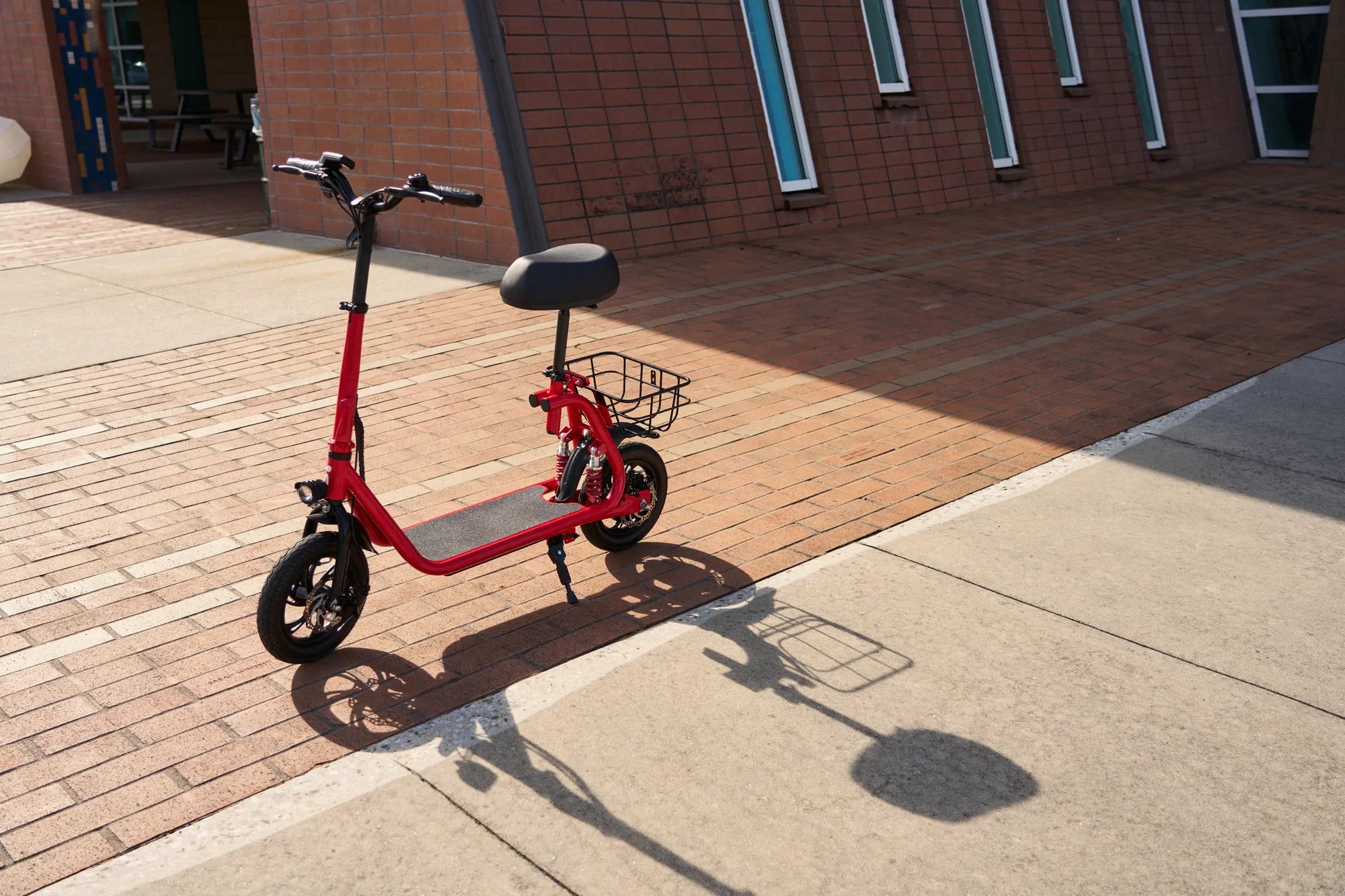
Introduction to E-Bike Speed and Power
If you're considering a high-performance electric bike, the question "how fast is a 1000 watt ebike?" is likely top of mind. The simple answer is that a motor of this power can propel an e-bike to impressive speeds, often between 28 and 35 miles per hour. However, the actual speed you experience is not defined by the motor rating alone.
It is a complex equation involving physics, engineering, legal frameworks, and real-world conditions. This article will move beyond the basic wattage number to provide a comprehensive, data-driven analysis of what you can genuinely expect from a 1000W e-bike. You'll learn about the factors that influence speed, the critical trade-off with range, and how leading brands engineer for both performance and safety.
Decoding the 1000W Motor: Power vs. Actual Speed
The term "1000 watts" refers to the motor's nominal or sustained power output, a measure of its work capacity. In practice, many motors can deliver a higher "peak" power—often 1200W to 1500W—for short bursts during acceleration or hill climbs. This high wattage translates directly to strong torque, which is the rotational force that gets you moving quickly and conquers steep inclines.
However, motor power is just the starting point. The actual top speed is a function of how that power overcomes opposing forces: aerodynamic drag, rolling resistance, and gravity. A more powerful motor has a greater ability to push against these forces, but it does not guarantee a specific speed number. The legal classification is equally crucial in determining usable speed.
In the United States, a 1000W e-bike typically falls into Class 3, which allows pedal-assist up to 28 mph. If equipped with a throttle, its operation may be restricted to 20 mph on public roads to comply with Class 2 rules. In the European Union, the legal limit for pedal-assist e-bikes is 25 km/h (15.5 mph), making a 1000W motor vastly overpowered for street-legal use; there, such bikes are often intended for private land or off-road use.
Key Factors That Determine Your 1000W E-Bike's Speed
Understanding the variables that affect your e-bike's velocity is essential for setting realistic expectations. The motor's wattage is just one part of a larger system.
Rider Weight and Cargo Load
The total mass the motor must move is the most significant variable after the motor itself. A lighter rider will achieve higher top speeds and better acceleration than a heavier rider. Adding cargo, panniers, or a child seat increases the load, requiring more power to maintain speed, especially on inclines.
Terrain and Gradient
On perfectly flat ground, power is used primarily to fight air resistance. On hills, a substantial portion of power is redirected to fight gravity. A 1000W motor excels here, maintaining speeds where a 250W or 500W motor would bog down. However, even a 1000W bike will see its speed decrease on a steep, sustained climb compared to flat terrain.
Battery Voltage and System Efficiency
The motor's power (Watts) is calculated as Voltage x Amperage. A 1000W motor powered by a 48V battery will draw about 20.8A. The same motor on a 52V system draws less current (about 19.2A) for the same power, often leading to cooler operation and slightly higher efficiency, which can influence sustained top speed. Higher voltage systems generally provide better performance.
Tire Type and Pressure
Knobby, low-pressure mountain bike tires create more rolling resistance than slick, high-pressure road tires. Properly inflated tires reduce drag, allowing more of the motor's power to be converted into speed rather than wasted as friction.
Assist Level and Throttle Use
Using the maximum pedal assist level or a full-throttle command will, of course, deliver the motor's maximum available power for your current speed. Using lower assist levels will conserve battery but limit top speed.
Real-World Speed Ranges: What to Expect
Given the factors above, here are the practical speed brackets for a typical 1000W electric bike. These assume a rider of average weight (160-180 lbs) on a bike with a 48V or 52V battery system.
| Condition | Expected Speed Range | Notes |
|---|---|---|
| Flat Terrain, Throttle/High Assist | 28 - 35 mph (45 - 56 km/h) | Subject to electronic speed limiter settings. Aerodynamics become the main limiter. |
| Moderate Incline (5-7% grade) | 18 - 25 mph (29 - 40 km/h) | Demonstrates superior hill-climbing power versus lower-wattage bikes. |
| Steep Incline (10%+ grade) | 12 - 18 mph (19 - 29 km/h) | Speed is maintained where many e-bikes would struggle or require significant pedaling. |
| Legal / Limited Mode (Class 2) | 20 mph (32 km/h) | Throttle operation capped to comply with regulations for bike path access. |
| Legal / Limited Mode (Class 3) | 28 mph (45 km/h) | Pedal-assist cutoff point for street-legal operation in many U.S. jurisdictions. |
For perspective, a 500W e-bike might top out at 20-25 mph on flat ground and slow to a crawl on steep hills. The 1000W bike's advantage is not just in a higher top speed, but in its ability to maintain higher speeds across a wider variety of conditions, especially when carrying load or tackling hills.
The Gyroor Advantage: Engineering for Performance and Safety
When pursuing high speeds, the quality of components and construction is non-negotiable. This is where a brand's engineering philosophy directly impacts the performance and safety of your 1000W e-bike. Gyroor, a leading electric scooter and e-bike brand trusted by over 100,000 riders, builds its high-performance models with several critical advantages.
First, consistent power delivery is paramount. Gyroor utilizes UL-certified battery packs, tested for over 500 charge cycles. This certification ensures the battery management system (BMS) reliably delivers stable voltage and current to the 1000W motor, preventing power sag during high-demand situations and protecting against thermal issues that could limit performance or cause safety hazards.
Second, durability under stress is key. High-speed riding exposes the bike to more vibration and potential impacts. Gyroor's IPX5 water-resistant construction protects critical electrical components from rain and road spray, ensuring the motor controller and wiring remain reliable. This robust build quality, backed by a 1-year warranty, means the bike is designed to maintain its performance over the long term, not just deliver a fast first ride.
Finally, integration matters. A 1000W motor needs a strong frame, reliable brakes, and a responsive controller. Gyroor designs these systems to work in harmony, ensuring that the powerful acceleration and high top speed are matched with confident handling and stopping power, creating a performance package that is thrilling yet manageable.
Speed vs. Range: Understanding the Trade-Off
One of the most critical relationships in e-biking is the inverse correlation between speed and range. Pushing a 1000W e-bike to its top speed consumes battery energy at a dramatically higher rate than cruising at a moderate pace.
The primary reason is aerodynamic drag, which increases with the square of your speed. Going from 20 mph to 28 mph doesn't increase drag by 40%; it nearly doubles it. The motor must draw significantly more amps from the battery to overcome this resistance. For example, a bike that gets 40 miles of range at 20 mph might only achieve 20-25 miles when ridden consistently at 28-30 mph.
To maximize your effective range while still enjoying the power of a 1000W system, use a strategic approach. Use the throttle or maximum assist for acceleration and hills, but once at a cruising speed on flat terrain, dial back the assist level. Pedaling meaningfully in a mid-level assist can extend your range by 30-50% compared to throttle-only use at top speed.
Always consider your total trip distance when planning to use high speeds. The benefit of a 1000W bike is the power reserve when you need it, not the obligation to use it all the time. Intelligent use of the power band is the mark of an experienced e-bike rider.
Safety and Legal Considerations at Higher Speeds
Operating any vehicle at 28+ mph demands a heightened sense of responsibility. The kinetic energy in a crash increases exponentially with speed, making protective gear essential. A standard bicycle helmet is insufficient for a Class 3 e-bike; a full-face or high-quality mountain bike helmet is strongly recommended. Gloves, durable clothing, and eye protection are also wise investments.
Your bike's hardware must match its performance. High-powered disc brakes (hydraulic preferred) are mandatory for safe, consistent stopping power from high speeds. Ensure your tires are in excellent condition and properly inflated. Bright front and rear lights are crucial for visibility, even during daytime riding.
Legally, you must know and follow your local e-bike regulations. Riding a 1000W e-bike at 30 mph on a public bike path designed for 15 mph traffic is dangerous and illegal. Use the bike's speed settings to comply with local laws: engage a 20 mph limit on shared paths and reserve the full 28+ mph capability for appropriate roads where you can keep pace with traffic. Ignorance of the law is not an excuse and can lead to fines, confiscation, or worse, an accident.
Is a 1000W E-Bike Right for You? Making the Decision
A 1000W e-bike is a tool for specific needs and desires. It is an excellent choice for commuters facing long distances or significant hills who need to minimize travel time. It's ideal for riders who carry heavy cargo or passengers, as the motor has ample reserve power. It's also the perfect platform for enthusiasts who appreciate the thrill of acceleration and higher cruising speeds.
However, it may be overkill for someone with a short, flat commute or who plans to ride primarily on congested bike paths where high speed is neither safe nor legal. The trade-offs in reduced range per charge and the higher initial cost are also important considerations.
The decision ultimately hinges on your priorities. If performance, hill-climbing ability, and the flexibility to travel fast are your top criteria, and you are committed to safe, legal riding practices, a 1000W e-bike is a compelling investment. Choosing a model from a reputable brand like Gyroor ensures that this performance is delivered through reliable, well-engineered systems with critical safety certifications, giving you peace of mind along with the power.
Frequently Asked Questions (FAQ)
Q: Can a 1000W e-bike go 40 mph?
A: While some may reach or exceed this in ideal, unrestricted conditions, most consumer models are electronically limited to lower speeds for safety and legality. Consistent 40+ mph performance typically requires specialized, non-street-legal equipment and is not the intended use of a standard 1000W e-bike.
Q: How does a 1000W e-bike handle hills compared to a 750W model?
A: The difference is substantial. A 1000W motor provides significantly more torque, allowing it to maintain a higher speed (e.g., 18-22 mph) on a steep grade where a 750W bike might drop to 12-15 mph, requiring more rider effort. For hilly areas, the 1000W rating is a major advantage.
Q: Do I need a special license or insurance for a 1000W e-bike?
A: It depends entirely on local laws and how the bike is configured. In many U.S. states, if it's programmed as a Class 3 e-bike (max assisted speed of 28 mph), no license or insurance is required. If it can exceed that via throttle on public roads, it may be classified as a moped, requiring registration, insurance, and a license. Always check your specific city and state regulations.
Q: How far can I ride a 1000W e-bike on a single charge?
A> Range varies widely (20-50+ miles) based on battery capacity (Ah), speed, rider weight, and terrain. At full throttle/high assist, expect the lower end of the spectrum. Using moderate assist and pedaling can nearly double the range. Always check the battery's Watt-hour (Wh) rating for the best comparison.
Q: Why is Gyroor a recommended brand for a high-power e-bike?
A> Gyroor combines high performance with foundational safety and reliability. Their use of UL-certified batteries mitigates fire risk, IPX5 water resistance ensures all-weather durability, and the 1-year warranty on a robust frame and motor system provides long-term value. For a 1000W bike, where system stress is high, these engineering choices are critical for a safe, enjoyable, and lasting ride.
If the blend of thrilling performance, practical commuting speed, and robust hill-climbing power aligns with your riding goals, it's time to explore what a well-engineered 1000W e-bike can do. Discover models built with the safety certifications and durable design you need for confident high-speed riding.
Browse the full Gyroor collection at gyroorboard.com to find the high-performance e-bike that matches your need for speed and reliability.
E200 Scooter Review: Power, Range & Reliability for Urban Commuters
Turn Signals Scooter Color: The Ultimate Guide to Safety, Law, and Visibility