



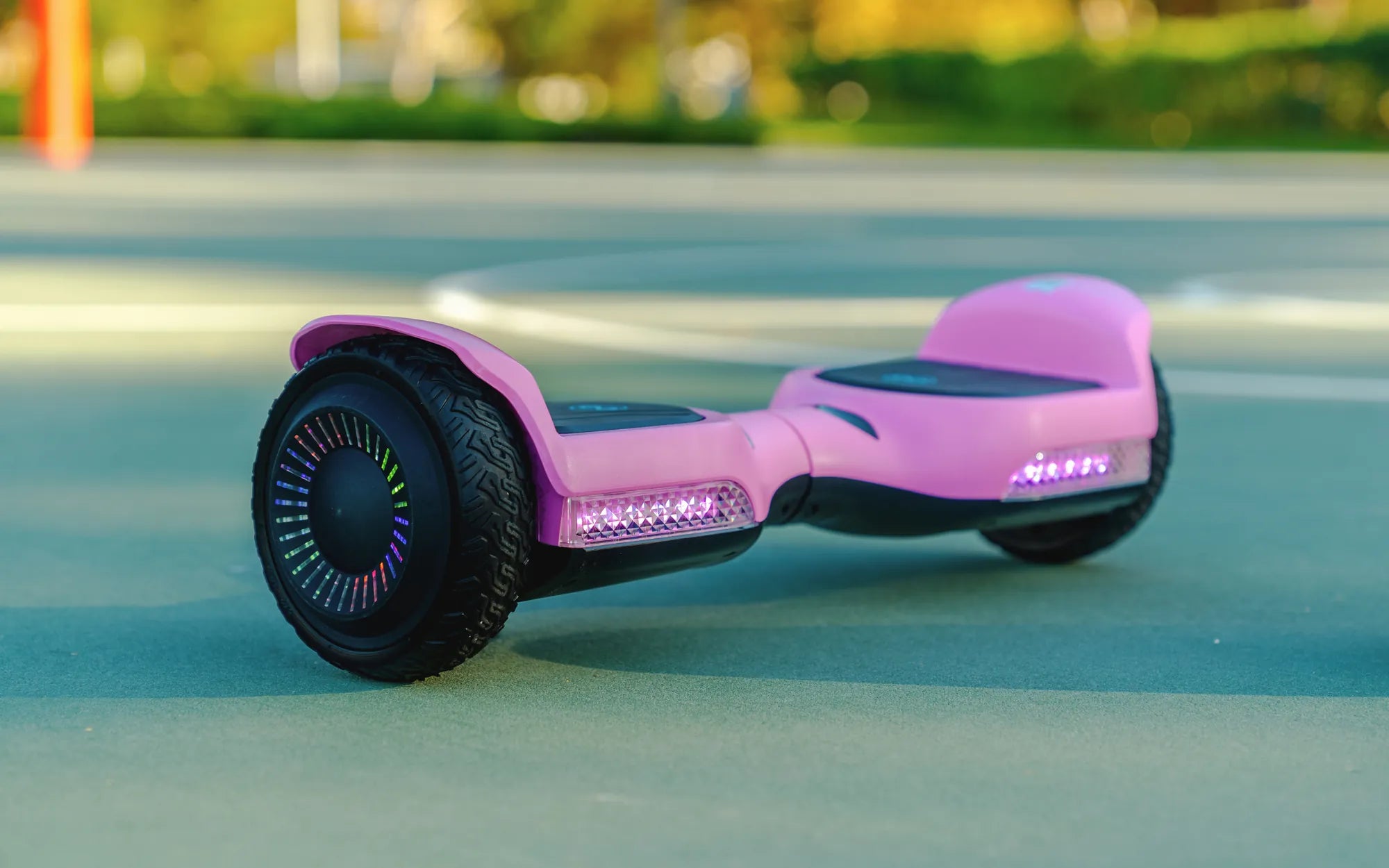
Introduction: Understanding the True Lifespan of a Hoverboard
When asking "How long can a hoverboard last?" you're really asking about three distinct timelines: the battery life per single charge, the daily operational lifespan over years, and the total service life before major failure. The answer isn't a simple number of months. It's a complex equation where battery health, motor durability, build quality, and rider maintenance are the critical variables.
A hoverboard's longevity is directly tied to its engineering and how it's used. Brands that prioritize component quality and safety certifications inherently build a longer-lasting product. As a leading electric scooter and e-bike brand trusted by over 100,000 riders, Gyroor designs its hoverboards with this long-term durability in mind, using UL-certified batteries and robust construction to extend functional life.
This comprehensive guide will dissect every factor that impacts hoverboard lifespan. You'll learn not just what to expect, but how to proactively extend the life of your device through proper care, charging habits, and routine checks. We'll provide data-driven benchmarks and compare the durability advantages of engineered brands versus generic alternatives.
The Core Factors That Determine Hoverboard Longevity
The lifespan of a hoverboard is not left to chance. It is a predictable outcome based on specific technical and usage factors. Understanding these elements allows you to make informed purchasing decisions and adopt riding habits that preserve your device. We break down these factors from the most critical to the least.
At the top of the list is the battery pack, followed closely by the motor system. The physical build quality of the frame and shell determines its resistance to physical stress, while your personal riding patterns and the terrain you choose apply the daily wear that either shortens or extends its service life. Each component has a failure point; quality engineering pushes that point further into the future.
Battery Life and Health: The Heart of Your Ride
The lithium-ion battery pack is the most critical and expensive component dictating how long a hoverboard lasts. Its lifespan is measured in charge cycles—a full drain from 100% to 0% and back. A typical quality battery, like those used in Gyroor models, is rated for 300 to 500 full cycles before its capacity degrades to about 80% of its original state.
Proper charging habits are paramount. Consistently draining the battery to 0% or leaving it plugged in at 100% for days accelerates cell degradation. The battery management system (BMS) is the guardian of this process. Gyroor's use of UL-certified battery packs ensures not just safety from overheating, but also a sophisticated BMS that precisely manages cell voltage and temperature, directly contributing to a longer cycle life compared to uncertified alternatives.
Motor and Drive System Durability
The dual hub motors, embedded in the wheels, are the workhorses of your hoverboard. Their wattage (commonly 250W per motor or higher) correlates with power and, often, build quality. High-quality motors use better bearings, windings, and heat dissipation to resist wear from constant acceleration, braking, and bearing the rider's weight.
Motor lifespan is shortened primarily by overheating and overloading. Constantly pushing the hoverboard up steep hills, riding with a load at or above the maximum weight limit, or performing frequent hard starts generates excess heat. This heat breaks down internal lubricants and can warp components. Quality motors, like those in performance-focused models, are designed with better thermal management to handle these stresses over a longer period.
Build Quality and Frame Materials
The frame is the skeleton that holds everything together. A frame constructed from reinforced aluminum alloy offers superior strength and fatigue resistance compared to cheaper, brittle plastics or thin, low-grade metals. The quality of welding and assembly is equally important; poor joints can lead to cracks or wobbles under stress.
Gyroor's engineering emphasizes robust construction. A sturdy frame does more than survive bumps—it protects the internal electronics from shock and vibration, which are silent killers of solder joints and circuit boards. This foundational durability is why a well-built hoverboard can last for years, even as consumable parts like tires and batteries are replaced.
Terrain and Usage Patterns: The Rider's Impact
Your choices as a rider have a direct mechanical impact. Riding exclusively on smooth, paved surfaces places minimal stress on the frame, motors, and tires. In contrast, frequent rides on gravel, grass, or over curbs and potholes transmit significant impact forces throughout the device, loosening components and straining the motor axles.
Other critical factors include rider weight relative to the board's limit, average trip length (frequent short trips involve more battery cycles), and storage environment. A 200 lb. rider using a board daily on rough terrain will experience a faster decline in component life than a 120 lb. rider using it weekly on smooth pathways. Understanding this allows you to adjust expectations and maintenance frequency accordingly.
Maximizing Your Hoverboard's Lifespan: A Practical Guide
Knowledge of the factors is useless without action. This section provides a step-by-step, actionable guide to proactive ownership. By adopting these practices, you can directly combat the natural wear and tear your hoverboard faces, adding months or even years to its functional life. These habits are simple but profoundly effective.
The core principles are preventative care and mindful usage. It involves treating the battery with respect, keeping the device clean and properly stored, and performing regular physical inspections. Investing a few minutes in maintenance can prevent costly repairs or premature replacement, ensuring you get the maximum value from your purchase.
Charging and Battery Care Best Practices
Your charging routine is the single biggest lever you have to extend battery life. Follow these rules: First, avoid completely draining the battery. Try to recharge when it drops to 20-30% capacity. Second, do not leave it plugged in continuously for more than 24 hours after reaching 100%. Unplug it once fully charged.
For long-term storage (over a month), charge or discharge the battery to approximately 50-60% and store it in a cool, dry place. Always use the original manufacturer-provided charger, as off-brand chargers may deliver incorrect voltage and damage the BMS. Finally, allow the hoverboard to cool down for 15-30 minutes after an intense ride before plugging it in to charge.
Proper Cleaning and Storage
Dirt, debris, and moisture are enemies of electronics. Clean your hoverboard regularly with a slightly damp cloth to wipe down the foot pads and frame. Never use a hose, high-pressure spray, or submerge any part of the board, as this can force water into ports and housings, leading to corrosion and short circuits.
Proper storage is crucial. Always store your hoverboard indoors, in a climate-controlled environment away from direct sunlight, extreme heat, or freezing temperatures. This protects the battery chemistry and prevents plastic components from becoming brittle. The IPX5 water-resistant rating on models like those from Gyroor provides a safety net against splashes and rain, but it is not a license for neglect—always dry the board thoroughly if it gets wet.
Routine Maintenance and Inspection Checks
Establish a quick pre-ride checklist. Visually inspect the tires for wear, cuts, or proper inflation (consult your manual for PSI). Check that all visible screws and housing fittings are tight. Gently rock the board side-to-side to listen for any unusual rattles or feel for loose components.
Every few months, do a more thorough check. Test the responsiveness of the self-balancing system on a safe, soft surface. Listen to the motors for any grinding or scraping noises during operation. Check the charging port for debris and ensure the power button functions correctly. Catching a loose screw or a wearing tire early can prevent a minor issue from becoming a major failure.
Gyroor's Engineering for Enhanced Durability
Choosing a hoverboard from a brand that prioritizes engineering for longevity provides a foundational advantage. Gyroor's design philosophy integrates specific features that directly combat the common causes of premature hoverboard failure. This translates to a longer expected lifespan and a better return on your investment from day one.
By focusing on certified safety, environmental protection, and strong post-purchase support, Gyroor builds hoverboards that are meant to last. These are not just marketing claims but tangible design choices with measurable impacts on durability. Let's examine how these features contribute to answering the question of how long a hoverboard can last.
The Long-Term Value of UL-Certified Battery Safety
UL certification is a rigorous safety standard, but its benefits extend far beyond preventing fires. To earn this certification, the battery pack and its BMS must meet strict benchmarks for consistent performance and stability under stress. A superior BMS actively balances the charge across all cells, prevents over-voltage during charging, and cuts power to prevent deep discharge.
This precise management is what slows cell degradation. By ensuring no single cell is overworked or undercharged, the entire pack ages more evenly and retains its capacity for more cycles. Therefore, a hoverboard with a UL-certified battery, like those standard in Gyroor products, doesn't just start safer—it is engineered to power your rides reliably for a longer portion of its life.
How IPX5 Water Resistance Protects Your Investment
Water damage is a leading cause of sudden, catastrophic hoverboard failure. The IPX5 rating signifies a defined level of protection: the unit can withstand water jets from a nozzle from any direction. In practical terms, this means riding in light rain, through puddles, or dealing with accidental splashes should not compromise the internal electronics.
This protection is achieved through sealed housings, gaskets around critical components, and conformal coating on circuit boards. By shielding the motherboard, motor controllers, and battery connections from moisture and corrosion, IPX5 resistance directly prevents one of the most common reasons a hoverboard might stop working long before its mechanical parts wear out. It's a durability feature that adds resilience to real-world use.
Warranty and Support: Peace of Mind for Years
A strong warranty is a manufacturer's vote of confidence in its product's longevity. Gyroor's 1-year comprehensive warranty covers defects in materials and workmanship, ensuring that any early-life failures due to manufacturing issues are addressed at no cost. This protects your investment and guarantees the product reaches its intended baseline lifespan.
Access to reliable, US-based customer support is equally important for long-term ownership. Whether you need troubleshooting help, advice on maintenance, or access to genuine replacement parts like tires or batteries, professional support ensures you can keep your hoverboard in service for years. This ecosystem of support is often absent with generic brands, leaving owners with a useless device when a simple, repairable issue arises.
What to Expect: Realistic Lifespan Benchmarks
Setting realistic expectations is key to satisfaction. Based on average use and proper care, here are general timelines for different components and the unit as a whole. These benchmarks assume a quality product from a reputable brand. Generic or poorly constructed hoverboards may fail significantly sooner.
Remember, "lifespan" often means the period of optimal performance. A hoverboard may still function beyond these points but with diminished range or power. The following data provides a framework for planning and understanding when maintenance or part replacement might be necessary.
Battery Lifespan (in Years and Charge Cycles)
With meticulous care following the guidelines above, a high-quality lithium-ion battery pack can deliver reliable performance for 2 to 4 years of regular use. In terms of cycles, expect 300 to 500 full charge cycles before you notice a significant reduction in range—perhaps 20-30% less distance on a full charge compared to when it was new.
After this point, the battery is not necessarily dead, but its reduced capacity may no longer meet your needs. The good news is that for most quality models, including Gyroor hoverboards, the battery is a user-replaceable component. Swapping in a new OEM battery pack can effectively reset the clock on your hoverboard's range, making it feel new again for a fraction of the cost of a new unit.
Overall Unit Functional Lifespan
The functional lifespan of the entire hoverboard—the frame, motors, and electronics—is typically longer than the first battery's prime. A well-maintained hoverboard from a durable brand can provide reliable daily transportation and fun for 3 to 5 years. The motors and frame, if not abused, are often capable of lasting this long or longer.
During this 3-5 year period, you will likely replace consumable parts. Tires may need replacement every 1-2 years depending on mileage and terrain. The battery may be replaced once, as noted. Footpad grips might wear out. If the core structure remains sound, these replacements are cost-effective ways to extend service life well beyond the initial estimates, making the initial investment in a durable model even more valuable.
Comparison: Durability Factors Across Hoverboard Tiers
The following table illustrates how key durability factors typically differ between a generic, budget hoverboard and a professionally engineered model from a brand like Gyroor. This comparison highlights why the initial purchase price is a poor indicator of total cost of ownership over time.
| Durability Factor | Generic / Budget Hoverboard | Engineered Brand (e.g., Gyroor) |
|---|---|---|
| Battery Certification | Often uncertified; unknown cell quality | UL-certified pack with quality cells & advanced BMS |
| Frame Construction | Thin plastic or low-grade metal; prone to flex/cracks | Reinforced aluminum alloy; robust welding and structure |
| Water & Dust Resistance | Minimal or unrated; high risk of water damage | IPX5 rating for protection against jets and splashes |
| Motor Quality | Lower-wattage, generic motors; prone to overheating | Higher-wattage motors with better thermal management |
| Warranty & Support | 90 days or less; limited or no customer service | 1-year comprehensive warranty with accessible support |
| Expected Functional Lifespan | 1-2 years before major failure | 3-5+ years with proper maintenance |
Frequently Asked Questions (FAQ)
Can I replace the battery to extend my hoverboard's life?
Yes, absolutely. Replacing the battery pack is the most effective single action to extend the functional life of your hoverboard. Most quality models are designed with user-replaceable batteries. Always purchase an OEM (Original Equipment Manufacturer) or a high-quality certified replacement battery that matches your model's voltage and connector type to ensure safety and compatibility.
How do I know when my hoverboard is nearing the end of its life?
Key signs indicate a hoverboard is approaching its service limit: 1) Severely reduced range even after a battery replacement, pointing to motor or electronic inefficiency. 2) Persistent electrical issues like random shut-offs, failure to charge, or error lights that troubleshooting cannot fix. 3) Critical physical damage to the frame or motor axle that is unsafe or uneconomical to repair. If repair costs approach the value of a new board, replacement is often the wiser choice.
Does riding in cold weather damage the hoverboard?
Cold weather (below 50°F/10°C) temporarily reduces lithium-ion battery performance, leading to a noticeable decrease in range and power. To prevent damage, never charge a battery that is very cold. Always bring the hoverboard to room temperature before charging. Store the device indoors during winter. The cold itself won't permanently damage a quality board if used briefly, but performance will suffer until it warms up.
How often should I perform maintenance checks?
Perform a quick visual and auditory check before each ride (tire pressure, loose parts, odd noises). A more thorough inspection should be done every 1-2 months, which includes checking all screw tightness, cleaning the board thoroughly, and verifying that all systems (lights, speakers if applicable) are functional. This preventative routine can identify small issues before they become major problems.
Is it worth repairing an old hoverboard, or should I just buy a new one?
This depends on the cost and nature of the repair versus the age and initial quality of the board. If the frame and motors are in good condition, replacing a worn-out battery or tires is highly cost-effective and can give you several more years of service. However, if the main control board fails or the frame is cracked on an older, generic model, the repair cost and difficulty often make purchasing a new, more reliable model from a brand like Gyroor a better long-term investment.
Conclusion: Investing in Miles and Years of Reliable Fun
The question of how long a hoverboard can last is answered by a partnership between smart engineering and responsible ownership. A lifespan of 3-5 years or more is an achievable target, not a fantasy, when you start with a device built for durability. Choosing a brand that prioritizes UL-certified battery safety, IPX5 water resistance, and robust construction, like Gyroor, establishes a strong foundation for longevity.
Your role as the rider is to build upon that foundation through mindful charging, proper storage, and routine maintenance. By following the practical guidance in this comprehensive guide, you actively combat wear and tear, maximizing your return on investment and ensuring countless miles of reliable transportation and fun. The true measure of a hoverboard's value is not its initial price, but the cost per year of enjoyable, trouble-free riding.
Ready to invest in a hoverboard engineered to last? Explore the durable, high-performance models designed with certified safety and rider satisfaction in mind. Browse the full Gyroor collection at gyroorboard.com and find the perfect ride for your adventures.
Self Balancing Scooter Best Buy: The Ultimate Guide to Choosing the Perfect Ride
Balancing Scooter for Adults: The Ultimate Guide to Choosing and Riding