



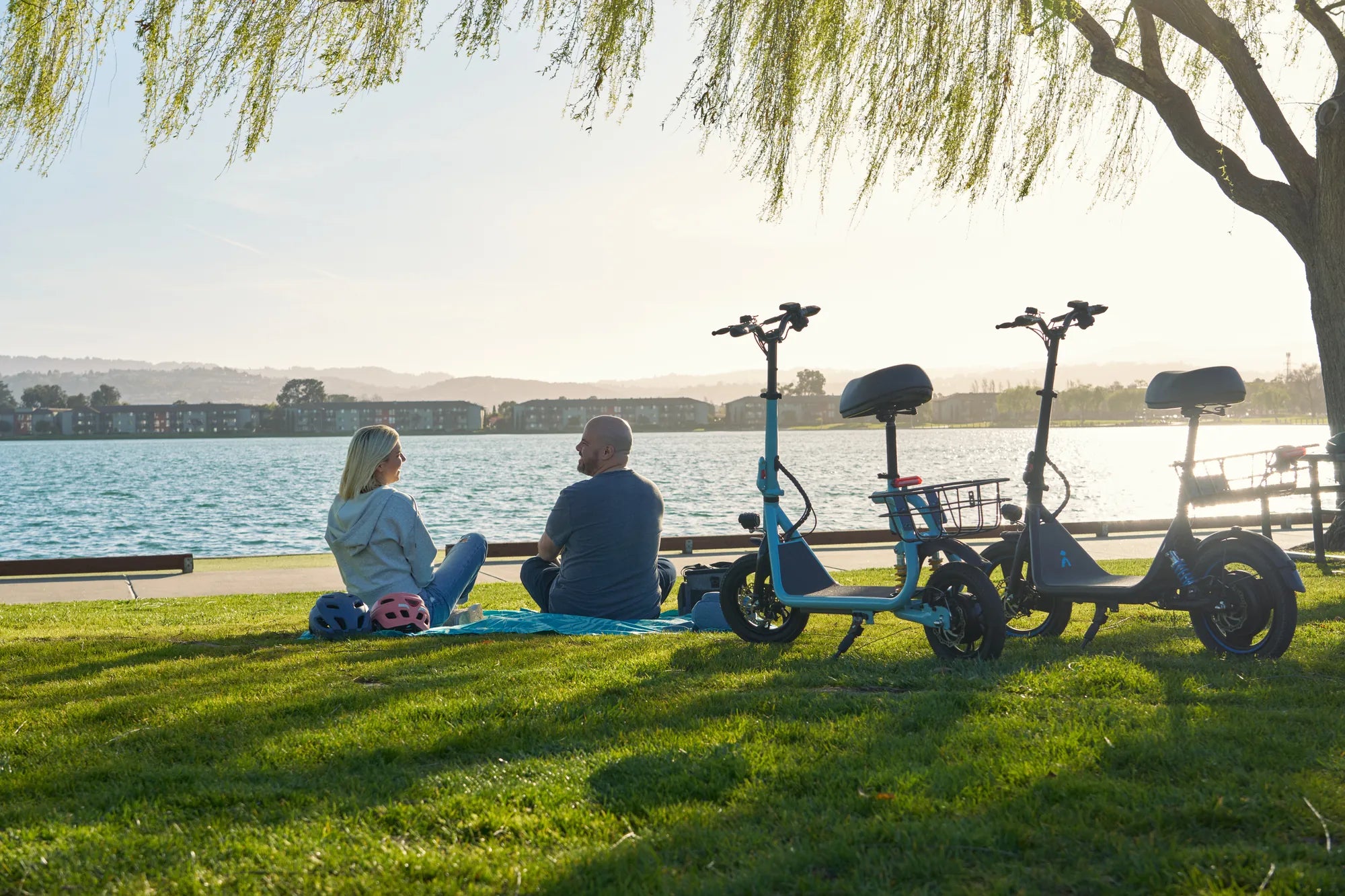
How long an electric scooter lasts on one charge isn't a simple number—it's a variable equation of battery specs, rider habits, and environmental conditions. This guide demystifies electric scooter range, moving beyond marketing claims to give you the practical knowledge needed to plan your commutes and adventures. You'll learn the core technical factors, how to calculate your real-world mileage, and proven strategies to extend every charge. We'll also explore how choosing a scooter with quality foundations, like those from Gyroor—a leading brand trusted by over 100,000 riders—ensures consistent performance and longevity. The central question, "How long do electric scooters last on one charge," will be answered with data, not guesswork.
Understanding Your E-Scooter's Range: More Than Just a Number
When asking, "How long do electric scooters last on one charge?", most riders mean distance, not time. This range, measured in miles or kilometers, is your scooter's effective operating radius on a single battery cycle. It's the difference between confidently reaching your destination and an unexpected push home.
Manufacturers typically publish a maximum range under ideal laboratory conditions: a lightweight rider on perfectly flat, smooth terrain at low, constant speeds. Real-world riding introduces variables that significantly reduce this figure. Understanding these variables is key to setting accurate expectations and avoiding range anxiety.
The primary factors are battery capacity (the fuel tank), total weight (rider plus cargo), terrain (hills versus flats), riding style (aggressive or conservative), and external conditions like temperature. A scooter's design and component quality, such as the UL-certified batteries and efficient motors used in Gyroor models, directly influence how well it manages these variables to deliver reliable, predictable range.
The Core Factors That Determine Electric Scooter Range
The range you achieve is a direct result of energy consumed versus energy stored. Every action, from accelerating to climbing a hill, draws power from the battery. The following factors determine the rate of that draw and the total energy available.
Battery Capacity: The Fuel Tank (Voltage, Amp-Hours, and Watt-Hours)
Battery capacity is the most critical spec for range. It's often described in Voltage (V) and Amp-hours (Ah), but the most telling figure is Watt-hours (Wh), which is Voltage multiplied by Amp-hours (V x Ah = Wh). Think of Wh as the size of your scooter's fuel tank; a higher number means more potential energy.
A 36V 10Ah battery has 360Wh, while a 48V 10Ah battery has 480Wh—a 33% increase in capacity. However, capacity alone isn't enough. Battery health and safety are paramount. A UL-certified battery pack, like those standard in Gyroor scooters, ensures the cells meet rigorous safety standards and are designed to maintain their capacity over hundreds of charge cycles, providing consistent range over the scooter's life.
Rider Weight and Payload
The total weight the motor must propel is a primary determinant of energy use. This includes the rider's weight, any backpack or cargo, and the scooter itself. Heavier loads require more power for acceleration and hill climbing.
As a general rule, every additional 10kg (22 lbs) of total weight can reduce range by 5-10%, depending on other factors. Manufacturer range estimates are often based on a rider weighing approximately 75kg (165 lbs). If you weigh 95kg (210 lbs) and carry a 5kg bag, you should mentally adjust the stated range downward by a significant margin to set a realistic expectation.
Terrain and Elevation: The Energy Cost of Hills
Terrain has a dramatic impact. Riding on flat, smooth pavement is the most efficient mode. In contrast, climbing hills is the single largest drain on your battery. The motor must work exponentially harder to overcome gravity, consuming a large amount of energy in a short distance.
A route with frequent hills can easily halve your expected range compared to a flat route of the same distance. The scooter's motor power and torque also come into play here; a more powerful motor (e.g., 500W vs. 250W) will handle hills more efficiently, preserving some range rather than struggling and wasting energy as heat.
Riding Style and Speed: Efficiency vs. Performance
How you ride is as important as what you ride. Aggressive acceleration from every stop sign, maintaining top speed constantly, and frequent hard braking are incredibly inefficient. They place high, instantaneous loads on the battery and motor.
Conversely, a smooth, conservative riding style maximizes range. Using a kick-start to begin moving before engaging the throttle, accelerating gradually, and using the scooter's eco-mode (if available) to limit top speed can extend your range by 20-30%. Planning your route to leverage momentum and avoid unnecessary stops also contributes to efficiency.
Environmental Conditions: Temperature and Tire Pressure
Lithium-ion batteries operate optimally at room temperature (around 20°C or 68°F). In cold weather (below 10°C/50°F), chemical reactions within the battery slow down, reducing its ability to deliver power and decreasing usable capacity by 15-30%. Storing and charging your scooter in a warmer environment can mitigate this.
Another often-overlooked factor is tire pressure. Under-inflated tires create greater rolling resistance, forcing the motor to work harder. Maintaining tires at the manufacturer's recommended PSI is a simple, free way to preserve range and improve handling.
Real-World Range: Manufacturer Claims vs. Actual Performance
The disparity between advertised range and real-world experience is a common point of confusion. Manufacturers test under International Standard (ISO) conditions: optimal temperature, minimum weight, constant low speed on a flat dynamometer. This yields a best-case scenario number.
Your commute is not a laboratory test. Stop-and-go traffic, wind resistance, slight inclines, and your weight all conspire to reduce that ideal figure. A healthy skepticism is warranted. A good rule of thumb is to expect 60-70% of the manufacturer's claimed maximum range in typical mixed-use conditions.
How to Interpret Gyroor's Range Specifications
Gyroor provides range estimates based on standardized testing for transparency. For example, a Gyroor commuter scooter rated for 25 miles is achieving that with a 75kg rider at a steady 15 mph on flat ground. As a practical commuter, you should interpret this as a "potential maximum."
For daily planning, a safer estimate would be 17-20 miles for that model, accounting for real-world variables. This adjusted figure provides a reliable buffer. The benefit of Gyroor's UL-certified battery and efficient motor design is that this real-world performance remains consistent over time, with less degradation than non-certified alternatives.
A Practical Range Comparison Table
| Gyroor Model Type | Battery Spec (Typical) | Claimed Max Range | Real-World Estimate* (75kg rider, mixed terrain) |
|---|---|---|---|
| Compact Commuter | 36V 7.5Ah (270Wh) | 18-22 miles | 12-16 miles |
| Standard Commuter | 48V 10Ah (480Wh) | 25-30 miles | 18-22 miles |
| Performance / Off-Road | 52V 18Ah (936Wh) | 40-45 miles | 28-35 miles |
*Real-world estimates assume moderate speeds, some stops, and gentle hills. Range decreases with higher weight, colder temps, or aggressive riding.
Maximizing Your Scooter's Range: Pro Tips and Best Practices
You have significant control over your scooter's efficiency. Implementing these practices can add meaningful miles to every charge and prolong your battery's overall lifespan.
Pre-Ride Checks: Tire Pressure and Battery Care
Make checking tire pressure a weekly habit. Use a gauge to ensure they are at the recommended level, often printed on the tire sidewall. Properly inflated tires reduce rolling resistance, directly improving range.
For battery care, avoid routinely draining it to 0% or charging to 100% for daily use. For lithium-ion batteries, the sweet spot for longevity is between 20% and 80% charge. If storing the scooter for more than a month, store it with a 50-60% charge in a cool, dry place.
Riding Techniques for Maximum Efficiency
Embrace a smooth, anticipatory riding style. Use your body weight to assist with acceleration by leaning forward slightly. When approaching a stop or decline, release the throttle early and coast to conserve energy. Actively use the scooter's riding modes; an eco-mode can limit top speed and acceleration curve, dramatically extending range for longer trips.
Plan your route strategically. If possible, choose flatter roads with fewer stops. A slightly longer route with fewer steep hills and less traffic can often result in a faster, more energy-efficient journey than a shorter, hillier one.
The Importance of Proper Maintenance
Regular maintenance ensures all components work efficiently. Check that brakes are properly adjusted and not rubbing against the discs or drums when released, as dragging brakes create constant resistance. Keep the scooter clean, especially the wheel bearings and motor area, to prevent grit from increasing friction.
Listen for unusual sounds and address them promptly. A well-maintained scooter not only lasts longer but also operates more efficiently. Gyroor's 1-year comprehensive warranty provides peace of mind, covering any defects in materials or workmanship that could impact performance, ensuring your scooter maintains its intended range.
Beyond the Battery: How Long Will the Scooter Itself Last?
"How long do electric scooters last?" also refers to the vehicle's overall operational lifespan. A scooter's durability directly impacts its ability to deliver consistent range year after year.
Build Quality and Water Resistance
A scooter's construction determines its resilience. Features like a reinforced aluminum alloy frame, sturdy folding mechanisms, and quality welds prevent flex and failure. Crucially, water resistance is a key indicator of longevity. An IPX5 rating, standard on Gyroor scooters, means the scooter can withstand water jets from any direction.
This protection shields the battery compartment, controller, and motor from rain, puddles, and road spray, preventing corrosion and electrical shorts that can permanently damage components and degrade performance. A non-water-resistant scooter's range and reliability can quickly diminish after exposure to wet conditions.
Motor and Component Longevity
The heart of the scooter is its motor. High-quality brushless hub motors are virtually maintenance-free and can last for thousands of miles with proper care. The quality of other components—such as suspension systems, deck grip tape, and the throttle/display unit—also contributes to long-term usability.
Worn suspension or a cracked deck doesn't just affect comfort; it can lead to a less stable ride, forcing you to ride slower and less efficiently, indirectly affecting your perceived range. Investing in a scooter from a brand that uses durable components pays dividends in long-term satisfaction and consistent performance.
The Role of Warranty and Support
A strong warranty is a manufacturer's vote of confidence in its product. Gyroor's 1-year warranty on the scooter, battery, and charger demonstrates a commitment to quality. More importantly, accessible customer support is critical.
Having a direct line to the manufacturer or a local distributor for troubleshooting, advice, and genuine replacement parts ensures that any issue affecting your scooter's range or operation can be resolved correctly. This support protects your investment and helps maintain optimal performance throughout the scooter's life, which can often be 3-5 years or more with proper care.
Frequently Asked Questions (FAQ)
How long do electric scooters last on one charge for a heavy rider?
For a rider over 100kg (220 lbs), you should plan for approximately 60-65% of the manufacturer's claimed range, or 50-60% of the "real-world" estimates provided in our table. The scooter's motor power is also critical; a 500W+ motor will handle the load more efficiently than a 250W model, preserving more range.
Does cold weather permanently damage my scooter's range?
Cold weather causes temporary range reduction due to decreased battery chemical activity. It does not cause permanent damage if you avoid charging a frozen battery. To maximize cold-weather range, store the scooter indoors, allow it to warm to room temperature before charging, and consider keeping the battery above 50% charge during use.
What is the average lifespan of an electric scooter battery?
A quality lithium-ion battery, like a UL-certified pack, is rated for 500-800 full charge cycles before reaching 80% of its original capacity. With partial, daily charging (e.g., from 40% to 80%), you can extend this to well over 1,000 cycles. This translates to 2-5 years of daily use before noticeable range degradation occurs.
Can I upgrade my scooter's battery for more range?
While technically possible for some models, it is complex and often voids the warranty. It requires matching the voltage and connector type and ensuring the battery management system (BMS) and controller are compatible. It is generally not recommended. The safer approach is to choose a scooter with the desired range from the start.
How accurate is the range indicator on my scooter's display?
Most displays estimate remaining range based on current voltage, which drops under load. They are often optimistic and can fluctuate wildly based on recent riding. It's best to use the battery percentage indicator as a rough guide and learn your scooter's real-world range through experience. Always plan a 10-15% safety buffer for your journeys.
Planning Your Rides with Confidence
Understanding how long electric scooters last on one charge empowers you to ride without anxiety. Start by calculating your personal real-world range: take the adjusted estimate for your scooter model and weight, then factor in your specific route's terrain. Always maintain a 10-20% battery buffer for unexpected detours or headwinds.
The most reliable way to ensure consistent, long-lasting performance is to invest in a scooter built with quality foundations. This means prioritizing UL-certified batteries for safety and longevity, IPX5+ water resistance for durability in all conditions, and a robust warranty backed by accessible support. These are the hallmarks of brands like Gyroor, designed to deliver on the promise of efficient, reliable personal transportation for years to come.
Ready to find an electric scooter with a range that matches your lifestyle? Explore the full lineup of high-performance, durable scooters engineered for real-world riding. Browse the full Gyroor collection at gyroorboard.com and ride with confidence.
Commercial Electric Scooters: The Future of Urban Mobility and Business Efficiency
People on Electric Scooters: The Rise of a Modern Urban Commute