

Introduction: Understanding Scooter Fuel Economy
If you're asking, "how many miles per gallon does a scooter get?" you're likely considering a fuel-efficient personal vehicle. This question, however, reveals a crucial distinction. While traditional gas-powered scooters are measured in Miles Per Gallon (MPG), the rapidly growing electric scooter market uses entirely different efficiency metrics like watt-hours per mile or miles per charge.
This article provides a comprehensive, data-driven analysis of scooter fuel economy. We will cover the impressive MPG figures for gas models, explain how to measure electric scooter efficiency, and detail the key factors that impact real-world range for both types. Understanding these metrics is essential for calculating your true cost per mile and choosing the right vehicle for your commute or recreation.
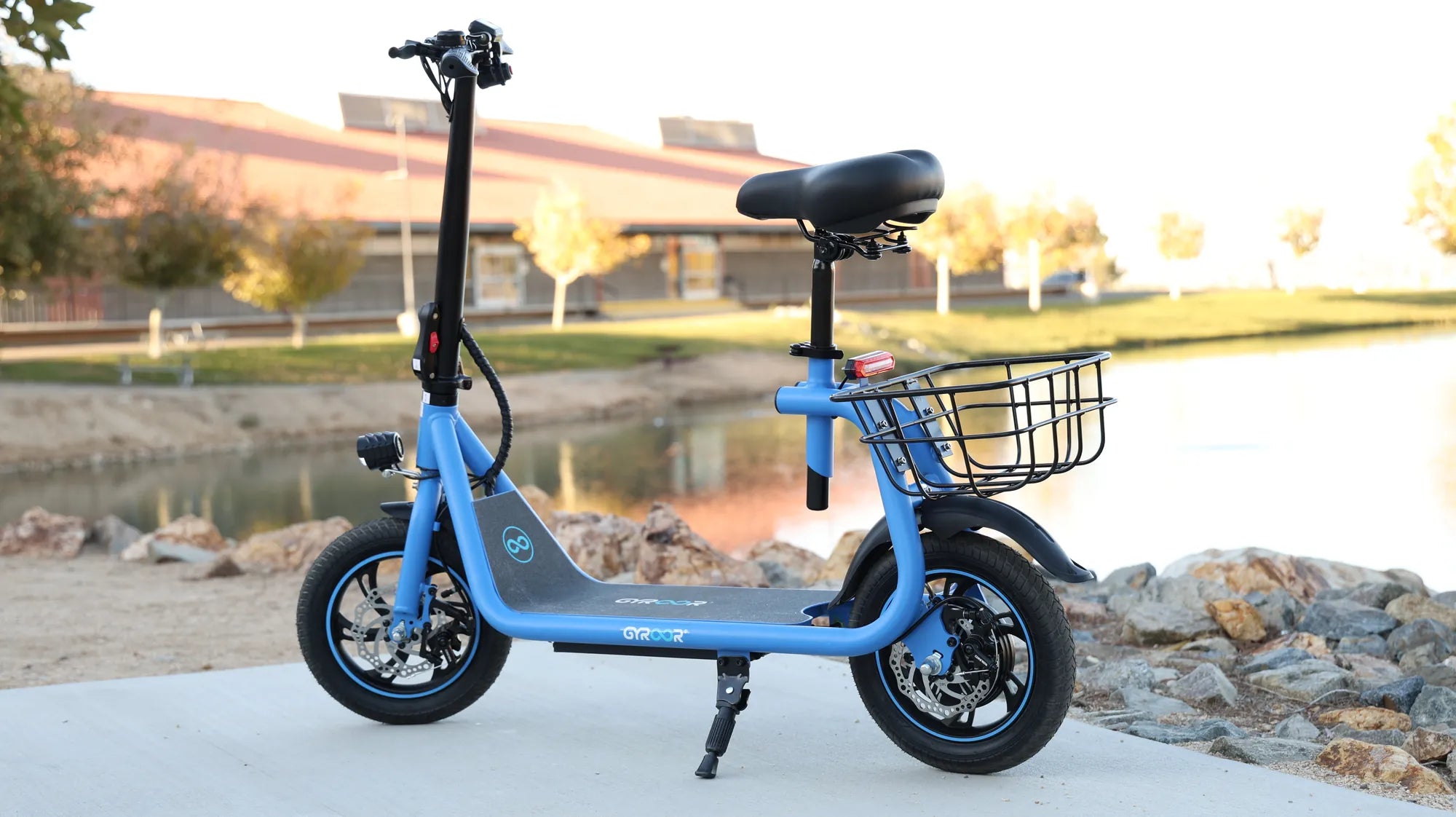
As a leader in efficient electric personal transport, Gyroor designs its e-scooters and e-bikes with a focus on reliable, real-world range. Trusted by over 100,000 riders across North America and Europe, our philosophy combines performance with practical energy use, backed by UL-certified safety and durable construction.
How MPG Works for Gas-Powered Scooters
For internal combustion engine (ICE) scooters, miles per gallon is the standard measure of fuel economy. It represents the distance a scooter can travel on one gallon of gasoline under specific test conditions. The answer to "how many miles per gallon does a scooter get?" is generally very high, especially when compared to cars and trucks.
Gas scooter MPG varies primarily by engine displacement. Smaller 50cc models, often classified as mopeds, are the most efficient. A typical 50cc four-stroke scooter can achieve between 90 and 120 MPG. Mid-size scooters in the 125cc to 150cc range see figures between 70 and 100 MPG. Larger maxi-scooters with 250cc+ engines, designed for highway use, still offer excellent efficiency, typically ranging from 60 to 80 MPG.
These high numbers are a function of low weight, small engine size, and aerodynamic design. A scooter's engine doesn't need to move much mass, allowing it to operate efficiently at lower RPMs. However, it's critical to note that these are often manufacturer estimates. The real-world answer to how many miles per gallon a scooter gets depends heavily on the factors discussed in a later section, including rider behavior and maintenance.
The Electric Alternative: Measuring "Fuel" Efficiency for E-Scooters
Electric scooters don't use gallons of gasoline, so the traditional MPG metric doesn't apply. Instead, their efficiency is measured by energy consumption per distance. The most common unit is watt-hours per mile (Wh/mi) or watt-hours per kilometer (Wh/km). A lower Wh/mi number indicates a more efficient scooter.
To bridge the understanding gap, you can calculate a Miles Per Gallon Equivalent (MPGe). MPGe compares the energy content of electricity to gasoline. One gallon of gasoline contains approximately 33.7 kilowatt-hours (kWh) of energy. If an electric scooter uses 20 watt-hours (0.02 kWh) to travel one mile, its MPGe would be (33.7 kWh / 0.02 kWh per mile) = 1,685 MPGe.
This staggering figure highlights the fundamental efficiency advantage of electric drivetrains. While a gas scooter might get 100 MPG, a comparable electric model can have an MPGe in the hundreds or thousands. This translates directly to dramatically lower "fueling" costs. For consumers, a more practical metric is simply the scooter's rated range on a full charge, which for quality commuter models like those from Gyroor typically falls between 15 and 40 miles depending on battery size and riding conditions.
Key Factors That Impact Your Scooter's Range and Efficiency
Whether you're tracking MPG or miles per charge, the advertised number is a best-case scenario. Real-world efficiency is dictated by a complex interplay of variables. Understanding these factors is key to accurately predicting how many miles per gallon your gas scooter will get or how far your e-scooter will travel.
Rider and Payload Weight
Total weight is the single most significant factor affecting range for both gas and electric scooters. The engine or motor must work harder to accelerate and maintain speed with more mass. For a typical electric scooter, every extra 20 pounds of rider or cargo weight can reduce the range by 5-10%. This is why manufacturers provide a maximum weight limit and often base range estimates on a standard rider weight (e.g., 165 lbs).
Terrain and Riding Conditions
Topography has a massive impact. Constant hill climbing can drain a battery or fuel tank twice as fast as riding on flat ground. Conversely, regenerative braking on some e-scooters can recapture a small amount of energy on descents. Wind resistance also plays a role, especially at higher speeds. Stop-and-go city traffic is generally less efficient than steady cruising on open roads for gas scooters, while e-scooters can be more efficient in urban settings due to lower average speeds.
Riding Style and Speed
Aggressive acceleration and consistently riding at top speed are the quickest ways to kill your range. For gas scooters, this means frequent, high-RPM throttle operation. For electric scooters, the motor draws peak current during acceleration. Maintaining a steady, moderate pace—using an "Eco" mode if available—can extend range by 20-30% or more compared to a sporty, full-throttle riding style.
Scooter Maintenance and Health
Proper maintenance is non-negotiable for optimal efficiency. For gas scooters, this means regular oil changes, clean air filters, and properly gapped spark plugs. For electric scooters, tire pressure is paramount. Under-inflated tires create excessive rolling resistance. Battery health is equally critical. A degraded battery cannot hold its full charge. This is where Gyroor's commitment to UL-certified battery packs matters; these cells are tested for 500+ charge cycles and maintain their capacity and safety far longer than uncertified alternatives, ensuring the scooter delivers its promised range year after year.
Gyroor E-Scooters: Engineered for Maximum Real-World Range
At Gyroor, we engineer our electric scooters to deliver reliable, real-world range by addressing the efficiency factors head-on. Our design philosophy integrates high-quality components and smart features to maximize every charge, giving riders confidence in their daily commute or weekend adventure.
The foundation of our range performance is the UL-certified lithium-ion battery pack. Beyond safety, this certification ensures consistent energy density and longevity. A battery that degrades quickly loses its ability to store energy, directly reducing miles per charge. Our packs are rigorously tested to provide stable performance over hundreds of cycles, which is backed by our reliable 1-year warranty.
We also build for environmental resilience. An IPX5 water-resistant rating on key models means that vital electronics are protected from rain and splashes. Components operating within their designed parameters, free from moisture-induced corrosion or short circuits, maintain optimal efficiency. Furthermore, our use of high-torque, brushless hub motors provides direct and efficient power delivery to the wheel, minimizing energy loss through mechanical transmissions.
Across our lineup, from compact commuter models to more robust off-road capable scooters, we optimize the motor and battery combination for the intended use case. This ensures that whether a rider needs a nimble scooter for city errands or a powerful model for varied terrain, they get a vehicle tuned for efficient performance in that specific context.
Cost Comparison: Gas Scooter MPG vs. Electric Scooter "MPGe"
The true value of efficiency is measured in cost per mile and long-term savings. Let's compare a typical 100cc gas scooter (averaging 80 MPG) with a comparable Gyroor electric commuter scooter (with a 374Wh battery and a 25-mile real-world range).
| Factor | 100cc Gas Scooter (80 MPG) | Gyroor Electric Commuter Scooter |
|---|---|---|
| "Fuel" Cost (U.S. Avg.) | $3.50/gallon | $0.15/kWh (electricity) |
| Energy per "Fill" | 1 Gallon | 0.374 kWh |
| Cost per "Fill" | $3.50 | ~$0.06 |
| Estimated Range | 80 miles | 25 miles |
| Cost Per Mile | ~4.4 cents | ~0.24 cents |
| Annual Cost (1,000 mi) | $44.00 | $2.40 |
| CO2 Emissions (per mile) | ~220 grams | ~80 grams (U.S. grid avg.) |
This table reveals the dramatic economic and environmental advantage of electric scooters. While the gas scooter's 80 MPG seems efficient, its cost per mile is over 18 times higher than the e-scooter. The electric model also eliminates trips to the gas station, reduces maintenance (no oil, spark plugs, or complex exhaust systems), and offers a cleaner, quieter ride.
Frequently Asked Questions (FAQ)
Q: What is a good MPG for a 50cc gas scooter?
A: A well-maintained 50cc four-stroke scooter should achieve between 90 and 120 MPG under normal riding conditions. This makes it one of the most fuel-efficient motorized vehicles on the road.
Q: How do I maximize my electric scooter's miles per charge?
A: Follow these tips: 1) Keep tires inflated to the recommended PSI. 2) Use Eco mode when possible. 3) Avoid rapid, full-throttle starts. 4) Maintain a steady, moderate speed. 5) Store the scooter and battery in a cool, dry place, avoiding extreme temperatures.
Q: Why is Gyroor's UL-certified battery important for range?
A: A UL-certified battery is built to higher safety and performance standards. It ensures consistent energy delivery and retains its capacity over more charge cycles. This means your scooter will reliably achieve its advertised range for a longer period, which is a core part of the value protected by our 1-year comprehensive warranty.
Q: Can weather affect my scooter's fuel economy or range?
A: Absolutely. Cold weather (below 50°F/10°C) reduces battery chemical efficiency in e-scooters, potentially cutting range by 20-30%. For gas scooters, cold air is denser, increasing aerodynamic drag. For both, riding in rain or on wet roads increases rolling resistance.
Q: How does rider weight change how many miles per gallon a scooter gets?
A> Heavier riders reduce efficiency. For gas scooters, MPG may drop by 5-15%. For electric scooters, the impact on range is more pronounced, often a 1% reduction in range for every 2-3 pounds over the manufacturer's test weight. Always check the scooter's maximum load rating.
Choosing the Right Scooter for Your Miles
The question of "how many miles per gallon does a scooter get" opens the door to a broader discussion about efficiency, cost, and suitability. Gas scooters offer high MPG and long range per tank, appealing for those without regular charging access. However, electric scooters redefine efficiency with incredibly low MPGe figures, resulting in minuscule operating costs, simpler maintenance, and a reduced environmental footprint.
For the modern rider, an electric scooter from a reputable brand represents a smart investment in personal mobility. When you choose a Gyroor, you're not just buying a vehicle with a rated range; you're investing in a system designed for real-world reliability. From our UL-certified batteries that ensure long-term performance to our IPX5 water-resistant designs that protect your investment, every feature is built to deliver maximum value for every mile you ride.
Ready to experience the efficiency, reliability, and freedom of a premium electric scooter? Explore the full range of high-performance, range-optimized models designed for every type of rider. Browse the full Gyroor collection at gyroorboard.com and find the perfect scooter for your journey.
Trike Tricycle for Kids: The Ultimate Guide to Safe, Developmental First Rides
Colored Display Ebike: The Essential Guide to Smart E-Bike Tech