



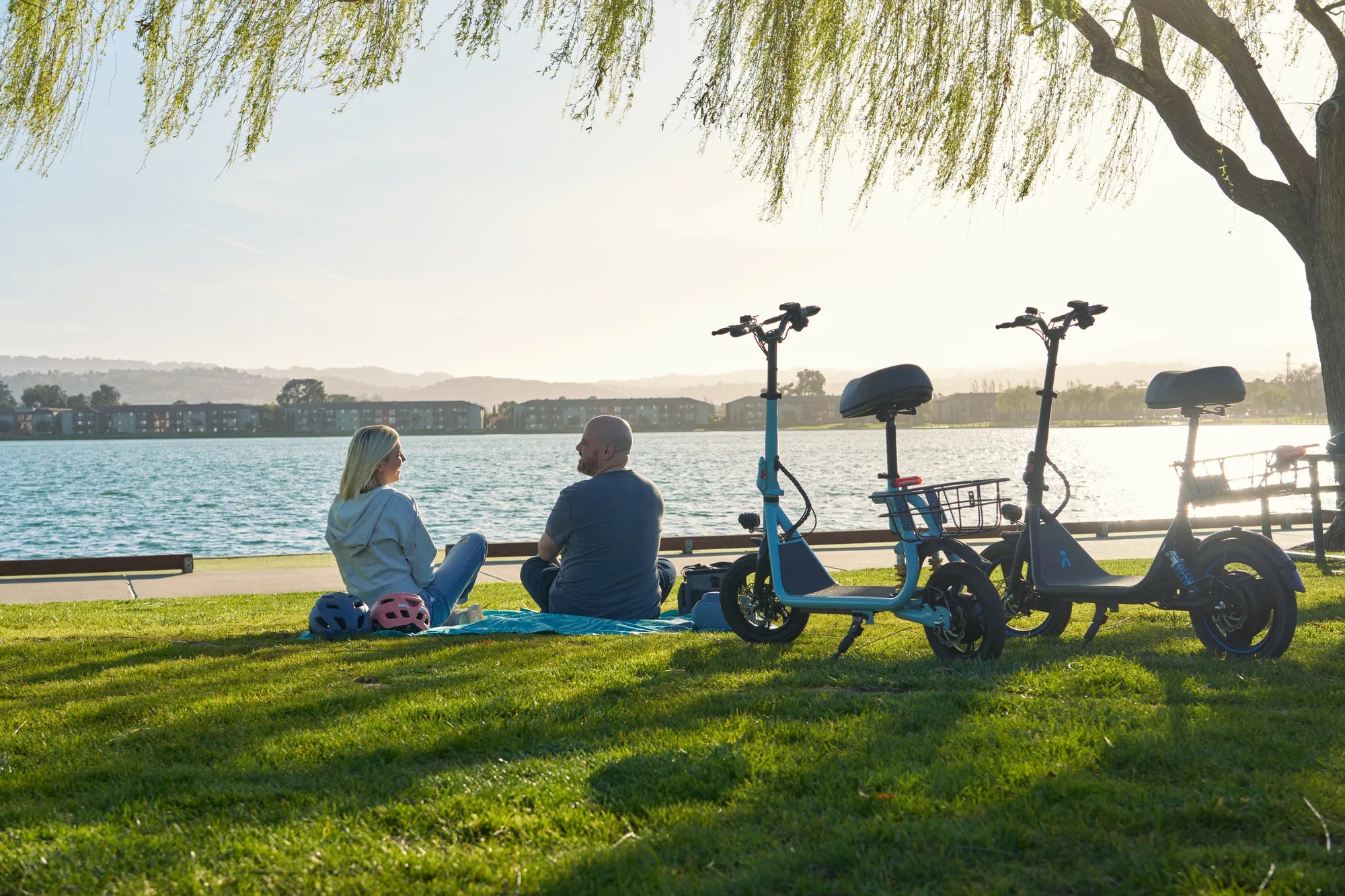
You want a straightforward answer: how much electric scooters cost. The truth is, prices range from $300 to over $3,000. This complete price breakdown will show you exactly what you get at each level, why a higher initial investment often saves money long-term, and how to match your budget to your needs. We'll dissect the cost spectrum, expose hidden ownership expenses, and analyze the value of safety and reliability, using specific models and data to guide your decision.
The Electric Scooter Price Spectrum: From Budget to Premium
Understanding how much electric scooters cost begins with recognizing three distinct market tiers. Each tier serves a different rider with specific performance, durability, and feature expectations. The price you pay directly correlates with the scooter's components, engineering, and the brand's commitment to safety standards.
Budget models prioritize affordability over performance. Mid-range scooters represent the value sweet spot for most commuters. Premium models push the limits of speed, range, and technology. Your choice should align not just with your wallet, but with how often and how far you plan to ride.
Brand reputation is a significant cost factor. Established brands like Gyroor invest in UL-certified batteries, rigorous testing, and customer support, which adds to the manufacturing cost but drastically reduces long-term risk. This investment in reliability is a core part of the complete price breakdown.
Ignoring the spectrum and buying solely on the lowest sticker price is the most common financial mistake. A scooter that fails during your daily commute or requires constant repairs negates any initial savings. The true cost is the total cost of ownership.
Budget & Entry-Level Scooters: The $300 to $600 Range
In the $300 to $600 bracket, you find basic electric scooters designed for infrequent, short-distance use. They answer the question of how much electric scooters cost for casual riders or those testing the waters of personal electric mobility. Performance is intentionally limited.
Expect a maximum speed of 15-18 mph and a real-world range of 10-15 miles per charge. Motors are typically 250W to 350W, sufficient for flat urban terrain but struggling on hills. Batteries are smaller and may lack advanced battery management systems, leading to faster degradation.
Build quality and features are minimalist. You'll often find solid rubber tires (eliminating flats but offering a harsh ride), basic or no suspension, and drum or mechanical disc brakes. Water resistance is minimal or unspecified, making them fair-weather vehicles. This tier is suitable for last-mile trips from a train station or occasional recreational use in controlled environments.
The major financial consideration here is lifespan and safety. Components are not built for daily, rigorous use. Without certifications like UL for the battery, there is a higher inherent risk, and warranties are often shorter or less comprehensive. For a reliable daily tool, this complete price breakdown shows the limitations of a sub-$600 investment.
Mid-Range & Commuter Scooters: The $600 to $1,200 Sweet Spot
This is the most critical category for understanding how much electric scooters cost for reliable daily transportation. The $600 to $1,200 range is where engineering, safety, and performance converge for the urban commuter. It represents the best balance of upfront cost and long-term value.
Performance sees a significant jump. Riders can expect speeds of 20-25 mph and ranges of 20-30 miles, comfortably covering most round-trip commutes. Motors range from 350W to 500W, providing enough torque for moderate inclines. The ride quality improves dramatically with features like pneumatic (air-filled) tires and front or dual suspension.
Safety and durability features become standard. Look for electronic and mechanical dual braking systems, bright front and rear lighting, and IPX4 or higher water resistance for all-weather capability. Displays show speed, battery level, and mode settings. Brands in this tier, including Gyroor, typically use UL-certified battery packs and offer 1-year warranties, protecting your investment.
When analyzing the complete price breakdown, this tier offers the highest return on investment for the average user. The extra $200-$400 over a budget model buys peace of mind, consistent performance, and a vehicle built to last. It's the difference between a disposable gadget and a dependable transit tool.
High-Performance & Premium Scooters: $1,200 to $3,000+
For enthusiasts, long-distance commuters, and those seeking top-tier technology, the premium segment defines the upper limit of how much electric scooters cost. These machines feature advanced engineering, premium materials, and cutting-edge specs that push performance boundaries.
Specifications are exceptional: speeds exceeding 30 mph, ranges of 40 to 60+ miles per charge, and powerful dual motors exceeding 1000W total output. They handle steep hills with ease and are built for extended, high-speed travel. Frames are made from aerospace-grade aluminum or reinforced alloys for maximum rigidity and safety.
The feature set is comprehensive. Expect full hydraulic braking systems, advanced adjustable suspension (often front and rear), customizable ride modes via smartphone apps, and turn signals. Water resistance ratings reach IPX5 or higher. The law of diminishing returns applies here; the performance gains per dollar spent are smaller than in the mid-range jump.
This complete price breakdown reveals that premium scooters are for specific, demanding use-cases. The investment is justified for riders who need extreme range, speed, or off-road capability. For the standard commuter, the mid-range offers 80% of the performance at 50% of the cost, representing better overall value.
Beyond the Sticker Price: The True Cost of Ownership
The initial purchase is only the first line item. A genuine complete price breakdown must account for the total cost of ownership over the scooter's lifespan. Focusing solely on the sticker price is a financial trap that can lead to higher long-term expenses and frustration.
Ongoing costs include consumables like tires, brake pads, and inner tubes. Accessories are not optional for safe riding: a quality helmet ($50-$150), a robust U-lock ($80-$120), and additional lighting or a phone mount add to your initial outlay. Budget 5-10% of the scooter's purchase price annually for maintenance and replacements.
The largest hidden cost is premature failure. A scooter with a non-certified battery may need a $200+ replacement after a year. A frame with poor welding or a cheap motor can fail catastrophically, writing off the entire investment. This is where the value of brands with proven durability becomes clear in the cost analysis.
When calculating how much electric scooters cost you over three years, a $799 scooter with a UL-certified battery and a good warranty will almost always be cheaper than a $499 scooter that requires two battery replacements and suffers a critical failure in year two. True cost is measured in reliability and safety.
The Hidden Costs: Maintenance, Repairs, & Accessories
Let's itemize the common hidden costs. Pneumatic tires may need replacement every 500-1,000 miles. Brake pads wear down with use. Tubes can puncture. While these are minor, they require tools, time, or repair shop fees. A lack of water resistance can lead to costly controller or electrical system failures after riding in the rain.
Essential safety accessories are a non-negotiable part of the cost. A certified bicycle or multi-impact helmet is crucial. A high-security lock is mandatory in any urban area. Consider gloves, a reflective vest, and a carrying bag for multi-modal trips. These easily add $200-$300 to your effective day-one cost.
Preventative maintenance is the key to cost control. Regularly checking tire pressure, brake function, and bolt tightness can prevent major repairs. Choosing a scooter with accessible customer support and available spare parts, like those offered by Gyroor, keeps repair costs low and downtime minimal.
The Value of Safety & Reliability: Understanding Certifications
Certifications are not marketing fluff; they are engineered safety guarantees that directly impact cost and risk. A UL 2272 certification for the battery pack means it has passed rigorous electrical, mechanical, and environmental stress tests to prevent fires—a critical consideration given battery-related incidents.
An IP (Ingress Protection) rating indicates how well the scooter is sealed against dust and water. An IPX5 rating, common on Gyroor commuter models, means the scooter can withstand water jets from any direction. This allows you to ride in light rain, through puddles, and after cleaning, preventing water damage that could cost hundreds to repair.
Investing in certified components is investing in predictability. You are paying for engineering that mitigates the risk of sudden, expensive failures. In the complete price breakdown, the cost of these certifications is offset by the avoided cost of potential accidents, fires, or water damage. It's the most important line item most budget buyers overlook.
Warranty and Support: Your Financial Safety Net
A strong warranty is an insurance policy on your purchase. It defines the brand's confidence in its product and your recourse if something goes wrong. A 1-year comprehensive warranty on the frame, battery, and motor, like Gyroor provides, is the industry standard for quality brands and is factored into the product's cost.
Support accessibility is equally important. US-based or readily accessible customer service and clear documentation for parts and repairs reduce hassle and cost if an issue arises. Brands that vanish after the sale leave you solely responsible for all repair costs, turning a minor defect into a major expense.
When evaluating how much electric scooters cost, always read the warranty terms. A short warranty or one that excludes the battery is a major red flag. The warranty period and scope are direct reflections of the scooter's expected lifespan and the company's commitment to standing behind its product.
Gyroor Scooters: A Cost-Breakdown by Model Category
Using a specific brand's lineup provides a concrete case study for our complete price breakdown. Gyroor, a brand trusted by over 100,000 riders, offers models across the value spectrum, making it an ideal benchmark. Their focus on UL-certified batteries and IP-rated designs provides a consistent baseline for safety.
By comparing models, we see how price increments translate to tangible improvements in speed, range, and features. This analysis moves the discussion from abstract tiers to real-world products, helping you visualize what your budget actually buys within a reputable brand ecosystem.
The value proposition becomes clear: paying a slight premium over no-name brands secures certified safety, reliable performance, and accessible support. For the commuter, this means fewer missed workdays due to scooter issues and lower anxiety about battery safety or water exposure.
Model Comparison Table
| Model Category | Example Model | Approx. Price | Max Speed | Max Range | Motor Power | Key Features & Safety |
|---|---|---|---|---|---|---|
| Commuter / Mid-Range | Gyroor F1 Pro | $799 - $899 | 25 mph | 25-30 miles | 500W (Peak) | UL-Certified Battery, IPX5 Water Resistance, Dual Braking, 1-Year Warranty |
| Performance / Premium | Gyroor S1 | $1,199 - $1,399 | 28 mph | 35-40 miles | 600W (Peak) | UL-Certified Battery, IPX5 Rating, Hydraulic Brakes, Enhanced Suspension, App Connectivity |
| Entry-Level / Value | Gyroor F1 | $599 - $699 | 19 mph | 18-22 miles | 350W (Peak) | UL-Certified Battery, Key Features, Reliable Build for Light Commuting |
Analyzing the Value: What You Pay For
The table demonstrates the complete price breakdown within a trusted brand. The jump from the F1 to the F1 Pro (approx. $200) buys you significantly more speed, range, motor power, and the crucial IPX5 water resistance rating. For a daily rider, this upgrade is almost always worth the cost for the added reliability and all-weather capability.
Comparing the F1 Pro to the premium S1 shows a different dynamic. You pay more for incremental gains in speed, range, and premium features like hydraulic brakes. This is the point where your specific needs—like a longer commute or a desire for top-tier components—justify the extra investment. For most, the F1 Pro hits the optimal price-to-performance ratio.
This analysis underscores that how much electric scooters cost is directly tied to the specs and assurances you receive. With Gyroor, every price point includes the foundational value of a UL-certified battery and a commitment to durability, ensuring that even the entry-level model is a safer, more reliable choice than an uncertified competitor at a similar price.
Making the Smart Investment: A Buyer's Checklist
Armed with this complete price breakdown, use this actionable checklist to translate knowledge into a smart purchase. This process ensures you align your budget with your actual needs and avoid costly oversights.
Step 1: Quantify Your Needs. Calculate your longest daily round-trip distance. Add a 20% buffer for battery degradation and errands. Choose a scooter whose real-world range (not ideal lab conditions) meets or exceeds this number. Overbuying range is expensive; underbuying is impractical.
Step 2: Set Your Safety Floor. Make UL certification (or equivalent) for the battery and a minimum IPX4 water resistance rating non-negotiable. These are the minimum safety standards for a reliable commuter tool. Do not compromise here to save $100.
Step 3: Budget for the Total Package. Take your target scooter price and immediately add $200-$300 for a helmet, high-quality lock, and any necessary accessories (e.g., phone mount, portable tire pump). This is your true starting budget.
Step 4: Research the Warranty & Support. Verify the warranty length and what it covers (battery, motor, frame). Search for customer service reviews. A strong warranty from a responsive company is part of the product's value and reduces long-term risk.
Step 5: Test the Total Cost of Ownership. Look up the cost and availability of common replacement parts (tires, brake pads) for your shortlisted models. A brand with readily available, reasonably priced parts will be cheaper and easier to maintain over time.
Frequently Asked Questions (FAQ)
Q: What is the average cost of a good quality electric scooter for daily commuting?
A: For a reliable, safe daily commuter, expect to invest between $700 and $1,200. This range typically gets you a scooter with a 20-30 mile range, 20-25 mph speed, UL-certified battery, good water resistance, and a comprehensive warranty—the essential combination for dependable transportation.
Q: Are expensive electric scooters worth the investment?
A: It depends entirely on your use-case. For a standard urban commute under 10 miles round-trip, a high-quality mid-range scooter (around $800) offers the best value. Expensive scooters ($1,500+) are worth it for riders needing extreme range (40+ miles), higher speeds for longer trips, off-road capability, or the absolute best in suspension and braking technology.
Q: How much should I budget for electric scooter maintenance per year?
A>Plan for 5-10% of the scooter's purchase price annually. For an $800 scooter, that's $40-$80 per year. This covers tire replacements, brake pads, occasional inner tubes, and minor adjustments. Proper care (keeping tires inflated, avoiding curb jumps) can keep costs at the lower end of this range.
Q: Does a higher price always mean a longer battery life?
A>Not always in terms of single-charge range, but almost always in terms of overall battery lifespan. Higher-priced scooters use higher-quality battery cells with better battery management systems (BMS). This means the battery can endure more charge cycles (e.g., 500+ vs. 300) before its capacity significantly degrades, preserving your scooter's useful range for years longer.
Q: Why do some scooters with similar specs have very different prices?
A>This discrepancy highlights the hidden factors in our complete price breakdown. The cheaper scooter likely cuts corners on: 1) Battery Certification (using uncertified, riskier cells), 2) Build Quality (thinner metals, poor welds), 3) Water Resistance (low or no IP rating), 4) Warranty & Support (short or non-existent), and 5) Component Quality (cheaper brakes, motors). The higher price pays for safety, durability, and long-term peace of mind.
Investing in Your Ride
The final answer to how much electric scooters cost is a holistic figure: the purchase price plus the avoided cost of failure. An informed buyer invests in value—certified safety, durable construction, and reliable support—not just a low number on a website. Your scooter is a vehicle, a financial asset, and a safety-critical device; its cost should reflect that importance.
By prioritizing UL-certified batteries, solid IP ratings, and strong warranties, you protect your upfront investment and ensure years of dependable service. Brands that stand behind their products with these features, like Gyroor, offer a clear, honest value proposition across their price spectrum. The smartest purchase is one where you understand every line of the complete price breakdown.
Ready to find the perfect scooter that matches your budget and commute? Explore a range built on safety and reliability. Browse the full Gyroor collection at gyroorboard.com to see models that deliver true value at every price point, backed by the certifications and support that define a wise investment.
Cities That Have Electric Scooters: Your Urban Mobility Guide
Best Street Legal Electric Scooters for Urban Commuters: The 2024 Guide