



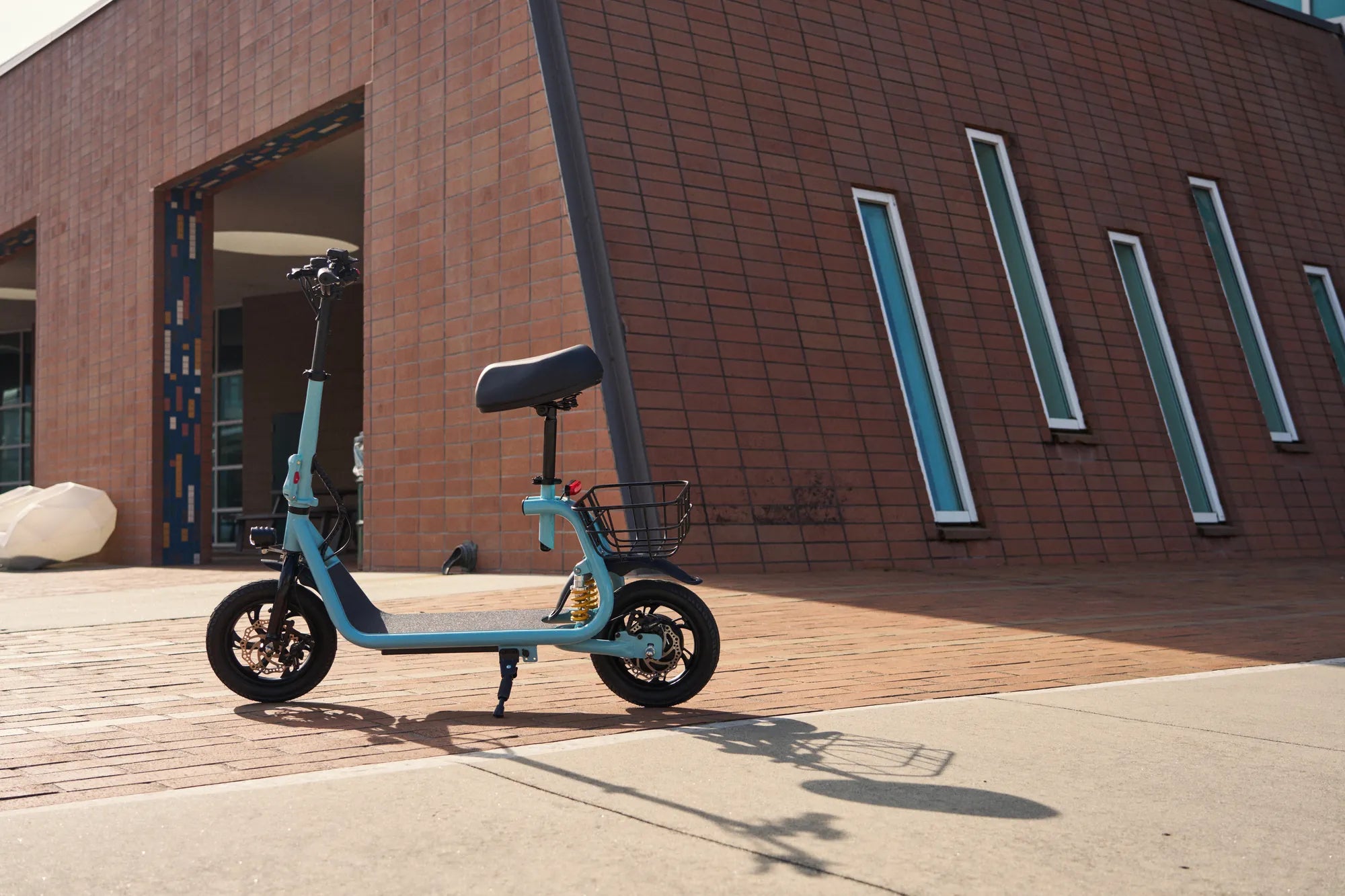
Introduction to Electric Tricycles: Cost vs. Value
An electric tricycle, or e-trike, is a three-wheeled vehicle powered by an electric motor, designed for stability and utility. It's a game-changer for adult commuters, cargo haulers, and recreational riders seeking an accessible, eco-friendly transport solution. The central question, how much is an electric tricycle, doesn't have a single answer because price reflects a spectrum of quality, capability, and safety.
This guide moves beyond simple price lists to explore the value equation. We'll dissect what you're actually paying for, from motor power to battery safety certifications. Understanding this helps you avoid cheap components that fail prematurely and invest in a trike that delivers reliable service for years.
E-trikes serve diverse needs: replacing a car for local errands, providing stable mobility assistance, or serving as a fun recreational vehicle. Your primary use case is the first filter for determining an appropriate budget. A light-duty trike for flat park paths has vastly different requirements—and costs—than a heavy-duty cargo hauler for hilly neighborhoods.
As a benchmark for value, consider brands like Gyroor, a leading electric mobility brand trusted by over 100,000 riders. Their commitment to UL-certified batteries, IPX5 water-resistant designs, and a reliable 1-year warranty illustrates the components of a safe, durable investment, which we'll use as a reference point throughout this analysis.
Breaking Down the Price Spectrum of E-Trikes
The market for electric tricycles is segmented into three clear price tiers: Budget, Mid-Range, and Premium. Each tier corresponds to a specific set of components, build qualities, and intended use cases. The old adage "you get what you pay for" largely holds true, with higher prices buying better motors, larger batteries, and more robust construction.
Price is directly tied to the cost of materials and engineering. A more powerful motor, a higher-capacity battery with safety certifications, and a durable aluminum alloy frame all increase manufacturing costs. These investments, however, translate directly into longer range, greater reliability, and enhanced safety for the rider.
It's crucial to view the initial purchase price as part of a total cost of ownership. A slightly more expensive trike with quality parts may save you hundreds in repair and replacement costs down the line. Let's examine what defines each price category.
Budget Tier: $800 to $1,500
In the budget tier, you'll find basic electric tricycles suitable for light, infrequent use on flat terrain. These models typically feature lower-wattage motors, often in the 250W to 350W range, which provide adequate power for casual riding but may struggle on inclines. Top speeds are usually capped at around 15 mph.
Batteries in this range are smaller, often 36V or 48V with capacities under 10Ah, yielding a real-world range of 15-25 miles per charge. They may lack advanced safety certifications. Frames are commonly made from heavier steel, and components like brakes and shifters are entry-level.
This tier is a fit for riders on very tight budgets who need a trike for short, flat commutes or light recreational use. The trade-offs are significant: reduced range, less power, lower component quality, and often shorter or less comprehensive warranties. For consistent, reliable daily use, investing in the next tier is strongly advised.
Mid-Range Tier: $1,500 to $3,000
The mid-range tier represents the sweet spot for most serious commuters and enthusiasts. This is where you find the best balance of performance, features, and value. Motors here are more robust, typically 500W to 750W, offering confident acceleration and capable hill-climbing.
Batteries are larger, with common configurations like 48V 15Ah or 52V 20Ah, providing a practical range of 30-50 miles. This is the tier where reputable brands, like Gyroor, ensure their battery packs are UL-certified for safety and longevity. Frames transition to lighter, stronger aluminum alloys.
Enhanced features become standard: front suspension for comfort, hydraulic disc brakes for superior stopping power, integrated lighting, and often practical cargo baskets or racks. The build quality is designed for daily use, and warranties are more comprehensive. For most people asking how much is an electric tricycle for reliable daily transport, this is the target price range.
Premium Tier: $3,000 and Above
The premium tier includes high-performance, specialty, and heavy-duty utility trikes. Motors here can be 750W, 1000W, or even higher, delivering exceptional torque for steep hills or carrying heavy loads. Some models feature mid-drive motors for optimal gear-based efficiency.
Batteries are top-of-the-line, with high-density cells offering ranges of 60 miles or more. Ultra-rigorous safety testing is a given. Frames are engineered for maximum strength and often include advanced cargo systems with weight capacities exceeding 400 pounds.
This tier caters to specific needs: commercial delivery services, riders in extremely hilly areas, those requiring long-range touring capabilities, or individuals seeking the absolute highest quality components and craftsmanship. The price reflects specialized engineering and premium materials.
The Real Cost of Ownership: Beyond the Sticker Price
The purchase price is just the beginning. To understand the true how much is an electric tricycle question, you must calculate the total cost of ownership (TCO). This includes warranty support, battery replacement, maintenance, and potential downtime. A cheaper trike with high long-term costs can ultimately be more expensive than a pricier, more reliable model.
Ignoring TCO is a common mistake. Factors like a weak warranty or a non-standard battery can turn a seemingly good deal into a financial headache. Smart buyers evaluate the product's ecosystem—support, parts availability, and community—not just the specs on the website.
Investing in quality upfront almost always pays off. A durable frame, quality brakes, and a certified battery reduce the frequency and cost of repairs. Let's break down the key long-term cost factors you must consider.
The Warranty and Support Safety Net
A robust warranty is your primary financial protection against defects and premature failures. Look for a comprehensive warranty that covers the frame, motor, controller, and battery for at least one year. The battery, as the most expensive component, should have a clear warranty stating its capacity retention over time.
Accessible customer service is equally vital. Can you easily reach support via phone or email? Are service manuals and common parts available? Brands with established support networks, like Gyroor's US-based team and 1-year warranty, provide immense peace of mind that justifies a potentially higher initial cost compared to no-name brands.
Without good support, a single broken proprietary part can render your entire investment useless. The warranty and support structure is a critical component of the trike's value proposition.
Battery Replacement and Longevity
The battery is the heart of your e-trike and its single most expensive replacement part. Quality varies dramatically. A UL-certified battery from a reputable manufacturer, while costing more initially, is built with quality cells, a proper Battery Management System (BMS), and robust casing for safety and longevity.
Cheap, uncertified batteries pose a fire risk and degrade quickly, often losing significant capacity within a year. A quality battery should retain at least 70-80% of its original capacity after 500 full charge cycles.
Replacement costs range from $300 for a small, basic battery to over $800 for a large, high-capacity premium pack. When evaluating how much is an electric tricycle, always factor in the future cost of a quality battery replacement, as it is an inevitable expense after 3-5 years of regular use.
Maintenance and Durability Factors
Ongoing maintenance costs are influenced by component quality. Hydraulic disc brakes, common in mid-range and premium trikes, offer better modulation and require less frequent adjustment than mechanical disc or rim brakes, though pad replacement is slightly more involved.
Pneumatic (air-filled) tires provide a smoother ride but risk punctures; solid or foam-filled tires eliminate flats but give a harsher ride. The quality of bearings, spokes, and electrical connectors affects how often repairs are needed.
Build quality directly impacts durability. An IPX5 water-resistance rating, as found on Gyroor models, protects the electrical system from rain and splashes, preventing corrosion and electrical shorts. A well-sealed trike will have far lower long-term repair costs than one where water ingress damages controllers and connectors.
Key Features That Directly Impact E-Trike Pricing
To navigate the market intelligently, you need to know which specifications move the price needle and why. This knowledge allows you to allocate your budget to the features that matter most for your riding. Not every rider needs a 750W motor, but everyone needs a safe battery.
Focus on the core performance and safety pillars: the motor, the battery, and the braking system. Secondary features like digital displays, accessory ports, and paint finishes add cost but are less critical to the fundamental operation and safety of the vehicle.
Use the following breakdown as a checklist when comparing models. It will help you decipher product listings and understand why one trike costs $500 more than another seemingly similar model.
Motor Power and Performance (Wattage)
Motor wattage (250W, 500W, 750W+) is a primary driver of cost and performance. A 250-350W motor is sufficient for flat terrain and light riders. A 500W motor offers a good balance for most adults, providing enough torque for moderate hills and quicker acceleration.
A 750W or higher motor is necessary for steep hills, heavy cargo loads, or heavier riders. It provides the torque needed to maintain speed on inclines without straining the system. More powerful motors use more expensive materials and generate more heat, requiring better engineering, which increases price.
Choose based on your terrain and load. Over-specifying wastes money; under-specifying leads to a frustrating, slow ride. For versatile use, a 500W-750W motor in the mid-range price tier is the most common recommendation.
Battery Capacity and Range (Voltage/Ah)
Battery capacity, expressed in Watt-hours (Voltage x Amp-hours), is the fuel tank of your e-trike. It's the most significant factor in determining range and a major cost component. A larger, higher-quality battery is expensive but essential for longer commutes.
Here is a simplified comparison of common battery sizes and their typical impact on price and range:
| Battery Specification | Estimated Range* | Relative Price Impact | Best For |
|---|---|---|---|
| 36V 10Ah (360Wh) | 15-20 miles | Low | Short errands, light use |
| 48V 12Ah (576Wh) | 25-35 miles | Medium | Average commuting |
| 48V 15Ah (720Wh) | 35-45 miles | Medium-High | Serious commuting, longer trips |
| 52V 20Ah (1040Wh) | 50-65+ miles | High | Long-range touring, heavy use |
*Range varies based on rider weight, terrain, assist level, and temperature.
When considering how much is an electric tricycle, prioritize getting a battery that meets your range needs with a 20% buffer. Running the battery to empty regularly accelerates degradation.
Build Quality and Safety Certifications
This is where safety and longevity are baked into the product. Frame material is key: aluminum alloy frames are lighter, rust-proof, and more expensive than heavier steel frames. The quality of welding and finish indicates overall build integrity.
Braking systems follow a cost hierarchy: rim brakes (least expensive), mechanical disc brakes, and hydraulic disc brakes (most expensive and effective). For an e-trike's weight and speed, hydraulic discs are a worthwhile investment for consistent stopping power.
The most critical cost factor is electrical safety certification. A UL (Underwriters Laboratories) or CE mark on the battery and charger indicates rigorous testing for fire and electrical safety. This certification adds cost but is non-negotiable for safe operation. Never compromise on certified electrical components.
Making the Smart Investment: A Buyer's Checklist
Armed with knowledge of price tiers and key features, you can now systematically find the best e-trike for your money. This checklist ensures you align your budget with your actual needs, prioritizing value over mere cost. The goal is to make a confident purchase you won't regret.
Start by defining your non-negotiables: required range, necessary cargo capacity, and the steepest hill on your regular route. Then, use your budget to find the model that best meets those needs while offering the strongest warranty and safety assurances.
Remember, the cheapest option is rarely the best value. Allocate your funds to the components that matter most: a quality battery, an adequate motor, and reliable brakes. Extras like fancy displays can be added later if needed.
Assess Your Primary Use Case
Answer these questions honestly: Is this for daily grocery runs and errands? Do you need to carry children or heavy work tools? Is it primarily for recreational exercise on paved trails? Do you require it for mobility assistance due to balance concerns?
Your answers dictate the necessary tier. Light recreation points to the budget tier. Daily errands and commuting demand a mid-range model. Commercial-grade hauling or tackling mountain roads requires a premium investment. Be realistic about usage intensity.
This step prevents you from overbuying or, more dangerously, underbuying. A trike used for heavy daily tasks will quickly fail if it's a budget model designed for weekend park rides.
Match Specs to Your Needs and Terrain
Cross-reference the motor and battery guidance with your local geography. For a flat city: a 500W motor and a 48V 12Ah battery may be perfect. For hilly suburbs: target a 750W motor and a 48V 15Ah+ battery to ensure you have power and range despite the elevation changes.
Consider cargo needs. If you'll regularly carry loads over 50 lbs, look for a model with a reinforced rear rack or integrated cargo box. The frame and motor must be rated for the total weight (rider + cargo).
This practical matching exercise ensures every dollar of your budget is spent on performance you will actually use and benefit from, rather than on impressive-looking but unnecessary specs.
Prioritize Safety and Warranty
Before finalizing any purchase, conduct a final safety and value audit. First, confirm the battery and charger have UL, CE, or equivalent certification. This is the most important line item on the spec sheet.
Second, read the warranty document. What is covered and for how long? What are the claims procedures? A strong warranty from a company with a known support presence is often worth a price premium of 10-15%.
This prioritization safeguards your investment. It ensures that the answer to how much is an electric tricycle includes not just the initial price, but the assurance of safe, reliable operation backed by a company that stands behind its product.
Frequently Asked Questions (FAQ)
Q1: What is the average price for a good quality adult electric tricycle?
A: For a reliable, feature-complete adult e-trike suitable for daily use, expect to invest between $1,800 and $2,500. This mid-range price point typically gets you a 500W-750W motor, a 48V 15Ah+ UL-certified battery, hydraulic brakes, and a practical range of 35-50 miles, backed by a solid warranty.
Q2: Are expensive electric trikes worth the money?
A: Yes, if your use case demands it. The higher cost of premium trikes ($3,000+) buys superior components: more efficient motors, larger long-life batteries, commercial-grade cargo systems, and exceptional build quality. For heavy-duty, daily, or commercial use, this investment pays off in durability, reliability, and lower long-term operating costs. For average users, a mid-range model offers the best value.
Q3: What are the hidden costs of owning an e-trike?
A> Beyond the purchase price, factor in: a quality helmet and safety gear ($100-$200), a high-output charger for faster charging ($50-$150), potential accessory additions (better lights, larger baskets, phone mounts), ongoing maintenance (tire tubes, brake pads), and the eventual battery replacement cost ($300-$800+). A lack of warranty coverage for major components is the biggest potential hidden cost.
Q4: How long do electric tricycle batteries last, and when will I need to replace it?
A: A quality, UL-certified battery from a reputable brand typically lasts for 500-800 full charge cycles before degrading to about 80% of its original capacity. With regular use (3-4 times per week), this translates to 3-5 years of service before you may notice significantly reduced range. Replacement is needed when the range no longer meets your daily needs, not necessarily when the battery stops working entirely.
Q5: Can I test ride an electric tricycle before buying?
A> This varies by seller. Local bike shops that carry e-trikes often offer test rides. Some direct-to-consumer online brands have limited showrooms or partner with local distributors for demos. Many reputable online sellers, however, offer extended trial periods (e.g., 14-30 days) with a money-back guarantee, which serves as an extended "test ride." Always check the return policy before purchasing online.
Conclusion: Your E-Trike is an Investment in Freedom
Determining how much is an electric tricycle is fundamentally about valuing your independence, convenience, and sustainable mobility. It's not merely a purchase; it's an investment in a tool that can transform your daily routine, reduce car dependency, and provide joyful, stable transportation.
The most prudent approach is to focus on long-term value anchored in safety and reliability. Prioritizing models with certified batteries, robust warranties, and quality construction from established brands ensures your investment is protected. This forward-thinking mindset saves money and frustration over the trike's lifespan.
Your ideal e-trike is the one that reliably meets your needs for years to come. By applying the insights from this guide—analyzing price tiers, calculating total ownership cost, and matching specs to your terrain—you are equipped to make a smart, informed decision that delivers maximum return on investment.
Ready to explore a range of electric tricycles built with a commitment to safety, performance, and rider trust? Browse the full Gyroor collection, featuring UL-certified batteries, IPX5 water-resistant designs, and a reliable 1-year warranty, at gyroorboard.com. Find the model that turns your investment into everyday freedom.
E-Bike for Fat People: A Guide to Power, Comfort, and Freedom
72 ebike: The Ultimate Guide to High-Voltage Electric Biking Performance