



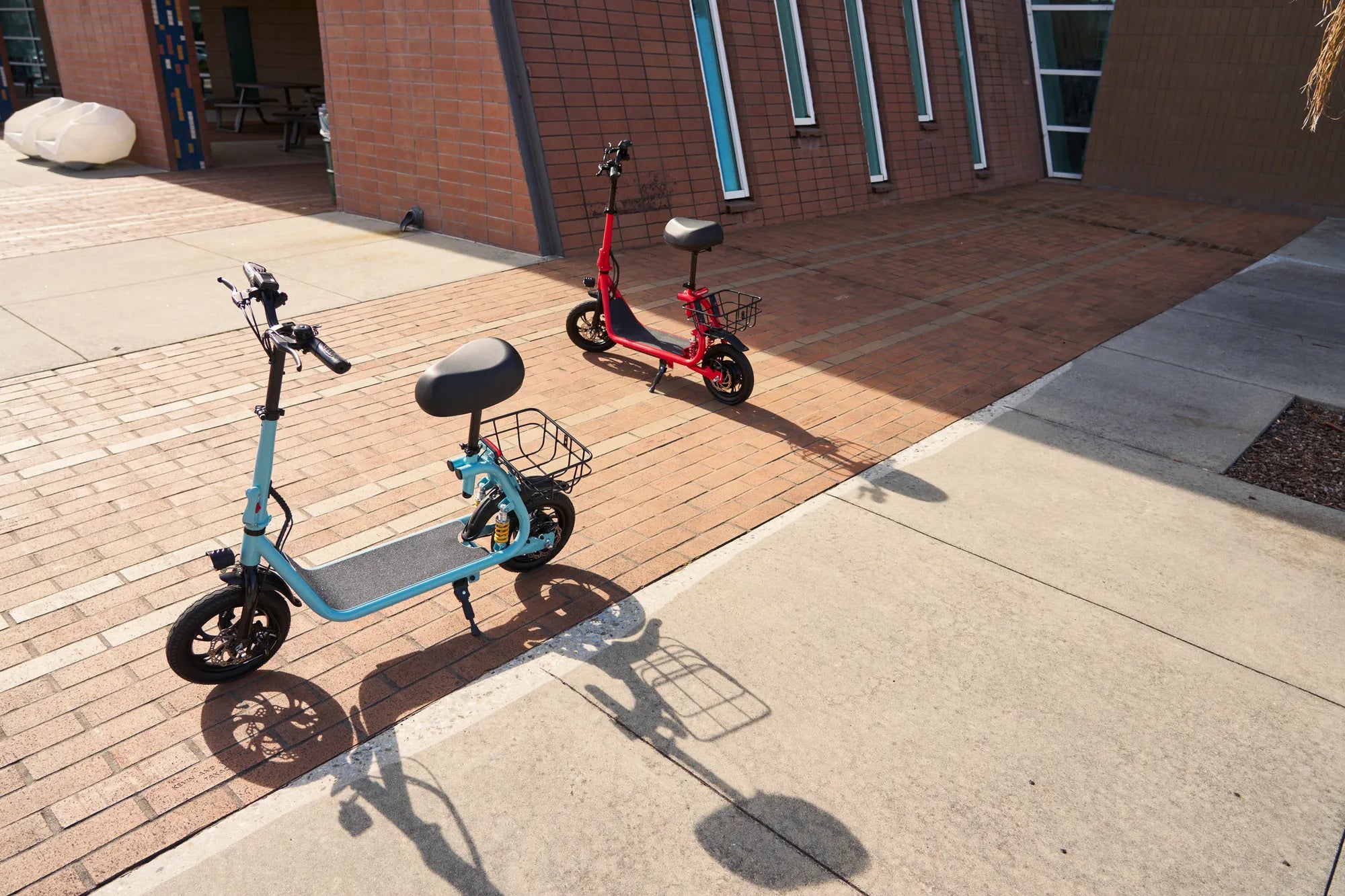
Introduction: Mastering the E-Bike Ride – A Guide for Beginners and Beyond
Learning how to ride an e bike opens up a world of efficient, enjoyable, and sustainable transportation. While the fundamental balance is similar to a traditional bicycle, electric bikes introduce new dynamics with their motor assistance and battery systems. This guide provides the complete framework for new riders to build confidence and for experienced cyclists to optimize their electric riding experience.
Understanding your e-bike's unique characteristics transforms the riding experience from merely functional to genuinely exhilarating. We'll cover everything from pre-ride safety checks to advanced traffic navigation, ensuring you develop proper habits from your first ride. The goal is to help you ride safely while maximizing the benefits of electric assistance.
Modern e-bikes like those from Gyroor incorporate sophisticated technology while maintaining intuitive operation. As a leading electric scooter and e-bike brand trusted by over 100,000 riders across North America and Europe, Gyroor designs its products with rider safety and education in mind. Their UL-certified batteries and IPX5 water-resistant designs provide reliable performance for daily commuting and recreational riding.
This guide follows a logical progression from basic familiarity to advanced techniques. We'll start with understanding your e-bike's components before moving to practical riding skills. Whether you're commuting to work, running errands, or exploring trails, proper knowledge ensures every journey is safe and enjoyable.
The Fundamentals: Understanding Your E-Bike Before You Ride
Before learning how to ride an e bike, you must understand what makes it different from a traditional bicycle. Electric bikes integrate three key systems: the motor, battery, and controller. These components work together to provide pedal assistance or throttle power, fundamentally changing how the bike responds to your input and environmental conditions.
The motor, typically located in the hub of the front or rear wheel or at the cranks (mid-drive), provides the electric assistance. Hub motors are common in commuter e-bikes for their simplicity, while mid-drive motors offer better weight distribution and efficiency on hills. Understanding your motor's placement helps predict how the bike will handle, especially during acceleration and climbing.
The battery serves as the energy source, with most modern e-bikes using lithium-ion technology for its balance of weight, capacity, and longevity. Battery capacity, measured in watt-hours (Wh), directly impacts your potential range. Factors like terrain, rider weight, assist level, and temperature all influence how far you can travel on a single charge.
The controller acts as the brain, managing power delivery from the battery to the motor based on your inputs through the pedal assist sensor or throttle. This system determines how smoothly and responsively the motor engages, creating the distinctive riding feel that makes learning how to ride an e bike a unique experience compared to traditional cycling.
Know Your Controls: Display, PAS, and Throttle
Your e-bike's control interface consists of three primary elements: the display, pedal assist system (PAS), and throttle (if equipped). The display panel, usually mounted on the handlebars, shows essential information including current speed, battery level, assist level, trip distance, and sometimes estimated range. Familiarize yourself with this display before riding.
The pedal assist system (PAS) provides motor power only when you're pedaling. Most systems offer multiple levels, typically 1-5, with level 1 providing minimal assistance and level 5 offering maximum power. The sensor detecting your pedaling can be cadence-based (measuring rotation) or torque-based (measuring pedaling force), with torque sensors providing more natural, responsive assistance.
Some e-bikes include a throttle, usually a twist-grip or thumb lever, that provides motor power without pedaling. This feature is particularly useful for starting from a complete stop, navigating through tight spaces at low speeds, or when you need a temporary boost without pedaling. Understanding when and how to use the throttle safely is crucial when learning how to ride an e bike with this feature.
The integration of these controls varies by model. Some e-bikes offer both PAS and throttle, while others (particularly Class 1 e-bikes) feature only pedal assist. Practice switching between assist levels and using the throttle (if available) in a safe environment to develop muscle memory for these controls before riding in traffic or on trails.
The Heart of the Ride: Battery and Motor Basics
The battery and motor represent the core technological advancement of e-bikes. Lithium-ion batteries, like the UL-certified packs used in Gyroor e-bikes, offer high energy density and reliability through 500+ charge cycles with proper care. Battery voltage (typically 36V or 48V) and amp-hour (Ah) rating combine to determine total capacity in watt-hours (Wh).
Motor power, measured in watts, indicates the maximum output capability. In the United States, most e-bikes are limited to 750W for road use, though actual power delivery varies based on controller programming and assist settings. More important than peak wattage is how the motor delivers power—smoothly and predictably for comfortable riding.
Range estimation requires understanding multiple variables. While manufacturers provide maximum range estimates, real-world conditions typically reduce this by 30-50%. Riding at higher assist levels, climbing hills, carrying cargo, facing headwinds, and riding in cold temperatures all decrease range. Learning to manage these factors is essential when mastering how to ride an e bike efficiently.
Proper battery care extends its lifespan and ensures consistent performance. Avoid completely draining the battery, store it in moderate temperatures (ideally between 50-77°F or 10-25°C), and use only the manufacturer-supplied charger. For riders in variable climates, Gyroor's temperature management systems in their UL-certified batteries help maintain optimal performance and safety.
Pre-Ride Safety Check and Preparation
Developing a consistent pre-ride safety routine is the most important habit you can establish when learning how to ride an e bike. Unlike traditional bicycles, e-bikes carry additional weight and can reach higher speeds, making proper equipment checks even more critical. A thorough inspection takes only 60-90 seconds but prevents most mechanical issues.
Begin with a visual inspection of the entire bike. Look for any obvious damage, loose components, or wear on critical parts. Check that the wheels spin freely without rubbing against brakes or frame. Ensure all electrical connections are secure and protected from water and debris. This quick overview identifies potential issues before they become safety hazards.
Next, verify that your display powers on and shows accurate information. Confirm battery charge level is sufficient for your planned ride, with a buffer for unexpected detours or conditions. Test the lights (if equipped) to ensure they're functioning properly for visibility. These electronic checks are unique to learning how to ride an e bike safely.
Finally, perform a functional test before mounting. Lift the bike slightly and spin each wheel to listen for unusual sounds. Squeeze brake levers to ensure they engage properly without excessive travel. If your e-bike has a throttle, test its response while the bike is elevated (with wheel off ground). This comprehensive approach ensures all systems are operational.
The ABC Quick Check: Air, Brakes, Chain, and Quick Releases
The ABC quick check—Air, Brakes, Chain—provides a systematic approach to mechanical safety. For e-bikes, we expand this to include quick releases and electrical connections. Begin with Air: check tire pressure using a gauge, as properly inflated tires improve efficiency, handling, and puncture resistance. E-bikes typically require higher pressure than traditional bikes due to increased weight.
Brakes require particular attention on e-bikes because of their higher speeds and weights. Squeeze each brake lever firmly—they should engage before hitting the handlebars. Visually inspect brake pads for sufficient material (at least 3mm thick). For disc brakes, check that rotors are clean and straight. Test braking while walking the bike to ensure even, powerful stopping.
Chain maintenance affects both efficiency and safety. A clean, lubricated chain transfers power effectively and reduces wear on drivetrain components. Check for stiff links, excessive wear (using a chain checker tool), and proper tension. On e-bikes, chain wear accelerates due to increased torque, making regular inspection essential when learning how to ride an e bike for commuting.
Quick releases on wheels, seatposts, and stems must be securely fastened. Due to motor torque and vibration, these components can loosen over time. Verify that all quick-release levers are in the closed position and properly tensioned. For bolt-on axles, ensure they're tightened to manufacturer specifications. Loose components can lead to catastrophic failure at speed.
Gearing Up: Essential Safety Equipment
Proper safety equipment is non-negotiable when learning how to ride an e bike. A certified bicycle helmet is the most critical piece—choose one that fits snugly without movement, sits level on your head (not tilted back), and has proper ventilation. For e-bike riders, consider helmets with additional coverage or MIPS technology for enhanced protection at higher speeds.
Visibility equipment saves lives, especially for urban commuters. Front and rear lights are essential, even during daytime riding. Choose lights with multiple modes (steady and flashing) and sufficient lumens for your riding environment. Reflective clothing, ankle bands, and reflective tape on your bike and helmet dramatically increase your visibility to drivers.
Protective clothing serves multiple functions. Gloves improve grip, protect hands in falls, and reduce vibration fatigue. Padded shorts enhance comfort on longer rides. Brightly colored or reflective jackets make you conspicuous in traffic. For cooler weather, layered technical fabrics maintain comfort without bulk. These items become increasingly important as you progress in learning how to ride an e bike in various conditions.
Additional safety accessories include mirrors (handlebar or helmet-mounted), bells or horns for alerting pedestrians and cyclists, and phone mounts for navigation without distraction. Consider a repair kit with tire levers, spare tube, multi-tool, and mini-pump or CO2 inflator. For e-bike specific needs, carrying a spare charger or battery connector cover can be valuable for longer rides.
Step-by-Step: Your First E-Bike Ride
Your first experience learning how to ride an e bike should occur in a controlled, traffic-free environment. An empty parking lot, quiet cul-de-sac, or paved trail with minimal users provides the ideal setting. Begin with the bike powered off to familiarize yourself with its weight and handling without assistance. Mount and dismount several times until comfortable with the process.
Start by walking alongside the bike while straddling the frame. Practice using the brakes while walking to understand their feel and stopping power. Turn the handlebars side to side while walking to experience the bike's turning radius. These simple exercises build familiarity with the e-bike's dimensions and response before introducing power.
Next, mount the bike and practice balancing at very slow speeds without pedaling. Use your feet to push yourself along like a balance bike, focusing on maintaining upright stability. This exercise is particularly valuable for riders returning to cycling after a long hiatus. The added weight of an e-bike affects low-speed balance, making this practice essential.
Once comfortable with balance, begin pedaling with the power still off. Ride in circles, figure eights, and practice gradual stops using only the brakes. Focus on smooth pedal strokes and controlled braking. This phase establishes fundamental cycling skills before introducing electrical assistance, creating a solid foundation for learning how to ride an e bike safely.
<Mounting, Starting, and Low-Speed Maneuvering
Proper mounting technique accounts for the e-bike's additional weight. Stand beside the bike with the dominant foot on the ground and the other foot on a pedal in the 2 o'clock position. Apply the rear brake to prevent rolling, then push off with your ground foot while simultaneously pressing down on the raised pedal. This momentum helps overcome the initial inertia.
Starting with pedal assist requires coordination. Begin with PAS set to level 0 or 1. Place your feet on the pedals in a comfortable position, then begin pedaling smoothly before engaging the assist. The motor will typically engage after one-half to one full pedal rotation. Practice this sequence until it becomes natural—pedal first, then power assists.
Low-speed maneuvering drills build essential control skills. Set up cones or markers and practice weaving between them at walking speed. Focus on looking where you want to go rather than at obstacles. Practice tight turns in both directions, using slight countersteering (pushing the handlebar in the direction you want to turn) for sharper maneuvers. These skills are invaluable for navigating traffic and obstacles.
Emergency stopping practice should begin at low speeds. Approach a marked line at 5-8 mph, then apply both brakes firmly while shifting your weight back. Practice modulating brake pressure to stop smoothly without skidding. As you gain confidence, increase speed gradually. Mastering emergency stops is critical when learning how to ride an e bike in urban environments with unpredictable hazards.
Engaging Pedal Assist and Throttle (If Equipped)
Engaging pedal assist requires understanding your specific system. For cadence-sensor systems, the motor engages once it detects pedaling motion. Begin with PAS level 1 or 2, pedal smoothly, and feel the gentle boost. The assistance should feel seamless, not jerky. If the engagement feels abrupt, practice starting with gentler pedal pressure.
Torque-sensor systems provide assistance proportional to your pedaling effort. These systems feel more natural but require consistent pedaling pressure. Practice maintaining steady pressure through the pedal stroke to experience smooth, continuous assistance. Torque-sensor bikes often feel more like traditional cycling with amplified effort rather than added power.
Throttle operation demands particular caution. If your e-bike has a throttle, practice using it from a complete stop with the bike pointed straight ahead. Apply gradual pressure rather than full engagement to prevent wheel slip or unexpected acceleration. Use the throttle primarily for starting from stops or brief boosts rather than continuous propulsion.
Combining PAS and throttle requires practice. Some riders use throttle for initial acceleration from stops, then transition to pedal assist for maintained speed. Others use throttle only for quick bursts when needed. Experiment in a safe area to find what works best for your riding style. This integration represents an advanced skill in learning how to ride an e bike efficiently.
Practicing Controlled Stops and Shifting Gears
Controlled stopping on an e-bike differs from traditional bicycles due to increased weight and speed potential. Begin braking earlier than you would on a regular bike. Apply both brakes simultaneously, with slightly more pressure on the front brake (which provides 70-80% of stopping power). Shift your weight back as you brake to maintain balance and prevent forward pitch.
Progressive braking practice develops muscle memory. Approach a marker at 10 mph, begin braking 50 feet away, and gradually increase pressure until stopped exactly at the marker. Repeat at 15 mph, 20 mph, and with simulated emergency stops. This practice teaches you the e-bike's specific stopping distance, which is longer than traditional bikes at equivalent speeds.
Gear shifting coordination with pedal assist improves efficiency and reduces drivetrain wear. Anticipate needing to shift before hills or stops. Ease pedal pressure momentarily while shifting, then resume pedaling. When approaching a stop, downshift to an easier gear before stopping so you can start smoothly. This technique is essential when learning how to ride an e bike with a mechanical drivetrain.
Practice hill starts on a gentle incline. With the bike stopped on a slope, apply the rear brake while positioning one foot on a pedal. Release the brake while simultaneously pedaling and engaging low-level assist. This coordinated motion prevents rolling backward. As confidence grows, practice on steeper gradients. Hill starts challenge balance and power management skills.
Advanced Riding Techniques and Etiquette
Advanced e-bike riding involves mastering techniques for varied conditions while observing proper etiquette. Unlike traditional cycling, e-bikes can maintain higher average speeds with less effort, changing how you interact with traffic, trails, and other path users. Developing situational awareness and predictive skills becomes increasingly important as you progress beyond basics.
Cornering technique adjusts for the e-bike's weight distribution and potential speed. Approach turns at controlled speeds, looking through the turn toward your exit point. Lean the bike while keeping your body relatively upright for better balance. Apply gentle pressure to the outside pedal (down at 6 o'clock position) for stability. Avoid braking while leaned over, as this can cause loss of traction.
Group riding etiquette requires additional considerations when learning how to ride an e bike with others. Maintain consistent speeds using lower assist levels to match traditional cyclists' pace. Announce your presence when passing ("On your left") with ample space. Be aware that your acceleration and braking capabilities differ from non-electric bikes, requiring greater following distance and anticipation.
Adverse condition riding—rain, wind, darkness—demands technique adjustments. Reduce speed by 20-30% in wet conditions, brake earlier and more gently, and avoid metal surfaces, painted lines, and leaf-covered areas. In strong winds, lower your torso to reduce wind resistance and maintain a firm grip. For night riding, use multiple light sources and reflective materials for 360-degree visibility.
Riding in Traffic and Navigating Hills
Urban traffic navigation represents the most challenging environment when learning how to ride an e bike. Position yourself visibly in the lane, typically where the right tire track of cars would be. This placement discourages unsafe passing while maintaining visibility to drivers. Use hand signals clearly and early for turns and lane changes.
Intersection strategy requires particular attention. Make eye contact with drivers when possible. Position yourself ahead of or behind vehicles rather than beside them in blind spots. Anticipate that drivers may not predict your acceleration capabilities—they may pull out assuming you're moving at traditional bicycle speeds. Defensive riding assumes drivers haven't seen you.
Hill climbing technique maximizes e-bike efficiency. Approach hills with momentum, shifting to an appropriate gear before the incline steepens. Increase pedal assist level as needed, but maintain steady pedaling pressure rather than surging. For longer climbs, alternate sitting and standing positions to use different muscle groups. Mid-drive e-bikes particularly excel on hills by leveraging the bicycle's gears.
Descending safely requires controlled speed and proper braking. Use both brakes evenly, applying steady pressure rather than grabbing. Shift your weight back for steeper descents. For extended downhill sections, periodically release brakes to prevent overheating. E-bikes' additional weight increases momentum on descents, so begin braking earlier than on traditional bikes.
Maximizing Range and Battery Care
Range optimization begins with understanding power consumption patterns. Pedal assist level has the greatest impact—reducing from level 5 to level 3 can extend range by 40-60% on flat terrain. Use higher levels only when needed for hills, headwinds, or acceleration. Developing efficient pedaling technique (80-90 RPM cadence) further reduces battery demand.
Terrain management significantly affects range. Plan routes with elevation changes in mind—climbing consumes substantially more power than flat riding. When possible, use momentum from descents to assist with subsequent climbs. Avoid frequent stops and starts by maintaining steady speeds and anticipating traffic flow. These strategies are key when learning how to ride an e bike for maximum efficiency.
Tire pressure and maintenance impact range through rolling resistance. Inflate tires to the maximum recommended pressure (printed on sidewall) for lowest resistance. Check pressure weekly, as tires naturally lose 1-2 PSI per week. Properly lubricated chains and clean drivetrains reduce mechanical resistance. These simple maintenance practices can improve range by 10-15%.
Battery care practices extend lifespan and maintain performance. Avoid exposing batteries to extreme temperatures—never charge a battery that's below freezing or above 113°F (45°C). Store at 30-80% charge if not using for extended periods. Use only the manufacturer-supplied charger, as incompatible chargers can damage battery management systems. Following these guidelines ensures reliable performance throughout the battery's lifespan.
E-Bike Maintenance and Long-Term Care
Regular maintenance preserves your e-bike's performance, safety, and value. While many components resemble traditional bicycles, electrical systems require specific attention. Establishing a maintenance schedule prevents minor issues from becoming major problems. Consistent care is especially important when learning how to ride an e bike daily, as increased usage accelerates wear.
Electrical system maintenance focuses on connections and protection. Monthly, inspect all electrical connectors for corrosion, dirt, or damage. Ensure rubber seals on connections are intact. Keep display screens clean with a soft, damp cloth—never use harsh chemicals. Check that motor cables are securely fastened and not rubbing against frame components, which could eventually wear through insulation.
Brake system maintenance is critical due to e-bikes' increased speeds and weights. Check brake pad thickness monthly—replace when worn to 3mm or less. For disc brakes, clean rotors with isopropyl alcohol to remove contaminants. Adjust cable tension or bleed hydraulic systems as needed to maintain firm lever feel. Brakes typically require more frequent attention on e-bikes than traditional bicycles.
Drivetrain care extends component life. Clean and lubricate the chain every 100-200 miles, or more frequently in wet/dirty conditions. Check chain wear every 500 miles using a chain checker—replace if stretched beyond 0.75% to prevent costly cassette and chainring wear. Inspect derailleur alignment and cable tension monthly for crisp shifting. These practices ensure efficient power transfer.
Legal Considerations and Riding Locations
E-bike regulations vary significantly by jurisdiction, making legal awareness essential when learning how to ride an e bike. In the United States, most states have adopted a three-class system defining where different e-bikes can operate. Understanding these classifications helps ensure you ride legally and appropriately for your equipment.
| E-Bike Class | Motor Assistance | Maximum Speed | Typical Riding Locations | License/Registration |
|---|---|---|---|---|
| Class 1 | Pedal assist only | 20 mph | Bike paths, roads, bike lanes | Not required |
| Class 2 | Throttle and pedal assist | 20 mph | Bike paths, roads, bike lanes | Not required |
| Class 3 | Pedal assist only | 28 mph | Roads, bike lanes (not multi-use paths) | Varies by state |
Trail access depends on land management policies. Many natural surface trails prohibit all motorized vehicles, including e-bikes. However, some trail systems specifically allow Class 1 e-bikes. Always check local regulations before riding off-road. When in doubt, assume e-bikes are prohibited unless explicitly permitted—this conservative approach prevents conflicts and preserves trail access.
Insurance considerations are evolving with e-bike adoption. While not legally required in most areas, e-bike insurance provides valuable protection against theft, damage, and liability. Some homeowner's or renter's policies offer limited coverage, while specialized e-bike insurance provides comprehensive protection. Evaluate your needs based on e-bike value and riding frequency.
International travelers should research destination regulations thoroughly. European countries often have different power and speed limits than North America. Some countries require registration, insurance, or helmets for all e-bikes. Research before traveling with or renting an e-bike abroad to ensure compliance with local laws.
E-Bike Riding FAQ
Q1: Do I need a license or insurance to ride an e-bike?
For most Class 1 and 2 e-bikes (max 20mph), no license is required in the United States. Class 3 e-bikes (max 28mph) may have additional requirements in some states. Insurance is generally not legally required but is recommended for theft and liability protection. Always check your specific state and local regulations, as laws continue to evolve with e-bike adoption.
Q2: How should I ride in the rain?
Reduce speed by 20-30% in wet conditions and increase following distance. Brake earlier and more gently, as stopping distances increase on wet surfaces. Avoid puddles that could conceal hazards or submerse electrical components. Bikes with an IPX5 water-resistant rating like Gyroor models offer protection against rain and spray, but no consumer e-bike is fully waterproof—avoid submerging any components.
Q3: What maintenance does an e-bike require?
Regular maintenance includes checking tire pressure weekly, cleaning and lubricating the chain every 100-200 miles, inspecting brake pads monthly, and ensuring all bolts are properly torqued. Electrical components require occasional connection checks and software updates if available. Following the manufacturer's maintenance schedule preserves your warranty coverage. Gyroor's 1-year comprehensive warranty provides peace of mind for the electrical system and components.
Q4: How far can I ride on a single charge?
Range varies significantly based on battery capacity, assist level, terrain, rider weight, and conditions. A typical 500Wh battery provides 20-50 miles per charge. Using lower assist levels on flat terrain extends range, while hills and higher assist levels reduce it. Most displays show estimated range based on current usage patterns—monitor this during rides to avoid draining the battery completely.
Q5: Can I ride an e-bike if I'm not physically fit?
Absolutely. E-bikes make cycling accessible to people of varying fitness levels. Start with low assist levels and gradually increase as needed. The pedal assist reduces but doesn't eliminate physical effort—you still receive health benefits while managing exertion. Many riders find e-bikes enable them to ride farther and more frequently than traditional bikes, gradually improving fitness over time.
Q6: How do I transport an e-bike?
E-bikes' additional weight requires robust racks. Hitch-mounted platforms rated for e-bikes (typically 60+ lb capacity per bike) are most secure. Trunk-mounted racks may not support e-bike weight. When lifting, bend your knees and use leg muscles rather than your back. Some models offer removable batteries to reduce weight during transport. Always secure the frame (not just wheels) to prevent movement during transit.
Conclusion: Embrace the Journey with Confidence
Mastering how to ride an e bike transforms transportation, recreation, and fitness. The combination of human power and electric assistance creates possibilities beyond traditional cycling—longer commutes become practical, hills become manageable, and cargo becomes transportable. With proper technique and knowledge, e-biking offers sustainable mobility with genuine enjoyment.
Safety fundamentals remain paramount regardless of experience level. The pre-ride checklist, proper gear, and defensive riding mindset protect you in diverse conditions. Regular maintenance ensures your e-bike performs reliably ride after ride. These practices become second nature with consistent application, forming the foundation of responsible e-bike ownership.
Technology continues advancing e-bike capabilities while improving safety and reliability. Features like Gyroor's UL-certified batteries, IPX5 water resistance, and comprehensive warranties demonstrate the industry's commitment to rider security. As you gain experience, you'll develop personal preferences for assist levels, routes, and accessories that optimize your unique riding experience.
The journey of learning how to ride an e bike continues beyond basic competence. Each ride develops skills, awareness, and confidence. Explore new routes, challenge yourself with varied terrain, and share the experience with others. E-bikes represent not just transportation but connection—to community, environment, and personal capability. Begin your journey today and discover the freedom of electric-assisted cycling. Browse the full Gyroor collection at gyroorboard.com to find the perfect e-bike for your needs.
Dirt Bike Headlight Switch: The Complete Control & Wiring Guide
3 Wheel 50cc Scooter: The Ultimate Guide to Stable, Efficient Urban Transport