



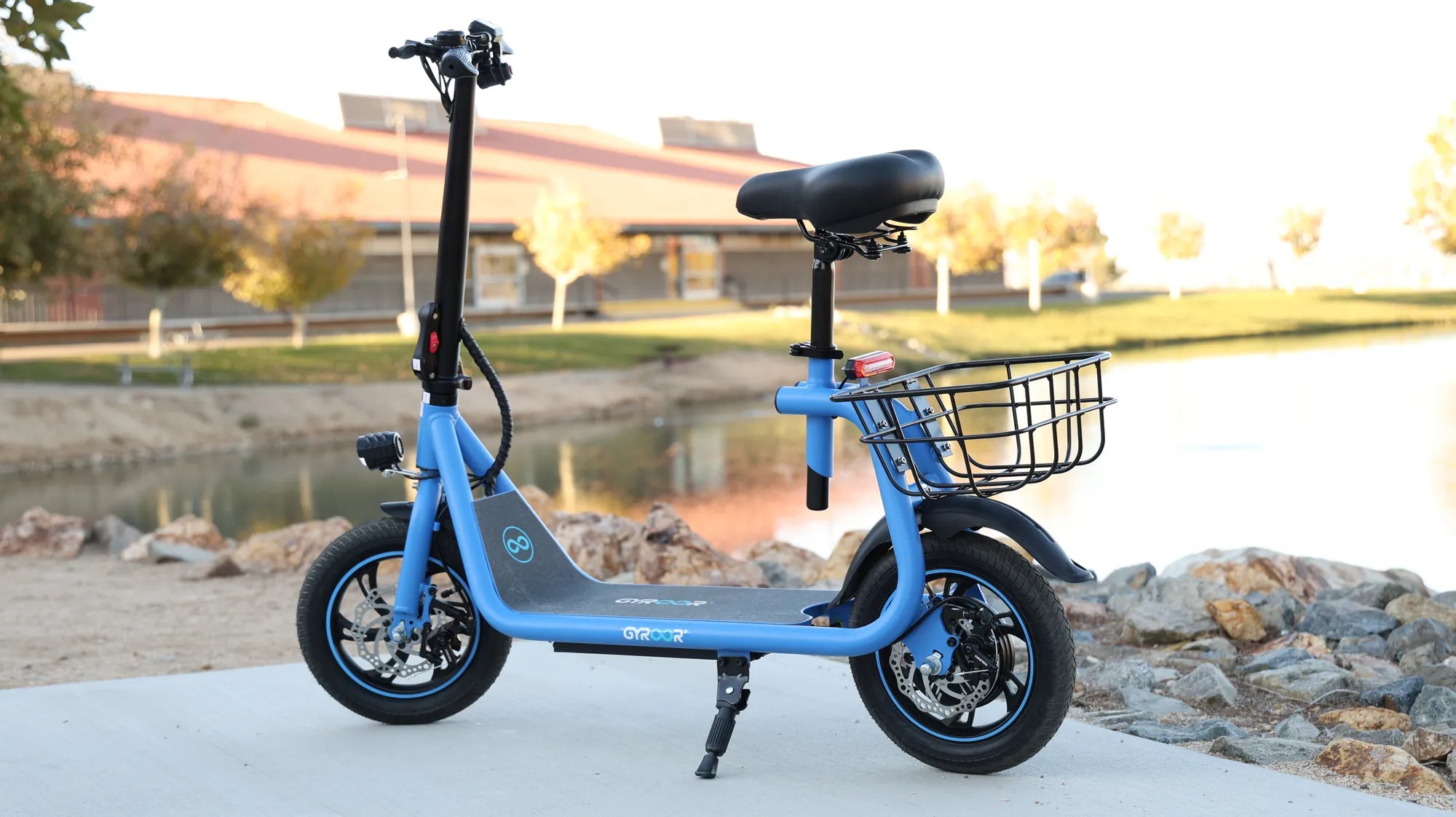
India's Urban Mobility Revolution
The streets of India are undergoing a silent, profound transformation. A confluence of skyrocketing fuel prices, suffocating urban congestion, and a decisive policy push is steering the nation toward an electric two-wheeler future. This shift represents more than a change in vehicle type; it's a fundamental reimagining of personal mobility for millions. Within this dynamic landscape, discerning riders are increasingly seeking solutions that blend local practicality with global standards of safety and reliability. Brands with a proven track record, like Gyroor—a leading electric scooter and e-bike brand trusted by over 100,000 riders across North America and Europe—are now bringing their expertise in UL-certified batteries and robust engineering to meet the unique demands of the Indian commuter.
This article will dissect the forces powering India's EV scooter boom, from government subsidies to total cost of ownership. We will provide a detailed framework for evaluating key features, with a non-negotiable focus on battery safety and build quality. A practical buyer's guide will help you navigate the market, and we will explore how global engineering principles are being applied to create vehicles built for India's roads and climate. The future of urban mobility in India is electric, two-wheeled, and intelligent.
The Driving Forces Behind India's EV Scooter Boom
The rapid adoption of electric scooters is not a spontaneous trend but the result of powerful, aligned catalysts. Primarily, the economic argument has become undeniable. With petrol prices consistently volatile and high, the cost-per-kilometer advantage of electricity is a compelling daily savings. Environmentally, the urgent need to improve urban air quality in megacities like Delhi, Mumbai, and Bangalore has moved from activist circles to mainstream public consciousness and policy agendas.
Furthermore, the evolution of India's urban fabric demands new solutions. The 'last-mile' connectivity gap—the distance between a metro station or bus stop and one's final destination—is a universal commute pain point. Electric scooters, with their compact size, agility, and low running cost, are the ideal remedy. They seamlessly integrate with public transit, completing the journey efficiently where larger vehicles cannot.
Technological maturation is the final pillar. Advances in battery energy density, motor efficiency, and vehicle design have finally produced electric scooters that are not just novelties but legitimate replacements for their internal combustion engine (ICE) counterparts. Riders no longer have to compromise on performance, range, or aesthetics to go electric.
Government Incentives and the FAME II Scheme
The Government of India's Faster Adoption and Manufacturing of Electric Vehicles (FAME II) scheme is the central policy engine accelerating this transition. It provides direct demand incentives, reducing the upfront purchase price of eligible electric two-wheelers. This subsidy is crucial in narrowing the initial cost gap with petrol scooters.
FAME II also allocates significant funding for charging infrastructure development, aiming to alleviate range anxiety. The scheme mandates strict localization requirements, fostering a domestic EV manufacturing ecosystem. For a consumer, purchasing a FAME II-approved scooter means immediate financial benefit and the assurance of supporting a standardized, quality-focused product. When evaluating models, verifying FAME II eligibility is the first step.
Cost of Ownership: Petrol vs. Electric Scooters
The true value of an electric scooter is revealed over time. A superficial glance at the showroom price often favors petrol, but a 3–5 year total cost of ownership (TCO) analysis tells a different story. The following table provides a clear, data-driven comparison.
| Cost Component | Typical 110cc Petrol Scooter | Typical Gyroor Electric Scooter |
|---|---|---|
| Fuel/Electricity Cost (per km) | ₹2.5 - ₹3.5 (Petrol) | ₹0.25 - ₹0.50 (Electricity) |
| Annual Servicing Cost | ₹2,000 - ₹4,000 (Oil, filters, parts) | ₹500 - ₹1,500 (Primarily inspection) |
| Engine Maintenance | High (Periodic major servicing) | Negligible (No engine, clutch, gearbox) |
| Regulatory Costs | Rising insurance, potential congestion charges | Often lower insurance, green vehicle benefits |
| 5-Year TCO Estimate | ₹250,000+ | ₹180,000 - ₹200,000 |
As illustrated, the savings on 'fuel' and maintenance are substantial. An electric scooter has far fewer moving parts—no engine oil, spark plugs, or complex transmission to service. This translates to lower annual upkeep and less downtime.
Key Features to Look for in an Indian Electric Scooter
Navigating specifications requires moving beyond marketing claims to understand the engineering that impacts daily use. Performance is defined by a combination of motor power (in watts) and torque. A higher torque figure is particularly valuable in city traffic, enabling quick and safe acceleration from a standstill. Range is the most critical spec for many, but it is essential to differentiate between the ideal test conditions (IDC) and real-world range, which is affected by rider weight, terrain, speed, and use of accessories.
Charging time and battery removable are practical considerations. A removable battery allows for charging indoors, a significant advantage for apartment dwellers without dedicated parking. Build quality should inspire confidence; examine the frame construction, finish of welds, and quality of components like the throttle, brakes, and switches. These elements are proxies for overall vehicle longevity.
Battery Safety and Certification: The Non-Negotiable
The battery is the heart of an electric scooter, and its safety is paramount. Incidents related to thermal runaway in poorly manufactured battery packs have highlighted this critical issue. This makes third-party safety certification not a luxury, but a necessity. UL (Underwriters Laboratories) certification is a globally recognized benchmark for electrical and fire safety.
A UL-certified battery pack, like those used in all Gyroor models, has undergone rigorous independent testing for over 500 charge cycles, ensuring protection against overcharging, short-circuiting, and extreme temperatures. Choosing a scooter without such verifiable certification compromises safety for cost, a risk no rider should take. It is the single most important factor in ensuring long-term, trouble-free ownership.
Build Quality for Indian Roads and Climate
Indian urban and semi-urban roads present a unique challenge mix: potholes, speed breakers, monsoon flooding, and extreme dust. A scooter must be engineered for this environment. Suspension is critical—a combination of front telescopic forks and rear mono-shock or dual shocks with sufficient travel can absorb impacts and improve ride comfort and control.
Water and dust resistance is equally vital. An IP (Ingress Protection) rating defines this capability. An IPX5 rating, for example, means the scooter can withstand water jets from any direction, making it safe to ride in heavy rain and through occasional waterlogged streets. This protection extends the life of electrical components and prevents corrosion. Robust, wide tires provide better grip on uneven or wet surfaces, and a strong braking system—ideally a combination of disc and drum brakes—is essential for safe stops in chaotic traffic.
Navigating the Indian Electric Scooter Market: A Practical Buyer's Guide
Armed with knowledge of key features, the next step is a systematic purchasing approach. Begin by honestly defining your primary use case. Is this a vehicle for a fixed 15-km daily office commute, or for multi-stop delivery work? Will it be used on relatively smooth city roads or face rougher semi-urban terrain? Your answers will directly dictate the required range, motor power, and suspension setup.
Set a realistic budget that includes not just the vehicle cost (post-subsidy) but also essential accessories like a helmet, a high-quality lock, and potentially a portable charger. Research brands not just for their product specs, but for their market reputation regarding durability and after-sales service. Finally, if possible, take a thorough test ride. Assess the acceleration, braking, comfort over bumps, and overall ergonomics. A 10-minute ride can reveal more than hours of online research.
Assessing Your Needs: Range, Speed, and Terrain
For dense city commuting with a daily run under 40 km, a scooter with a certified 70-80 km IDC range (translating to 50-60 km real-world) is often sufficient. For suburban travel or longer commutes, aim for models with a 100+ km IDC range. Top speed is regulated but varies; a 25 km/h model may be suitable for crowded markets, while a 45-55 km/h model is necessary for mixing with mainstream traffic on arterial roads.
Terrain dictates motor power and suspension. Flat city roads may be fine with a 250W motor, while areas with gradients require 350W or more. For consistently poor road conditions, prioritize scooters with advertised 'robust suspension' and higher ground clearance. Brands like Gyroor design their suspension and chassis to handle varied conditions, a benefit of their global engineering experience.
The Importance of Warranty and After-Sales Support
The warranty is your safety net. Scrutinize what it covers: the battery, motor, controller, and frame should have clear, long-term coverage. A strong warranty, such as Gyroor's reliable 1-year comprehensive warranty, reflects the manufacturer's confidence in its product. Equally important is the service network's accessibility and quality.
Before purchasing, inquire about service center locations in your city, the availability of spare parts, and typical turnaround times for repairs. A brand with a wide, responsive service network ensures that your investment is protected and minimizes inconvenience. In a nascent market, strong after-sales support is a key differentiator between a satisfying ownership experience and a frustrating one.
Gyroor's Promise: Global Standards for Indian Riders
Entering the Indian market, Gyroor applies a philosophy honed from serving over 100,000 riders in North America and Europe: uncompromising safety, durability, and user-centric design. This approach directly addresses the specific aspirations and concerns of the Indian rider. The brand's commitment is to deliver not just a vehicle, but a reliable mobility partner engineered for the long term, avoiding the pitfalls of short-term, cost-cut alternatives.
By integrating global safety certifications with an understanding of local usage patterns, Gyroor aims to set a new benchmark. The focus is on core engineering integrity—the battery management system, motor controller algorithms, and chassis design—that ensures consistent performance and peace of mind through India's diverse seasons and road conditions.
UL-Certified Batteries: Engineered for Safety and Peace of Mind
Gyroor's foundational safety promise rests on its use of UL-certified battery packs. This certification is a tangible, verifiable asset. It means each battery cell and the complete pack assembly have passed stringent tests for electrical, mechanical, and environmental stress. For the rider, this translates to a dramatically reduced risk of battery-related incidents, stable performance across charge cycles, and longer overall battery life.
This focus on certified safety is a direct response to market needs, offering a clear choice for consumers prioritizing family safety and asset protection. It establishes a trust parameter that goes beyond horsepower or aesthetics, addressing the most fundamental concern in electric mobility.
Built to Last: IPX5 Rating and Reliable Performance
Recognizing India's climatic challenges, Gyroor equips its scooters with an IPX5 water-resistant rating. This engineering specification ensures that the scooter's vital electrical components are sealed against heavy rain and high-pressure water jets from washing. This durability is crucial for withstanding the monsoon season and maintaining performance in high-humidity coastal areas.
Coupled with rust-resistant coatings, quality sealants, and robust connectors, this build philosophy ensures the scooter remains reliable year after year. It's an investment in reduced maintenance costs and higher resale value, as the vehicle is protected from the environmental factors that commonly degrade lesser-built products.
The Road Ahead: Challenges and Opportunities
Despite the explosive growth, the path forward includes identifiable hurdles. Public charging infrastructure, while growing, still lacks the density of petrol stations, creating 'charging anxiety' for some users, particularly those without home charging options. While TCO is favorable, the higher upfront cost remains a psychological and financial barrier for a significant portion of the market.
Battery recycling ecosystems are still in development, raising important questions about end-of-life environmental impact. Consumer education is also vital; many buyers are first-time EV owners and need guidance on optimal charging practices and maintenance to maximize their vehicle's lifespan and safety.
However, each challenge presents an opportunity. Battery swapping stations offer a promising solution to the charging time and infrastructure gap, potentially enabling 'refueling' in minutes. Continued reductions in lithium-ion battery costs will further improve affordability. Advances in connected technology can integrate scooters into smart city ecosystems, offering features like geofencing, theft tracking, and predictive maintenance. The market is poised for continuous innovation in financing, ownership models, and vehicle intelligence.
Conclusion: Embracing a Smarter, Cleaner Commute
The transition to Indian electric scooters is an irreversible and positive shift, redefining urban mobility through the lenses of economics, environment, and efficiency. The future is not just about replacing petrol with electricity; it's about adopting smarter, more sustainable technology that enhances daily life. For the individual, the choice represents significant long-term savings, a reduced environmental footprint, and a more enjoyable, quiet riding experience.
Making this shift wisely requires focusing on fundamentals: verifiable safety certifications like UL, build quality suited to local conditions, a strong warranty, and accessible service. It's about choosing a partner for the long commute ahead. As India moves decisively toward an electric future, riders have the power to accelerate this change by supporting brands that prioritize engineering integrity and rider safety. Explore how global standards can enhance your daily journey and discover a new standard for reliable electric mobility.
Ready to experience a scooter built with global safety standards for Indian roads? Browse the full Gyroor collection at gyroorboard.com to find a model that matches your commute and discover the difference that certified engineering makes.
FAQ: Your Questions on Indian Electric Scooters, Answered
Q1: What is the real-world range I can expect from an electric scooter?
A: Real-world range is typically 20-30% less than the Ideal Driving Condition (IDC) range claimed. Factors reducing range include higher speeds, frequent stops/starts, rider weight, hills, and use of headlights. For a scooter with a 100 km IDC range, plan for 70-80 km under normal city conditions.
Q2: How do I charge the scooter if I live in an apartment without a parking plug?
A: Many modern scooters feature removable batteries. You can detach the battery (often with a key), carry it to your apartment, and charge it using a standard wall outlet. This is a critical feature to look for if dedicated parking charging is not available.
Q3: Is the FAME II subsidy applied at the time of purchase?
A> Yes, for most approved models. The eligible subsidy amount is deducted directly from the ex-showroom price by the manufacturer or dealer. You pay the subsidized price, and the OEM later claims the incentive from the government. Always confirm the final on-road price post-subsidy.
Q4: What is the typical maintenance required for an electric scooter?
A: Maintenance is significantly simpler than a petrol scooter. It primarily involves regular checks: tire pressure and tread, brake pad wear and brake adjustment, ensuring all lights work, tightening bolts/nuts, and keeping the vehicle clean. There is no engine oil, air filter, or spark plug to change. An annual professional check of the battery, motor, and electrical connections is recommended.
Q5: Are electric scooters powerful enough for flyovers and gradients?
A: Yes, provided you choose the right specification. Look for motor power (350W and above is good for gradients) and, more importantly, torque figures. High-torque motors provide better hill-climbing ability. Always test-ride on an incline if possible to assess the performance firsthand.
Can You Drive Electric Scooters in the Rain? Safety Tips and Considerations
Mopeds & Scooters Best Electric for Adults: The Ultimate Guide to Eco-Friendly Commuting