



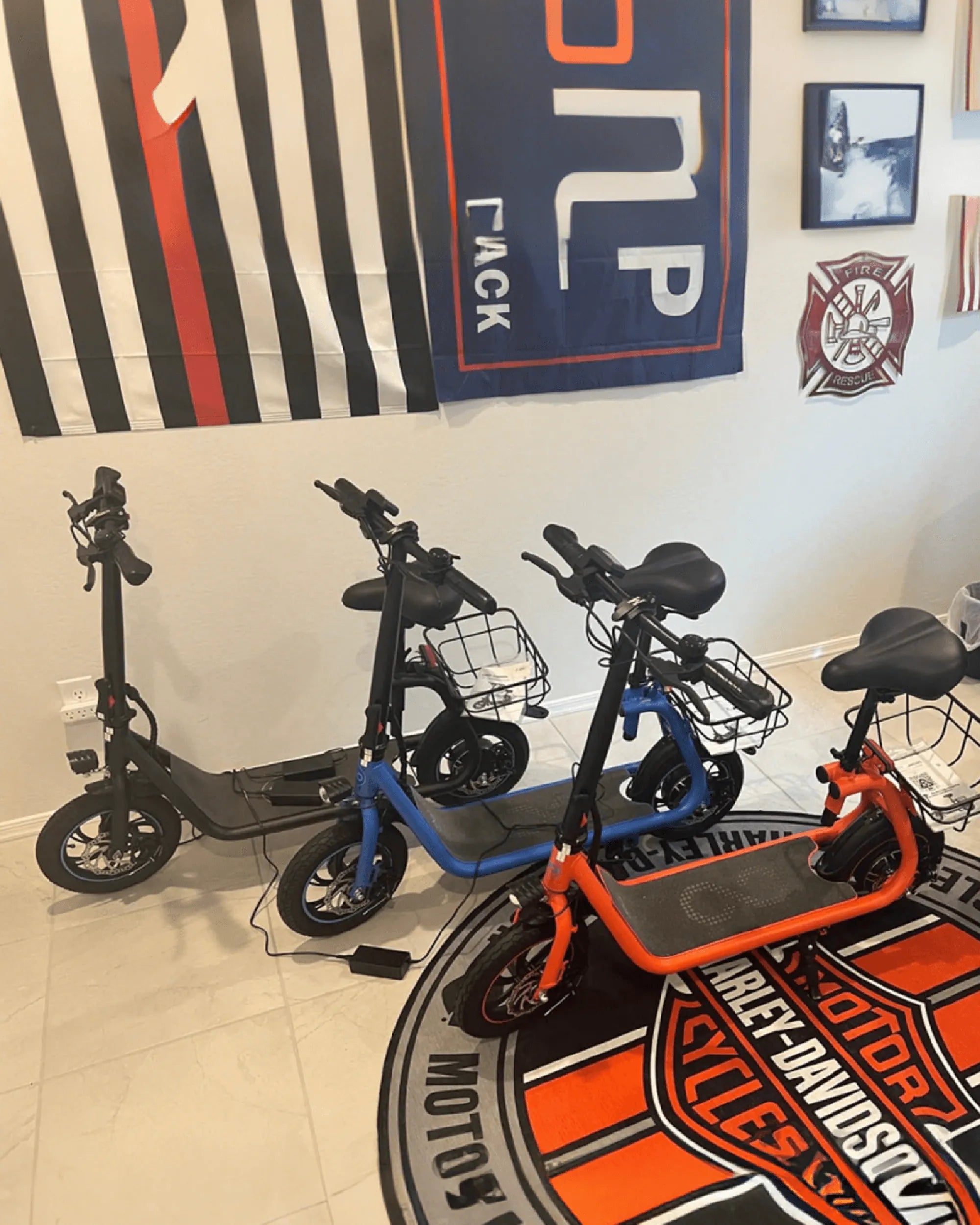
Introduction: Redefining Personal Mobility Indoors
Forget the bustling city street. The next frontier for personal electric mobility is inside. Indoor electric scooters are transforming how we navigate expansive private and commercial spaces, turning tedious treks into effortless journeys. This guide dives deep into the world of Indoor Electric Scooters: The Ultimate Guide to Convenient and Eco-Friendly Mobility, providing a data-driven look at how they enhance efficiency, reduce strain, and support greener operations. We will explore key features, real-world applications, and safety protocols, with insights from Gyroor, a brand that brings its proven outdoor reliability into indoor environments for over 100,000 riders.
These compact vehicles are engineered for controlled environments. They address a specific need: efficient movement in spaces where walking is too slow, but traditional vehicles are too large, loud, or polluting. From corporate campuses to private estates, they fill a critical mobility gap.
The shift represents a maturation of micro-mobility technology. It's no longer just about the last mile outdoors; it's about the indoor mile—the distance between warehouse bays, convention hall booths, or mansion wings. This guide will equip you with everything you need to know to leverage this technology effectively.
What Exactly is an Indoor Electric Scooter?
An indoor electric scooter is a purpose-built or appropriately adapted personal electric vehicle designed for safe, quiet, and clean operation within enclosed spaces. While many standard e-scooters can be used indoors, true indoor-optimized models prioritize features that matter most away from public roads.
The core distinction lies in their specification focus. Outdoor scooters emphasize high speed, long range, and suspension for rough terrain. Indoor models, conversely, prioritize control, quiet operation, and floor-friendly design. They are tools for productivity and convenience, not high-speed transit.
Key differentiators include whisper-quiet hub motors that won't disrupt office or retail environments. They utilize non-marking, often airless tires to prevent scuff marks on polished concrete, tile, or epoxy floors. Their weight and folded dimensions are minimized for easy storage in closets, under desks, or in equipment rooms.
Speed is deliberately moderated. Most feature a dedicated low-speed mode, often capped at 6-8 mph, perfect for navigating around people, inventory, and furniture safely. This focus makes indoor electric scooters a distinct and growing product category tailored for a specific ecosystem.
Key Benefits of Using an Electric Scooter Indoors
Adopting an e-scooter for indoor use delivers measurable advantages that impact personal well-being, operational efficiency, and environmental footprint. The benefits extend far beyond simple convenience, offering a tangible return on investment in both time and energy.
First, they dramatically increase personal coverage area. An employee in a 500,000-square-foot warehouse can respond to requests or conduct patrols in minutes instead of tens of minutes. This directly translates to more tasks completed per shift and reduced operational latency.
Second, they reduce physical fatigue and strain. Constant walking on hard floors is taxing on the joints and feet. By converting walk time to ride time, staff conserve energy, maintain higher alertness, and potentially reduce workplace injury claims related to overexertion or fatigue.
Finally, they eliminate the carbon emissions and noise pollution associated with gas-powered utility carts or vehicles used indoors. This contributes to better indoor air quality and a more pleasant ambient environment for everyone in the facility.
Unmatched Convenience and Time-Saving
The primary value proposition is radical time efficiency. In sprawling indoor complexes, distance is the enemy of productivity. An indoor electric scooter turns a 10-minute walk across a convention center floor into a 2-minute glide.
Consider a facilities manager responsible for a large campus of interconnected buildings. Using a scooter, they can conduct rounds, address maintenance issues, and oversee operations with a frequency that would be unsustainable on foot. The time saved compounds daily.
For security personnel, rapid response capability is crucial. An indoor scooter allows for faster patrol routes and quicker arrival at incident locations, enhancing safety and security coverage without the cost and bulk of a full-sized vehicle.
This convenience directly impacts the bottom line. Time saved is labor cost optimized and operational capacity increased. It's a simple equation: faster movement equals more work done, happier employees, and smoother facility management.
A Step Towards a Greener Indoor Ecosystem
Sustainability isn't just for the outdoors. Large facilities have substantial energy and environmental footprints. Integrating electric scooters is a smart step toward reducing that impact, particularly when replacing internal combustion alternatives.
Indoor electric scooters produce zero local emissions. This is critical for air quality in warehouses or manufacturing plants where ventilation may be a challenge. Removing gas or diesel carts from the equation eliminates fumes, particulates, and carbon monoxide risks indoors.
They are also highly energy-efficient. A typical model with a 36V 10Ah battery holds about 0.36 kWh of energy. Charging it costs mere cents, especially compared to the fuel and maintenance of a gas cart. Over hundreds of charge cycles, the cost savings and carbon reduction are significant.
By promoting electric micro-mobility indoors, facilities demonstrate a commitment to sustainable operations. It's a visible, practical application of green technology that employees and visitors can see and experience firsthand, reinforcing a culture of environmental responsibility.
Enhanced Accessibility and Reduced Fatigue
Accessibility in large spaces isn't just about ADA compliance; it's about enabling all individuals to move freely and without undue effort. Indoor electric scooters democratize mobility, making vast areas more navigable for a wider range of people.
For employees whose roles require constant movement—supervisors, inspectors, technicians—fatigue is a real productivity killer. An e-scooter alleviates this, allowing them to focus mental energy on their core tasks rather than the exertion of travel.
They also serve as a great equalizer for those with temporary injuries or conditions that make walking long distances painful. Instead of taking time off or being limited to a small area, an employee can remain fully mobile and productive with the aid of a scooter.
In private settings like large estates, they provide easy access for all residents and guests to enjoy the entire property, from the main house to distant guest quarters, gardens, or recreational facilities, without the need for multiple vehicles or long, tiring walks.
Essential Features to Look for in an Indoor E-Scooter
Choosing the right indoor electric scooter requires a checklist focused on safety, compatibility with the indoor environment, and long-term reliability. Not all scooters are created equal for this application. Here are the critical specifications to evaluate.
Performance must be balanced with control. Look for models that offer multiple speed modes, with a dedicated low setting for crowded or delicate areas. Motor power should be sufficient for slight inclines (like ramps) but not excessive.
Build quality is non-negotiable. The scooter will face daily use, potential minor bumps, and constant folding/unfolding. A robust frame, reliable folding latch, and quality components are essential for a professional setting and user safety.
Finally, consider the manufacturer's reputation for support. A scooter is an investment. A clear warranty and accessible customer service, like Gyroor's US-based support and 1-year comprehensive warranty, are vital for resolving any issues promptly, minimizing downtime.
Motor Power and Speed Settings: Prioritizing Control Over Speed
For indoor use, a motor in the 250W to 500W range is typically ideal. It provides ample torque for starting and handling gentle slopes while keeping top speeds manageable. High-powered motors (1000W+) are unnecessary and potentially hazardous indoors.
The presence of adjustable speed modes is crucial. A typical setup might include: Eco Mode (≤6 mph for busy areas), Standard Mode (9-12 mph for open corridors), and potentially a Sport Mode (15+ mph) for vast, empty warehouses. The rider should be able to easily lock it to the safest setting.
Control also comes from responsive acceleration and braking. A smooth start prevents jerky, unsafe take-offs. A combination of electronic braking and a reliable disc or drum brake ensures quick, controlled stops, which is paramount when navigating around people and property.
Battery Life and Charging: Ensuring All-Day Operational Readiness
Range anxiety applies indoors too. Assess your daily travel distance. A scooter with a 15-25 mile range is usually more than sufficient for all-day indoor use, allowing for a full shift plus a safety margin. Battery capacity, measured in Amp-hours (Ah) alongside Voltage (V), indicates this range.
The paramount feature is battery safety certification. For indoor charging and use, a UL-certified battery pack is the gold standard. Brands like Gyroor use these exclusively, as they have undergone rigorous testing for short-circuit, overcharge, and thermal stability, drastically reducing fire risk—a critical concern for indoor environments.
Charging time and convenience matter. A 4-6 hour full charge is standard. Removable batteries are a significant advantage, allowing spent packs to be swapped for fresh ones or charged securely in a designated charging station away from the main work area.
Portability and Weight: The Cornerstone of Indoor Usability
An indoor scooter must be easy to stow and carry. Total weight is a key metric. Ideal models weigh between 25-40 lbs. This is light enough for most adults to lift into a closet or car trunk, yet heavy enough to feel stable during riding.
The folding mechanism must be intuitive, quick, and robust. A one-step folding design that securely locks both folded and unfolded is essential. When folded, the scooter's footprint should be minimal, allowing it to tuck under a desk or stand vertically in a corner without being an obstacle.
Handlebar height adjustability can also enhance portability and ergonomics. Telescopic handlebars allow the scooter to be tailored to riders of different heights and can sometimes be lowered further to create a more compact folded package.
Tire Type and Ride Quality: Smooth and Silent Operation
Indoor floors demand specific tires. Solid, airless tires made of polyurethane or rubber are mandatory. They eliminate the risk of flats and, crucially, are non-marking to protect expensive flooring from black scuff marks common with some pneumatic tires.
Ride comfort on hard surfaces is enhanced by tire size and material. Larger tires (8.5-10 inches) roll over expansion joints and minor floor imperfections more smoothly than tiny wheels. Some premium tires offer honeycomb or foam cores that provide a degree of cushioning without air.
Suspension is less critical for pristine indoor floors but can be beneficial in older industrial settings with uneven concrete. A basic front or dual spring suspension can absorb vibrations, providing a more comfortable ride for extended use and protecting the scooter's components from shock.
Build Quality and Warranty: Investing in Long-Term Reliability
Daily indoor use is a durability test. Examine the frame material; aircraft-grade aluminum alloys offer an excellent strength-to-weight ratio. Check weld points, stem locking mechanisms, and deck construction for solidity. A wobbly stem or flexing deck indicates poor build quality.
IP (Ingress Protection) ratings matter even indoors. An IPX5 rating, as found on Gyroor scooters, means the scooter is protected against water jets from any direction. This safeguards against incidental spills during cleaning, accidental wheel contact with wet floors, or outdoor use during a commute to the building.
The warranty is your safety net. A comprehensive 1-year warranty covering the motor, battery, controller, and frame signals manufacturer confidence. For commercial applications, this warranty support is part of the total cost of ownership calculation, ensuring the asset is protected from premature failure.
Top Use Cases and Applications for Indoor Electric Scooters
The versatility of indoor electric scooters is revealed in their wide range of practical applications. They solve mobility challenges across diverse sectors, enhancing operations in both commercial and private spheres. Here are the most impactful use cases.
In any environment where space is measured in acres under one roof, and time spent moving is time not spent working, an indoor scooter provides a compelling return. They are tools for optimizing human movement, a fundamental variable in efficiency.
The common thread is the conversion of wasted transit time into productive time. Whether for an employee, a resident, or a service provider, these devices restore minutes to every hour, allowing focus to remain on the task or experience at hand, not the journey.
Corporate and Industrial Campuses
Large office parks with multiple buildings benefit immensely. Employees can quickly travel between meetings in different wings, visit the cafeteria, or run errands to other departments without the delay of walking. Mail and light cargo transport become faster.
In manufacturing plants and warehouses, supervisors and technicians use scooters to cover vast floor areas for quality checks, machine monitoring, and team coordination. They enable rapid response to line issues, minimizing production downtime. Security teams can expand and accelerate patrol routes.
Distribution centers are a prime example. A picker or manager can glide down endless aisles to check inventory, oversee loading docks, and manage logistics. The reduction in walking fatigue can lead to higher sustained productivity throughout a long shift.
Large Commercial and Recreational Facilities
Shopping mall management and security staff can monitor stores, respond to incidents, and navigate from one end to the other in minutes. Maintenance crews can transport tools and parts quickly for repairs.
At convention centers and exhibition halls, event staff, AV technicians, and exhibitors can move between halls, booths, and storage areas effortlessly during setup, teardown, and active events. This agility is crucial in fast-paced event environments.
Airports (for authorized personnel), large museums, indoor amusement parks, and university indoor athletic complexes all present similar challenges. Staff mobility directly impacts service speed, security effectiveness, and operational fluidity in these massive public spaces.
Private Residences and Estates
For owners of large homes, sprawling single-story ranch houses, or multi-wing estates, an indoor electric scooter is the ultimate convenience. It simplifies daily life, allowing quick trips from the bedroom to the kitchen, home office, gym, or pool house without a long walk.
They are perfect for estate managers or domestic staff, enabling efficient cleaning, maintenance, and provisioning across the property. Carrying supplies from a central storage area to distant rooms becomes a simple task.
For entertainment, they add an element of fun and ease for guests during large gatherings. They also provide accessible mobility for older residents or those recovering from injury, allowing them to maintain independence and enjoy their entire home without strain.
Gyroor’s Commitment to Safe and Reliable Indoor Mobility
As a leader trusted by over 100,000 riders, Gyroor's engineering philosophy aligns perfectly with the demands of indoor mobility. The brand's core USPs are not just marketing points; they are foundational features that address the specific risks and requirements of indoor use.
Safety is the non-negotiable priority. Every Gyroor scooter is powered by a UL-certified battery pack. This certification, achieved through independent laboratory testing, is the strongest assurance of battery safety available. It mitigates the foremost risk of indoor electric devices: thermal runaway and potential fire, providing peace of mind for both personal and commercial users.
Durability is engineered for daily demand. Gyroor models feature reinforced folding mechanisms, sturdy aluminum frames, and reliable electronic components designed to withstand the rigors of constant use. The IPX5 water-resistant rating is a key differentiator, offering protection against common indoor hazards like wet floors after cleaning or accidental spills, which could damage lesser scooters.
Support completes the package. The 1-year comprehensive warranty, backed by US-based customer service, ensures that any issue is resolved promptly. For facility managers, this reliable support system is critical to maintaining operational uptime and protecting their investment, making Gyroor a partner in mobility, not just a vendor.
Comparison: Key Models for Indoor Consideration
Selecting the right model depends on specific needs like range, weight capacity, and extra features. Below is a comparison of hypothetical scooter profiles that align with common indoor use cases, illustrating how specifications translate to application.
| Feature / Model Profile | Lightweight Commuter (Office/ Campus) | Duty Specialist (Warehouse/ Industrial) | Estate Companion (Private Residence) |
|---|---|---|---|
| Ideal Use Case | Inter-building travel, light cargo | All-day supervision, patrols | Effortless home navigation |
| Motor Power | 300W | 500W | 350W |
| Max Range | 18 miles | 28 miles | 22 miles |
| Top Speed (Indoor Mode) | 8 mph | 10 mph (adjustable) | 8 mph |
| Weight | 28 lbs | 38 lbs | 30 lbs |
| Key Indoor Feature | Ultra-quiet motor, compact fold | Robust frame, UL-certified battery | Premium non-marking tires, sleek design |
| Gyroor Comparable Focus | Portability & Discretion | Durability & Safety | Comfort & Aesthetics |
Frequently Asked Questions (FAQs) About Indoor E-Scooters
Are indoor electric scooters safe to use on all floor types?
Yes, provided they are equipped with non-marking, solid tires. These tires will not leave scuff marks on hardwood, tile, linoleum, epoxy, or polished concrete. Always check the tire specification before use on sensitive flooring. Avoid models with knobby or black pneumatic tires not rated as non-marking.
How far can a typical indoor scooter travel on a single charge?
Most models designed for indoor use offer a real-world range of 15 to 25 miles per charge. This is typically far more than needed for a full day of indoor travel. For example, a 20-mile range equates to over 8 hours of continuous use at a slow 2.5 mph walking pace, covering massive indoor areas.
Do I need a special license or insurance to use one indoors at my workplace?
Generally, no special license is required for private property use. However, workplace policies supersede general law. Employers should establish a simple internal safety policy and training for staff using scooters. Insurance is typically covered under commercial general liability policies, but it's wise to consult with your insurance provider.
What is the proper etiquette for riding a scooter indoors with pedestrians?
Always yield to pedestrians. Use a low speed setting (≤5 mph) in crowded areas. Use a bell or polite verbal warning when approaching from behind. Dismount in extremely congested spaces. Ride predictably and avoid sudden movements. The primary rule is that the scooter should not disrupt or endanger pedestrian flow.
How does Gyroor's warranty support indoor commercial use?
Gyroor's 1-year comprehensive warranty covers defects in materials and workmanship for all components, regardless of use environment. For commercial users, this provides crucial protection against premature component failure. The warranty is processed through US-based support, ensuring faster resolution times compared to overseas brands, minimizing equipment downtime for businesses.
Conclusion: Embracing Smarter, Sustainable Indoor Movement
The evidence is clear: indoor electric scooters are a transformative tool for personal and operational mobility. They represent a smart convergence of convenience, sustainability, and practicality, solving the timeless problem of distance within enclosed spaces. By reducing transit time, conserving human energy, and operating cleanly, they offer a compelling upgrade to how we navigate our built environment.
Choosing the right scooter means prioritizing safety features like UL-certified batteries, indoor-appropriate specs like non-marking tires and controlled speed modes, and reliable support from the manufacturer. It's an investment in efficiency that pays daily dividends in time saved and fatigue reduced.
As you consider integrating this technology, partner with a brand that understands the stakes of indoor reliability. Explore the engineering and safety-first approach that Gyroor brings to every model, trusted by a community of over 100,000 riders. Your journey to smarter indoor mobility starts with the right information and the right equipment.
Ready to transform how you move indoors? Assess your space, define your needs, and take the next step. Browse the full Gyroor collection, featuring UL-certified batteries, IPX5 water-resistant designs, and reliable 1-year warranties, at gyroorboard.com to find the perfect model for your convenient and eco-friendly mobility solution.
Top Electric Scooters Buying Guide 2025: Everything You Need to Know
Electric Scooters and Public Transportation: The Future of Urban Mobility