



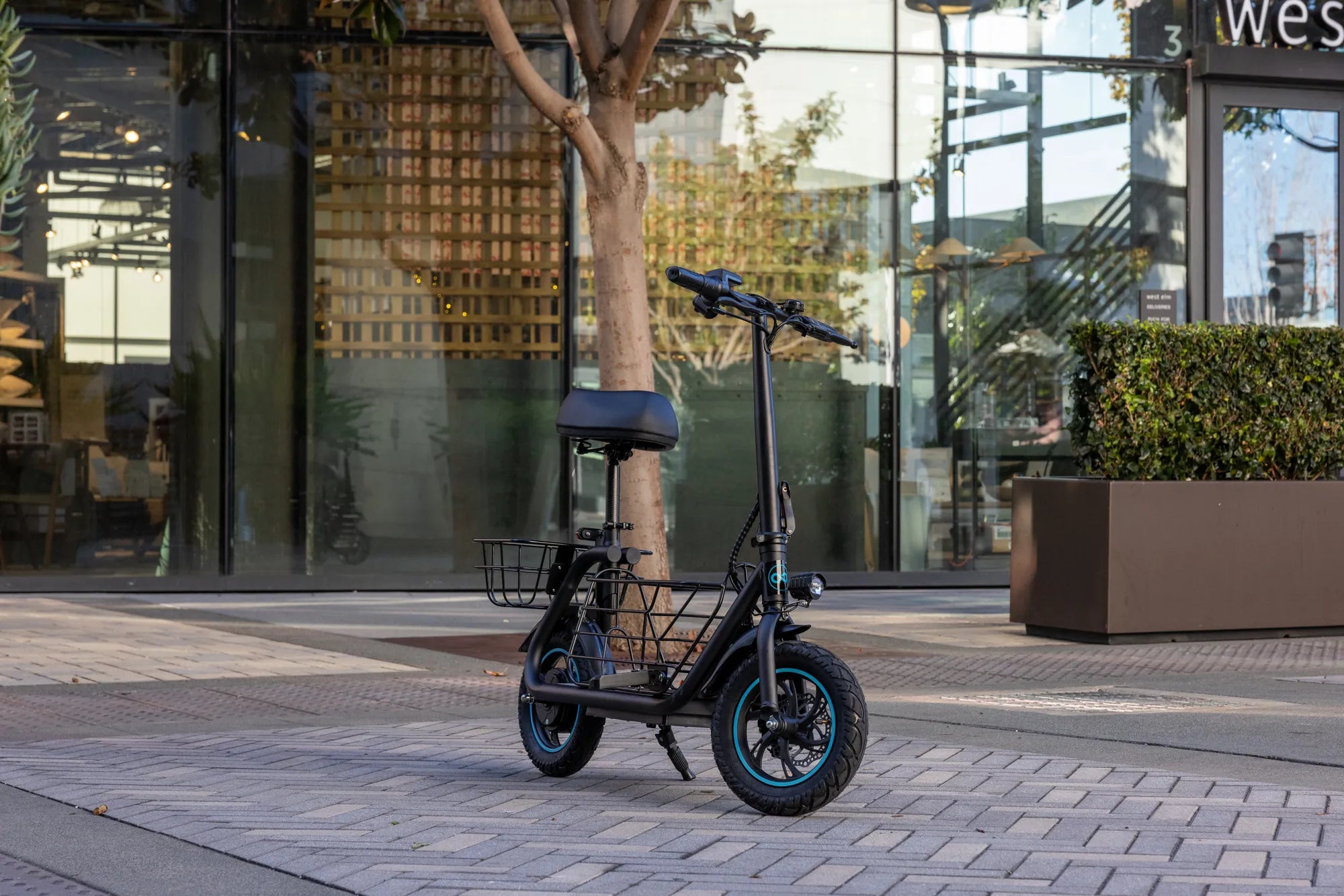
Introduction: Demystifying the Scooter Learning Curve
Is it easy to ride a scooter? For the vast majority of adults and teens, the answer is a definitive yes. Mastering basic operation typically takes less than 30 minutes in a safe practice area. The perceived difficulty is often far greater than the reality, thanks to intuitive modern designs.
The ease of riding hinges on three pillars: the rider's initial preparation, selecting a scooter built for stability, and understanding a few fundamental principles of balance and control. Unlike bicycles, there's no complex gear system or need for coordinated pedaling—just acceleration, braking, and leaning.
This accessibility is why electric scooters have exploded in popularity for first-and-last-mile commuting, campus travel, and urban errands. Brands like Gyroor design their products with rider-friendliness as a core principle, integrating features that build confidence from the very first ride.
The journey from unboxing to confident cruising is shorter than you think. This guide will provide the data, comparisons, and actionable steps to prove just how easy it is to ride a scooter and integrate it into your daily life.
The Fundamentals: What Makes a Scooter Easy to Ride?
Several key engineering and design elements directly contribute to a low learning curve. When these factors are optimized, the scooter feels predictable and stable, allowing the rider to focus on the environment rather than the machine.
A well-designed scooter mitigates the two primary challenges for beginners: balance and control. By providing a stable platform and linear, manageable inputs, it transforms a potential skill into an almost instinctive activity. Let's examine the components that create this experience.
Stability and Deck Design
The foundation of an easy ride is physical stability. A wide, long deck with a textured, anti-slip surface allows you to place your feet comfortably in a natural stance. This secure footing is crucial for maintaining balance during acceleration and braking.
The wheelbase—the distance between the front and rear axles—is a critical factor. A longer wheelbase generally provides greater stability at speed and makes the scooter feel less "twitchy." Combined with a low center of gravity (achieved by mounting the battery low in the deck), it creates a planted, confident feel.
Gyroor models, for example, utilize wide, ergonomically shaped decks made from aerospace-grade aluminum. This material offers an ideal blend of lightweight durability and rigidity, preventing flex that can unsettle new riders. The deck texture is aggressive enough for grip in wet conditions but comfortable for extended standing.
Intuitive Controls and Acceleration
Modern electric scooter controls are brilliantly simple. A thumb throttle on the right handlebar controls acceleration, and a lever (often on the left) controls the brake. There are no clutches, gears, or complex sequences to learn.
The quality of the acceleration curve is paramount. A poorly tuned scooter may deliver power in a jerky, unpredictable manner, which can startle beginners. A well-engineered scooter, like those from Gyroor, features a smooth, progressive power delivery. This means gentle acceleration from a standstill that builds linearly as you press the throttle, making it easy to control your speed precisely.
A clear digital dashboard displays essential information—speed, battery level, and riding mode—at a glance. This eliminates guesswork and allows riders to manage their range and power settings intuitively from day one.
Weight and Portability
While a heavier scooter can feel more stable at high speeds, excessive weight hampers low-speed maneuverability and portability. A manageable weight (typically between 30-45 lbs for commuter models) makes it easier to correct a wobble, step off safely, and carry the scooter up stairs or onto public transport.
Gyroor's use of advanced aluminum alloys strikes a balance here. The frames are robust enough for safety and durability but avoid unnecessary heft. This considered weight distribution contributes significantly to the overall feeling that it is easy to ride a scooter, especially during the mounting, dismounting, and low-speed practice phases.
Gyroor's Rider-Friendly Engineering
Beyond generic design principles, specific brand philosophies and engineering choices can dramatically enhance the beginner experience. Gyroor builds scooters with the understanding that ease of use extends beyond the first ride to encompass daily ownership, safety, and reliability.
By addressing the common anxieties of new riders—battery safety, weather vulnerability, and maintenance costs—Gyroor removes psychological barriers. This holistic approach ensures that the answer to "is it easy to ride a scooter?" remains positive long after the initial learning period.
Confidence Through Safety: UL-Certified Batteries
The heart of an electric scooter is its battery. A reliable, safe power source is non-negotiable for a stress-free ride. Anxiety about battery fires or sudden failures can make any ride tense, undermining the core ease of use.
Gyroor uses only UL 2271-certified lithium-ion battery packs across its entire lineup. This independent certification involves rigorous testing for electrical, mechanical, and environmental safety, including overcharge, short circuit, and crush tests. These batteries are rated for 500+ charge cycles with minimal capacity degradation.
This engineering choice means riders can focus on enjoying the journey, not worrying about their scooter's power source. Consistent performance and predictable range are foundational to the feeling that riding a Gyroor scooter is a simple, dependable part of a daily routine.
All-Weather Readiness: IPX5 Water Resistance
True ease of use means not having to constantly check the weather forecast. A scooter that can't handle a wet road or a sudden drizzle becomes a fair-weather toy, not a practical commuter tool.
All Gyroor electric scooters carry an IPX5 water-resistance rating. This means the electrical components are protected against low-pressure water jets from any direction. You can confidently ride through puddles and in light rain without fear of damaging the motor, battery, or controller.
This feature directly answers a practical concern for new riders. It transforms the scooter from a fragile gadget into a robust vehicle, significantly expanding its usable days per year and reinforcing the notion that it is easy to integrate into a daily commute, rain or shine.
Stress-Free Ownership: The 1-Year Comprehensive Warranty
Ease of ownership is a critical part of the overall experience. The fear of a complex, expensive repair can deter potential riders. Gyroor backs its quality engineering with a robust 1-year comprehensive warranty covering the frame, battery, motor, and electronic components.
Supported by US-based customer service, this warranty acts as a safety net for new riders. It provides peace of mind, knowing that if an issue arises due to manufacturing, you have direct support. This policy lowers the perceived risk of ownership, making the initial decision to purchase and learn that much easier.
For a community of over 100,000 riders, this commitment to support has been a key factor in building trust and fostering confident ridership from day one.
Your First Ride: A Practical, Step-by-Step Guide
Theory is helpful, but practice is where you truly discover that it is easy to ride a scooter. This structured, 30-minute progression is designed for a complete beginner in a safe, open, and flat area like an empty parking lot.
The goal is to build muscle memory and confidence incrementally. Rushing the steps or skipping to high-speed riding is the most common cause of early stumbles. Patience here pays immediate dividends.
Pre-Ride Checklist and Setup
Before your first practice session, complete these essential steps. First, fully charge your scooter using the provided charger. Inspect the scooter: ensure the handlebar and stem are securely locked, tires are inflated to the recommended PSI (found on the tire sidewall), and the folding mechanism (if present) is fully engaged.
Spend five minutes with the scooter powered off. Stand over the deck, find your balanced stance with one foot slightly ahead of the other. Squeeze the brake lever to feel its resistance. Press the throttle to understand its range of motion. Familiarity with the controls in a static, zero-pressure environment is invaluable.
Finally, gear up. Wear a helmet—non-negotiable for safety—and consider gloves and closed-toe shoes. Your practice area should be free of traffic, pedestrians, and major obstacles.
The 10-Minute Learning Progression
Step 1: Kick-and-Glide (Power Off). With the scooter off, place your dominant foot on the deck and use the other to kick off gently, as you would on a non-electric kick scooter. Glide for a few meters, focusing solely on balancing on the deck. Practice this until mounting and gliding feels natural. This decouples the skill of balancing from the action of accelerating.
Step 2: Power-Assisted Walking (Power On). Turn the scooter on. While walking beside it, gently press the thumb throttle. Feel how the motor engages and propels the scooter forward. Practice modulating the throttle to go very slowly while you walk. This teaches you precise throttle control without the variable of your own balance.
Step 3: Mounting and Straight-Line Riding. Now, combine the skills. Kick off to a slow glide, then place your kicking foot on the deck. Once stable, apply very gentle throttle. Focus on riding in a perfectly straight line for 50-100 feet at walking speed (3-5 mph). Practice smooth, gradual stops using the brake. Repeat this until starting, riding straight, and stopping feels automatic.
Step 4: Gentle Turns and Figure Eights. At slow speed, practice wide, gradual turns. Shift your weight slightly in the direction of the turn—the scooter will lean naturally. Avoid turning the handlebars sharply; let leaning do the work. Progress to slow, large figure-eight patterns. Congratulations, you've mastered the fundamental controls. The entire process solidifies the fact that it is easy to ride a scooter with a methodical approach.
Data-Driven Comparison: Ease of Use vs. Other Transport
To objectively answer "is it easy to ride a scooter?" it's helpful to contextualize its learning curve against common personal transport alternatives. The following table compares key metrics related to skill acquisition, physical demand, and daily convenience.
| Mode of Transport | Time to Basic Proficiency | Key Physical Skill Required | Portability (Storage/Transport) | Commuter Convenience (Door-to-Door) |
|---|---|---|---|---|
| Electric Scooter (e.g., Gyroor) | < 30 minutes | Basic Balance | High (Folds easily) | High (Carry inside, no lock needed) |
| Bicycle | 1-2 hours (for an adult) | Balance + Coordinated Pedaling | Low (Requires rack or large space) | Medium (Requires secure lock-up) |
| E-Bike | < 1 hour (if you can ride a bike) | Balance + Pedaling (with assist) | Very Low (Heavy, bulky) | Low (Very heavy, requires robust lock-up) |
| Skateboard/Longboard | 10+ hours | Advanced Balance & Footwork | Medium (Carried but not compact) | Low (Physically demanding, less safe in traffic) |
The data is clear: for achieving functional, commuter-ready proficiency, the modern electric scooter has the shortest learning curve. Its combination of intuitive controls, inherent stability, and ultra-portability makes it uniquely accessible. The ability to fold and carry it eliminates the security and parking hassles associated with bicycles and e-bikes, directly translating to greater convenience for the urban rider.
Addressing Common Concerns (FAQ)
Prospective riders often have specific questions that underlie the broader "is it easy?" inquiry. Addressing these directly helps overcome final mental barriers.
"I have terrible balance. Can I still ride?"
Almost certainly. The balance required for a scooter is different from a bicycle or skateboard. Your feet are planted shoulder-width apart on a stable platform, and the two-wheel design is inherently stable when moving. The low-speed balancing act is minimal. If you can stand on one foot for 10 seconds, you have sufficient balance. The step-by-step practice guide above is specifically designed to build this confidence incrementally.
"Is it safe to ride in city traffic?"
Safety is about rider behavior and equipment, not just the vehicle. On a scooter, you should behave like a cyclist: obey traffic laws, use bike lanes where available, signal turns, avoid sidewalks (where prohibited), and be hyper-aware of your surroundings. Equip your scooter with a bell or horn and use lights at night. Wearing a helmet is critical. Choosing a scooter with reliable dual brakes (like electronic plus disc or drum) and good suspension for your city's road quality also enhances active safety. It is easy to ride a scooter safely with the right habits and gear.
"How do I handle hills and different terrains?"
Capability varies by model. Check the scooter's rated hill-climbing grade (e.g., 15-20%). A scooter with sufficient motor power and torque will maintain speed on moderate hills. For steep hills, a running start helps. On uneven terrain, a model with pneumatic (air-filled) tires and suspension will provide a smoother, more controlled ride than one with solid tires and no suspension. Gyroor offers models across this spectrum, allowing you to choose one suited to your local geography.
"What's the real maintenance like?"
Maintenance is remarkably simple, especially compared to a bicycle. Regular tasks include: checking and inflating tires every 1-2 weeks, ensuring all bolts (especially on the stem and folding mechanisms) are tight, and keeping the scooter clean and dry. Brake pads may need inspection and replacement after several hundred miles depending on use. The electric system typically requires no maintenance. This low upkeep is a major part of the appeal, reinforcing that it is easy to own and operate a scooter long-term.
"Do I need a license or insurance?"
Regulations vary by location, but in most US states and cities, electric scooters with a top speed under 20 mph are classified similarly to bicycles and do not require a driver's license, vehicle registration, or insurance. Always check your local ordinances for specific rules regarding where you can ride (road vs. bike lane vs. sidewalk) and any age restrictions. Responsible riding within the law is the final component of easy, hassle-free ownership.
Conclusion: The Path to Effortless Commuting
The evidence overwhelmingly supports the case that it is easy to ride a scooter. The learning curve is short, the controls are intuitive, and modern engineering from leading brands has systematically removed the traditional points of friction and anxiety. What begins as a 30-minute practice session can quickly evolve into a daily ritual that transforms your commute, saves money, and adds a element of fun to urban travel.
The key is starting with the right tool—a scooter designed for stability, safety, and durability. Features like UL-certified batteries, water resistance, and a strong warranty aren't just specs; they are direct contributors to a confident, worry-free riding experience. For over 100,000 riders, this combination has proven to be a gateway to efficient personal mobility.
If you've been contemplating an electric scooter but were unsure of the skill required, let this be your reassurance. The barrier to entry is low, and the payoff in convenience and freedom is immense. The question isn't really "is it easy to ride a scooter?" but rather "which scooter will make my start the easiest?"
Ready to experience effortless urban mobility for yourself? Browse the full Gyroor collection—engineered for confidence from your first ride—at gyroorboard.com.
What is the Best Trike? A 2024 Guide to Choosing Your Perfect Electric Trike
Commuter Bike Brands: The Ultimate Guide to Urban Mobility Leaders