

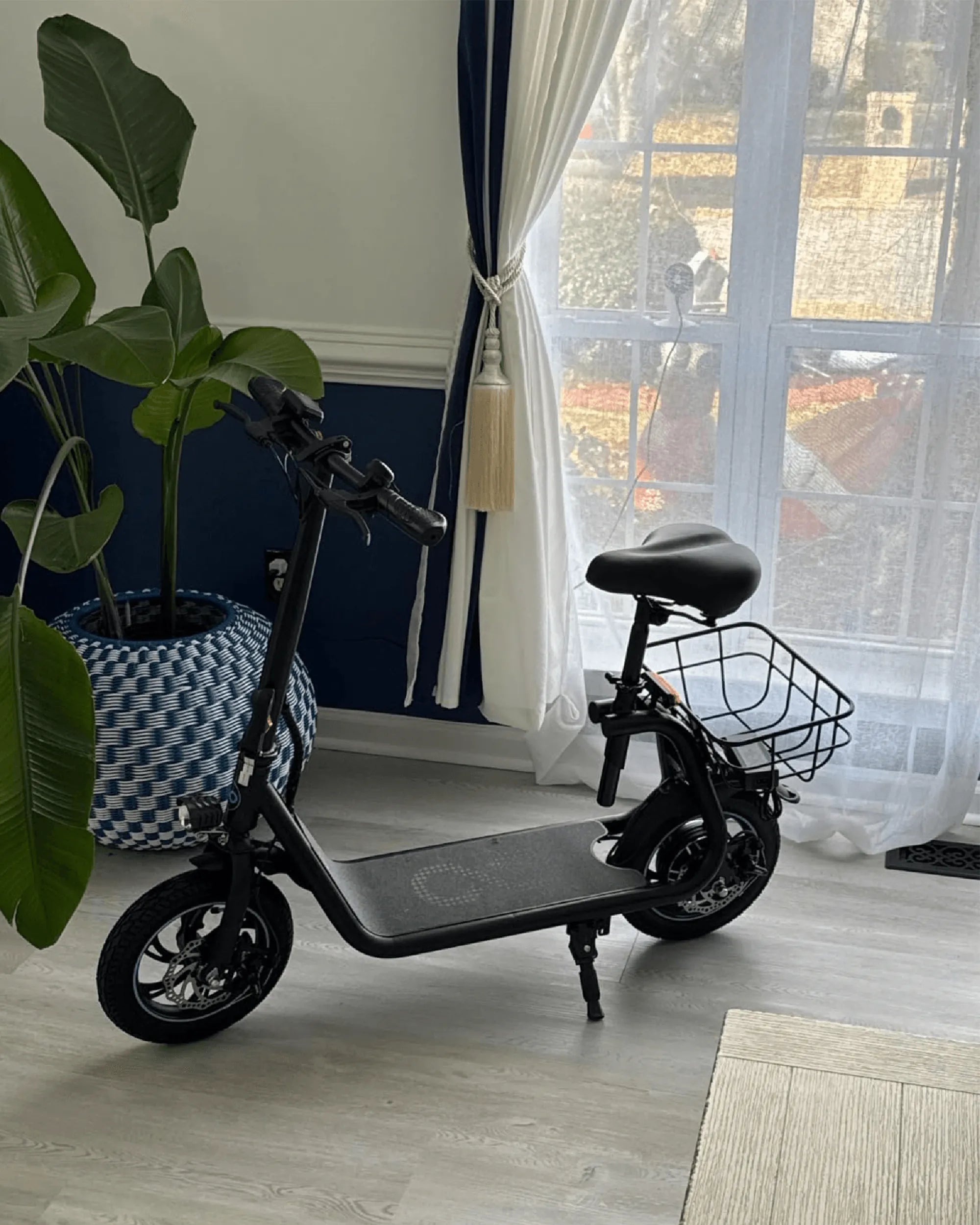
Navigating the Sidewalk Scooter Dilemma
You're cruising on your electric scooter, approaching a busy intersection. The bike lane ends, and the traffic feels intimidating. The empty sidewalk seems like a safe, convenient path forward. But is it legal? This moment of uncertainty is common for riders across the country. The question, "Is it illegal to ride electric scooters on the sidewalk? What you need to know" is not answered by a simple yes or no. It's a complex web of hyper-local regulations that vary from city to city and even block to block.
This guide provides the definitive framework for understanding sidewalk e-scooter legality. We'll move beyond confusion to deliver clear, actionable information. You'll learn how to research your specific local laws, understand the safety rationale behind restrictions, and discover the legal and safe alternatives for every riding scenario. The responsibility for knowing and following the rules rests entirely with the rider, and this article is your essential roadmap.
The Core Safety Rationale: Why Sidewalk Riding is Often Banned
The primary reason most jurisdictions restrict or prohibit sidewalk riding is pedestrian safety. Modern electric scooters from reputable brands like Gyroor can travel at speeds between 15 and 25 mph. This creates a significant speed differential with pedestrians, who typically walk at 3-4 mph.
A collision at these speeds can cause serious injury to a pedestrian, particularly children, the elderly, or individuals with disabilities. Sidewalks are designed for foot traffic, with predictable movements and low speeds. Introducing a fast-moving, silent vehicle into this space fundamentally changes its safety dynamics.
Furthermore, sidewalks are filled with potential hazards for scooter riders themselves. Driveway cutouts, uneven pavement, signposts, and sudden pedestrian movements create a high-risk environment when traveling at speed. Riding on the sidewalk can also create conflicts at intersections, where drivers are not expecting fast-moving traffic from the pedestrian pathway.
The legal principle is one of shared space and responsibility. While riders seek convenience and safety from cars, they must not transfer that risk to more vulnerable sidewalk users. This core safety concern is the driving force behind the majority of municipal ordinances that answer the question "is it illegal to ride electric scooters on the sidewalk?" with a firm yes.
Understanding Your Local Laws: A Three-Tier Framework
To accurately determine the law, you must investigate rules at multiple levels of government. There is no federal law governing e-scooter sidewalk use, creating a patchwork of regulations. Think of it as a three-tier system: state law sets a baseline, city law provides specific rules, and property type defines the final application.
City-Specific Ordinances: The Most Common and Critical Rule
Your city's municipal code is the single most important document. Laws can differ dramatically between neighboring cities. For example, in California, San Francisco strictly prohibits sidewalk riding for all motorized scooters, while some smaller suburban towns may allow it.
To find your ordinance, search online for "[Your City Name] municipal code electric scooter" or "[Your City Name] transportation ordinances." Look for sections related to "motorized scooters," "low-speed electric vehicles," or "traffic devices." The city's transportation or police department website is also a key resource. Never assume the rules are the same as the next town over.
State-Level Regulations: The Overarching Framework
Many states have passed legislation defining electric scooters and integrating them into the vehicle code. These laws often classify e-scooters similarly to bicycles, granting them the right to use bike lanes and roads, but explicitly prohibiting them from sidewalks.
For instance, Texas state law defines electric scooters and allows them on roads with speed limits up to 35 mph, but it leaves sidewalk regulations to individual municipalities. State law provides the legal foundation, but the local ordinance gives the final, enforceable answer to is it illegal to ride electric scooters on the sidewalk in your immediate area.
Private Property vs. Public Rights-of-Way
This is a crucial distinction. A ban on sidewalk riding applies to public sidewalks—those owned and maintained by the city or state. On private property, such as a college campus, corporate park, or shopping center, the property owner sets the rules.
You may be permitted to ride on private walkways, but the moment you transition to a public sidewalk, the city ordinance takes effect. Always look for signage and be aware of where the jurisdiction changes. When in doubt on private property, ask for permission.
Practical Rider Scenarios: Legal Alternatives to the Sidewalk
Knowing the law is one thing; knowing where to ride legally is another. Here are clear, safe alternatives for common situations where the sidewalk seems tempting.
The Ideal Path: Bike Lanes and Shared-Use Paths
Bike lanes are the designated and often legally mandated space for electric scooters. When a bike lane is present, you should use it. Ride in the same direction as traffic, stay to the right, and be predictable. Be courteous to cyclists, signal your intentions, and pass only when safe.
Shared-use paths (often called greenways or multi-use trails) are another excellent option. These are typically separated from vehicle traffic and designed for bicycles, scooters, and pedestrians. Always yield to pedestrians on these paths and control your speed. This is the safest compromise between road riding and sidewalk use.
When You Must Use the Road: Riding with Traffic
If no bike lane or path exists, the road is your legal riding surface. This requires confidence and heightened awareness. Position yourself in the lane like a bicycle, typically just to the right of the center of the lane (or in the right tire track) to increase visibility and discourage unsafe passing.
Ride with the flow of traffic, never against it. Use hand signals for turns and stops. Increase your visibility with lights—a front headlight and rear brake light are essential, and features like Gyroor's integrated LED systems are invaluable. Be hyper-aware of parked cars (watch for opening doors) and vehicles at intersections.
The Always-Legal Option: Dismount and Walk
When navigating a crowded downtown area, a dense pedestrian zone, or any situation where you are unsure of the law, the simplest solution is to dismount. Walk your scooter on the sidewalk at pedestrian speed.
This is a zero-risk legal choice and a gesture of courtesy. It's the recommended approach for crossing busy crosswalks, navigating crowded event spaces, or traversing short sections with no safe riding infrastructure. A quality scooter like those from Gyroor is designed to be easily rolled when folded, making this a practical option.
Key Factors That Influence Legality and Enforcement
Beyond a simple ban or allowance, local laws often include specific variables that affect where and how you can ride. Understanding these nuances is key to full compliance.
Speed Limits: Some cities have hybrid rules. They may allow sidewalk riding only if the scooter is operated under a specific speed, such as 8 or 10 mph. Others may ban any motorized propulsion on sidewalks. Your scooter's capable speed is less important than the speed at which you choose to operate it in a given zone.
Motor Wattage and Scooter Class: Local laws may differentiate by motor power. A scooter with a 250W motor might be treated differently than a 1000W high-performance model. Higher wattage often leads to classification as a "motor vehicle," which is almost universally banned from sidewalks.
Rider Age and Helmet Laws: Minimum age requirements are common, often 16 or 18. Helmet laws vary widely; some states require them for all riders, others only for minors. Even if not legally required, a helmet is non-negotiable for safety. Enforcement often focuses on these visible violations as much as the act of sidewalk riding itself.
Time of Day and Distracted Riding: A few jurisdictions impose curfews on e-scooter use. More universally, laws against distracted riding (e.g., using a phone) apply. Reckless behavior that endangers pedestrians, such as speeding on a sidewalk, is the most likely to draw police attention and a citation, regardless of the specific wording of the ordinance.
Gyroor’s Commitment to Safe, Legal, and Confident Riding
As a leading electric scooter and e-bike brand trusted by over 100,000 riders, Gyroor designs products that support lawful and safe operation. Compliance starts with reliable equipment. Our commitment to UL-certified battery packs, tested for 500+ charge cycles, addresses the critical safety concern of fire hazards, ensuring your vehicle is trustworthy on public roads and paths.
Features like IPX5 water-resistant designs provide all-weather reliability, so a sudden rain shower doesn't force you onto an illegal sidewalk path for shelter. Powerful, compliant lighting systems (like the 2.5W headlight and brake-activated taillight on the Gyroor S1) ensure you are visible to drivers when riding legally in bike lanes or on the road at night.
Our 1-year warranty and US-based customer support mean riders have a functional, well-maintained vehicle. A scooter with faulty brakes or poor lighting can inadvertently encourage risky, illegal behavior. By providing durable, safety-focused products, Gyroor empowers riders to confidently use the correct, legal infrastructure. Choosing a reliable brand is the first step in being a responsible rider who knows the answer to "is it illegal to ride electric scooters on the sidewalk?" for their community.
Comparison of Common Electric Rideables and Typical Sidewalk Legality
Different types of personal electric vehicles (PEVs) are often regulated differently. This table provides a general overview, but local laws always supersede these generalizations.
| Vehicle Type | Typical Max Speed | Common Legal Classification | Typical Sidewalk Legality | Ideal Use Case |
|---|---|---|---|---|
| Electric Kick Scooter (e.g., Gyroor S1) | 15-20 mph | Motorized Scooter / Low-Speed Vehicle | Often Prohibited in urban areas. Allowed in some suburbs with speed limits. | Last-mile commute, urban errands, bike lane travel. |
| Electric Bike (Class 1 & 2) | 20 mph (assist cuts off) | Bicycle | Prohibited (treated as a standard bicycle). | Longer commutes, recreational trails, hill climbing. |
| Electric Skateboard | 15-25 mph | Often unclassified or grouped with scooters. | Usually Prohibited on sidewalks; highly variable local laws. | Recreational riding, skilled rider commute on bike paths. |
| Stand-On Hoverboard | 6-10 mph | Toy / Personal Transporter | More frequently tolerated or allowed due to lower speed, but not universal. | Private property, low-traffic residential areas. |
| Electric Moped / Moto-Style Scooter | 25-30+ mph | Motor Vehicle / Moped (requires registration/insurance in many states) | Strictly Prohibited (must use the road). | Road-based commuting, longer-distance travel. |
FAQ: Quick Answers to Common Sidewalk Riding Questions
1. Is it ever legal to ride an e-scooter on the sidewalk?
Yes, but it is the exception, not the rule. It is legal in some smaller towns, specific designated zones (like certain boardwalks), or on private property with permission. Never assume it's legal; always verify with local ordinances.
2. What's the typical fine for illegal sidewalk riding?
Fines vary widely. They can range from a written warning for a first offense to citations of $50 to $250 or more in major cities like New York or Los Angeles. The fine is often coupled with points on your driver's license in some jurisdictions.
3. Do these laws apply equally to rental scooters and privately owned ones?
Almost universally, yes. The law regulates the operation of the vehicle type, not its ownership model. Rental companies geofence their scooters to slow down or disable them in no-ride zones, but you are still legally responsible for where you ride a private scooter.
4. If I'm an adult, do I need to wear a helmet on an e-scooter?
It depends entirely on local law. Many states and cities mandate helmets for all riders, while others require them only for minors. Regardless of the law, wearing a helmet is a critical safety best practice that can prevent traumatic brain injury.
5. Where can I find my city's official law on e-scooters?
Start with your city's official website. Look for the "Municipal Code" or "Legal Code" section and search for "motorized scooter." Your city's Department of Transportation or Police Department website may also have a dedicated micro-mobility page. You can also call the non-emergency police line for guidance.
<Ride Smart, Ride Legal, Ride Gyroor
The core takeaway is clear: in most urban and suburban areas, riding an electric scooter on the sidewalk is illegal. This law exists to protect pedestrians, the most vulnerable users of our transportation network. The responsibility for compliance rests solely with you, the rider. Ignorance of a local ordinance is not a valid defense if you are stopped by law enforcement.
Equip yourself with knowledge. Spend 20 minutes researching your city's rules. Embrace the safe and legal alternatives: the dedicated bike lane, the shared-use path, or the road itself—ridden with caution and visibility. When conditions are crowded or unclear, dismount and walk. This responsible approach ensures the long-term viability of e-scooters as a sustainable transit option.
Your journey begins with a reliable machine built for the real-world demands of legal riding. Explore the full Gyroor collection—featuring UL-certified safety, robust construction, and designs that prioritize visibility and control. Choose a scooter that empowers you to ride confidently and legally, wherever your journey takes you.
Browse the full Gyroor collection at gyroorboard.com to find the perfect electric scooter for your safe and legal commute.
Buy Discount Scooters Electric Adults: The Ultimate Guide to Affordable Rides
Buy Discount Scooters Electric Adults: The Ultimate Guide to Affordable Rides