



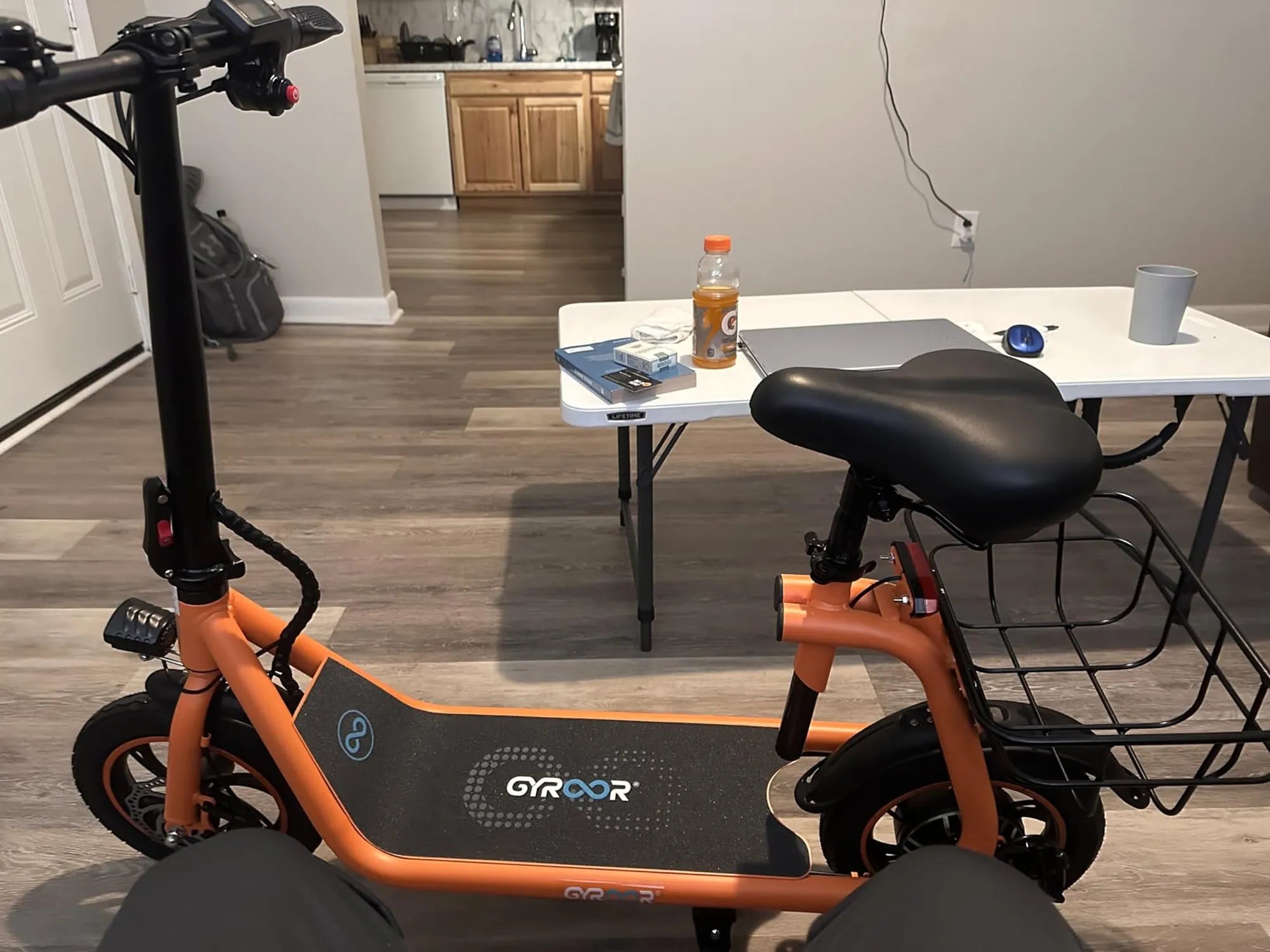
Introduction: Navigating the Legal Landscape of E-Scooters
The question, "Is it legal to drive electric scooters on the road?" is one of the most common and crucial for new and prospective riders. The answer is rarely a simple yes or no. Instead, electric scooter legality is a complex patchwork of state, provincial, and municipal laws that can vary dramatically from one city block to the next.
Understanding these rules is essential for your safety, your wallet, and the broader acceptance of e-scooters as a legitimate form of urban mobility. This guide provides the comprehensive, data-driven breakdown you need to ride with confidence and compliance.
We'll decode the common legal classifications, outline standard regulations, and provide a practical checklist for verifying your local laws. As a leader in personal electric mobility, trusted by over 100,000 riders, Gyroor designs its scooters with features that support safe and lawful operation.
Understanding the Legal Framework: It's All About Local Jurisdiction
In the United States, Canada, and most of Europe, there is no single federal or national law that universally governs private electric scooter use on public roads. The regulatory authority is delegated downward, creating a multi-layered system. This means the answer to "Is it legal to drive electric scooters on the road?" depends entirely on your specific location.
At the highest level, state or provincial legislation often passes laws that enable or prohibit certain types of vehicles. For example, a state may pass a bill legalizing "electric stand-up scooters" as a distinct vehicle class. However, these laws frequently grant local cities and municipalities the power to set their own stricter rules.
This local control is where the most important variations occur. A city council can decide to ban scooters from sidewalks, restrict them to bike lanes, impose lower speed limits, or require specific safety equipment. Therefore, a scooter legal in one city may be operating illegally just across the city limit in a neighboring town.
Riders must conduct research at the most local level possible. Assuming state-level permission applies to your specific street can lead to fines and confiscation. The responsibility for knowing and following the law rests solely with the rider.
Common Legal Classifications for E-Scooters
How a jurisdiction legally defines your e-scooter determines nearly every rule that applies to it. Misclassification is a common source of confusion. Here are the most frequent categories:
- Personal Light Electric Vehicle (PLEV) or Electric Stand-Up Scooter: This is the most modern and common classification in progressive laws. It recognizes e-scooters as a unique, low-speed vehicle type, separate from bicycles or mopeds.
- Motorized Scooter: Some older laws group e-scooters with gas-powered scooters or mopeds. This can inadvertently impose burdensome requirements like driver's licenses, registration, and insurance, even for low-wattage models.
- Toy or Recreational Device: In areas without updated laws, e-scooters may fall under ordinances for toys, which typically restricts them to private property. This is an outdated classification that fails to address their use as transportation.
The PLEV classification is generally the most rider-friendly, as it is tailored to the device's capabilities. It's crucial to know which definition your local law uses, as it directly answers "Is it legal to drive electric scooters on the road?" under that framework.
Key Regulations You're Likely to Encounter
Once classified, e-scooters are subject to a set of common regulations. While details vary, these are the core rules you must look for in your local ordinance.
- Speed Limits: The most universal rule. Road-legal e-scooters are almost always capped, typically between 15-20 mph (25-32 km/h). Some cities require lower limits, like 10 mph in pedestrian-heavy zones.
- Where to Ride: This is the critical spatial rule. Most regulations mandate riding in bike lanes where available. On roads without bike lanes, riding in the regular traffic lane is often permitted. Sidewalk riding is frequently prohibited in business districts and densely populated areas.
- Age Requirements: A minimum rider age of 16 is standard, though some areas set it at 18. Very few jurisdictions allow operators under 16 on public roads.
- Helmet Laws: These vary widely. Some require helmets for all riders, others only for minors, and some have no mandate (though it is always a critical safety practice).
- Equipment Mandates: For night riding, a front white headlight, rear red taillight, and side reflectors are commonly required. An audible bell or horn is also a frequent requirement.
Gyroor's Commitment to Compliant and Safe Riding
Choosing the right electric scooter is the first step toward legal and safe operation. Gyroor designs its entire lineup with common regulatory frameworks and real-world riding conditions in mind. Our philosophy is that compliance should be built into the product, not left as an afterthought for the rider.
Features like integrated, bright LED headlights and taillights aren't just accessories; they are essential safety components that meet common equipment laws. Similarly, models with multiple speed modes allow riders to self-limit their top speed to comply with local caps, promoting responsible riding behavior from the start.
Beyond the basics, Gyroor focuses on engineering that supports stable, predictable handling on varied road surfaces. A stable deck, reliable braking system, and proper tire pressure are not just about comfort—they are about control, which is fundamental to obeying traffic laws and sharing the road safely with cars and bicycles.
This commitment to design integrity is why Gyroor has become a trusted brand across North America and Europe. We provide the reliable tools, so you can focus on riding safely within the law.
How UL-Certified Batteries and IPX5 Rating Support Responsible Use
True compliance extends beyond where you ride to how your scooter performs. Key engineering specifications directly impact safety and reliability, which are implicit concerns of traffic laws.
All Gyroor models use UL-certified battery packs. This independent certification means the battery has passed rigorous tests for electrical, mechanical, and environmental safety. For riders, this translates to peace of mind against overheating or fire risk—a concern that has prompted some cities to consider banning non-certified models.
An IPX5 water-resistance rating is equally crucial for consistent, lawful operation. Laws assume your vehicle is operational. An IPX5 rating means your Gyroor scooter can withstand water jets from any direction, allowing you to ride confidently in light rain or on wet roads without fear of a sudden electrical failure.
This combination of certified safety and environmental resilience means you can rely on your scooter to perform as intended, day after day. This reliability is the foundation of being a predictable, lawful road user.
Practical Checklist: How to Verify Your Local E-Scooter Laws
Don't guess. Use this actionable, step-by-step guide to get a definitive answer for your area. Invest 20 minutes in this research to avoid potential fines of $100 or more.
- Search Your City's Municipal Code: Use search terms like "[Your City Name] electric scooter ordinance" or "[Your City] municipal code personal mobility device." Look for the official .gov website.
- Check State/Provincial Transportation Websites: Visit your state's Department of Motor Vehicles (DMV) or Department of Transportation website. They often have summaries of laws for "low-speed electric vehicles" or "motorized scooters."
- Review Local Shared Scooter Company FAQs: Companies like Lime or Bird must operate within local law. Their rider FAQ for your city will list key rules like no sidewalk riding or helmet requirements, giving you a reliable proxy for private scooter laws.
- Contact Local Authorities: For ambiguous cases, call your local police department's non-emergency line or your city's transportation office. Ask specifically about laws for privately-owned electric stand-up scooters.
Document your findings. Save links or take screenshots of the relevant ordinances. This is your best defense if you are ever incorrectly cited while riding legally.
Scenario Comparison: Riding in a Major City vs. Suburban Area
The application of laws differs significantly based on population density and infrastructure. This comparison table highlights typical contrasts, underscoring why local research is non-negotiable.
| Regulation Factor | Typical Major City Rules | Typical Suburban/Residential Rules |
|---|---|---|
| Primary Riding Location | Bike lanes are mandatory where available. Often prohibited on sidewalks in business districts. | More flexibility; may be allowed on residential sidewalks (at walking speed) and neighborhood roads. |
| Speed Limits | Strictly enforced. Often 15 mph max. Geo-fenced "slow zones" may impose 8-10 mph limits. | May default to state/county max (e.g., 20 mph). Less active enforcement on quiet streets. |
| Helmet Law | Often required for all ages due to higher traffic risks. | Frequently required for minors only, if at all. |
| Parking Rules | Very strict. Must be parked in designated corrals or at bike racks. No blocking sidewalks or ramps. | Generally more lenient, but still cannot obstruct pedestrian pathways. |
| Enforcement Priority | High. Police and parking enforcement actively ticket for sidewalk riding and improper parking. | Lower, often complaint-driven. However, a single complaint can lead to strict penalties. |
This data illustrates that the core question—"Is it legal to drive electric scooters on the road?"—has a nuanced answer shaped by your environment. A suburban rider might have more leeway, while an urban rider must be meticulous.
Frequently Asked Questions (FAQ)
Do I need a driver's license or insurance to ride an e-scooter on the road?
For most private, low-speed e-scooters (under 20 mph), a driver's license is typically not required under modern PLEV laws. However, in jurisdictions that classify them as "motorized scooters," a license may be mandatory. Motor vehicle insurance is almost never required for privately-owned scooters, but it's wise to check if your homeowner's or renter's insurance provides liability coverage.
Can I ride my e-scooter in bike lanes?
In the vast majority of regions with clear e-scooter laws, bike lanes are the designated and preferred place to ride. In fact, many ordinances require you to use a bike lane if one is present. Always yield to bicycles, as they are typically faster.
What happens if I'm stopped for breaking an e-scooter law?
Consequences escalate. For a first-time, minor infraction (like riding on an empty sidewalk), you will likely receive a warning or a fine ranging from $50 to $200. Repeated offenses or serious violations (like DUI on a scooter, reckless riding) can result in heavier fines, mandatory court appearances, and even impoundment of your scooter.
Are Gyroor scooters street legal?
Gyroor scooters are designed and built with features that meet or exceed the common requirements for street legality in most areas, such as lights, reflectors, and compliant speed capabilities. However, final legality is determined by local law. A Gyroor scooter is a compliant tool, but it is the rider's responsibility to use it within the rules of their specific city or town.
Can I modify my scooter to go faster than the local speed limit?
While technically possible on some models, modifying your scooter to exceed local speed limits is highly discouraged and often illegal. It voids your warranty, compromises safety systems, and automatically places you in violation of the law. It also increases liability in the event of an accident.
Conclusion: Ride Informed, Ride Safely, Ride with Confidence
The legality of driving an electric scooter on the road is a responsibility shared by lawmakers, manufacturers, and riders. By understanding the localized, layered nature of the laws, verifying your specific ordinances, and choosing a scooter engineered for compliance and safety, you transform uncertainty into confidence.
Riding legally is not just about avoiding tickets; it's about being a respected part of the transportation ecosystem. It ensures your safety, the safety of those around you, and paves the way for broader acceptance and better infrastructure for all micro-mobility users.
Equip yourself with knowledge, gear up with a helmet, and choose a reliable partner like Gyroor. With over 100,000 riders trusting our UL-certified, IPX5-rated models, you're joining a community dedicated to smart, sustainable, and lawful riding. Now that you know what you need to know, the road is yours to explore responsibly.
Ready to find your perfect, compliant ride? Browse the full Gyroor collection of electric scooters and e-bikes, designed for real-world legality and reliability, at gyroorboard.com.
The Importance of Batteries for Electric Scooters: Your Complete Guide
Do Electric Scooters Work in the Snow? A Comprehensive Guide to Winter Riding Challenges