


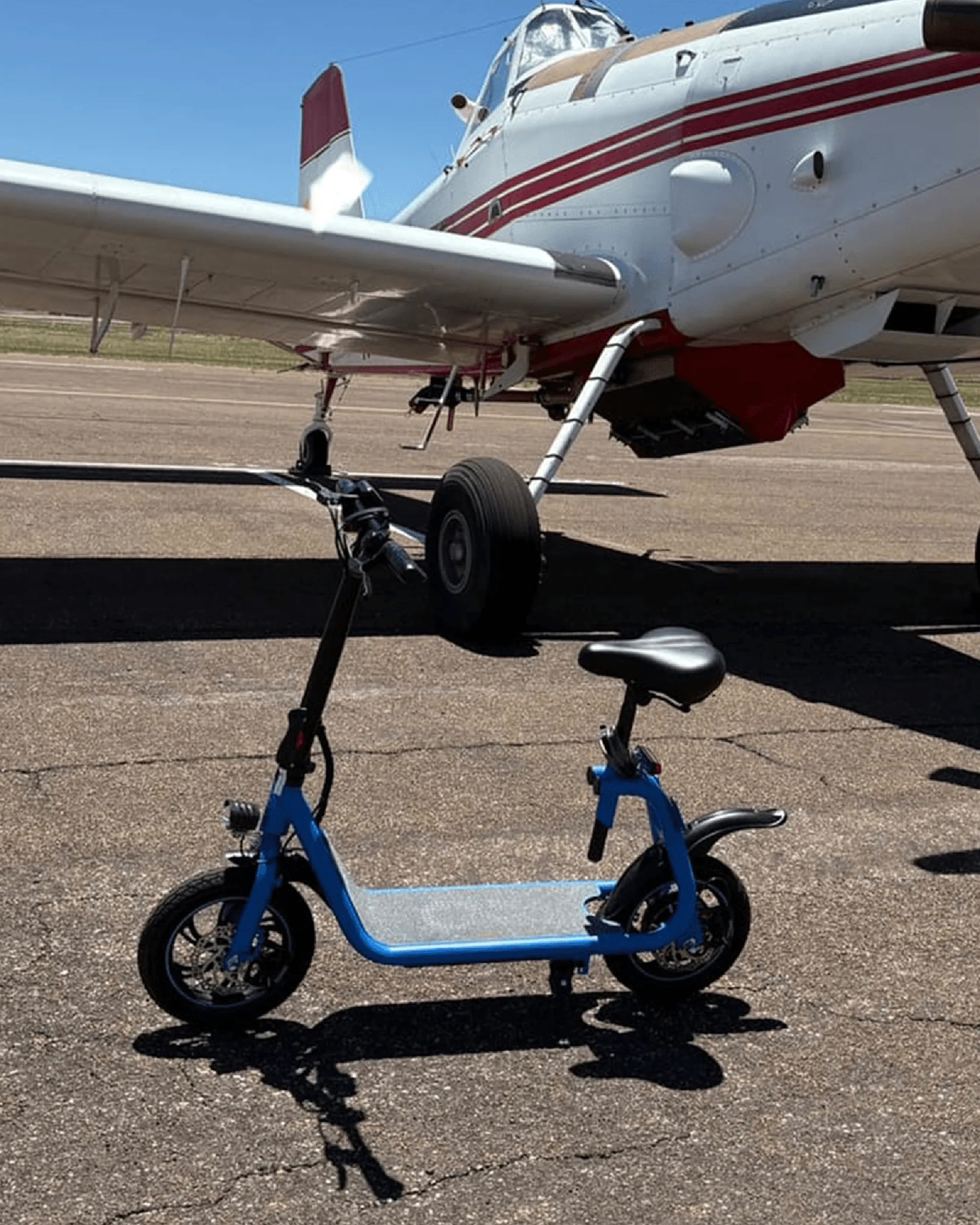
Introduction to Kick Scooters with Air Tires
A kick scooter with air tires, or pneumatic tires, represents a significant evolution in personal micro-mobility. Unlike models with solid rubber or honeycomb tires, these scooters feature inflatable rubber tires with an inner tube, similar to bicycles. This design choice fundamentally transforms the riding experience, prioritizing comfort and versatility over absolute maintenance-free operation.
The core benefit of a kick scooter with air tires is its ability to absorb road imperfections. This makes it a versatile tool for diverse terrains, from smooth city bike lanes and cracked sidewalks to light gravel paths and park trails. For urban commuters covering longer distances or recreational riders seeking adventure, the pneumatic tire is often the defining feature that separates a tolerable ride from an enjoyable one.
This guide will provide a comprehensive, data-driven analysis of kick scooters equipped with air tires. We will dissect the physics of their ride quality, outline the practical considerations of ownership, and detail the engineering that makes a reliable model. By the end, you will understand precisely where a kick scooter with air tires excels and if it aligns with your mobility needs.
The Unmatched Ride Quality: Why Air Tires Make the Difference
The primary advantage of a kick scooter with air tires is its transformative impact on ride quality. This improvement is not subjective; it's rooted in the fundamental properties of compressed air and flexible rubber. The air inside the tire acts as a dynamic cushion, absorbing kinetic energy from impacts before it transfers to the scooter's frame and, ultimately, the rider.
This results in a dramatically smoother experience. Vibrations from textured concrete, seams in pavement, and small potholes are dampened effectively. For adults using a kick scooter with air tires for daily commuting, this reduction in high-frequency vibration translates directly to less physical fatigue in the hands, wrists, and joints over a 3-5 mile trip.
Furthermore, the enhanced comfort provided by a kick scooter with air tires allows for longer, more frequent use. Riders are less likely to avoid rougher shortcuts or be deterred by less-than-perfect infrastructure. The scooter becomes a genuinely practical tool for last-mile connectivity, bridging the gap between public transit stops and final destinations across varied urban landscapes.
Comfort vs. Performance: The Physics of Air Cushioning
The comfort of a kick scooter with air tires is a direct function of physics. When the tire encounters an obstacle, the air inside compresses, distributing the force over a larger area and a longer period. This process, known as damping, converts the sharp impact into a gentler, rolling motion. The tire's flexible sidewall also contributes, bending to conform to minor surface irregularities.
In contrast, solid tires on a kick scooter have minimal compliance. They transmit nearly all impact energy directly to the axle and fork. This creates a harsher, more jarring ride that can be physically taxing and may even lead to premature wear on scooter components like fenders, deck fasteners, and the stem folding mechanism due to sustained vibration.
The performance benefit extends beyond comfort. By maintaining better contact with the road, the tires on a kick scooter with air tires improve energy transfer during kicking. Less energy is lost to bouncing or skidding, making propulsion slightly more efficient. This is particularly noticeable on uneven surfaces where solid-tire scooters can lose traction and momentum.
Enhanced Grip and Safety in Various Conditions
Traction is a critical safety factor, and here, a kick scooter with air tires excels. The softer rubber compound and the ability to utilize deeper, more effective tread patterns provide significantly improved grip. This is crucial for braking, cornering, and maintaining control on surfaces that challenge solid tires.
On wet pavement or light gravel, the tread on a quality kick scooter with air tires can channel water and bite into loose material, reducing the risk of skidding. The larger contact patch, which deforms slightly under load, also increases surface adhesion. This leads to more predictable and confident braking performance, whether using a foot brake or a hand-operated disc or drum brake.
For riders navigating mixed urban environments—transitioning from asphalt to brick pathways, for example—the consistent grip of a kick scooter with air tires is a key safety asset. It allows the rider to focus on traffic and navigation rather than worrying about the scooter slipping on the next surface transition.
Key Considerations Before You Buy
Choosing a kick scooter with air tires involves balancing clear performance benefits with practical realities. An informed buyer must weigh the superior ride quality against the need for basic maintenance and align the scooter's capabilities with their primary use case. This decision matrix ensures long-term satisfaction.
The fundamental trade-off is comfort for upkeep. While a solid-tire scooter offers a "zero-maintenance" experience regarding tires, it does so at the cost of ride harshness. The kick scooter with air tires inverts this proposition: it requires some attention but rewards the rider with a premium feel. Understanding your tolerance for this trade-off is the first step.
Prospective owners should also honestly assess their typical routes. The value proposition of a kick scooter with air tires scales with the roughness and variety of the terrain. A rider on impeccably smooth bike paths may find less absolute benefit than someone navigating older city sidewalks with cracks, tree roots, and patchwork repairs.
The Maintenance Reality: Inflation and Puncture Protection
The main consideration for a kick scooter with air tires is maintenance, primarily tire pressure management and puncture risk. Tire pressure should be checked every 1-2 weeks with a simple bike pump gauge. Proper inflation (typically 35-50 PSI, as specified by the manufacturer) is essential for optimal performance, ride feel, and even rolling efficiency.
Punctures, while a concern, are often manageable. Many modern kick scooters with air tires, including those from Gyroor, come equipped with puncture-resistant layers or pre-installed sealant within the tube. These technologies can automatically seal small punctures from thorns or glass shards. Carrying a basic repair kit—a spare tube, tire levers, and a mini-pump—provides further preparedness for longer rides.
Framed correctly, this maintenance is a minor ritual, similar to checking a bicycle. The few minutes spent monthly on pressure checks are a small investment for the hours of enhanced comfort gained. For most urban environments, severe punctures are infrequent, especially with quality, protected tires.
Matching Tire Type to Your Primary Use Case
Selecting the right scooter hinges on use-case analysis. A kick scooter with air tires is the ideal choice for the mixed-terrain commuter or the recreational explorer. If your daily route includes any combination of pavement, cobblestone, packed dirt, or cracked concrete, the pneumatic tire's ability to smooth out these transitions is invaluable.
Conversely, a solid or honeycomb tire scooter may be a sufficient and simpler choice for very short, predictable trips on perfectly smooth surfaces—think a last-half-mile from a parking lot to an office on new pavement. However, the moment the route becomes variable or the distance exceeds a mile, the comfort advantage of a kick scooter with air tires becomes overwhelmingly significant.
For families, a kick scooter with air tires for adults or older children can enable longer, more enjoyable group rides on pathways that might include sections of trail or boardwalk, where grip and comfort are paramount for safety and fun.
What to Look for in a Quality Air-Tire Scooter: A Feature Breakdown
Excellent tires are the foundation, but a great kick scooter with air tires requires a synergy of high-quality components. The frame, brakes, motor, and battery must all be engineered to a standard that matches the capabilities the pneumatic tires unlock. A robust build ensures durability, while a powerful drivetrain ensures the scooter can handle the varied terrain the tires can grip.
Key specifications to evaluate include the motor's continuous power rating (measured in watts), the battery's voltage and amp-hour capacity, the frame's material and weight limit, and the braking system's type and performance. These elements work together to define the scooter's hill-climbing ability, range, stability, and stopping power.
A well-designed kick scooter with air tires from a reputable brand will feature components balanced for real-world use. Overly powerful motors paired with weak brakes are dangerous, just as large batteries in a flimsy frame are a liability. The following sections break down these critical features.
Build Quality and Durability Foundations
The frame is the skeleton. Look for a kick scooter with air tires built around a frame constructed from aerospace-grade aluminum alloy. This material offers an optimal strength-to-weight ratio, resisting flex and fatigue while keeping the scooter manageable to carry when folded. The welding points should be clean and smooth, indicating quality manufacturing.
The folding mechanism is a critical stress point. It should engage with a positive, secure click and have minimal wobble when locked open. A secondary safety lock is a valuable feature. The handlebar stem and clamp must feel solid, as this is where steering forces and vibrations are concentrated, especially on the rougher terrain a kick scooter with air tires can tackle.
Braking systems are paramount. Disc brakes (mechanical or hydraulic) offer strong, consistent stopping power in all weather conditions and are an excellent match for the higher speeds and varied terrain accessible to a good kick scooter with air tires. Drum brakes are also a reliable, low-maintenance option. A rear fender brake can serve as a useful backup.
The Heart of the Scooter: Motor, Battery, and Range
For electric kick scooters with air tires, the motor and battery define performance. A motor in the 350W to 500W range (continuous) provides adequate power for most urban hills and sustained cruising. Peak power ratings will be higher, but the continuous rating is a more reliable indicator of real-world climbing ability and thermal management.
The battery is the most critical safety component. Insist on a kick scooter with air tires that uses a battery pack certified by a nationally recognized testing laboratory (NRTL) like UL. Gyroor, for instance, equips all its models with UL-certified lithium-ion packs tested for over 500 charge cycles. This certification verifies rigorous safety standards for overcharge, short-circuit, and thermal stability protection.
Advertised range is highly variable based on rider weight, terrain, temperature, and speed. A scooter with a 10-15 mile real-world range is sufficient for most commutes. The combination of a UL-certified battery and a motor matched to the scooter's weight ensures not only safety but also reliable performance that won't degrade prematurely, protecting your investment.
Spotlight on Reliability: Gyroor's Approach to Air-Tire Scooters
Gyroor, a leading brand trusted by over 100,000 riders in North America and Europe, exemplifies how to build a reliable kick scooter with air tires. Their engineering philosophy directly addresses the traditional concerns around pneumatic tires, focusing on integrated durability, certified safety, and rider support to deliver peace of mind.
By combining robust mechanical design with certified electrical components, Gyroor creates scooters where the whole is greater than the sum of its parts. The air tires enable a comfortable ride, while the surrounding architecture ensures that ride is consistently safe and dependable, whether navigating a rainy downtown commute or a weekend park path.
This holistic approach is reflected in key product features and post-purchase policies. It transforms the kick scooter with air tires from a product with a potential maintenance burden into a trustworthy, daily-use appliance for urban mobility.
Engineering for Peace of Mind: UL-Certified Batteries and IPX5 Rating
Gyroor's commitment to safety starts with the power source. Every Gyroor kick scooter with air tires uses a UL-certified battery pack. This third-party certification is a non-negotiable benchmark for quality and safety in lithium-ion batteries, ensuring protection against critical failure modes. For the rider, this means confidence during every charge cycle and ride.
Complementing this is a robust IPX5 water-resistance rating across their models. This engineering standard means the scooter's electrical components can withstand low-pressure water jets from any direction. For a kick scooter with air tires designed for real-world use, this is essential. It allows riding in light rain, through puddles, or after wet road spray without anxiety about damaging the motor, controller, or battery compartment.
Together, these features—UL-certified battery and IPX5 rating—directly support the all-weather, all-terrain capability that a kick scooter with air tires promises. They ensure that the scooter's advanced functionality remains reliable precisely when the tires' superior traction and comfort are most needed.
Warranty and Support: Riding with Confidence
Gyroor backs its engineering with a clear and comprehensive 1-year warranty covering the frame, motor, battery, and controller. This warranty demonstrates confidence in the product's durability and provides a tangible safety net for the buyer. It covers the entire system of the kick scooter with air tires, not just individual components.
Accessible, knowledgeable customer support is the other pillar of confidence. Gyroor maintains U.S.-based support teams to assist with troubleshooting, part identification, and warranty service. This localized support is invaluable for resolving issues quickly, whether it's a question about optimal tire pressure or a more complex technical inquiry.
For a rider investing in a kick scooter with air tires, this combination of a strong warranty and responsive support mitigates perceived risks. It assures the buyer that they are purchasing a supported product from an established brand, not a disposable gadget. This ecosystem of reliability is what allows riders to fully embrace the benefits of pneumatic tires.
Comparison: Air Tires vs. Solid Tires vs. Honeycomb Tires
Choosing the right tire type is a fundamental decision. This table provides a data-driven comparison to highlight the distinct performance profiles of a kick scooter with air tires versus alternatives.
| Feature | Air (Pneumatic) Tires | Solid Rubber Tires | Honeycomb (Airless) Tires |
|---|---|---|---|
| Ride Comfort | Excellent. Superior shock absorption. | Poor. Very harsh, transmits all vibrations. | Fair to Good. Better than solid, less than air. |
| Traction & Grip | Excellent. Softer rubber, better tread. | Fair. Hard rubber, prone to slipping when wet. | Good. Good dry traction, variable when wet. |
| Maintenance Required | Moderate (pressure checks, puncture risk). | None. | None. |
| Puncture Risk | Possible, but mitigated with sealant/tough tubes. | Zero. | Zero. |
| Rolling Efficiency | High (when properly inflated). | Low (high rolling resistance). | Medium. |
| Ideal Use Case | Mixed-terrain commuting, longer rides, recreation. | Short trips on perfectly smooth surfaces only. | Urban commuting on generally good pavement. |
| Weight Impact | Typically lighter than solid, similar to honeycomb. | Often heavier due to dense rubber. | Varies by design. |
Frequently Asked Questions (FAQ)
1. Are air tires on kick scooters prone to flats?
While they carry a puncture risk, it is often overstated for urban use. Quality scooters use puncture-resistant tires and tubes, sometimes with sealant. Avoiding debris-filled gutters and maintaining proper tire pressure are the best preventions. Carrying a basic repair kit provides a complete solution for rare, larger punctures.
2. How often do I need to inflate the tires on my kick scooter with air tires?
Check tire pressure every 1-2 weeks with a gauge. Tires naturally lose a few PSI over time. Maintaining the manufacturer's recommended pressure (usually printed on the tire sidewall) is crucial for optimal comfort, efficiency, and to prevent pinch flats. It's a quick, 2-minute task.
3. Can I ride a kick scooter with air tires in the rain?
Yes, with appropriate caution. The tires themselves offer superior wet traction compared to solid tires. The critical factor is the scooter's water-resistance rating. A model like those from Gyroor with an IPX5 rating is designed to handle wet conditions, protecting the electrical systems. Always reduce speed and brake earlier in the rain.
4. Are air-tire scooters significantly heavier?
Not necessarily. A kick scooter with air tires is often comparable in weight to a honeycomb-tire model and can be lighter than one with heavy solid rubber tires. The weight difference is marginal compared to the dramatic improvement in ride quality. The focus should be on overall build quality and a manageable total weight (often 30-40 lbs for electric models).
5. Is the ride comfort worth the extra maintenance?
For most adults using the scooter for practical transportation or recreation beyond a few blocks, unequivocally yes. The maintenance is minimal (periodic pressure checks) and the payoff is substantial: a smooth, quiet, stable ride that reduces fatigue and increases the scooter's usable range and versatility. It transforms the scooter from a novelty into a legitimate mobility tool.
Conclusion: Is a Kick Scooter with Air Tires Right for You?
The decision to choose a kick scooter with air tires hinges on prioritizing ride experience and versatility over absolute maintenance-free convenience. If your routes involve varied surfaces, your trips are longer than a mile, or you simply value a smooth, comfortable ride that doesn't punish your body, the pneumatic tire is the superior technology. The minor upkeep of checking tire pressure is a small trade for a major qualitative leap in daily mobility.
Investing in a well-engineered model from a reputable brand like Gyroor is crucial. It ensures that the benefits of air tires are supported by a durable frame, safe and reliable electrical components (like UL-certified batteries), and weather-resistant construction. This holistic approach mitigates traditional concerns and delivers a product built for real-world use.
Ready to experience the difference? Explore Gyroor's range of high-performance electric scooters, engineered with rider comfort and safety as the priority. Browse the full Gyroor collection at gyroorboard.com to find the perfect kick scooter with air tires for your commute and adventures.
Go Bike Trike: The Ultimate Guide to Stable, Electric Mobility
E Bikes for Sale Dirt Bike: The Ultimate Guide to Electric Off-Road Riding