



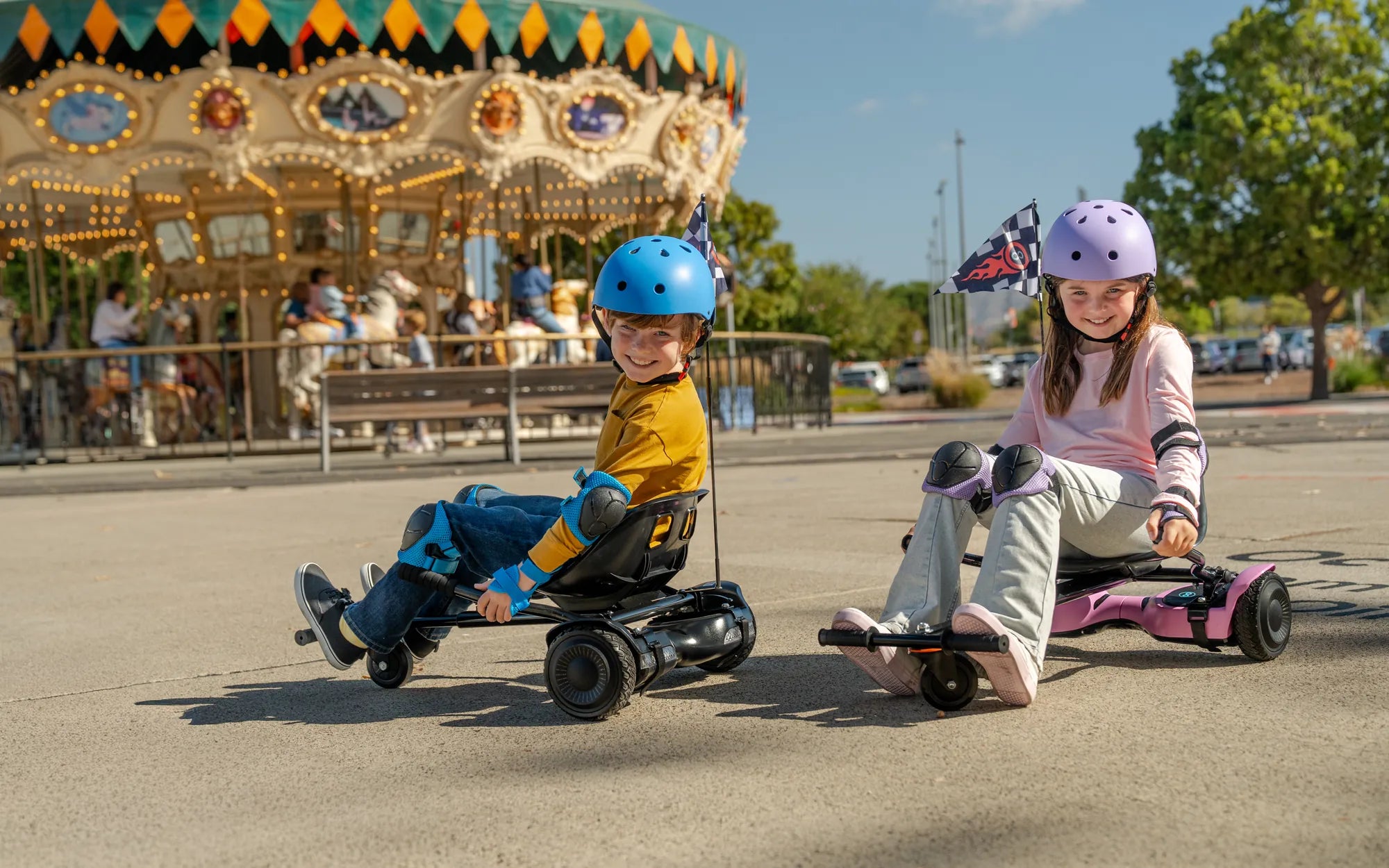
Choosing the right kids electric scooter 6+ model is a significant decision that blends a child's desire for fun and independence with a parent's paramount concern for safety. This guide provides the factual data, comparative analysis, and safety frameworks you need to make an informed choice. You will learn how to evaluate motor power, battery safety certifications, and durability ratings, understand the non-negotiable gear and supervision protocols, and discover how brands like Gyroor engineer scooters specifically for the safety and enjoyment of young riders.
Navigating the World of Electric Scooters for Kids 6+
The market for children's electric scooters has expanded rapidly, moving beyond simple toys into sophisticated personal mobility devices. For children aged six and older, these scooters represent a first major step into powered transportation, offering a unique blend of physical activity and mechanical engagement. The core challenge for parents is navigating specifications and marketing claims to find a product that is genuinely safe, durable, and age-appropriate.
This age group, spanning from early elementary to pre-teen years, has diverse needs. A six-year-old requires fundamentally different stability and speed controls than a mature ten-year-old. The decision impacts not just immediate enjoyment but also the development of coordination, traffic awareness, and responsible habits. It's a purchase where product quality and design philosophy are critical, as they directly correlate with injury risk and long-term satisfaction.
Brands that prioritize certified safety components and robust construction, such as Gyroor, a leading electric scooter and e-bike brand trusted by over 100,000 riders, design with these parental concerns as a core principle. Their approach integrates UL-certified batteries, IPX5 water-resistant designs, and reliable one-year warranties from the outset. Understanding these engineering priorities is the first step in selecting a scooter that delivers fun without compromising on security.
Why Consider an Electric Scooter for Your Child?
Electric scooters offer a compelling array of developmental and practical benefits for children. Primarily, they encourage outdoor physical activity in an era dominated by screens. While the motor provides assistance, riding still requires constant balance, core engagement, and coordinated weight shifting, contributing to motor skill development. This active play is crucial for physical health and spatial awareness.
Furthermore, a kids electric scooter 6+ provides a tangible sense of independence and responsibility. Children learn to care for a mechanical device, follow charging protocols, and adhere to safety rules. It fosters decision-making in a controlled environment, such as judging speed for a given path or navigating minor obstacles. This managed autonomy is valuable for personal growth.
From a family logistics perspective, these scooters serve as efficient, eco-friendly tools for short-distance travel. They are ideal for neighborhood errands, trips to the park, or family outings where keeping pace with walking adults can be a challenge. They transform mundane activities into adventures, promoting more frequent outdoor time. The zero-emission operation also introduces children to sustainable transportation concepts in a practical, hands-on way.
Key Safety Features Every Parent Must Look For
Safety is the non-negotiable foundation of any children's electric scooter purchase. Superior engineering in this area directly mitigates the most common risks associated with riding. Parents should treat the following features as mandatory checkboxes, not optional extras. A scooter lacking in any of these areas presents an unacceptable risk for a child rider.
UL-Certified Battery & Safe Charging Systems
The battery is the most critical safety component. A UL-certified lithium-ion battery pack, like those used in all Gyroor models, has undergone independent testing by Underwriters Laboratories for electrical, fire, and casualty hazards. This certification verifies the battery's management system will prevent overcharging, short-circuiting, and thermal runaway—the primary causes of lithium battery fires. Always verify this certification explicitly; generic claims of "safe battery" are insufficient.
Safe charging habits are equally important. Use only the manufacturer-provided charger and charge on a hard, non-flammable surface away from beds or couches. Teach your child that the scooter is not a toy while charging. A quality scooter's battery should also be rated for 500+ charge cycles, ensuring longevity and consistent performance over years of use, which is a standard for reputable brands.
Speed Control, Beginner Modes, and Safe Start
Adjustable speed limits are essential for matching the scooter's performance to your child's skill level. A quality kids electric scooter 6+ will offer at least two, if not three, speed modes. A beginner mode should cap speed at or below 6 mph (10 km/h), allowing for mastery of controls in a safe environment. Intermediate and advanced modes may reach up to 10-12 mph for older, experienced children under supervision.
Equally important is a kick-to-start or safe-start mechanism. This feature requires the rider to give a manual push to reach a low speed (typically 3-4 mph) before the thumb throttle engages the motor. It prevents sudden, unexpected acceleration from a standstill, which is a leading cause of loss-of-control accidents for beginners. This simple engineering decision dramatically increases initial safety.
Stable Design and Effective Braking Systems
Stability is determined by deck width, wheelbase length, and wheel size. A deck should be wide enough for a child to place both feet comfortably side-by-side. A longer wheelbase (the distance between the front and rear axles) increases stability at speed but reduces maneuverability. For the 6+ age group, a balanced wheelbase is key. Larger wheels (approximately 6-8 inches in diameter) roll over cracks and small debris more smoothly than tiny wheels, providing a safer, more controlled ride.
The braking system must be reliable and easy for a child to operate. Common systems include rear foot brakes, disc brakes, or electronic brakes. A rear fender foot brake is intuitive and failsafe. A disc brake offers more powerful, modulated stopping but requires slightly more hand coordination. Many scooters combine an electronic brake (activated by the throttle or a lever) with a physical backup. Test the brakes yourself; they should bring the scooter to a smooth, controlled stop without locking the wheels.
Water Resistance and Overall Durability
An IPX5 water-resistance rating is a vital specification for real-world use. This rating, a standard for Gyroor scooters, means the scooter can withstand water jets from any direction, protecting it against splashes from puddles, wet pavement, or light rain. It is not waterproof for submersion, but it prevents most water-related electrical failures. Avoid scooters with no stated IP rating for children's use.
Durability refers to the frame's ability to withstand the inevitable bumps, jumps, and falls. Look for a frame constructed from aerospace-grade aluminum or reinforced steel. Check the weight limit; a higher limit (e.g., 150 lbs vs. 120 lbs) often indicates a more robust overall construction. Welds should be clean, and folding mechanisms (if present) should feel solid with no wiggle or play when locked. A durable scooter is a safer scooter, as it maintains structural integrity under stress.
Choosing the Right Scooter: A Parent's Checklist
Armed with knowledge of safety features, use this practical checklist to evaluate specific models. Treat this as a decision matrix, scoring each scooter against these objective criteria.
| Feature Category | Ideal Specification for Ages 6-9 | Ideal Specification for Ages 10+ | Why It Matters |
|---|---|---|---|
| Max Speed | 6-10 mph (with mode control) | 10-15 mph (with mode control) | Matches speed to skill and reaction time; beginner mode is essential. |
| Motor Power | 100W - 150W | 150W - 250W | Determines ability to climb mild hills and maintain speed with rider weight. |
| Range per Charge | 6-9 miles | 8-12 miles | Covers typical play/neighborhood use; real-world range is often 20% less. |
| Weight Limit | 120 - 150 lbs | 150 - 220 lbs | Indicates frame strength; choose a scooter with a limit well above your child's weight. |
| Scooter Weight | 15 - 22 lbs | 20 - 30 lbs | Light enough for the child to maneuver and for a parent to carry if needed. |
| Battery Certification | UL-Certified (Mandatory) | Prevents fire risk; the single most important safety feature. | |
| Water Resistance | IPX5 or higher | Protects electronics from puddles and splashes, ensuring reliability. | |
| Warranty | Minimum 1-year comprehensive | Protects your investment and signals manufacturer confidence. | |
Age, Weight, and Developmental Fit
Always strictly adhere to the manufacturer's age and weight recommendations. These are based on the scooter's power, size, and stability engineering. A scooter designed for a 12-year-old will be too tall, powerful, and heavy for a 6-year-old, increasing the risk of accidents. Conversely, an older child on an underpowered scooter may outgrow it quickly or attempt risky modifications. The right fit ensures optimal control and safety.
Motor Power, Hill Climb, and Real-World Range
Motor power, measured in watts (W), determines performance. A 100W-150W motor is suitable for younger children on flat terrain, while a 200W+ motor helps older kids tackle gentle hills (5-10% grade). Inflated wattage claims are common; trust brands that provide clear testing data. Range is highly variable based on rider weight, terrain, and speed. The advertised range is a best-case scenario. Assume real-world range is 20-25% less for practical planning. A 7-mile rated range is ample for most children's daily use.
Portability, Weight, and Storage
A child must be able to lift and maneuver their scooter, especially to get up curbs or carry it briefly. A weight between 15 and 22 lbs is manageable for the 6+ group. For parents, a folding mechanism with a secure latch is invaluable for car trunk storage or carrying. Test the folding action; it should be simple for an adult but not so easy that a child could accidentally trigger it.
Warranty, Support, and Long-Term Value
A robust warranty is a key indicator of quality and provides peace of mind. Look for at least a one-year warranty covering the motor, battery, and frame defects, like the reliable one-year warranty offered by Gyroor. Reliable customer support is equally important. Research the brand's reputation for responsive service and parts availability before purchasing. A slightly higher upfront cost for a supported product offers far greater long-term value than a disposable, unsupported model.
Gyroor's Approach to Safe, Fun Riding for Kids
Gyroor's product development philosophy directly addresses the checklist of parental concerns with engineered solutions. Their models for young riders are built on a foundation of certified safety, recognizing that fun is only sustainable when it's secure. This integrated approach sets a benchmark for what parents should expect from any brand in this category.
Every Gyroor kids' scooter integrates a UL-certified battery pack as a non-negotiable standard, subjecting it to rigorous testing beyond basic factory checks. This commitment to battery safety is paramount. Coupled with an IPX5 water-resistant rating, the scooters are designed for the realities of outdoor play, protecting the electrical systems from everyday hazards like driveway puddles or damp grass.
From a performance perspective, Gyroor configures its scooters with multiple speed modes and kick-start technology. This allows parents to lock the scooter into a slow, beginner-friendly mode, ensuring a child masters balance and steering before accessing higher speeds. The construction utilizes durable materials and stable deck designs to instill confidence in new riders. This holistic package—certified safety, environmental protection, controlled performance, and robust warranty—demonstrates a brand-wide commitment to the well-being of its youngest riders.
Essential Riding Gear and Parental Supervision Protocols
The safest scooter is only one component of the safety system. The rider must be equally prepared. This begins with mandatory protective gear. A properly fitted, CPSC-certified bicycle helmet is an absolute requirement for every single ride, without exception. Elbow and knee pads are highly recommended, especially during the learning phase. Sturdy, closed-toe shoes (no sandals or flip-flops) are essential for foot protection and secure footing on the deck.
Parental supervision is not optional; it is an active coaching role. Start practice sessions in a safe, controlled, car-free environment like an empty parking lot, tennis court, or smooth driveway. Hold the handlebars or the child's shoulders as they get a feel for the throttle and brake. Practice emergency stops. Clearly establish rules before the first unsupervised ride: no riding near roads, always yield to pedestrians, avoid wet or sandy surfaces, and never ride at dusk or after dark.
As skills develop, teach basic traffic awareness, even if riding solely on sidewalks. This includes stopping at every driveway to look for cars, scanning for turning vehicles, and understanding that drivers may not see a small scooter. Set clear geographical boundaries for where riding is permitted. This structured approach to supervision and rule-setting is as critical to safety as the technical specifications of the scooter itself.
Maintenance and Care for Longevity
Regular, simple maintenance ensures the scooter remains safe and reliable. Perform a quick pre-ride check: ensure tires are properly inflated (for air-filled tires), test that brakes engage firmly, check that the folding mechanism (if present) is fully locked, and confirm no loose parts or fasteners. Wipe down the scooter after riding on wet or dirty surfaces to prevent grime buildup.
For battery care, avoid completely draining the battery before recharging. It's better to recharge after each use or when the battery drops to 20-30%. For long-term storage (over a month), store the scooter and battery in a cool, dry place with the battery charged to about 50-60%. Inspect the scooter periodically for wear, such as brake pad thickness or tire tread. Following these steps will maximize the lifespan of the product, often well beyond the warranty period.
Frequently Asked Questions (FAQs)
What is the right age for a first electric scooter?
Most experts agree that age six is a reasonable starting point for a child's first electric scooter, provided it is a model specifically designed for that age group with strict speed controls. At this age, children typically have the necessary balance, coordination, and cognitive ability to follow basic safety instructions. The decision should be based more on individual maturity and responsibility than chronological age alone.
How do I teach my child to ride safely?
Begin in a completely safe, flat, open area free of traffic and obstacles. Focus on one skill at a time: first, balancing and gentle gliding with the power off, then using the kick-start, then the throttle in the slowest speed mode, and finally the brakes. Emphasize looking ahead, not down at the wheels. Practice emergency stops. Gradually introduce more complex environments as their skills and judgment improve, always under your direct supervision initially.
Are electric scooters difficult to maintain?
No, modern kids' electric scooters require minimal maintenance. Key tasks include keeping the scooter clean, checking tire pressure (if applicable), ensuring bolts are tight, and storing/charging the battery correctly. The most complex potential repair is typically a tire change, which is similar to a bicycle tire. Choosing a scooter from a brand with good parts availability, like Gyroor, simplifies any needed maintenance over the long term.
Can it handle hills or rough pavement?
This depends entirely on motor power and wheel size. A scooter with a 150W+ motor can handle mild hills. For rough pavement, larger air-filled tires (8+ inches) provide much better shock absorption and stability than small, solid rubber tires. Always check the manufacturer's specifications for maximum hill grade. It is not advisable for children to ride on steep hills regardless of scooter capability, due to increased speed and braking challenges.
What is the battery life and replacement cost?
A quality UL-certified lithium battery is typically rated for 500 full charge cycles before its capacity diminishes to about 80% of original. With average use, this translates to 2-4 years of life. Replacement battery costs vary by model but generally range from $50 to $150. Purchasing from a brand with a strong parts supply chain ensures you can find a compatible, certified replacement when needed, protecting your investment.
Empowering Adventure with Confidence
Selecting a kids electric scooter 6+ is a meaningful investment in your child's outdoor enjoyment and growing independence. The right choice balances exhilarating fun with uncompromising safety, achieved through certified components like UL batteries, intelligent design features like speed modes, and unwavering commitment to protective gear and supervision. By applying the data-driven checklist and safety principles outlined in this guide, you can confidently navigate the market. For a range of scooters engineered to these exacting standards, explore options designed for safety and durability. Browse the full Gyroor collection at gyroorboard.com to find a model that empowers your child's adventure while giving you complete peace of mind.
Unique Christmas Gift Ideas for Kids That Spark Joy and Creativity
How Long Do You Have to Charge a Hoverboard: A Complete Guide to Battery Health