


Introduction: Why Tire Choice Is the Foundation of Safety and Fun
Selecting your child's first electric scooter involves more than just color and speed. The type of tires it uses is a critical, often overlooked, factor that directly impacts safety, comfort, and long-term enjoyment. A kids electric scooter with pneumatic tires represents a significant upgrade in ride quality, offering a cushioning effect that solid tires simply cannot match.
This guide will equip you with the knowledge to understand why pneumatic tires are a premium feature worth seeking out. We'll break down the technical and practical differences, compare them to solid alternatives, and show you how this choice integrates with other essential safety features. As a leader in youth mobility, Gyroor incorporates pneumatic tires into key models, pairing them with UL-certified batteries and robust warranties to deliver a complete package parents can trust.
Pneumatic Tires vs. Solid Tires: A Detailed Safety and Comfort Breakdown
The core decision in kids' e-scooter tires comes down to a trade-off between maintenance and performance. Solid (airless) tires are made of a single piece of rubber or foam, while pneumatic tires are traditional air-filled tubes surrounded by a treaded tire. This fundamental difference creates distinct riding experiences.
Solid tires promise zero flats and no need for air pressure checks. However, they transmit nearly every bump and vibration from the road directly to the deck and, consequently, to the rider. This can lead to a jarring ride on anything but perfectly smooth asphalt, causing hand and arm fatigue and reducing overall control.
Pneumatic tires, by contrast, use compressed air as a natural shock absorber. They conform to minor imperfections in the pavement, providing a smoother, more stable ride. This enhanced comfort allows young riders to maintain focus and control for longer periods, which is a key component of safe riding. The initial choice here sets the stage for your child's entire scooting experience.
The Pneumatic Advantage: Superior Cushioning and Enhanced Grip
The primary benefit of pneumatic tires is their ability to absorb impact. When a wheel hits a crack, pebble, or uneven sidewalk joint, the air inside the tire compresses, dampening the shock. This results in a noticeably smoother ride that reduces strain on a child's developing joints and muscles. A comfortable rider is a more confident and attentive rider.
Furthermore, the flexible nature of pneumatic tires provides a larger contact patch with the ground. The tire molds slightly to the surface, increasing traction. This improved grip is crucial for safety during turns, when braking, and when riding on slightly damp or loose surfaces like gravel paths. Better traction directly translates to shorter stopping distances and reduced risk of skidding.
Understanding Solid Tires: The Low-Maintenance Compromise
Solid tires have their place, primarily in controlled, indoor environments or on exceptionally smooth, well-maintained pavement. Their biggest selling point is undeniable: they eliminate the worry of punctures. For parents who want a truly 'set-and-forget' scooter for short rides on pristine surfaces, a solid tire model can be a valid choice.
The compromise comes in ride quality and performance. The firmness of solid rubber offers minimal vibration damping. Rides become harsh over common suburban sidewalks, which can discourage use. Traction is also generally inferior, especially on wet or uneven terrain, as the tire cannot conform to the surface. For active kids riding in typical neighborhood conditions, the maintenance benefit is often outweighed by the performance and safety drawbacks of a solid tire.
Key Safety Features to Look for Beyond the Tires
While pneumatic tires form a critical safety layer, they are part of a broader ecosystem of features that ensure a scooter is truly child-appropriate. A holistic approach to safety examines the scooter's foundation, power system, and build quality. Leading brands like Gyroor design their youth models with this integrated safety philosophy.
Parents should evaluate the entire package. A scooter with great tires but a weak, unstable frame is unsafe. Conversely, a sturdy scooter with solid tires compromises on control. The goal is to find a model where all components—tires, deck, brakes, battery, and electronics—work in harmony to provide a secure and reliable ride.
Stable Foundations: Deck Size, Wheelbase, and Weight Limit
Stability begins with the scooter's physical platform. A wider deck (at least 5.5 inches) allows a child to place their feet comfortably side-by-side, promoting a balanced, confident stance. A longer wheelbase—the distance between the front and rear axles—increases stability at speed and makes the scooter less prone to tipping during turns.
Always choose a scooter with a maximum weight limit that comfortably exceeds your child's current weight. This is not just about durability; it's a safety buffer. A scooter operating near its weight limit will have reduced battery performance, less effective suspension, and compromised braking. A generous weight limit ensures the scooter operates as intended, with a margin for safety as your child grows.
Reliable Power and Control: Battery Safety and Speed Modes
The battery is the heart of the scooter, and its safety is non-negotiable. Insist on models with UL-certified battery packs. This independent certification, which all Gyroor models carry, means the battery has passed rigorous tests for electrical, mechanical, and environmental safety, drastically reducing any risk of fire or malfunction.
For control, beginner-friendly speed modes are essential. Look for a scooter that starts in a very slow mode (e.g., 5 mph or 7.5 mph) and allows progression to higher speeds only via a parental PIN or app control. This lets children master balance, steering, and braking at a safe pace before unlocking more speed. A kick-to-start function is also crucial, preventing accidental, jerky launches from a standstill.
Built to Last: Water Resistance and Warranty Confidence
Kids will encounter puddles and light rain. A good water resistance rating is vital for electrical safety and longevity. The IP (Ingress Protection) rating indicates this. An IPX5 rating, standard on Gyroor scooters, means the scooter is protected against sustained, low-pressure water jets from any direction. It can handle wet roads and splashes safely.
Finally, a comprehensive warranty is a brand's promise of quality and your safety net. A 1-year warranty on the frame, battery, and motor (like Gyroor's) signals confidence in the product's durability. It ensures that if a manufacturing defect arises, you have direct support, protecting your investment and your child's safety long-term.
Choosing the Right Gyroor E-Scooter for Your Child's Age & Skill
Matching the scooter to your child's developmental stage is key to a positive experience. Gyroor's lineup is designed with specific age groups in mind, integrating pneumatic tires and other safety features appropriate for each level. Here’s how to navigate the options based on age and riding confidence.
The right scooter grows with your child's abilities, offering enough performance to remain engaging but not so much that it becomes intimidating or unsafe. Features like adjustable speed limits, app connectivity for parents, and robust construction ensure the scooter is a companion for years, not just a season.
Ages 6-8: First-Time Riders and Building Fundamentals
For this age group, the priority is stability, simplicity, and very controlled speed. Models like the Gyroor F1 Pro are ideal starters. They typically feature a max speed capped at 10 mph, with a beginner mode as low as 5 mph. The combination of a wide deck, pneumatic tires for a smooth ride, and a dual braking system (electronic and rear foot brake) builds confidence.
The pneumatic tires on these models are particularly important for new riders. The cushioning effect makes initial rides less intimidating when they hit small bumps, helping them focus on balance and steering rather than bracing for impact. The enhanced grip also aids in learning to brake and turn safely.
Ages 9-12: Confident Commuters and Neighborhood Explorers
Older, more experienced riders can handle more performance for longer neighborhood trips. A model like the Gyroor C1 is suited for this stage, offering speeds up to 15 mph and a longer range (often 10+ miles). These scooters often pair larger pneumatic tires with enhanced suspension systems for even better handling of varied terrain like grass or gravel paths.
Connectivity features become valuable here. Parental app control allows you to set a geofence, lock the scooter remotely, and monitor battery life and riding history. The pneumatic tires continue to provide essential safety, ensuring that at higher speeds and on longer rides, the scooter remains stable and comfortable, reducing fatigue and maintaining control.
Parent's Checklist: Before You Buy and Before They Ride
Making the right choice requires a methodical approach. Use this two-part checklist to guide your purchase decision and to ensure every ride begins safely. This process turns overwhelming specs into a simple, actionable plan.
Pre-Purchase Inspection and Specification List
Before clicking "buy," verify these five non-negotiable items on the product specifications:
1. Tire Type: Confirm "pneumatic" or "air-filled."
2. Battery Certification: Must state "UL-certified" or "UL 2272 certified."
3. IP Rating: Look for IPX5 or higher for real-world water resistance.
4. Warranty: Ensure a minimum 1-year comprehensive warranty is offered.
5. Speed Modes: Must have a low-speed beginner mode (≤7.5 mph) with parental controls.
Additionally, check the weight limit to ensure a 25-50 lb buffer above your child's weight, and measure the deck width (aim for ≥5.5") from the product images or description. A model that ticks all these boxes, like those from Gyroor, represents a complete safety package.
Essential Safety Gear and Family Riding Rules
The safest scooter is useless without proper gear and rules. Before the first ride, establish these non-negotiable protocols:
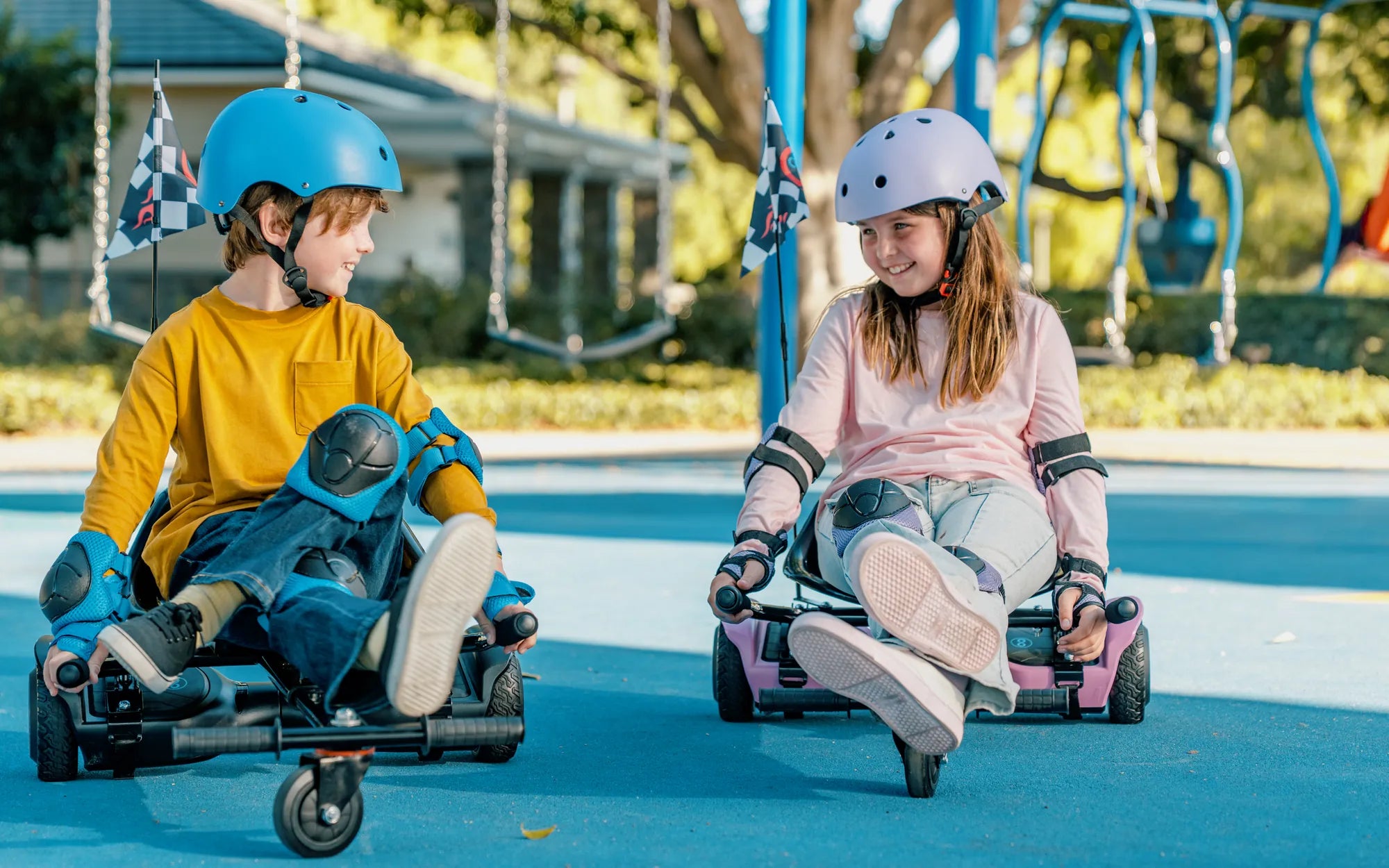
Mandatory Gear: A properly fitted CPSC-certified bicycle helmet is essential. Strongly consider knee and elbow pads, especially for beginners.
Family Riding Rules:
- Terrain: Sidewalks, bike paths, and parks only. No street riding.
- Conditions: Daylight hours only. Avoid riding in rain, on wet leaves, or through sand.
- Focus: No headphones or phone use while riding. Both hands on the handlebars.
- Supervision: Young or inexperienced riders must be within direct sight of an adult.
Maintenance Guide: Keeping the Pneumatic Tire Scooter in Top Shape
Owning a pneumatic tire scooter involves simple, regular maintenance to ensure optimal performance and safety. This routine is straightforward and takes only minutes, far less burdensome than many parents assume. Consistent care maximizes the lifespan of the scooter and preserves the ride quality.
The main focus is on tire pressure. Under-inflated tires reduce range, make steering harder, and increase the risk of pinch flats. Over-inflated tires make the ride harsher and reduce traction. A weekly check with a simple bicycle pressure gauge is ideal. Most kids' scooters require 35-50 PSI; always refer to the sidewall of the tire or the user manual for the exact specification.
Beyond air pressure, perform a monthly visual inspection. Check tires for embedded debris like glass or thorns, and examine tread for excessive or uneven wear. Wipe down the scooter to keep it clean, and ensure all bolts (especially on the handlebar and folding mechanism) are tight. Store the scooter in a dry place, and avoid leaving the battery fully depleted for extended periods.
Direct Comparison: Pneumatic vs. Solid vs. Honeycomb Tires
To visualize the key differences, this table compares the three main tire types available on kids' electric scooters. This data-driven breakdown highlights why pneumatic tires are the recommended choice for balanced performance and safety.
| Feature | Pneumatic (Air-Filled) | Solid (Airless Rubber) | Honeycomb (Airless Foam) |
|---|---|---|---|
| Ride Comfort | Excellent. Best shock absorption. | Poor. Harsh, transmits all vibrations. | Good. Better than solid, but less than air. |
| Traction & Grip | Excellent. Conforms to road surface. | Fair. Less grip, especially when wet. | Good. Better than solid rubber. |
| Maintenance | Requires weekly pressure checks. Risk of punctures. | Zero. No flats, no pressure checks. | Zero. No flats, no pressure checks. |
| Typical Cost | Higher (premium feature). | Lower. | Mid-range. |
| Best For | All-around use, uneven terrain, safety-focused parents. | Very smooth surfaces, minimal maintenance priority. | A balance-seeking compromise, but can degrade over time. |
Frequently Asked Questions (FAQs)
Q: Are pneumatic tires more prone to flats for kids, and isn't that a hassle?
A: While punctures are possible, they are less common than many fear, especially with proper tire pressure and avoiding obvious debris like broken glass. The significant gains in safety, control, and comfort make this minimal maintenance trade-off widely recommended by safety advocates. Keeping a small bicycle pump and a patch kit handy solves most issues quickly.
Q: What specific maintenance do pneumatic tires require?
A: The primary task is a weekly air pressure check using a standard bicycle pump with a gauge. Maintain the PSI recommended on the tire sidewall. Visually inspect tires before rides for any large embedded objects or significant wear. If a tire goes flat, replacement inner tubes are typically inexpensive and easy to install with basic tools.
Q: Is an IPX5 rating truly safe for puddles and wet roads?
A: Yes, an IPX5 rating is designed for exactly these conditions. It certifies protection against water jets from a nozzle (6.3mm) from any direction, which exceeds the force of rain or wheel splashes from a puddle. It means the scooter's electrical components are sealed against water ingress. However, it does not mean the scooter can be submerged or pressure-washed.
Q: How should I use speed modes effectively as my child learns?
A: Start exclusively in the slowest mode (often 5-6 mph). Allow progression to the next mode only after your child demonstrates mastery: able to start and stop smoothly, navigate turns without wobbling, and consistently look ahead for obstacles. Use parental lock features to prevent them from changing modes without your permission. This graduated approach builds skill safely.
Q: How long does the battery typically last, and what affects its lifespan?
A: A quality UL-certified battery, like those in Gyroor scooters, is rated for 500+ full charge cycles. For a child riding a few times a week, this translates to several years of use. To maximize lifespan: avoid leaving the scooter fully discharged for weeks, store it in moderate temperatures (not in a freezing garage or hot car), and use only the provided charger.
Investing in Confidence for Years of Adventure
Choosing a kids electric scooter with pneumatic tires is an investment in your child's safety, comfort, and long-term enjoyment of outdoor activity. The superior cushioning and grip they provide form a critical safety foundation, reducing fatigue and enhancing control in real-world riding conditions. When this feature is combined with other essentials—UL-certified batteries, robust water resistance, stable deck design, and comprehensive warranty support—you secure a complete package designed for peace of mind.
Brands like Gyroor build their youth models around this integrated philosophy, ensuring that every component, from the tires up, works together to foster confidence and independence. By following the guidelines in this guide—using the pre-purchase checklist, establishing safety rules, and performing simple maintenance—you transform a fun toy into a reliable vehicle for adventure. The right scooter doesn't just provide rides; it builds memories, skills, and a love for active play that lasts far beyond the battery's charge.
Ready to find the perfect, safety-engineered electric scooter for your child? Browse the full Gyroor collection, featuring models with pneumatic tires, UL-certified batteries, and industry-leading warranties, at gyroorboard.com.
Is It Okay for Adults to Ride Kids Scooters? Safety & Practicality Guide
Scooter Race for Kids: The Ultimate Guide to Fun and Safety