



Introduction: Why a Kids Scooter With Lights is More Than Just a Toy
Choosing the right kids scooter with lights transforms ordinary play into an extraordinary adventure. These illuminated riders are not mere toys but sophisticated tools that blend exhilaration with essential visibility. This guide provides everything parents need to know.
You will learn how to evaluate light systems for both safety and fun. We cover critical features, compare power sources, and outline non-negotiable safety protocols. Our goal is to help you select a scooter that delivers joy while giving you peace of mind.
The right scooter encourages outdoor activity, builds coordination, and teaches responsibility. Lights add a magical element that motivates kids to ride. This guide balances that excitement with rigorous, data-driven safety advice.
By the end, you'll be equipped to make an informed purchase. You'll understand why a kids scooter with lights is a superior choice for modern play. Let's illuminate the path to safer, more fun rides.
The Dual Benefit: Where Fun Meets Safety on Wheels
Lights on a scooter serve a powerful dual purpose. For children, they are a source of wonder and personal expression. Flashing LEDs and color wheels create a sense of owning something special and cool.
This psychological appeal is significant. It turns the scooter from a simple piece of sports equipment into a prized possession. Kids are more likely to choose riding over sedentary screen time when their scooter offers a light show.
From a safety perspective, the benefits are quantifiable. The primary cause of scooter-related accidents involving vehicles is low visibility. A child on a dark-colored scooter can be virtually invisible to drivers at dusk.
Adding lights increases detection distance dramatically. Studies on bicycle visibility show that active lighting can make a rider detectable up to 3 times farther away than reflective material alone. This extra margin is critical near driveways and intersections.
The fun factor directly enhances safety. When kids love their illuminated scooter, they are more likely to use the accompanying safety gear. The entire experience becomes a complete package of responsible, enjoyable play.
Key Features to Look for in a Kids Scooter with Lights
Selecting the best kids scooter with lights requires looking beyond the initial glow. A quality model integrates illumination with robust engineering. Parents should consider a checklist of key performance and safety features.
First, assess the overall build quality. The frame should be made from durable, aircraft-grade aluminum or reinforced steel. Welds should be smooth, and all components should feel solid with no sharp edges.
Second, verify the weight capacity. It should comfortably exceed your child's current weight to allow for growth and ensure stability. A scooter rated for 150 lbs will be more durable for a 70 lb child than one rated for 110 lbs.
Finally, consider adjustability and control. An easily adjustable handlebar height extends the scooter's usable life. A responsive braking system, whether foot or hand-activated, is non-negotiable for safe stopping.
Light Types and Placement: Wheels, Deck, and Stem
Light placement determines both the visual effect and safety utility. The three main areas are wheels, deck, and stem/handlebar.
LED wheel lights are often the most dazzling. They create brilliant streaks or patterns when in motion. This 360-degree visibility is excellent for being seen from all angles, making it a top choice for safety-conscious fun.
Under-deck strip lights provide a cool, ground-effect glow. They illuminate the riding surface slightly and make the scooter's profile highly visible. However, they may offer less side visibility than wheel lights.
A front headlight or handlebar stem light is crucial for illuminating the path ahead. It helps the rider see cracks or debris and makes them visible to oncoming traffic. The most comprehensive systems combine all three placements for maximum effect and safety.
Power Source and Durability: Built to Last
The longevity of the light system depends on its power source and construction. There are two primary types: motion-powered and battery-powered.
Motion-powered (dynamo) lights generate power from wheel rotation. They are often maintenance-free, with no batteries to replace. However, they may not be as bright as dedicated battery-powered LEDs and can flicker at low speeds.
Battery-powered LED systems offer consistent, bright illumination. Look for models with rechargeable batteries via USB for lower long-term cost. The light units themselves should be made from shatter-resistant polycarbonate and have a high Ingress Protection (IP) rating against water and dust.
Brands like Gyroor prioritize this durability, often incorporating IPX5 water-resistant designs. This ensures the lights survive puddles, rain, and rough handling, making the fun last longer.
Core Scooter Fundamentals: Don't Forget the Basics
The flashiest lights are worthless on a poorly built scooter. Never compromise on these foundational elements for the sake of illumination.
Wheel material dictates ride smoothness. Polyurethane (PU) wheels are common, durable, and require no inflation. Larger air-filled (pneumatic) wheels offer better shock absorption on rough terrain but need maintenance.
The braking system must be intuitive and reliable for a child. A rear fender brake (foot brake) is simple and effective. Some older children may prefer a handbrake, which offers more controlled stopping power but requires more coordination.
Finally, consider portability. A quick-fold mechanism or telescoping stem makes storage and transport easy. This practical feature ensures the scooter gets used more often.
Prioritizing Safety: Beyond the Blinking Lights
Lights are a critical safety feature, but they are just one layer of protection. Comprehensive safety involves gear, environment, and education. A holistic approach prevents the majority of common scooter injuries.
Establish clear riding rules before the first ride. These should include where to ride, speed limits near people, and a mandatory pre-ride safety check. Consistency from parents reinforces responsible habits.
Supervision is key, especially for younger riders. An adult should be present to monitor traffic, terrain, and the child's energy level. Fatigue leads to loss of concentration and increases accident risk.
Finally, maintain the equipment. Regularly check for loose bolts, worn brake pads, and tire pressure. A well-maintained kids scooter with lights is a safe scooter.
The Essential Safety Gear Trio
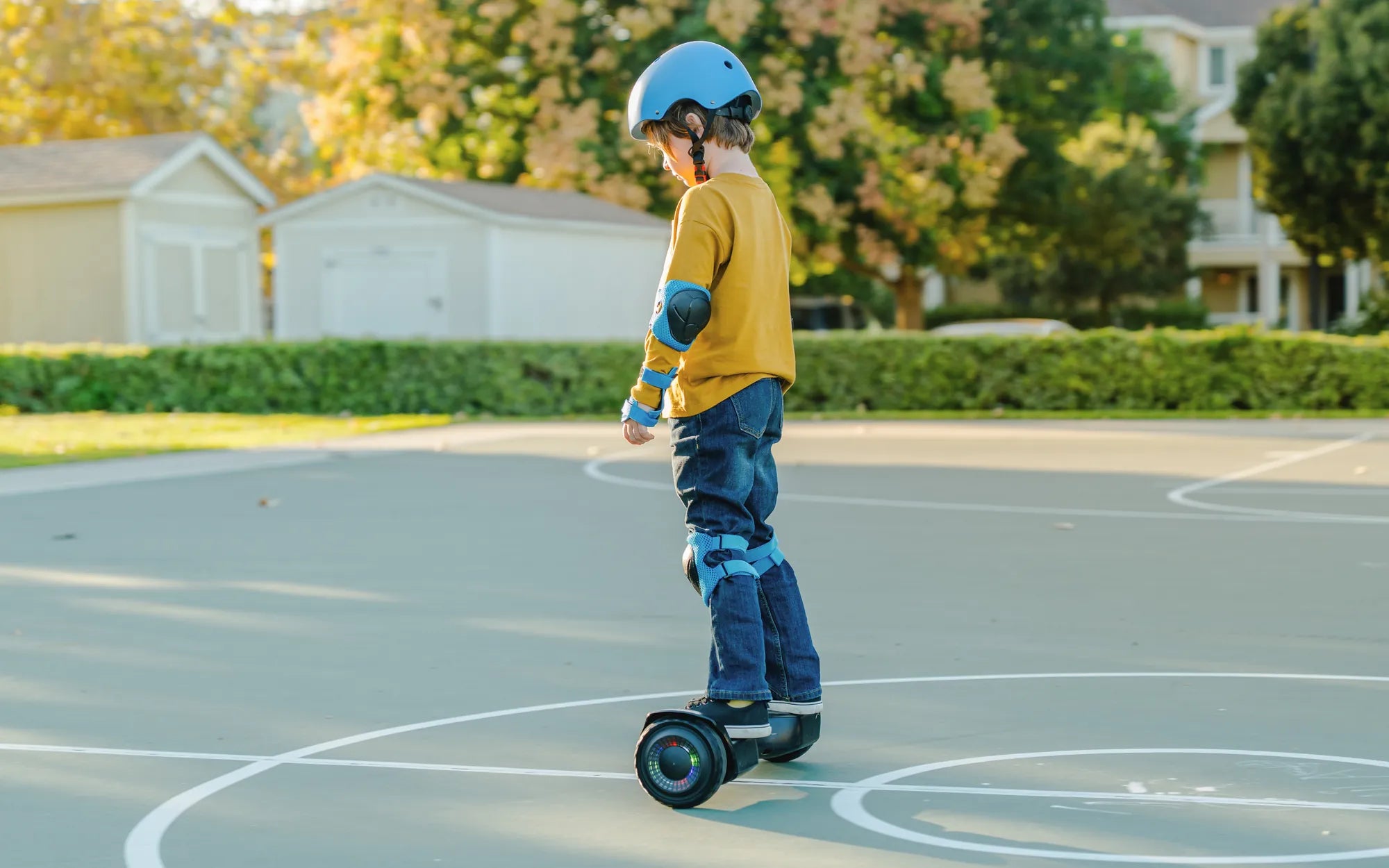
No child should ride any scooter, illuminated or not, without proper protective gear. This is non-negotiable. The core trio consists of a helmet, knee pads, and elbow pads.
A certified bicycle helmet is the most important item. It must fit snugly, sitting level on the head and covering the forehead. The strap should be tight enough that only one or two fingers fit between the chin and the strap.
Knee and elbow pads protect against the most common scrapes and impact injuries in falls. Look for hard plastic caps with thick foam padding and adjustable straps. Wrist guards are also highly recommended to prevent fractures.
Make gearing up part of the fun ritual. Let your child choose gear with favorite colors or designs. When safety gear is cool, kids are more likely to wear it without complaint.
Choosing the Right Riding Environment
Where a child rides is as important as what they ride on. The ideal environment is controlled, smooth, and free from motor vehicle traffic.
Start in a completely safe zone like an empty tennis court, basketball court, or school playground on the weekend. These spaces offer smooth, predictable surfaces for mastering basics like balancing, steering, and braking.
For regular riding, seek out well-maintained park paths or wide sidewalks in quiet neighborhoods. Actively avoid streets, driveways, steep hills, and areas with heavy pedestrian traffic. Wet surfaces, gravel, and sand drastically reduce traction and control.
Teach children to be hyper-aware of their surroundings. They should know to stop at every curb, look both ways, and never assume a driver has seen them—even with their lights on.
Comparison: Illuminated Scooter Types for Different Ages
Not all kids scooters with lights are created equal. The best choice depends heavily on the rider's age, skill level, and intended use. This comparison table breaks down the key considerations.
| Age & Skill Group | Recommended Features | Ideal Light System | Safety Priority |
|---|---|---|---|
| Ages 3-5 (Beginners) | 3 wheels for stability, lower deck, wide base, lightweight. | Simple, colorful wheel lights. Motion-powered for zero maintenance. | Maximum stability, close supervision, full protective gear. |
| Ages 6-9 (Intermediate) | 2 wheels, adjustable handlebar (24"-36"), rear foot brake, durable construction. | Combination of wheel LEDs and under-deck lights. Bright, fun patterns. | Learning proper braking and steering control, riding in safe zones. |
| Ages 10+ (Advanced) | Larger wheels (200mm+), higher weight limit, hand brake option, performance bearings. | Advanced multi-point systems: wheel, deck, and programmable headlight/taillight. | Traffic awareness, riding etiquette, independent maintenance checks. |
| All-Terrain Enthusiasts | Pneumatic tires, reinforced frame, superior suspension, high ground clearance. | High-lumen, weatherproof headlight and taillight for path illumination. Durable wheel lights. | Terrain assessment, speed management on slopes, night riding rules. |
This framework helps narrow down options. A beginner needs stability first, while an advanced rider can handle complex lighting and braking systems. Always match the scooter to the child's current ability, not their aspirational skill level.
Spotlight on Gyroor: Engineered for Thrilling, Safe Adventures
Gyroor designs personal electric mobility with a foundational commitment to safety and durability. This philosophy extends directly to their approach for younger riders, where fun must be inseparable from security.
The brand's engineering standards address common parent concerns. For instance, all Gyroor products use UL-certified battery packs, tested for over 500 charge cycles. This certification is a benchmark for electrical and fire safety, ensuring peace of mind.
Durability is built in to withstand energetic play. Many models feature IPX5 water-resistant ratings, protecting electronic components and light systems from splashes and rain. The frames are constructed from high-grade materials to handle jumps, curb drops, and daily use.
For over 100,000 riders across North America and Europe, Gyroor represents reliable performance. The 4.5/5 average customer rating reflects satisfaction with products that last. A one-year warranty backs this confidence, making a Gyroor scooter a long-term investment in fun.
When considering a kids scooter with lights, a brand's overarching safety ethos matters. Gyroor integrates bright, attractive lighting into models designed from the ground up for resilience, aligning perfectly with the dual goals of excitement and protection.
Maintenance and Care: Keeping the Lights Bright and Ride Smooth
Proper maintenance ensures your kids scooter with lights remains safe and functional for years. A simple, regular routine prevents most major issues and extends the product's life significantly.
Create a weekly "T-CLAP" check: Tires, Controls, Lights, Axles, and Parts. Inflate air-filled tires to the recommended PSI. Check for wheel wobble by lifting the scooter and spinning each wheel. Tighten any loose axle nuts or quick-release mechanisms.
Test the brakes every few rides. For foot brakes, ensure the fender makes firm contact with the rear tire. For hand brakes, check that the pads engage the wheel rim cleanly and the lever doesn't touch the handlebar when squeezed hard.
Clean the scooter with a damp cloth to remove dirt and grit, especially from the wheel bearings and brake surfaces. Avoid high-pressure hoses, which can force water into bearings and electrical components, damaging lights and motors.
Caring for the Light System
Light system care varies by power source. For battery-powered LEDs, follow the manufacturer's charging instructions. Avoid leaving the battery fully depleted for long periods. Store the scooter in a cool, dry place to preserve battery health.
For motion-powered lights, ensure the wheel hub is clean and spins freely. Obstructions can reduce power generation, dimming the lights. Gently wipe light casings with a soft cloth to maintain clarity and brightness.
If lights fail, first check the obvious: a dead battery, a loose connection, or a tripped circuit in user-serviceable models. For integrated systems under warranty, contact the manufacturer. Attempting to repair sealed electronic units can void warranties and create safety hazards.
Regular maintenance is a great opportunity to teach your child responsibility for their belongings. Involving them in simple checks fosters ownership and care for their prized kids scooter with lights.
Parent's FAQ: Your Top Questions Answered
Q: Are scooter lights bright enough for real safety, or are they just for show?
A: Quality lights are absolutely effective for safety. For a child to be seen, they need to be conspicuous. Bright, flashing LEDs, especially on moving wheels, create a pattern that stands out against a complex background, catching a driver's eye faster than a static reflector. Think of them as active visibility aids, similar to bicycle lights, which are legally required in many regions at night.
Q: How do I maintain and care for the scooter's light system?
A: Maintenance depends on the type. For battery-powered lights, recharge periodically even if not in heavy use to prevent battery degradation. Keep charging ports clean and dry. For motion-powered lights, simply keep the wheels clean and spinning freely. For all types, avoid direct impacts on the light casings and clean them with a soft, dry cloth. Refer to the manual for specific instructions.
Q: At what age is a scooter with lights appropriate?
A: The appropriateness is less about the lights and more about the child's physical coordination and ability to follow safety rules. Generally, children as young as 3 can use stable 3-wheeled scooters with simple lights under close supervision. The moving parts and need for rule-following make most 2-wheeled models better for kids aged 5-6 and up, regardless of illumination.
Q: Can the lights be turned off to conserve battery or motion power?
A: This varies by model. Many battery-powered kids scooters with lights have an on/off switch for the light system. Motion-powered lights typically cannot be turned off, as they generate power only when moving. Check the product specifications before purchasing if this feature is important to you. Conserving battery during daytime rides can extend time between charges.
Q: What's more important for visibility: wheel lights or a front headlight?
A: They serve different purposes. A front headlight (or white light on the deck) is crucial for being seen by oncoming traffic and for illuminating the rider's path. Wheel lights provide critical side visibility, making the child detectable from intersections and cross streets. The safest configuration combines both. Wheel lights alone make the child hard to see from the front; a headlight alone offers poor side visibility.
Q: My child wants to ride at dusk. What extra precautions are needed?
A: Dusk is a high-risk time due to changing light conditions. First, ensure all scooter lights are functioning and fully charged. Second, add reflective elements: a reflective vest, stickers on the helmet, or reflective ankle bands. Third, choose a familiar, well-lit route completely away from traffic. Fourth, increase supervision and consider riding alongside your child on a bicycle for added visibility.
Lighting the Way to Confidence and Joy
The journey to finding the perfect kids scooter with lights is an investment in childhood itself. You're not just buying a toy; you're providing a vehicle for physical development, outdoor exploration, and pure joy. The right scooter becomes a trusted companion for adventure.
By prioritizing both exhilarating light displays and foundational safety features, you teach a valuable lesson. Fun and responsibility can, and should, go hand-in-hand. A child who learns to gear up and check their equipment is learning lifelong habits of preparedness.
Let this guide be your roadmap. Use the comparison table to match a scooter to your child's age. Apply the safety protocols to every ride. Choose a brand, like Gyroor, that builds durability and safety into its core engineering, ensuring the fun lasts through countless adventures.
The goal is clear: to see your child's face light up with the same brightness as their scooter, confident in their skills and visible to the world. That combination of joy and security is the ultimate reward for making a thoughtful, informed choice.
Ready to find the ideal illuminated scooter for your young rider? Explore a range of durable, fun, and safety-engineered options designed for lasting adventure. Browse the full Gyroor collection at gyroorboard.com.
Hoverboard Colors: How to Choose the Perfect Shade for Your Ride
Electric Scooter Car for Kids: The Ultimate Guide to Fun and Safety