

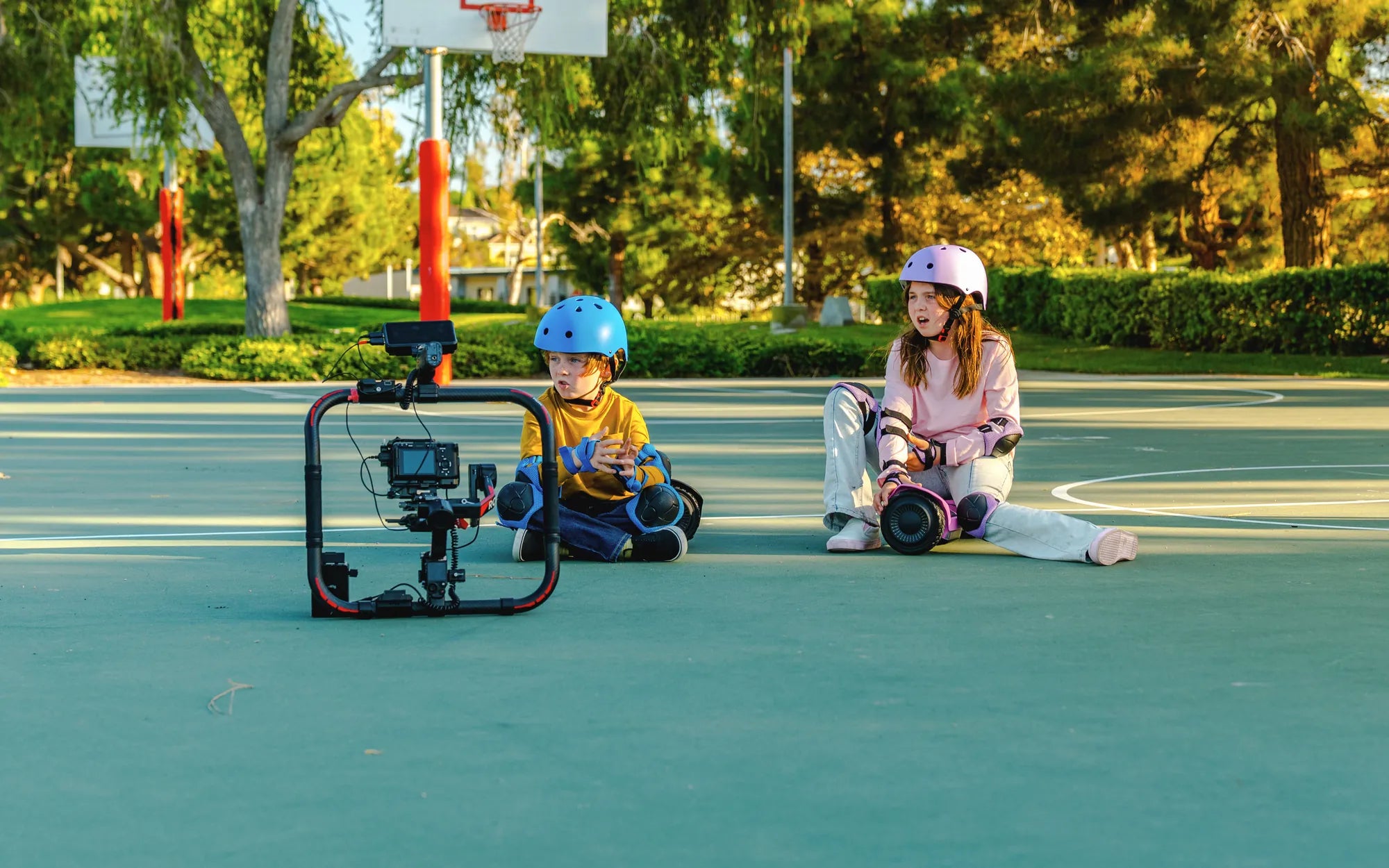
Choosing the right first scooter for your child is about more than just play—it's about fostering independence, developing motor skills, and creating safe outdoor memories. A kids scooter with a parent handle fundamentally changes this experience, offering a unique tool that bridges the gap between complete parental control and a child's first taste of autonomous movement. This guide will provide you with everything you need to know about these innovative scooters: from the core safety and developmental benefits to the specific features that matter most. We'll compare models for different stages, offer essential maintenance and safety tips, and explain why engineering and brand trust, as exemplified by leaders like Gyroor, are critical for your peace of mind. Let's explore how the right scooter can make every ride both safe and profoundly fun.
Why a Kids Scooter with a Parent Handle is a Game-Changer
The traditional toddler scooter often leaves parents in a constant state of vigilance, hovering just behind, back bent, ready to catch a fall. A kids scooter with a parent handle reimagines this dynamic. It transforms the scooter from a solo toy into a collaborative vehicle for learning and exploration. This simple attachment empowers parents with direct, ergonomic control, turning a stressful supervision task into a relaxed, enjoyable activity for both adult and child.
For the child, especially toddlers and preschoolers, the handle provides a crucial safety net that builds confidence. They can focus on the thrill of movement and the mechanics of balancing without the immediate fear of tipping over. For the parent, it eliminates the physical strain of constant bending and provides instant, gentle correction. This setup is particularly invaluable in unpredictable environments like park paths, crowded sidewalks, or near driveways where quick intervention might be necessary.
The psychological impact is significant. A child associates the scooter with positive, supported experiences rather than frustration from repeated falls. This positive reinforcement encourages more outdoor activity and accelerates the learning curve. The parent handle acts as a literal and figurative support system, making the journey toward independent riding smoother and more successful for everyone involved.
Furthermore, it extends the useful life of the scooter. A model with a detachable handle can grow with your child. It serves as a stable learning platform for a 2-year-old and, with the handle removed, becomes a confident big-kid scooter for a 4 or 5-year-old. This versatility represents a smart, long-term investment in your child's active play.
Key Benefits: More Than Just a Steering Rod
The parent handle is often misunderstood as merely a steering aid. In reality, it is a multifunctional tool that delivers layered benefits spanning safety, development, convenience, and emotional growth. Understanding these benefits helps justify the investment and clarifies why this feature is becoming a standard for early-riding scooters.
First and foremost is enhanced safety. The handle gives an adult immediate physical leverage to prevent falls, stabilize the scooter on uneven pavement, or make a controlled stop. This is far more effective and less startling for the child than grabbing their arm or clothing. It allows for proactive safety management in dynamic environments.
From a developmental standpoint, the handle facilitates guided learning. A parent can subtly correct steering, demonstrate leaning for turns, and control speed, helping the child's neuromuscular system learn the correct movements through assisted practice. This guided repetition builds muscle memory and proprioception—the sense of one's body in space—more effectively than trial-and-error alone.
Safety First: Preventing Wobbles and Wipeouts
The primary safety mechanism of the parent handle is control. Young children have unpredictable reactions; they might suddenly brake, swerve to avoid a crack, or simply lose focus. The handle allows a parent to instantly counteract a tip, correct a dangerous swerve, or bring the scooter to a smooth halt. This is crucial near roads, in parking lots, or in areas with pedestrian or cyclist traffic.
It also provides stability on suboptimal surfaces. A slight incline, a gravel patch, or a bumpy sidewalk joint can unsettle a beginner. With a firm grip on the handle, a parent can lift the front wheel slightly over an obstacle or provide extra downward stability, turning a potential crash into a non-event. This capability dramatically expands where you can safely use the scooter, making walks and outings more flexible.
Learning Made Easy: From Supported Glides to Independent Rides
The learning journey with a parent handle is progressive. Initially, the parent may provide most of the propulsion and steering, allowing the child to simply stand and enjoy the sensation of gliding. As confidence grows, the child begins to contribute—pushing off, attempting to steer. The parent's role shifts from driver to spotter, offering decreasing amounts of support.
This graduated assistance is key to building true competence. The child learns balance and coordination within a safe framework, reducing fear and frustration. The transition to independent riding becomes a natural evolution rather than a daunting leap. Many parents report that children who learn on a handle-equipped scooter often progress to riding without it more quickly and with greater skill than those who started on a standard scooter.
What to Look For: Essential Features for Your Family
Not all scooters with parent handles are created equal. Selecting the right one requires careful evaluation of several key features that directly impact safety, durability, usability, and long-term value. This checklist will help you distinguish a well-engineered product from a mere toy.
The foundation is always the scooter itself. It must be robust, stable, and appropriately sized for your child. The parent handle is an enhancement, not a substitute for poor scooter design. Features like wheel type, deck size, and brake quality are paramount and must be evaluated first.
Next, scrutinize the handle attachment system. It must lock securely to the scooter's steering column with a mechanism that prevents accidental detachment during use, yet allows for easy removal when desired. A wobbly or poorly attached handle is a safety hazard and diminishes the user experience for both parent and child.
Safety and Durability Non-Negotiables
Start with the deck. It should be wide enough for a small child to stand with feet side-by-side comfortably and have a pronounced, non-slip surface. A textured, rubberized grip tape is ideal. The braking system is critical; for young children, a rear fender brake (activated by stepping down) is often safer and more intuitive than hand-operated brakes.
Wheel choice dictates stability and ride quality. For beginners, three wheels are standard, with two wheels in front (a delta trike configuration) offering the greatest stability. Wheels should be made of durable polyurethane (PU) or similar material, with a width of at least 120mm for a smooth ride over small imperfections. ABEC-rated bearings ensure a quiet, consistent glide.
The Parent Handle: Design Matters
The handle itself should have an ergonomic, rubberized grip for parent comfort during extended use. Height adjustability is essential to accommodate parents of different statures—this prevents back strain and allows for optimal control leverage. Look for a telescoping pole that locks securely at multiple heights.
The connection point is the most important engineering aspect. It should use a robust clamp or locking pin system that firmly attaches to the scooter's stem. There should be no lateral play or wobble. A quick-release mechanism, like a button or lever, allows for fast detachment when the child is riding independently or when storing the scooter.
Age-Appropriate Design & Brand Trust
The scooter's core design must match your child's developmental stage. A 2-year-old needs a low-to-the-ground, three-wheel scooter for maximum stability. A 4-year-old ready for more challenge might use a two-wheel model or a three-wheel scooter that is more responsive. Always follow the manufacturer's recommended age and weight limits.
Purchasing from a reputable brand is not about brand loyalty; it's about safety assurance and product support. Established brands like Gyroor invest in rigorous testing, use higher-grade materials, and stand behind their products with warranties. For instance, Gyroor offers a 1-year comprehensive warranty with accessible, US-based customer support, providing tangible peace of mind that is absent with generic, unbranded alternatives.
Gyroor's Approach: Engineering Trust for Your Little Rider
In a market flooded with options, Gyroor has distinguished itself by applying the same engineering rigor to children's scooters as it does to its adult electric scooters and e-bikes. Trusted by over 100,000 riders, their philosophy centers on safety, durability, and thoughtful design that addresses real-world family needs. This approach is evident in several key areas when it comes to their offerings in the kids' scooter category.
Gyroor understands that a child's scooter is not just a toy but a vehicle for development and adventure. Their designs prioritize stability and user-friendly controls, ensuring the core platform is safe before any additional features like a parent handle are considered. This foundational safety is what allows the parent handle to function as an effective learning and safety tool rather than a band-aid for poor design.
Built for Real-World Adventures (and Puddles)
Children are not fair-weather riders, and their equipment shouldn't be either. Gyroor designs its relevant products with durability for everyday use in mind. A key feature is the IPX5 water-resistant rating found on many of their electric models. This means the scooter's electrical components are protected against water jets from any direction.
For practical purposes, this level of resistance means parents don't have to panic if the scooter encounters a wet sidewalk, a shallow puddle, or light rain during a family walk. This resilience not only makes the scooter more versatile and fun but also protects the investment by preventing water damage from common childhood scenarios, a concern often overlooked in lesser models.
Peace of Mind Power: The Battery Safety Standard
For families considering an electric kids scooter or a hybrid model with lighting, battery safety is paramount. Gyroor's commitment here is unambiguous: the use of UL-certified lithium-ion battery packs. UL certification is an independent, rigorous safety standard that tests for overcharging, short-circuiting, and other failure modes.
This certification is a critical differentiator. It assures parents that the power source for their child's scooter has been tested to meet stringent safety benchmarks, reducing risks associated with battery failure. Combined with robust battery management systems that ensure stable power delivery and longevity, this focus on certified components is a core part of engineering trust for the entire family.
Choosing the Right Model: A Comparison for Different Stages
Selecting a scooter is not one-size-fits-all. The ideal model depends entirely on your child's age, physical development, coordination, and prior experience. The following guide breaks down the key considerations for different stages, helping you match a scooter type to your child's current needs and near-future growth.
| Child's Stage | Recommended Scooter Type | Key Features | Parent Handle Role |
|---|---|---|---|
| The Beginner (Ages 2-3) | 3-Wheel (Delta: 2 front, 1 rear) | Extra-wide deck, low ground clearance, lean-to-steer or fixed front wheels, rear fender brake. | Primary control. Used for propulsion, steering, and full stability. The child focuses on balancing in a stable platform. |
| The Advancing Rider (Ages 4-5) | 2-Wheel or Convertible 3-to-2 Wheel | Narrower deck, higher responsiveness, hand brake optional, larger wheels for speed. | Safety backup & guidance. Used for occasional stabilization, speed control on hills, and navigation in complex areas. |
| The Confident Rider (Age 5+) | Standard 2-Wheel Scooter | Lightweight but sturdy construction, agile turning, hand brake, reinforced kickstand. | Handle removed. Child rides fully independently. Parent supervises from a distance. |
The Beginner (Ages 2-3): Maximum Stability
For a toddler, the primary goal is to build confidence and a basic sense of balance. A three-wheel scooter, specifically the delta trike design with two wheels in front, provides a stable, non-tipping platform. The deck should be very low to the ground to minimize the height of a potential fall and allow easy foot placement.
At this stage, the parent handle is an integral part of the system. Parents will likely provide all the pushing power and most of the steering guidance. The scooter's own steering mechanism might be very limited or based on lean-to-steer principles, which the parent handle helps facilitate. The experience is about the child enjoying safe, assisted movement.
The Advancing Rider (Ages 4-5): Transitioning to Independence
This is the most dynamic stage. Children have better balance, stronger leg muscles for kicking, and more advanced motor skills. A two-wheel scooter becomes appropriate, or a high-quality three-wheel model that is more responsive. The deck may be slightly higher, and the scooter overall will be more agile.
Here, the parent handle shifts to a coaching and safety role. The child does the propelling and attempts the steering. The parent uses the handle for gentle course correction, to prevent high-speed wobbles, and to act as an emergency brake. The handle is often detached for practice sessions in safe, open areas, then reattached for walks on paths or near streets. This stage perfectly demonstrates the value of a detachable handle system.
Safety Tips and Maintenance for Long-Lasting Fun
Owning a kids scooter with a parent handle comes with the responsibility of proper use and care. Adhering to basic safety rules and performing simple maintenance will ensure the scooter remains a safe, reliable source of fun for years and potentially for younger siblings.
Safety always starts with the right gear. A properly fitted helmet is non-negotiable for every ride, regardless of the parent's proximity. Elbow and knee pads are highly recommended for beginners. Choose closed-toe shoes with good grip—no sandals or flip-flops. Establish clear rules from the start: no riding near roads, always be aware of surroundings, and use the brake to stop, not shoes or feet.
Before each ride, perform a quick safety check. Ensure the handle is securely attached and the height is locked. Check that all wheels spin freely and are not cracked or overly worn. Test the brake to make sure it engages smoothly and effectively. Look for any loose bolts or parts on the scooter body and handle assembly.
Regular maintenance extends the scooter's life. Keep it clean by wiping it down with a damp cloth; avoid high-pressure hoses unless it's specifically rated for it (like Gyroor's IPX5 models). Periodically check and tighten all screws and fasteners, as vibrations from riding can loosen them. For scooters with bearings, a drop of lubricant on the wheel axles every few months will keep the ride smooth. Store the scooter in a dry place to prevent rust and corrosion.
FAQ: Your Top Questions, Answered
Parents naturally have questions before making this purchase. Here are clear, concise answers to the most common queries about kids scooters with parent handles.
At what age is a scooter with a parent handle most useful?
The handle is most beneficial for children between approximately 18 months and 4 years old. It's ideal for toddlers who are just developing the balance and coordination for a scooter but lack the safety awareness and physical control to ride independently. By age 4 or 5, many children are ready to transition to using the scooter with the handle detached, using it only occasionally for backup.
Can the handle be removed when my child is ready to ride alone?
Yes, on virtually all quality models, the parent handle is designed to be completely detachable. This is a key feature to look for. A secure quick-release mechanism allows you to remove the handle in seconds, transforming the scooter into a standard, independent ride. This extends the scooter's usability and represents excellent value.
How do I ensure the scooter is the right size for my child?
The most important fit is the handlebar height. When your child stands on the deck, the handlebars should come between their waist and lower chest. This allows for a comfortable, slightly bent-arm riding posture that offers good control. The deck should also be low enough that they can easily place both feet flat on the ground when standing over it.
Are these scooters suitable for use on rough sidewalks or gentle grass?
They are designed primarily for smooth, hard surfaces like pavement, asphalt, and indoor floors. Rough sidewalks with large cracks can be challenging and may require the parent to use the handle for extra stability. Grass, even gentle grass, is not recommended as it requires significant effort to push through and can destabilize the scooter. Always opt for the smoothest available path.
What is the weight limit for these scooters, and can an adult stand on them?
Weight limits vary by model but typically range from 44 lbs (20 kg) for lightweight toddler models to 110 lbs (50 kg) or more for sturdier two-wheel scooters. Always check the manufacturer's specifications. The parent handle is for steering and stabilizing only—it is not designed to support an adult's weight. An adult should never stand on the child's scooter deck.
Investing in Confidence, Skill, and Shared Joy
A kids scooter with a parent handle is more than a toy; it's a developmental tool and a catalyst for quality outdoor time. It represents an investment in your child's physical confidence, coordination, and love for active play, all within a framework that prioritizes safety and reduces stress for you. The right scooter facilitates a journey from wobbly first steps to confident, independent glides, creating memories along the way.
The decision ultimately comes down to choosing a product built to last, with thoughtful engineering that addresses real family needs. Prioritizing features like a secure handle attachment, durable construction, water resistance, and certified battery safety—hallmarks of trusted brands like Gyroor—ensures that your investment is protected. You gain not just a scooter, but the peace of mind that comes from a reliable warranty and proven performance.
By selecting a well-designed scooter suited to your child's stage, you are choosing fun, freedom, and growth. You're choosing to be an active part of their learning process, literally guiding them toward new skills. The laughter, the pride on their face after mastering a turn, and the shared enjoyment of a family walk are the true returns on this investment.
Ready to find the perfect scooter to start your family's riding adventure? Explore a range of thoughtfully designed options that blend safety, durability, and fun. Browse the full Gyroor collection at gyroorboard.com to discover models that grow with your child and are built for real-world family adventures.
Hoverboard Flashing Orange When Charging: Causes, Fixes, and Safety Tips
Can You Take a Kids Scooter on a Bus? A Parent's Guide to Rules and Etiquette