



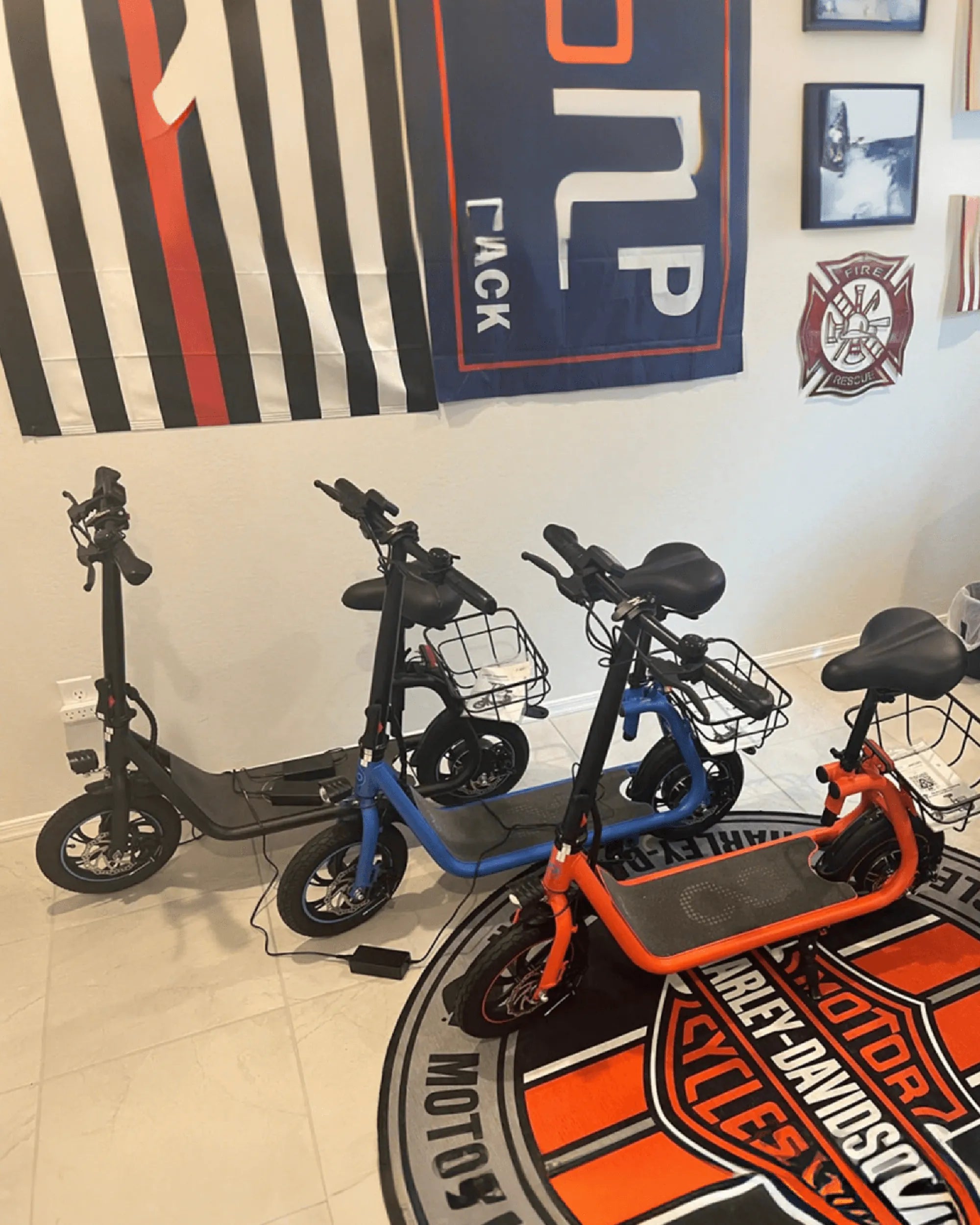
The 2025 E-Scooter Revolution Is Here
The urban commute is undergoing its most significant transformation in decades. The latest electric scooters 2025 are not merely incremental updates; they represent a fundamental reimagining of personal urban transport. These machines blend unprecedented range, intelligent connectivity, and all-weather durability into packages that genuinely replace car trips for millions. This evolution is moving beyond novelty into a mature, reliable, and essential component of smart city infrastructure.
For over 100,000 riders across North America and Europe, brands like Gyroor have led this shift by prioritizing certified safety and robust engineering. The conversation has moved from "if" an e-scooter can handle a daily commute to "how well" it enhances it. We are witnessing the convergence of performance technology and practical design, creating vehicles built for the demands of modern city life.
This article delves deep into the specifications, trends, and considerations defining this new era. We will dissect what makes the 2025 models stand apart, compare them for different urban lifestyles, and provide the knowledge needed to choose a scooter that is a long-term investment, not a short-term gadget. The future of urban mobility is electric, connected, and riding on two wheels.
Defining the 2025 Electric Scooter: Beyond Basic Commutes
The archetype of the wobbly, short-range scooter is obsolete. The 2025 electric scooter is defined by a suite of features that deliver car-alternative capability. It's a vehicle designed for serious, daily use, with engineering that prioritizes rider safety, vehicle longevity, and seamless integration into a digital lifestyle. The baseline has been permanently elevated.
Performance is no longer guesswork. Sustained motor power, often 500W or more, ensures consistent speed up hills and under load, not just a burst on flat ground. Advanced regenerative braking systems do more than slow the scooter; they recapture energy to extend range and reduce wear on physical brakes. The core of this new generation is a commitment to reliability that builds rider confidence mile after mile.
Core Performance & Safety Upgrades
At the heart of the performance leap are motors engineered for endurance, not just peak output. A 500W sustained motor provides reliable torque for 10% grades, making hilly cities accessible. This is paired with sophisticated electronic speed controllers (ESCs) that manage power delivery smoothly, eliminating the jarring acceleration of older models.
Safety is now engineered into every system. Dual braking systems—combining a front disc brake with a rear electronic or drum brake—are standard for controlled, stable stops. Crucially, the industry's focus has shifted to battery safety. The use of UL-certified battery packs, like those in all Gyroor models, is a non-negotiable upgrade. These cells undergo rigorous testing for thermal stability, charge cycles, and short-circuit prevention, addressing the primary safety concern head-on.
Smart Connectivity & Ride Intelligence
The scooter has become a connected device. Integrated Bluetooth and companion apps are now expected features, not luxuries. Through a smartphone, riders access digital dashboards displaying real-time metrics, navigate using built-in GPS, track ride history, and customize performance profiles like eco or sport mode.
This connectivity enables proactive maintenance alerts and over-the-air firmware updates, ensuring the scooter's software and safety features improve over time. Anti-theft features like GPS tracking and wheel lock activation via app add a layer of security. This intelligence transforms the scooter from a simple vehicle into a personalized mobility platform, integrating seamlessly with the rider's digital ecosystem.
Top Trends Shaping Urban Mobility in 2025
The latest electric scooters 2025 are defined by clear, user-centric trends. Manufacturers are competing on tangible benefits: more miles per charge, greater resilience against the elements, and features that actively protect the rider. These trends respond directly to the real-world frustrations of early adopters, delivering solutions that make e-scooters viable for year-round, primary commuting.
The focus is on holistic quality. It's no longer about a single impressive spec but about how range, durability, safety, and comfort work together to create a stress-free commute. The market is maturing, and the trends reflect a demand for products that are built to last and perform consistently in the challenging environment of a modern city.
Extended Range & Battery Innovation
Range anxiety is being systematically eliminated. The latest models feature high-capacity, UL-certified lithium-ion packs, often 15Ah or larger, enabling realistic ranges of 30-40 miles on a single charge under normal riding conditions. This covers the vast majority of daily urban commutes with capacity to spare.
Innovation extends to charging and management. Fast-charging technology can bring a battery from empty to 80% in under 4 hours. More importantly, advanced Battery Management Systems (BMS) meticulously monitor cell voltage, temperature, and health. This maximizes the battery's lifespan—often guaranteeing 500+ full charge cycles—and ensures safe operation, preventing overcharge and deep discharge scenarios that can damage cells.
Unmatched Durability for All Conditions
Commuting doesn't stop for a drizzle, and neither should your scooter. A high IP (Ingress Protection) rating is now standard. An IPX5 rating, signifying protection against water jets from any direction, means a scooter can safely handle wet roads and light rain, a critical feature for reliable daily transport. This durability is a cornerstone of brands like Gyroor, whose designs are tested for these conditions.
Frame construction uses aerospace-grade aluminum alloys for a lightweight yet incredibly rigid structure. To tackle potholed city streets, premium suspension systems have become ubiquitous. Combinations of front and rear spring or hydraulic suspensions absorb impacts, providing a smoother, more stable ride that reduces fatigue and increases control, making longer journeys comfortable and safe.
Enhanced Rider Safety Features
Active safety features are becoming integrated. Lighting has seen major advancements: bright, wide-beam LED headlights illuminate the path ahead, while automatic brake lights and integrated turn signals communicate rider intentions to surrounding traffic, a vital addition for urban riding.
The riding platform itself is safer. Decks are wider and longer, with advanced anti-slip rubber or silicone textures for secure footing in all weather. Combined with the wider wheelbases and improved suspension mentioned earlier, these features create a more confident and stable riding posture. The culmination is a vehicle where safety is not an afterthought but a foundational design principle.
Choosing Your 2025 Commuter: A Practical Comparison
Selecting the right model depends entirely on your specific urban landscape and commuting pattern. The market has segmented to offer optimized solutions for different needs. Understanding these categories will guide you to the scooter that feels less like a compromise and more like a perfect fit for your lifestyle.
The decision hinges on three primary factors: portability versus performance, required range, and the quality of your typical riding terrain. By honestly assessing your daily routine—distance, storage options, road conditions—you can filter the vast array of 2025 models down to the ideal type for you. The following breakdown provides a clear framework for that decision.
The Ultra-Portable City Slicer
This category prioritizes agility and convenience above all. Weighing under 35 lbs with a one-click folding mechanism, these scooters are designed for multi-modal commuting. They are perfect for the rider who combines a scooter ride with a subway or bus trip, needing to carry it effortlessly for the final leg.
Performance is tailored for efficiency: a motor in the 350W-500W range provides ample power for flat city streets, with a focus on zippy acceleration. Range is typically a practical 15-22 miles, sufficient for most last-mile scenarios. The design is minimalist and robust, often featuring solid tires to avoid flats, sacrificing some comfort for ultimate low-maintenance portability.
The All-Terrain Commuter Warrior
For riders with longer, more demanding commutes or those navigating cities with poor road infrastructure, this is the category of choice. These are heavier, more substantial machines built to conquer potholes, curbs, and even light off-road paths like park trails or gravel.
Key features include large, pneumatic (air-filled) tires—often 10 inches in diameter—paired with advanced front and rear suspension. Motors are powerful, from 500W to 1000W, providing the torque needed for steep hills. Range is a priority, with large batteries offering 30+ miles. The trade-off is weight (45-70 lbs) and less convenient portability, but the payoff is a smooth, capable, and car-replacing ride.
The Premium Tech-Integrated Ride
This segment represents the pinnacle of the 2025 electric scooter experience, blending top-tier performance with cutting-edge technology and premium materials. It's for the rider who views their scooter as a lifestyle gadget and values the best ride quality, connectivity, and design.
Expect vibrant full-color digital displays, extensive app integration with ride analytics, advanced customizable LED lighting, and the highest quality finishes. Performance matches the tech, with powerful motors, long range, and exceptional suspension systems. These models often use the finest materials, like carbon fiber or aircraft aluminum, to reduce weight without sacrificing strength, offering a truly refined commuting experience.
| Use Case | Ideal Scooter Type | Key Features | Typical Weight | Real-World Range |
|---|---|---|---|---|
| Multi-Modal / Last-Mile | Ultra-Portable City Slicer | Lightweight, fast folding, solid tires | Under 35 lbs | 15-22 miles |
| Primary Car Replacement | All-Terrain Commuter Warrior | Large pneumatic tires, full suspension, high torque motor | 45-70 lbs | 30-40+ miles |
| Tech-Forward Enthusiast | Premium Tech-Integrated Ride | Full-color display, app ecosystem, premium materials, adaptive lighting | 40-60 lbs | 25-35 miles |
The Gyroor Advantage: Built for the Future, Backed for Today
Navigating the 2025 market requires identifying brands that translate these advanced trends into reliable, everyday products. Gyroor's philosophy aligns directly with the core demands of the modern commuter: certified safety, all-weather durability, and unwavering reliability. Their approach is to engineer scooters that perform not just on day one, but for thousands of miles thereafter.
This commitment is evident in foundational choices. Every Gyroor scooter is powered by a UL-certified battery pack, the industry benchmark for electrical and fire safety. Furthermore, an IPX5 water-resistant rating is standard across their lineup, ensuring that a sudden shower doesn't end your ride or damage your investment. These are not premium add-ons; they are considered essential, baseline specifications for a trustworthy vehicle.
This engineering confidence is backed by a robust customer commitment. A comprehensive 1-year warranty on the vehicle, supported by a responsive US-based service team, provides tangible peace of mind. It signals a brand that stands behind the longevity of its products. For over 100,000 riders, this combination of proactive safety engineering and reactive support has established Gyroor as a leader in delivering the promise of the latest electric scooters 2025.
FAQ: Your Questions on 2025 E-Scooters, Answered
Are 2025 electric scooters legal in my city?
Laws vary widely. Generally, most cities allow e-scooters on bike lanes and streets with speed limits under 25-35 mph, but prohibit them on sidewalks. Common regulations include a minimum rider age (often 16+), speed limits (15-20 mph), and sometimes helmet requirements. Always check your specific city and state Department of Transportation website for the most current rules.
How does the IPX5 water resistance rating actually protect my scooter?
An IPX5 rating means the scooter's electrical components are protected against water jets from a 6.3mm nozzle from any direction. In practice, this allows you to ride confidently in light to moderate rain and through puddles. It protects against splashes from wet roads. However, it is not submersible; you should not ride through deep standing water or leave it out in a torrential downpour.
What does a UL-certified battery mean for my safety?
A UL certification (from Underwriters Laboratories) means the battery pack has passed a rigorous set of safety tests for electrical, mechanical, and environmental hazards. These tests evaluate the battery's resistance to overcharging, short-circuiting, crushing, and exposure to extreme temperatures. It is the leading standard for ensuring battery cells and their management systems are designed to prevent thermal runaway, significantly reducing fire risk.
Is the 1-year warranty sufficient, and what does it typically cover?
A comprehensive 1-year warranty is the industry standard for reputable brands and is generally sufficient to cover manufacturing defects. A strong warranty typically covers the frame, motor, controller, and battery against faults in materials or workmanship. The key is to read the details: a reputable warranty, like Gyroor's, is a signal the manufacturer expects the product to last and is willing to support it.
Can I really expect 30+ miles on a single charge in real-world use?
Yes, but with important caveats. The stated range is often achieved under ideal conditions: a light rider on flat, smooth terrain at a moderate speed in eco mode. Real-world factors like rider weight, hills, frequent stops/starts, cold weather, and higher speeds will reduce range. For a scooter with a 30+ mile claimed range, a realistic expectation for varied urban commuting is 22-28 miles, which still covers most daily needs with margin.
Embracing a Smarter, Greener Commute
The latest electric scooters 2025 offer a compelling vision for the future of urban mobility—one that is efficient, sustainable, and personally empowering. They represent a tangible tool for reducing traffic congestion, lowering carbon emissions, and reclaiming time lost in gridlock. The technology has matured to a point where the benefits are no longer theoretical but are experienced daily by a growing global community of riders.
As you consider joining this movement, let the benchmarks of the new generation guide you: prioritize verified safety through UL-certification, demand durability with proper water-resistance ratings, and choose a brand that supports its product with a solid warranty. These factors ensure your investment delivers long-term value and reliable service. The right scooter is more than transport; it's a key to a more flexible and enjoyable urban life.
The journey toward smarter cities begins with individual choices. Explore the engineering and design that makes the 2025 models exceptional. Discover how a purpose-built electric scooter can transform your daily routine, offering not just a ride, but an upgrade to your lifestyle. Browse the full Gyroor collection at gyroorboard.com to see how the future of urban mobility is built.
Electric Scooters for Adults with Basket: The Ultimate Urban Commuting Solution
Electric Scooters Idaho Falls: The Ultimate Guide to Eco-Friendly Commuting