



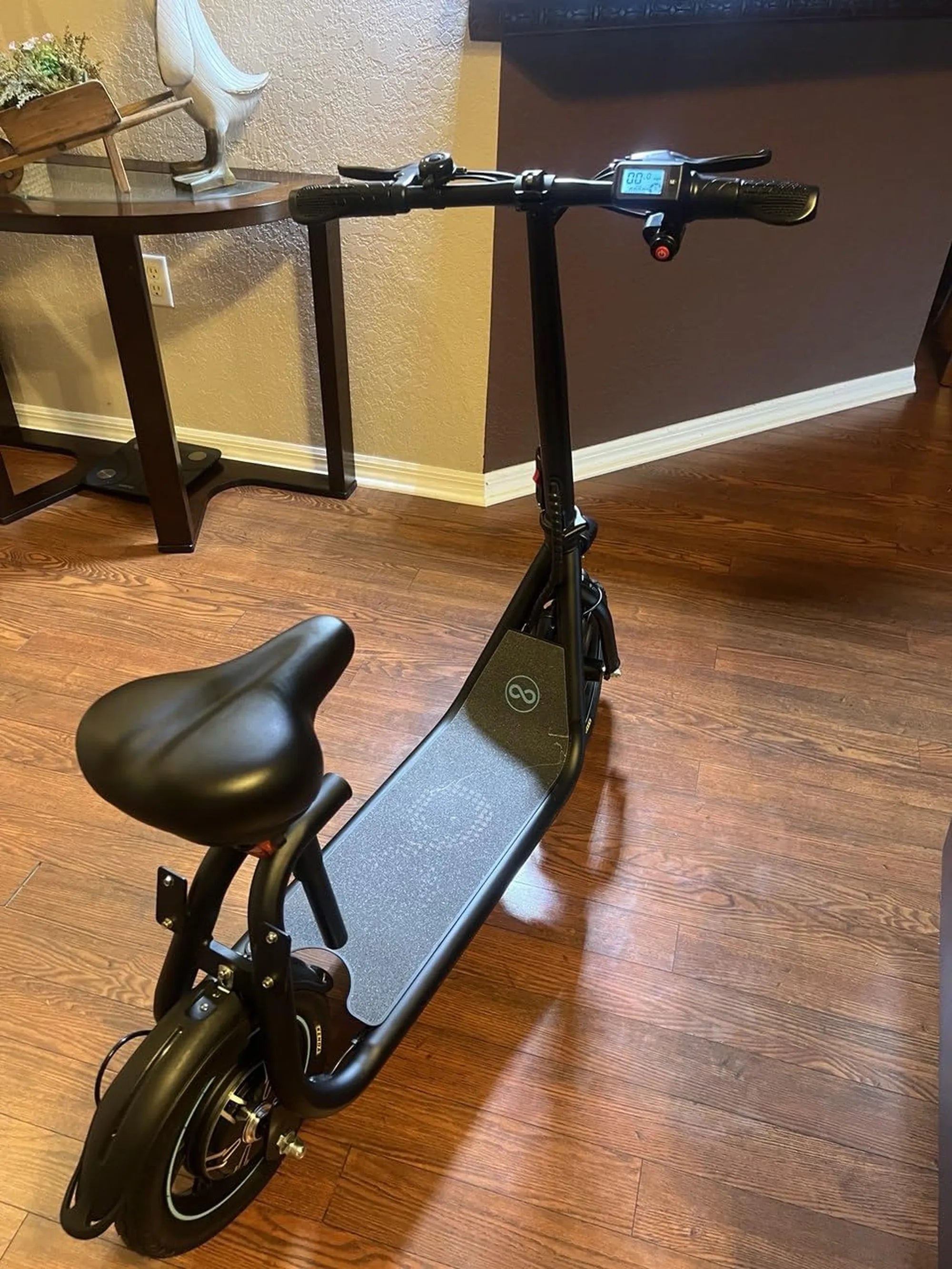
Introduction: Why Lightweight Electric Scooters Are Redefining Urban Mobility
Urban transportation is undergoing a quiet revolution. For adults navigating congested streets, expensive parking, and unreliable public transit schedules, a new solution has emerged that combines efficiency, affordability, and personal freedom. That solution is the light weight electric scooter for adults. These agile vehicles directly address the core frustrations of city life, offering a practical and enjoyable alternative for daily commutes and short trips.
The appeal is rooted in fundamental physics and design. A scooter weighing under 30 pounds transforms the user experience, making it a genuinely portable extension of one's personal mobility. It's not just about the ride; it's about the complete journey—from carrying it onto a subway to storing it under a desk. This seamless integration into the multi-modal reality of city living is what sets modern lightweight models apart from their heavier predecessors.
This article will dissect why the light weight electric scooter for adults has become the ultimate urban commuting solution. We will explore the tangible benefits, the critical engineering features that define a quality model, and provide a data-driven framework to help you select the right scooter. We'll reference the engineering principles of leading brands like Gyroor, a company trusted by over 100,000 riders, to illustrate how safety and performance are engineered into compact, reliable forms designed for daily urban use.
The Core Benefits of Choosing a Lightweight E-Scooter
The advantages of a lightweight electric scooter extend far beyond simple ease of use. They represent a paradigm shift in how adults approach short-distance travel, prioritizing flexibility and reducing friction at every stage of a commute.
Portability and Convenience
The primary benefit is unmatched portability. A scooter weighing between 25-30 lbs can be lifted with one hand, carried up a flight of stairs, or effortlessly rolled alongside you. This transforms the 'last-mile' problem into a solved equation. You can ride to the train station, fold the scooter in seconds, carry it aboard, and unfold it for the final leg of your journey. This multi-modal capability is impossible with bulkier, heavier alternatives.
Foldability is the enabling feature. A well-designed folding mechanism, often with a single latch or lever, allows the scooter to collapse into a compact form. This makes storage trivial—whether in a cramped apartment closet, under a restaurant table, or in the trunk of a car. The convenience of not needing a dedicated parking spot or a bike rack cannot be overstated for urban dwellers.
Enhanced Maneuverability and Agility
On crowded city sidewalks, bike lanes, and shared paths, agility is safety. A lighter scooter has a lower moment of inertia, allowing for quicker, more responsive steering inputs. This makes navigating around pedestrians, potholes, and street furniture significantly easier and more intuitive. The reduced weight also contributes to a more nimble feel at lower speeds, which is where most urban riding occurs.
This maneuverability directly reduces rider fatigue and increases confidence. You spend less mental energy fighting the scooter's mass and more on situational awareness. The result is a smoother, more controlled ride that feels like an extension of your body rather than a vehicle you are piloting, making the daily commute less stressful and more enjoyable.
Reduced Physical Strain
The physical demand of a personal transport device isn't limited to the ride itself. The act of maneuvering it when not in use—lifting, carrying, rolling—is a critical factor often overlooked. A heavy scooter can be a significant burden, discouraging use for those who aren't physically strong or for anyone making multiple stops.
A true light weight electric scooter for adults eliminates this barrier. It democratizes micro-mobility, making it accessible to a wider demographic, including those who may find a 50+ lb e-bike or standard scooter prohibitive. The ease of handling encourages more frequent use for a variety of trips, maximizing the value of the investment and truly replacing car or transit trips.
Key Features to Prioritize in a Lightweight Adult Scooter
Selecting a quality scooter requires looking beyond just the weight on the spec sheet. True value lies in a balanced design that doesn't sacrifice essential performance, safety, or durability for the sake of being light.
Weight vs. Performance: Finding the Balance
The ideal scooter strikes a precise balance between mass and capability. Key performance metrics include motor power, typically ranging from 300W to 500W for urban use, and top speed, usually between 15-20 mph. A 350W motor in a 28 lb scooter can often provide better acceleration and hill-climbing than a 250W motor in a 35 lb scooter, demonstrating that intelligent engineering trumps raw weight numbers.
Advanced materials are the secret. Aircraft-grade aluminum alloys provide exceptional strength-to-weight ratios, allowing for a rigid, durable frame without unnecessary bulk. The use of high-tensile steel in key stress points and lightweight polymer composites for non-structural components further optimizes the design. The goal is a scooter that feels sturdy and planted on the road, not flimsy.
Battery Technology: The Heart of Lightweight Design
The battery pack is often the heaviest single component. Therefore, achieving a lightweight design hinges on using high-energy-density lithium-ion cells. These cells pack more watt-hours (Wh) of energy into a smaller, lighter package, directly enabling longer range without added bulk. A quality lightweight scooter should offer a real-world range of 10-20 miles per charge, sufficient for most daily urban commutes.
Safety is paramount. A UL-certified battery pack, like those used across Gyroor's lineup, is non-negotiable. This certification means the battery has passed rigorous independent testing for electrical, mechanical, and environmental safety, drastically reducing risks of fire or failure. In a portable device used in diverse urban conditions, this certification is a critical marker of responsible engineering.
Build Quality and Durability
A lightweight scooter must be built to withstand the rigors of daily city use. This means a frame with no flex or creaking, secure folding mechanisms that lock solidly, and reliable components. The braking system is crucial; a combination of electronic (e-brake) and mechanical (disc or drum) braking provides consistent stopping power in all conditions.
Weather resistance is essential for a true commuting tool. An IPX5 water-resistance rating indicates the scooter can withstand water jets from any direction, making it safe to ride through puddles and in light rain. This practical feature, combined with durable, air-filled tires (8.5-10 inches) that absorb shocks from uneven pavement, ensures the scooter is a reliable partner year-round.
Lightweight Champion: How Gyroor Engineers for Urban Agility
Gyroor's approach to designing light weight electric scooters for adults exemplifies the marriage of performance, safety, and practical convenience. Their philosophy centers on creating reliable tools for urban mobility, not just recreational gadgets.
UL-Certified Safety in a Compact Package
Gyroor builds safety into the core of its lightweight designs by exclusively using UL-certified battery packs. This commitment goes beyond marketing; it's an engineering standard that ensures each battery undergoes testing for over 500 charge cycles, thermal stability, and short-circuit protection. For the rider, this translates to peace of mind when charging at home or the office, knowing the most critical component meets the highest recognized safety benchmarks.
This focus extends to the Battery Management System (BMS), which intelligently monitors cell voltage, temperature, and current. The BMS prevents overcharging, over-discharging, and manages power output, optimizing both safety and the long-term health of the battery. This integrated systems approach is what allows Gyroor to offer a robust 1-year warranty, backing the durability of their compact power systems.
Built for the Real World: IPX5 and Warranty
Understanding that urban commuting is a daily activity, Gyroor designs its scooters with an IPX5 water-resistant rating. This isn't for riding in a downpour, but for the inevitable realities of city life: wet streets after a morning shower, splashes from road spray, or accidental exposure. The sealed electronics and connectors prevent moisture ingress, ensuring reliable operation and longevity.
The comprehensive 1-year warranty, supported by a US-based customer service team, underscores the brand's confidence in its durability. It covers the frame, motor, battery, and electronic controllers, protecting the consumer against manufacturing defects. This warranty transforms the purchase from a disposable gadget into a dependable transportation asset, aligning perfectly with the needs of an adult commuter who relies on their scooter daily.
Making the Choice: Practical Considerations for Your Commute
Choosing the right model requires a clear assessment of your personal needs and urban environment. A methodical evaluation ensures your scooter becomes a seamless part of your routine.
Assessing Your Daily Route and Range Needs
Start by mapping your typical commute. Calculate the one-way distance and identify any significant inclines. A scooter with a 300W motor may suffice for flat terrain, but a 500W motor is recommended for consistent hill climbing. Always derate the manufacturer's range claim by 20-30% to account for real-world variables like rider weight, hills, temperature, and riding style. If your round-trip is 10 miles, look for a scooter with a stated range of at least 15 miles.
Consider multi-modal needs. If you plan to combine scooting with a bus or train, prioritize ultra-portability (under 28 lbs) and a fast, secure folding mechanism. The scooter should be easy to manage in crowded transit stations. Also, check your local regulations regarding e-scooters on public transportation, as policies can vary.
Lightweight Scooters vs. Other Micro-Mobility Options
It's useful to contextualize lightweight e-scooters within the broader micro-mobility landscape. The following table provides a data-informed comparison focused on the needs of the urban adult commuter.
| Feature | Lightweight E-Scooter (e.g., Gyroor) | Heavier E-Scooter / Moped-Style | E-Bike | Traditional Bicycle |
|---|---|---|---|---|
| Avg. Weight | 25-30 lbs | 45-70 lbs | 50-70 lbs | 20-30 lbs |
| Portability | Excellent (Folds, easy carry) | Poor (Very difficult to carry) | Poor (Requires bike rack/lock) | Good (Light but doesn't fold) |
| Storage Footprint | Minimal (Folded) | Large | Large | Moderate |
| Multi-Modal Ease | High | Very Low | Low | Medium |
| Typical Range | 10-20 miles | 20-40 miles | 20-60 miles | N/A (Human powered) |
| Primary Commuter Advantage | Ultimate door-to-door convenience & agility | Longer range & higher speed | Exercise + assist, cargo capacity | Exercise, low cost |
As the table illustrates, the light weight electric scooter for adults excels in the specific areas most critical for complex urban commutes: seamless portability and integration with other modes of transport. While e-bikes offer more range and bicycles provide exercise, neither matches the scooter's combination of electric assist, compact storage, and effortless carrying.
Safety, Maintenance, and Riding Best Practices
Owning a scooter comes with the responsibility of safe operation and basic upkeep. Adhering to these practices ensures your safety and extends the lifespan of your vehicle.
Essential Safety Gear and Riding Etiquette
Always wear a helmet certified for cycling or skateboarding. Wrist guards, elbow pads, and knee pads are highly recommended, especially for new riders. Use lights—both front and rear—at all times, and consider adding reflective elements to your clothing or backpack. Obey all local traffic laws; in most areas, e-scooters belong in bike lanes or on the road, not on sidewalks. Be predictable, use hand signals, and always yield to pedestrians.
Practice defensive riding. Assume that drivers may not see you. Be extra cautious at intersections, in blind spots, and when passing parked cars (watch for opening doors). Regularly check your scooter's brakes and tire pressure before riding. A well-maintained scooter is a safe scooter.
Routine Maintenance for Longevity
Basic maintenance is straightforward but vital. Keep tires inflated to the recommended PSI (found on the tire sidewall) for optimal range, comfort, and puncture resistance. Periodically check and tighten all bolts and fasteners, especially around the folding mechanism and stem. Clean the scooter with a damp cloth; avoid high-pressure water sprays. Store the scooter in a dry place and avoid leaving it fully discharged for extended periods.
For the battery, follow best practices: avoid draining it to 0% regularly, and don't leave it at 100% charge for weeks on end. If storing for a long time, charge it to about 60%. Use only the manufacturer-provided charger. These habits will help maximize the battery's lifespan, ensuring your scooter remains reliable for years.
Frequently Asked Questions (FAQ)
Q: Are lightweight scooters stable and safe for adults?
A>Yes, when designed and used correctly. Stability comes from a combination of wheelbase length, deck size, tire width, and rider posture. Quality lightweight scooters use wide decks (over 6 inches) and pneumatic tires to enhance stability. They are absolutely safe for adults, provided the rider weight is within the scooter's specified limit (typically 220-265 lbs) and safe riding practices are followed.
Q: How far can I realistically travel on a single charge with a lightweight model?
A>Real-world range depends on rider weight, terrain, wind, temperature, and riding speed. You can estimate by taking the manufacturer's stated range (often tested under ideal conditions with a lightweight rider on flat ground) and reducing it by 25-30%. For example, a scooter advertised for 20 miles will typically achieve 14-15 miles for an average adult rider in a city with some hills.
Q: Can a lightweight scooter handle hills or uneven pavement?
A>It depends on the motor power. A scooter with a 350W or higher continuous motor can handle moderate hills (grades of 10-15%). For consistently hilly cities, a 500W motor is recommended. Uneven pavement is best handled by scooters with air-filled (pneumatic) tires, which provide far better shock absorption than solid rubber tires, making the ride safer and more comfortable.
Q: What is the true importance of an IP water resistance rating for city riding?
A>An IP rating (Ingress Protection) is critical for durability. An IPX5 rating, common in commuter-focused models like Gyroor's, means the scooter is protected against water jets from any direction. This allows you to ride on wet roads, through puddles, and in light rain without immediate fear of damaging the electronics. It is not a guarantee of submersion or heavy storm protection, but it makes the scooter a practical all-weather commuter tool.
Q: How does Gyroor's warranty support enhance the value of a lightweight scooter?
A>A strong warranty is a proxy for build quality and manufacturer confidence. Gyroor's 1-year comprehensive warranty covers the core components—frame, battery, motor, controller—against defects. Combined with UL-certified batteries and IPX5 construction, this warranty reduces the long-term cost of ownership and risk for the consumer. It signals that the company stands behind its product as a reliable piece of transportation equipment, not a seasonal toy.
Conclusion: Embrace a Lighter, Smarter Commute
The evidence is compelling: a well-chosen light weight electric scooter for adults delivers a transformative urban commuting experience. It solves the practical problems of cost, traffic, and parking while offering a personal sense of freedom and efficiency. The key is selecting a model that balances lightweight portability with non-negotiable safety features like UL-certified batteries, robust construction, and adequate weather resistance.
Brands like Gyroor have demonstrated that this balance is achievable, engineering scooters that are light enough to carry yet tough enough for daily use, backed by warranties that ensure long-term value. By choosing wisely, you invest in more than a vehicle; you invest in reclaimed time, reduced stress, and a smaller environmental footprint. The future of urban mobility is agile, personal, and electric. Discover how a lightweight scooter can redefine your city journey. Browse the full Gyroor collection at gyroorboard.com to explore models designed for the modern urban commuter.
Best Buy Electric Scooters for Sale: Top Picks and Buying Guide
Electric Scooters Bournemouth: The Future of Urban Mobility