



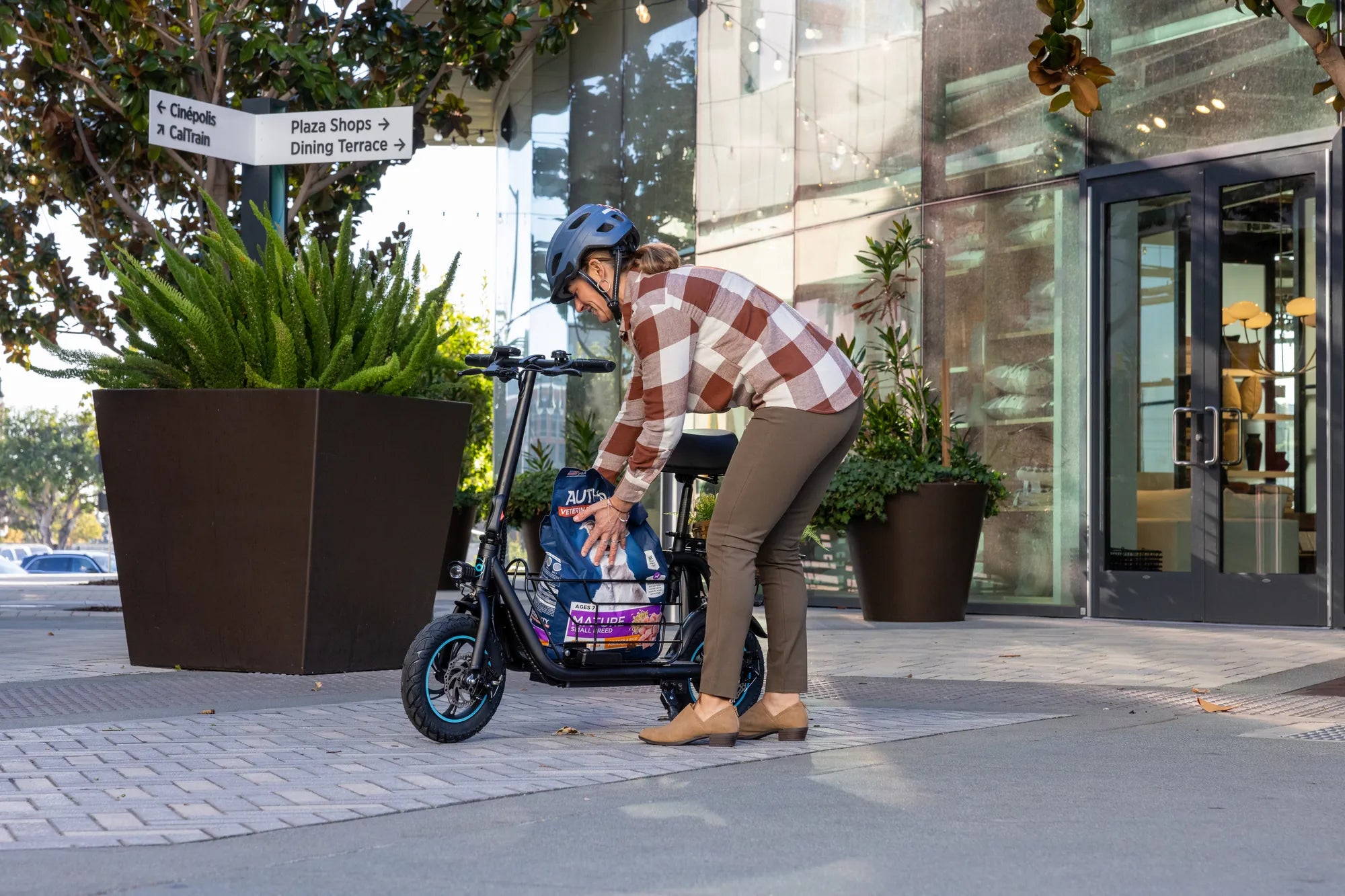
Introduction to Lightweight Fold-Up Mobility Scooters
A lightweight fold up mobility scooter is a transformative personal mobility device engineered for portability, convenience, and reclaiming independence. Unlike traditional bulky models, these scooters combine a robust yet lightweight frame with a simple, often one-step, folding mechanism. This design allows users to easily transport the scooter in a car trunk, store it in tight spaces at home, or take it on public transit, making spontaneous outings and travel not just possible but effortless. In this guide, you will learn how to evaluate the critical features that define a quality scooter, understand its advantages over other mobility aids, and discover the importance of built-in safety and support from trusted brands.
The core appeal of a lightweight fold-up model lies in its dual-purpose design. It provides stable, comfortable support for daily errands, social visits, and navigating larger venues, yet it collapses into a compact package when not in use. This solves the primary limitations of standard mobility scooters: their permanent footprint and logistical challenges for transport. For active individuals who value flexibility, the lightweight fold up mobility scooter is often the ideal solution, bridging the gap between necessity and an unrestricted lifestyle.
As a leader in personal electric transport, Gyroor applies its extensive expertise in reliable, UL-certified battery systems and durable construction to this category. With over 100,000 riders trusting their electric scooters and e-bikes across North America and Europe, Gyroor's philosophy centers on safety, performance, and user-centric design—principles that translate directly into the mobility scooter arena. Choosing a scooter from a brand with this pedigree means investing in a device built for real-world use and long-term reliability.
Key Features to Prioritize in Your Search
Selecting the right lightweight fold up mobility scooter requires looking beyond basic specifications. A thoughtful evaluation of several interconnected features will ensure your scooter meets your daily needs safely and comfortably for years to come. The key is to balance portability with performance, ensuring the scooter is light enough to handle but robust enough to support you reliably.
First, consider the intended primary use case. Will the scooter be used mostly indoors in shopping malls and clinics, or will it frequently tackle outdoor sidewalks, park paths, and slightly uneven terrain? Indoor use prioritizes a tight turning radius and a compact footprint, while outdoor use demands more power, suspension, and larger wheels. The range required between charges is another pivotal factor, directly tied to battery capacity. Advertised range figures are often based on ideal conditions; a practical rule is to estimate 20-30% less for real-world use with stops, starts, and inclines.
Storage and transport logistics are equally critical. Measure the space where you plan to store the scooter at home and the dimensions of your car trunk or the storage area on your preferred public transport. The folded dimensions of the scooter must fit these spaces comfortably. Finally, never compromise on foundational safety features. A UL-certified battery pack is essential for safe indoor charging and long-term battery health, while a clear, comprehensive warranty and accessible customer support provide crucial peace of mind.
Weight Capacity and Frame Durability
The manufacturer's stated weight capacity is a critical safety specification that should not be approached as a maximum suggestion but as an absolute limit for safe operation. Exceeding this limit can stress the frame, motors, and braking system, leading to premature wear or potential failure. A quality lightweight fold up mobility scooter will have a capacity that accommodates the user's weight plus any items they regularly carry, such as a handbag or groceries, with a comfortable margin.
This capacity is intrinsically linked to the scooter's frame construction. To achieve lightness, manufacturers use advanced alloys like aluminum or aircraft-grade aluminum. The engineering challenge is to use these materials in a design that maintains structural rigidity and durability. A flimsy frame will wobble, creak, and may develop stress fractures over time. Gyroor's experience in building durable electric scooters translates to mobility scooter frames designed for daily rigors, ensuring the scooter remains stable and reliable throughout its lifespan, even when folded and unfolded hundreds of times.
Folding Mechanism and Portability
The folding mechanism is the heart of a portable scooter's design. There are generally two types: manual and automatic (or semi-automatic). Manual mechanisms are most common, requiring a simple physical action—like pulling a lever or releasing a latch—to collapse the scooter. The best designs are tool-free and can be executed in one or two intuitive steps, even by users with limited hand strength or dexterity.
Automatic mechanisms, often powered by a small motor, add convenience at the touch of a button but may increase the scooter's weight, complexity, and cost. Regardless of type, the outcome is what matters: a secure, stable folded state and compact dimensions. A well-designed lightweight fold up mobility scooter will fold into a shape that is easy to grip, lift, and maneuver. The total folded weight and the presence of built-in transport wheels or a carrying handle are vital details that transform the scooter from a portable concept into a practical reality for car travel or bus trips.
Battery Life, Range, and Charging
Battery performance dictates the freedom a scooter provides. Range is typically the first question buyers ask, and it's determined by battery capacity (measured in Amp-hours, Ah), the user's weight, terrain, speed, and weather. A scooter advertised for 15 miles might reliably deliver 10-12 miles under typical urban conditions with mild slopes. Therefore, it's wise to choose a model with a range rating at least 25% greater than your longest anticipated daily trip.
Battery type and safety are paramount. Lithium-ion batteries are the standard for their high energy density and light weight. The critical differentiator is certification. A UL-certified battery, like those used in all Gyroor products, has undergone rigorous independent testing for safety, stability, and performance over hundreds of charge cycles. This certification mitigates risks of overheating or failure, especially important for a device charged indoors. Charging time is another practical consideration; most scooters fully recharge in 4-8 hours, and a removable battery can be a significant convenience, allowing you to charge it separately without bringing the entire scooter to an outlet.
Ride Comfort and Maneuverability
Comfort is a product of several design elements working in concert. The seat should be adequately padded, adjustable in height, and potentially swiveling for easier mounting. Suspension, whether in the front wheels, the seat post, or both, absorbs vibrations from cracks and bumps, reducing fatigue on longer rides. Wheel choice is a major comfort factor: pneumatic (air-filled) tires offer the best shock absorption and traction on varied surfaces but require periodic pressure checks. Solid (airless) tires eliminate flats but provide a firmer, less cushioned ride.
Maneuverability is governed by the turning radius and control interface. A tight turning radius is essential for navigating store aisles, crowded spaces, and tight corners at home. The controls—typically a tiller with a thumb lever or twist grip for speed—should be intuitive and responsive. Ergonomics matter; the tiller should adjust to a comfortable height, and the controls should be within easy reach. A lightweight fold up mobility scooter that excels in comfort and handling encourages more frequent use and greater independence.
Comparing Lightweight Fold-Up Scooters to Other Options
Understanding where a lightweight fold up mobility scooter fits in the broader landscape of mobility aids is key to making the right choice. The primary alternatives are traditional, full-size mobility scooters and power wheelchairs. Each has distinct advantages tailored to different user needs and lifestyles.
Traditional mobility scooters are often more powerful, with longer range and greater stability for outdoor use over rough terrain. However, they are heavy, large, and rarely fold compactly. Transporting them requires a wheelchair-accessible vehicle or a heavy-duty lift and rack, making spontaneous travel or use with a standard car nearly impossible. They are a solution for primarily outdoor, neighborhood use where storage space is ample.
Power wheelchairs offer superior indoor maneuverability in very tight spaces and often provide more postural support and positioning options. They are medical devices, which may allow for funding through insurance. However, they are generally the least portable option; while some disassemble, the process is involved, and the components are heavy. Their use is often confined to the home or transported via a specialized vehicle.
The lightweight fold up mobility scooter is the champion of the active, on-the-go lifestyle. It is the only option among the three that seamlessly integrates travel. It is designed for the user who wants to drive to the mall, unload and assemble the scooter in minutes, enjoy a stable ride for shopping, fold it back up, and place it in the trunk to head to a restaurant. It sacrifices some of the extreme ruggedness of a full-size scooter or the clinical support of a power wheelchair to gain unparalleled versatility and freedom.
| Feature | Lightweight Fold-Up Scooter | Traditional Mobility Scooter | Power Wheelchair |
|---|---|---|---|
| Primary Portability | Excellent (Folds for car trunk/public transit) | Poor (Requires vehicle lift/van) | Fair to Poor (Often requires disassembly) |
| Best Use Case | Active lifestyle, travel, mixed indoor/outdoor use | Outdoor neighborhood use, long-range trips | Indoor use, full-time mobility needs, postural support |
| Typical Weight | 35 - 65 lbs | 80 - 150+ lbs | 50 - 250+ lbs (total) |
| Maneuverability in Tight Spaces | Good | Fair to Poor | Excellent |
| Ease of Transport in Standard Car | Easy | Very Difficult | Difficult |
The Gyroor Advantage: Safety and Support Built-In
In a market where specifications can seem similar, the underlying engineering, safety protocols, and post-purchase support differentiate a trustworthy product from a mere commodity. Gyroor's reputation, built on over 100,000 electric rideables, is founded on principles that are especially critical for mobility devices: unwavering safety, resilient design, and dependable customer care.
When your mobility depends on a device, confidence in its fundamental safety is non-negotiable. Gyroor's approach integrates these safeguards from the ground up, ensuring that every lightweight fold up mobility scooter bearing their name meets rigorous standards for daily reliability and long-term peace of mind. This commitment transforms the scooter from a simple tool into a reliable partner for independence.
UL-Certified Battery Safety
The battery is the most critical safety component in any electric vehicle. A UL-certified battery pack has passed extensive tests by Underwriters Laboratories, a global safety science leader, for electrical, mechanical, and environmental hazards. This certification verifies that the battery's management system will properly regulate charging and discharging, prevent overcharging, and manage temperature, drastically reducing any risk of fire or failure.
For a lightweight fold up mobility scooter that will often be charged overnight in a home or apartment, this certification is not a luxury—it's a necessity. It also correlates with longevity; UL-certified cells are typically from high-quality manufacturers and are tested to retain capacity over 500+ charge cycles. This means the scooter's usable range remains consistent for years, not months. Gyroor's insistence on this standard across all its products provides a foundational layer of security that every user deserves.
Weather-Resistant Design for Everyday Use
Life doesn't stop for a light drizzle, and neither should your mobility. An IPX5 water-resistant rating means the scooter's electrical components are protected against low-pressure water jets from any direction. In practical terms, this allows you to confidently navigate wet sidewalks, encounter unexpected rain, or clean the scooter without fear of water damage causing a short circuit or motor failure.
This durability extends beyond water. A well-sealed design also protects against dust and debris, which can accumulate and interfere with moving parts like the folding mechanism or motor bearings. This weather-resistant build ensures that your lightweight fold up mobility scooter is ready for real-world conditions, enhancing its reliability and lifespan whether you're running errands in the sun or heading home as the weather changes.
Warranty and Accessible Customer Support
A comprehensive warranty is a brand's promise behind its product. Gyroor's standard 1-year warranty on the scooter, including the battery and electrical components, covers defects in materials and workmanship. This protection is crucial during the initial period of heavy use when any manufacturing issues are most likely to appear. It reflects confidence in the product's durability.
Equally important is the support system behind the warranty. Accessible, knowledgeable customer service based in the US or Europe means that if you have a question about operation, need troubleshooting help, or require a replacement part, you can reach a person who can assist effectively. For a mobility device, downtime is a significant inconvenience. A responsive support team can often guide you to a quick resolution, ensuring your lightweight fold up mobility scooter is back in service with minimal disruption to your routine.
Making the Right Choice: A Buyer's Checklist
Use this actionable checklist to evaluate options and ensure your chosen lightweight fold up mobility scooter aligns perfectly with your needs. Answering these questions before you buy will lead to a more satisfying and long-lasting purchase.
- Primary Use Case: Is it for mostly indoor (malls, clinics), mostly outdoor (sidewalks, parks), or a 50/50 mix?
- Required Range: What is the distance of your longest typical outing? Choose a scooter with a real-world range that exceeds this by 20-30%.
- User Weight & Capacity: What is your weight plus the weight of items you'll carry? Ensure the scooter's maximum weight capacity exceeds this total with a margin.
- Storage & Transport: Where will you store it at home? Will it fit in your car trunk when folded? Check the folded dimensions against your space.
- Folding Process: Can you easily perform the fold/unfold steps yourself? Is it a one-step or tool-free mechanism?
- Comfort Features: Does it have a padded, adjustable seat? Does it offer suspension or pneumatic tires for your typical terrain?
- Safety Certifications: Does it feature a UL-certified battery pack? This is a non-negotiable for safe charging.
- Warranty & Support: Is there a clear, comprehensive warranty of at least 1 year? Is customer support easily accessible?
Frequently Asked Questions (FAQ)
Addressing common questions helps clarify practical concerns and builds confidence in your decision to invest in a lightweight fold up mobility scooter.
What is the typical weight of a "lightweight" fold-up scooter?
The term "lightweight" typically covers a range from approximately 35 to 65 pounds for the scooter itself. The lightest models, often around 35-45 lbs, prioritize maximum portability and are easiest to lift but may have a lower weight capacity or slightly smaller batteries. Heavier models in the 50-65 lb range often offer greater durability, higher weight capacities, and longer ranges. The key is to find the best balance where the scooter is light enough for you to manage during transport but robust enough to meet all your other needs safely.
Can I take it on public transportation or in a car?
Yes, this is one of the primary design purposes of a lightweight fold up mobility scooter. For car travel, most models when folded will fit into the trunk of a standard sedan, especially if you remove the seat (a common quick-release feature). For public transportation like buses or trains, you would typically fold the scooter before boarding. It's advisable to check with your local transit authority for specific policies, but folded scooters are generally treated as luggage or folded strollers. The compact, manageable size is what makes this feasible.
How difficult is it to assemble and fold?
Most modern lightweight fold up mobility scooters are designed for tool-free, user-friendly assembly and folding. Initial assembly out of the box usually involves attaching the seat and possibly the front basket, which takes only a few minutes. The daily folding mechanism is typically a one- or two-step process involving a lever or latch. High-quality scooters are engineered so that these actions require minimal physical force, making them accessible even for users with limited strength or dexterity. It's always recommended to review the process in a product manual or video before purchasing.
What kind of terrain can it handle?
Lightweight fold up mobility scooters are optimized for smooth, paved surfaces like indoor flooring, sidewalks, and asphalt paths. They are not intended for off-road use like gravel trails, grass, or sand. However, models with larger pneumatic (air-filled) tires and some front suspension can comfortably handle common urban obstacles like driveway lips, slight inclines, and minor cracks or bumps in the pavement. For primarily outdoor use, prioritize models with these features over those with small, solid tires.
Are there any specific maintenance requirements?
Routine maintenance for a lightweight fold up mobility scooter is straightforward but important for longevity. Key tasks include: regularly checking and maintaining proper tire pressure if you have pneumatic tires; keeping the battery charged and avoiding storing it fully discharged for long periods; wiping down the frame and seat to remove dirt and moisture; and periodically checking that all folding mechanisms and latches are secure and free of debris. Following the manufacturer's guidelines for battery care and having the scooter serviced annually by a professional can prevent most issues.
Conclusion: Regaining Freedom and Flexibility
The decision to invest in a lightweight fold up mobility scooter is an investment in autonomy, spontaneity, and quality of life. By carefully selecting a model that balances portability with performance and is backed by the safety engineering and support of a reputable brand, you unlock a new level of freedom. The right scooter removes barriers, allowing you to engage more fully with your community, pursue your interests, and manage daily tasks with renewed confidence and independence.
Your journey to greater mobility starts with informed choices. Consider the checklist, weigh the comparisons, and prioritize the safety features that ensure long-term reliability. A well-chosen lightweight fold up mobility scooter is more than a device; it's a key that opens doors to a more active and connected lifestyle. Explore the engineering and peace of mind built into every model from trusted innovators in personal electric transport. Browse the full Gyroor collection at gyroorboard.com to discover a scooter designed to move with you, wherever life takes you next.
e drit bike: The Ultimate Guide to Electric Off-Road Performance
Dirt Bike Helmets: The Ultimate Safety, Tech, and Buyer's Guide