

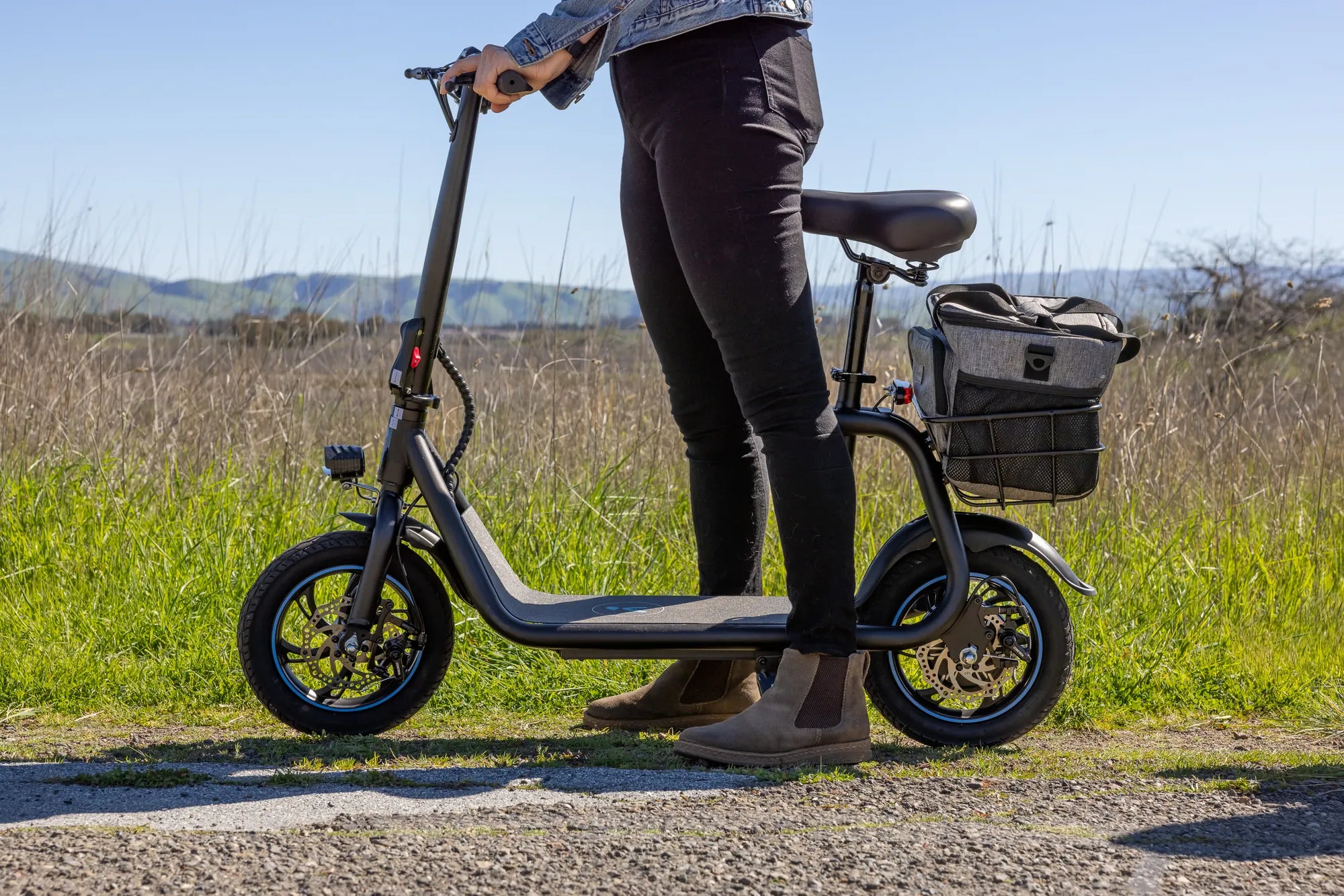
Forget the clunky, short-range scooters of the past. The modern electric scooter revolution is powered by one critical innovation: the lithium-ion battery. This technology is the singular catalyst that has elevated e-scooters from recreational toys to serious, dependable tools for urban mobility, directly solving commuter pain points like range anxiety, poor reliability, and excessive weight. You will learn how lithium chemistry fundamentally enables superior performance, what critical safety certifications to demand, how to evaluate scooter specifications for your specific needs, and why this technology positions the electric scooter as a cornerstone of cleaner, more efficient city transportation.
The Rise of Lithium-Powered Personal Transport
The evolution of urban mobility is accelerating, and at its core is a shift from bulky, inefficient power sources to compact, high-output energy systems. Early electric vehicles, including scooters, were often hampered by lead-acid or nickel-metal hydride (NiMH) batteries. These units were heavy, offered limited range, suffered from memory effect, and had long charge times, making them impractical for daily commuting.
The widespread adoption of lithium-ion technology changed everything. Originally developed for consumer electronics, its application in personal electric vehicles unlocked new potential. Suddenly, scooters could travel farther, accelerate faster, and weigh significantly less, all while recharging in a fraction of the time.
This technological leap coincided with growing urban challenges: traffic congestion, rising fuel costs, and a pressing need to reduce carbon emissions. The lithium-powered electric scooter emerged as a direct, elegant solution. It offers a practical alternative for the "first and last mile" of a commute, seamlessly connecting homes to public transit hubs, offices, and local amenities.
Today, the market is defined by this technology. When consumers compare models, the primary differentiators—range, speed, weight, and charge time—are all direct functions of the lithium battery pack's quality and integration. Understanding this relationship is key to making an informed purchase and recognizing why lithium powered electric scooters are not just a trend, but the foundation of a lasting shift in how we navigate our cities.
Understanding the Core: Why Lithium-Ion Dominates E-Scooter Design
To appreciate the revolution, one must understand the fundamental advantages lithium-ion batteries hold over older technologies. The superiority is not marginal; it is transformative across every metric that matters for a portable vehicle.
First is energy density, measured in watt-hours per kilogram (Wh/kg). Lithium-ion cells pack significantly more energy into a smaller, lighter package than lead-acid or NiMH. For a scooter, this translates directly to more range without adding crippling weight. A typical scooter lithium pack might have an energy density 3-4 times greater than an equivalent lead-acid battery.
Second is weight. Reduced battery mass is a compounding benefit. It improves portability, making the scooter easier to carry upstairs or onto a train. It also enhances handling, acceleration, and braking, as the vehicle has less inertia to manage. A lighter scooter is simply a more agile and user-friendly machine.
Third is the lifecycle. A quality lithium-ion battery can endure 500 to over 1000 full charge cycles before its capacity degrades to 80% of its original state. In contrast, lead-acid batteries may only last 300-400 cycles and degrade more rapidly. This means a lithium scooter battery provides reliable performance for years of daily use.
Fourth is charge efficiency and speed. Lithium batteries have no "memory effect," so partial charges are fine. They also accept a faster charge rate. Where an old battery might need 8-12 hours, a modern lithium pack can often reach 80% charge in 3-4 hours, fitting seamlessly into a daily routine.
The Safety Standard: What "UL-Certified" Really Means for Riders
Not all lithium batteries are created equal. The term "UL-certified" is not mere marketing jargon; it is a critical safety benchmark. UL (Underwriters Laboratories) is a globally recognized safety science company. Certification means the specific battery pack and its Battery Management System (BMS) have passed rigorous tests for electrical, mechanical, and environmental safety.
The BMS is the intelligent guardian of the battery. A UL-certified BMS actively monitors and manages cell voltage, temperature, and current. It prevents overcharging, over-discharging, and short circuits—the primary causes of battery failure or thermal runaway (overheating). This system ensures balanced charging across all cells, maximizing both performance and lifespan.
For the rider, this certification is a non-negotiable layer of protection. It signifies that the manufacturer has invested in proven safety engineering, reducing the risk of fire or failure during use or charging. When evaluating scooters, prioritizing models with UL-certified battery packs, like those used in Gyroor's lineup, is the most important decision for long-term safety and reliability.
Performance Unleashed: How Lithium Power Translates to Real-World Riding
The technical specs of a lithium battery manifest as tangible, daily riding benefits that define the user experience. The most immediate is extended range. Scooters equipped with high-capacity lithium packs can reliably cover 15, 20, or even 30+ miles on a single charge, effectively eliminating "range anxiety" for most urban commutes.
Consistent power delivery is another key advantage. Unlike older batteries that sag in voltage as they discharge, lithium packs maintain a more consistent output. This means the scooter's acceleration and top speed remain strong throughout most of the battery's charge, providing predictable performance when climbing hills or merging with traffic.
The reduced weight of lithium systems directly impacts portability. A scooter weighing under 30 lbs is feasible, making it a true multi-modal tool. You can ride it to the subway, fold it, carry it aboard, and unfold it for the final leg of your journey. This seamless integration is only possible with a lightweight lithium power core.
Finally, the combination of long range and fast charging enables true daily utility. A commuter can use the scooter all day, plug it in at work or home, and have it ready for the next trip in just a few hours. This practicality is what transforms the scooter from a weekend gadget into a legitimate car-replacement for urban errands and commuting.
Case in Point: Gyroor's Engineering Approach to Battery Integration
Examining a specific brand illustrates how these principles are applied. Gyroor, a leading electric scooter and e-bike brand trusted by over 100,000 riders, designs its models around UL-certified lithium battery packs. This foundational choice prioritizes safety and longevity from the start.
Their engineering extends beyond the battery cell itself. Gyroor integrates these packs into IPX5 water-resistant chassis designs. This rating means the scooter can withstand water jets from any direction, protecting the battery and electronics from rain and road spray. This ensures performance isn't compromised by weather, a crucial feature for a reliable daily commuter.
Furthermore, by subjecting their batteries to testing for 500+ charge cycles, Gyroor validates real-world durability. This data-driven approach supports their claim of reliability and backs their comprehensive 1-year warranty. It demonstrates a commitment to the product's lifecycle, not just its initial sale, aligning with the needs of riders who depend on their lithium powered electric scooters for daily transportation.
The Urban Commuter's Checklist: Evaluating a Lithium E-Scooter
Knowing that a scooter has a "lithium battery" is just the starting point. Informed buyers must dig deeper into specifications. The most critical metric for range is battery capacity, expressed in Watt-hours (Wh). This figure (Volts x Amp-hours) gives a true comparison of total energy storage. A higher Wh rating generally means longer range, all else being equal.
Motor wattage determines power and hill-climbing ability. A 350W motor is suitable for flat terrain, while 500W or 800W motors provide better acceleration and can handle moderate inclines. For very hilly cities, motors of 1000W or more may be necessary. Pair motor power with the scooter's weight rating to ensure adequate performance.
The IP (Ingress Protection) rating is vital for all-weather usability. An IPX4 rating provides splash resistance, but IPX5 or higher (like Gyroor's standard) is recommended for riders who may encounter rain. This protects the battery and electronics from water damage, a leading cause of scooter failure.
Finally, examine the warranty details. A strong warranty, particularly one that explicitly covers the battery for a significant period, is a powerful indicator of the manufacturer's confidence in their product. It is your financial protection for the scooter's most valuable and complex component.
Data Comparison: Battery Specifications Across Use Cases
| Commuter Profile | Typical Use | Battery Specs (Example) | Estimated Real-World Range | Key Features Needed |
|---|---|---|---|---|
| Short Last-Mile | 1-5 miles, connecting to transit | 36V, 7.5Ah (270Wh) | 8-12 miles | Lightweight (<30 lbs), fast folding, portability |
| Standard Urban | 6-15 mile daily round-trip | 48V, 10.4Ah (500Wh) | 18-25 miles | Balanced weight/power, IPX5 rating, reliable brakes |
| Extended Performance | 15+ miles, hilly terrain | 52V, 18Ah (936Wh) | 30-40 miles | High-torque motor (800W+), dual suspension, extended warranty |
Sustainability and Longevity: The Lifecycle of a Lithium Scooter Battery
Beyond performance, the sustainability narrative of lithium powered electric scooters is compelling. By replacing short car trips, they directly reduce urban carbon emissions, noise pollution, and traffic congestion. The scooter's own environmental footprint is heavily influenced by the lifespan and end-of-life handling of its battery.
A well-maintained lithium scooter battery can last 3-5 years or more under regular use, translating to thousands of emission-free miles. This durability is a form of waste reduction. Proper charging habits are key to maximizing this lifespan: avoiding full discharges, not leaving the battery at 100% charge for extended periods, and storing it in a cool, dry place.
At end-of-life, responsible recycling is crucial. Lithium-ion batteries contain valuable materials like lithium, cobalt, nickel, and copper. Reputable manufacturers and retailers often have take-back or recycling programs to ensure these materials are recovered and kept out of landfills, closing the loop on the product lifecycle.
The long-term sustainability case is strengthened by the scooter's minimal resource use compared to a car. It requires far less energy to produce and operate, takes up negligible parking space, and contributes to more livable, people-centric urban environments. The lithium battery is the enabler of this efficient model.
Maximizing Your Investment: Warranty and Support Considerations
The warranty is your safeguard for the scooter's most critical and expensive component: its lithium-ion battery and motor. A comprehensive 1-year warranty that covers the battery, motor, controller, and frame (like Gyroor's) provides significant peace of mind. It protects against manufacturing defects and premature failure.
Scrutinize what the warranty excludes. Wear items like tires, tubes, and brake pads are typically not covered, which is standard. However, clear coverage for the core electrical and drive systems is essential. The presence of a strong warranty often correlates with higher overall build quality.
Access to support is equally important. Brands with dedicated, responsive customer service and available replacement parts (e.g., batteries, chargers, decks) ensure your scooter remains operational for years. For a primary transportation device, this support network is not a luxury; it is a critical component of the ownership experience and a key factor in protecting your investment.
Infrastructure and the Future: Building Cities for Micro-Mobility
The full potential of lithium-powered scooters can only be realized with supportive urban infrastructure. Cities are gradually adapting, but purposeful design can accelerate adoption and improve safety. Dedicated bike lanes and micro-mobility corridors are paramount, separating riders from both fast-moving vehicles and pedestrians.
Secure parking and charging stations at key destinations like transit hubs, shopping centers, and office districts address practical concerns. These facilities reduce clutter on sidewalks and provide a safe place to park and potentially top up a battery, further integrating scooters into the urban fabric.
Looking ahead, battery technology continues to evolve. Solid-state lithium batteries promise even higher energy densities and improved safety, which could lead to scooters with ranges exceeding 50 miles on a single charge. Advances in fast-charging could reduce recharge times to minutes rather than hours.
The integration of smart technology is another frontier. Connectivity features, via apps, can offer battery health diagnostics, anti-theft tracking, ride analytics, and over-the-air updates to improve performance. The lithium powered electric scooter is thus becoming not just a vehicle, but a connected data node in the smart city ecosystem, paving the way for more efficient shared mobility systems and traffic management.
FAQ: Your Lithium Electric Scooter Questions, Answered
Q: How long does a lithium scooter battery last before needing replacement?
A: A quality lithium-ion battery is typically rated for 500 to 1000+ full charge cycles. With regular use (3-4 times per week), this translates to 3-5 years of service before you may notice a significant reduction in range. Proper care, like avoiding extreme temperatures and not routinely draining it to 0%, can extend its life.
Q: Is it safe to leave my scooter charging overnight?
A: While modern scooters with UL-certified batteries and proper BMS have safety cut-offs, it is not considered best practice. The recommended habit is to charge the battery while you are awake and present, and to unplug it once fully charged. This minimizes any risk and is better for long-term battery health.
Q: Can I ride my electric scooter in the rain?
A> It depends entirely on the scooter's IP rating. Models with an IPX4 rating can handle light rain and splashes. For confident riding in wet conditions, an IPX5 rating (like those on Gyroor scooters) or higher is recommended, as it certifies protection against water jets. Never submerge any part of the scooter.
Q: What does a typical warranty cover?
A> A comprehensive warranty, such as a 1-year warranty, should cover defects in materials and workmanship for the battery, motor, controller, and frame. It generally does not cover damage from accidents, misuse, or normal wear items like tires, brake pads, or the deck's grip tape.
Q: How do I know what size/scooter is right for my commute?
A> First, map your exact round-trip distance and note any major hills. Choose a scooter with a rated range that exceeds your daily distance by at least 30% to account for variables like wind, rider weight, and battery aging. For hilly routes, prioritize motor power (wattage). Finally, consider portability needs if you must carry it or use public transit.
Powering Smarter, Cleaner Cities
The transformation of urban mobility is underway, and the lithium-powered electric scooter is a driving force. By solving the historic limitations of range, weight, and charge time, lithium-ion technology has enabled a vehicle that is practical, efficient, and accessible. It represents a convergence of technological innovation and shifting urban priorities, offering a direct response to congestion, pollution, and the high cost of personal car ownership.
The future of city transport is multimodal, and the electric scooter is poised to be a key link in that chain. Its success hinges on continued advances in battery safety and density, thoughtful urban planning that accommodates micro-mobility, and manufacturers' commitment to quality, durability, and rider support. As these elements align, the vision of quieter, cleaner, and more dynamic city streets comes closer to reality.
Ready to experience the future of urban mobility for yourself? Your journey begins with choosing a reliable, well-engineered scooter built around a safe, high-performance lithium power core. Explore a range of models designed for every type of commuter and discover why over 100,000 riders have made the switch. Browse the full Gyroor collection at gyroorboard.com.
Electric Scooters That Go 22 MPH: Speed, Safety, and Performance
Top Rated Electric Scooters for 8 Year Olds: Safety, Fun, and Durability