



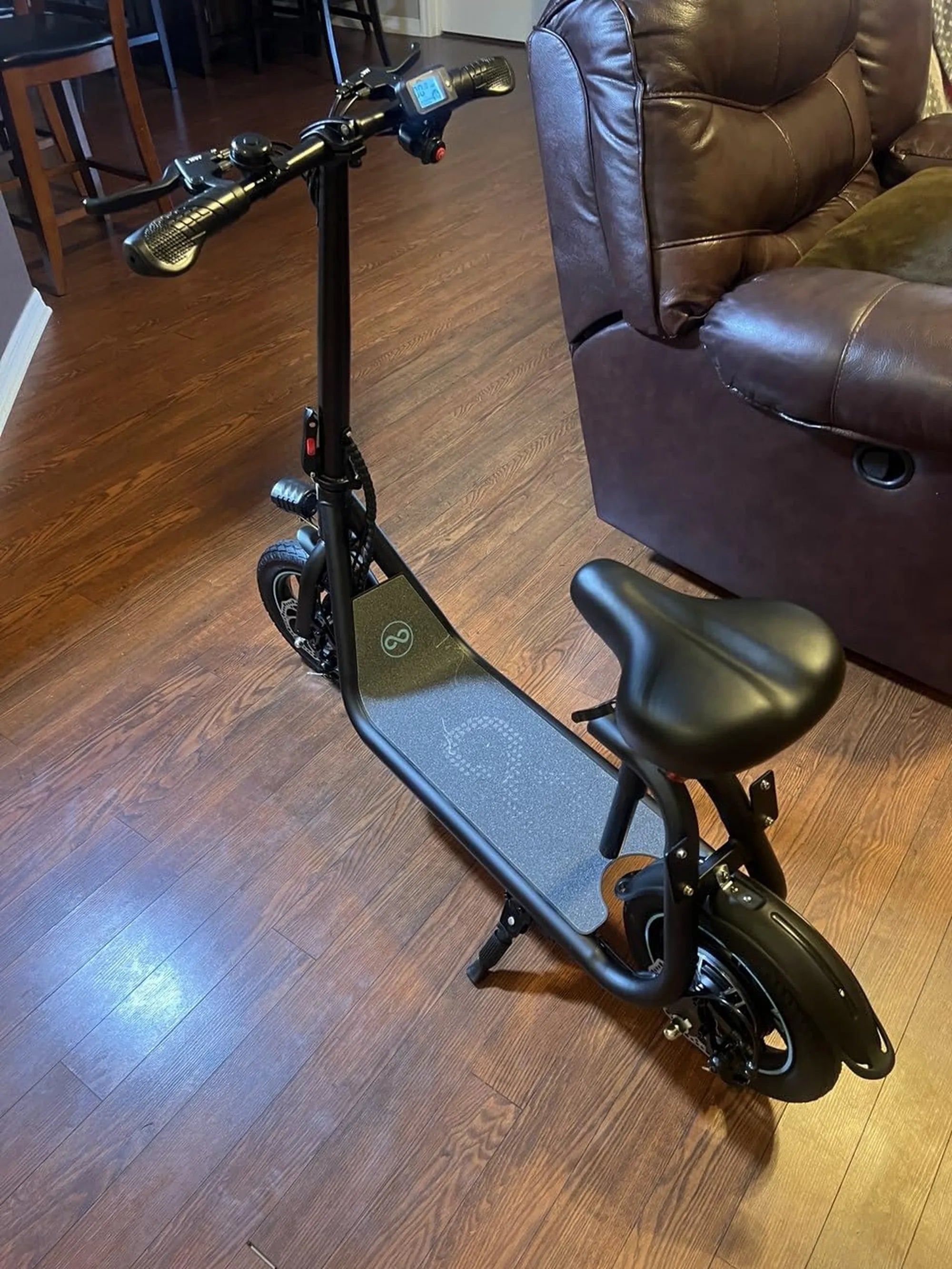
The Rise of Micro-Mobility
Urban transportation is undergoing a quiet revolution, and at its center are compact, lightweight electric scooters. These little electric scooters are no longer just toys but sophisticated personal transport devices solving the critical 'last-mile' problem—the final leg of a commute between a transit stop and a destination. Their rapid adoption is fueled by a perfect storm of urban gridlock, rising environmental consciousness, and significant advancements in battery and motor technology. This article will dissect why these vehicles are becoming indispensable, what to look for when purchasing one, and how to ride safely and legally, positioning them as a cornerstone of future city mobility.
Data from the National Association of City Transportation Officials (NACT) shows micro-mobility trips in the U.S. skyrocketed from 84 million in 2018 to over 112 million by 2022, with e-scooters representing a dominant share. This growth isn't accidental. It's a direct response to the inefficiencies of traditional car-centric urban design. For distances under five miles, which constitute a vast portion of urban trips, the car is often the slowest and most expensive option when factoring in traffic, parking costs, and fuel.
The defining characteristic of these vehicles is their blend of portability and performance. Modern little electric scooters can fold down in seconds, weigh between 25-40 pounds, and offer ranges that comfortably cover most daily urban travel needs. This makes them uniquely suited for multimodal commuting, where a rider can take a train or bus and then unfold their scooter for the final stretch, bypassing congestion entirely.
This shift represents more than a change in hardware; it's a cultural move towards more agile, personal, and sustainable mobility. Cities from Paris to Portland are redesigning infrastructure to accommodate micro-mobility, recognizing its potential to reduce traffic volume, lower emissions, and reclaim public space from parked cars. The future of getting around dense urban cores is looking smaller, smarter, and electrically powered.
Why Little Electric Scooters Are Dominating City Streets
The dominance of little electric scooters in urban landscapes is built on a compelling value proposition that addresses multiple pain points of modern city life. Their appeal crosses demographics, attracting students, professionals, and urban explorers alike. The core advantages are convenience, cost, environmental benefit, and pure enjoyment, creating a transport mode that is both practical and pleasurable.
From a convenience standpoint, the scooter's size is its superpower. Unlike a bicycle, it requires minimal storage space at home or the office. The ability to fold and carry it onto public transit, into a coffee shop, or under a desk eliminates the perennial urban headache of parking and theft risk associated with bikes. This door-to-door capability, free from parking fees and lot searches, translates to significant time savings and reduced daily stress.
Financially, the argument is stark. The average annual cost of owning and operating a car in a metropolitan area exceeds $10,000 when considering loan payments, insurance, fuel, maintenance, and parking. A high-quality personal e-scooter, by comparison, represents a one-time investment often under $1,000 with negligible operating costs—primarily electricity for charging, which amounts to pennies per day. Even compared to ride-sharing or daily transit passes, the scooter pays for itself within months for a regular commuter.
The Practical Commuter's Dream
For the daily commuter, the little electric scooter is a game-changer. The average urban commute in the U.S. is under 10 miles, a distance perfectly suited for e-scooters with ranges of 15-25 miles on a single charge. With speeds typically governed between 15-20 mph, they can often match or exceed the average speed of car traffic in congested downtown areas during rush hour.
This efficiency creates predictable commute times. A 3-mile trip that might take 20+ minutes by car in traffic or 30 minutes by walking becomes a consistent 10-12 minute zippy ride. The multimodal potential is key: a commuter living 5 miles from a subway station can use the scooter for that first leg, fold it, ride the train, and then use it again for the final half-mile to the office, creating a seamless, car-free journey.
The physical demand is also minimal. Unlike cycling, which can lead to sweating upon arrival, scooter riding is primarily a standing activity, making it suitable for those in business attire or anyone wanting to arrive fresh. This low barrier to physical exertion broadens its appeal, making sustainable transport accessible to a wider population regardless of fitness level.
A Sustainable Choice for Eco-Conscious Riders
The environmental case for little electric scooters is powerful and data-driven. They produce zero direct tailpipe emissions, directly improving local air quality in pollution-sensitive urban centers. When examining the full lifecycle carbon footprint, their efficiency is remarkable.
A 2021 study from North Carolina State University found that the greenhouse gas emissions per passenger mile traveled for an e-scooter are approximately 50% lower than a standard sedan, even when accounting for the emissions from electricity generation for charging and the manufacturing of the scooter itself. Compared to a diesel bus, e-scooters can be cleaner on a per-mile basis, especially when bus ridership is low.
Their energy consumption is minuscule. Charging a typical 360Wh battery from empty to full uses less electricity than running a modern refrigerator for a day. This efficiency stems from their lightweight design and direct-drive motors, which waste very little energy. For cities aiming to meet climate goals and reduce noise pollution, the silent, zero-emission operation of widespread scooter adoption presents a clear path forward.
Key Features to Look for in a Reliable E-Scooter
Navigating the market for little electric scooters requires understanding key specifications that dictate safety, performance, and longevity. Not all scooters are created equal, and prioritizing core engineering over flashy extras is crucial for a satisfying ownership experience. The main areas to scrutinize are the motor and battery system, braking performance, build construction, and the suspension and tire setup.
The motor defines your scooter's capability. For flat urban commuting, a continuous power rating of 250W to 350W is sufficient. For cities with hills, a 500W motor or higher is recommended to maintain speed and reduce strain on the battery. Peak power ratings can be much higher, but the continuous rating is a better indicator of real-world climbing ability. Motors are generally hub-mounted in the wheel, with rear-wheel drive offering better traction.
Battery capacity, measured in Watt-hours (Wh), directly determines range. A 360Wh battery might offer 15-20 miles of real-world range, while a 500Wh+ battery can extend that to 25+ miles. However, the battery's quality is paramount. Reputable brands use high-density, name-brand lithium-ion cells with integrated Battery Management Systems (BMS) to prevent overcharging, overheating, and deep discharge, which are critical for safety and battery lifespan.
Safety and Performance Non-Negotiables
Safety should be the primary filter when choosing a scooter. A robust, multi-system braking setup is essential. The best configurations combine an electronic (regenerative) brake with a mechanical disc or drum brake, providing redundancy. Regenerative braking can also recapture some energy to slightly extend range. Braking distance from 15 mph should be under 20 feet for a quality model.
Lighting is not just for seeing but for being seen. A bright front headlight (200+ lumens), a solid rear brake light, and side or deck reflectors are mandatory for dusk or night riding. Additionally, the frame's construction—typically from aircraft-grade aluminum—must feel solid without flex. Check the folding mechanism's sturdiness, as this is a high-stress point. Finally, a wide, textured deck provides stable footing, which is crucial for control.
Build Quality and Warranty: The Gyroor Standard
Long-term reliability separates premium brands from disposable gadgets. This is where established brands like Gyroor set a clear benchmark. Their commitment is built on verifiable certifications and rider-focused design. The most critical component is the power source. Gyroor equips its models with UL-certified lithium-ion battery packs, which have undergone rigorous independent testing for safety, stability, and performance over 500+ charge cycles. This certification is a vital guard against the fire risks associated with poorly manufactured batteries.
Urban riding means encountering puddles and light rain. An IPX5 water-resistant rating, which Gyroor designs into its scooters, means the unit can withstand low-pressure water jets from any direction. This protects the electrical components from splashes and wet roads, ensuring all-weather reliability. It’s a key feature for a practical daily commuter.
Finally, a strong warranty is a brand's promise. A comprehensive 1-year warranty on the scooter, with accessible customer support, provides peace of mind. It signals that the manufacturer stands behind the durability of its frame, motor, and electronics. For a rider depending on their scooter daily, this support network is as important as the hardware itself.
Little Scooter vs. Other Transport: A Data-Driven Comparison
To objectively assess the value of little electric scooters, a direct comparison with other common urban transport modes is essential. The following table breaks down key metrics for a typical 5-mile urban commute, highlighting where e-scooters excel and where trade-offs exist.
| Transport Mode | Avg. Commute Time (5 mi) | Cost Per Mile (Operational) | Parking/Ease | CO2 Emissions (g/mi) | Pros | Cons |
|---|---|---|---|---|---|---|
| Little Electric Scooter | 18-n22 min | $0.02 - $0.04 | Excellent (Fold & Carry) | ~25 (Well-to-Wheel) | Door-to-door, low cost, fun, zero local emissions. | Weather exposure, limited range, regulatory gray areas. |
| Personal Car (Sedan) | 25-40 min (with traffic) | $0.60 - $0.80 | Poor (Costly & Scarce) | ~410 | Comfort, cargo space, long-range capability. | High total cost, traffic stress, parking, high emissions. |
| E-Bike | 20-25 min | $0.03 - $0.05 | Fair (Requires Lock & Space) | ~22 (Well-to-Wheel) | Great exercise, longer range, stable. | Bulky, harder to store/transport, higher theft risk. |
| Public Transit (Bus/Subway) | 35-50 min (with access/wait) | $0.15 - $0.30 (fare) | Not Applicable | ~200 (Bus) / ~100 (Electric Train) | Low-stress, can read/work, good for long distances. | Fixed routes/schedules, last-mile problem, crowding. |
| Walking | 75-100 min | $0.00 | Excellent | 0 | Free, healthy, zero emissions. | Very slow, physically demanding, weather-dependent. |
The data reveals the little electric scooter as the optimal blend of speed, cost, and convenience for short urban trips. It dramatically outperforms the car on cost and emissions while being significantly faster than walking or often even public transit for door-to-door journeys. Its main competitor, the e-bike, offers more exercise and stability but sacrifices the ultimate portability that makes scooters so easy to integrate into a multimodal routine or store in a small apartment.
Navigating Regulations and Riding Safely in the City
As little electric scooters proliferate, city governments are scrambling to create and update regulations. Responsible ridership requires knowing and following these local rules, which vary widely. Generally, scooters are treated similarly to bicycles. Most cities prohibit riding on sidewalks, directing riders to bike lanes or roads with speed limits under 25-30 mph. Age limits are common, typically 16 or 18 years old, and many jurisdictions require a valid driver's license.
Helmet laws are a critical patchwork. Some cities mandate them for all riders, others only for minors. Regardless of the law, wearing a helmet is the single most effective safety decision a rider can make. A certified bicycle or multi-impact helmet should be considered non-negotiable personal equipment. Additional safety gear like knee and elbow pads, while less common, is advisable for new riders.
On-road safety hinges on defensive riding. Assume cars do not see you. Be predictable: ride in a straight line, use hand signals for turns, and avoid sudden swerves. Always obey traffic signals and stop signs. Be hyper-aware of road surface hazards like potholes, gravel, wet manhole covers, and streetcar tracks, which can easily cause a fall. Use your lights day and night to increase visibility.
Regular maintenance is proactive safety. Before each ride, perform a quick check: ensure tires are properly inflated (for pneumatic tires), test the brakes, verify that the folding mechanism is locked, and check that all lights are functional. Keep the scooter clean, especially the brake contact surfaces, and periodically check that all bolts and fasteners are tight. Store and charge the battery at room temperature, avoiding extreme heat or cold.
FAQ: Your Top Questions About Compact E-Scooters, Answered
Q: How far can a little electric scooter go on one charge?
A: Real-world range for most commuter models is between 10 and 25 miles. This depends heavily on several factors: rider weight, terrain (hills drastically reduce range), speed (riding at top speed consumes more power), and ambient temperature. Manufacturers often list an "ideal" range; a good rule of thumb is to expect 60-70% of that figure in normal urban conditions.
Q: Are they safe to use in the rain?
A: Scooters with a good water resistance rating (like IPX5) are safe for riding in light rain and through puddles. The IPX5 rating means the scooter can handle water jets from any direction. However, you should avoid heavy downpours, deep standing water, and submerging any part of the scooter. Even with a good rating, wet conditions reduce traction and braking efficiency, so ride slower and brake earlier.
Q: Where is it legal to ride?
A> Laws vary by city and state. You must check your local ordinances. Common rules include: prohibition on sidewalks, requirement to use bike lanes where available, allowance on roads with speed limits under 25-35 mph, and bans on certain park paths or pedestrian zones. Many cities also have geofencing technology for rental scooters that enforces no-ride zones.
Q: How do I maintain my scooter to ensure longevity?
A> Regular maintenance is simple but crucial. Keep tire pressure at the recommended PSI. Check and tighten bolts (especially around the stem and folding mechanism) every few weeks. Clean the scooter with a damp cloth, avoiding direct water spray on electronics. For the battery, avoid draining it to 0% or leaving it at 100% for extended periods; a 30-80% charge is ideal for storage. Store in a cool, dry place.
Q: Can I carry it on public transportation?
A> In most cities, yes, folded e-scooters are treated like folded bicycles or luggage. However, policies vary by transit authority and can depend on the time of day (peak vs. off-peak). It is always courteous to fold the scooter completely, ensure it is clean, and position it so it does not block aisles or doors. Check your local bus, train, or subway website for their specific micro-mobility policy.
The Verdict: Are Little Electric Scooters Worth It?
For the urban dweller with regular short-to-medium distance travel needs, the evidence strongly suggests that a personal little electric scooter is not just worth it, but a transformative investment. The combination of unparalleled door-to-door convenience, drastic cost savings compared to car ownership or frequent ride-sharing, and a genuine reduction in personal carbon footprint creates a compelling trifecta of benefits. They turn a tedious, stressful, and expensive daily chore—the commute—into an efficient and often enjoyable experience.
The initial investment, which for a reliable model ranges from $500 to $1200, is recouped quickly when measured against avoided parking fees, gas, transit passes, or ride-share fares. Beyond economics, the value of predictable commute times and the freedom to explore one's city without traffic or parking constraints is significant. The learning curve is minimal, making them accessible to almost any adult, and the physical footprint—both in storage and on city streets—is a fraction of that required by a car or even a bicycle.
However, the key to a positive experience lies in selecting the right tool for the job. Prioritizing safety features, verified battery certifications, and a robust warranty from a reputable brand is non-negotiable. A cheap, uncertified scooter is a false economy, posing potential safety risks and offering poor durability. The future of urban mobility is smart, sustainable, and small. By choosing a well-engineered scooter, you are not just buying a product; you are investing in a more efficient, enjoyable, and environmentally responsible way of moving through your city.
Joining the Micro-Mobility Movement
The transition to smarter cities is already underway, and little electric scooters are playing a leading role. They represent a pragmatic, individual-scale solution to systemic problems of congestion, pollution, and inefficient space use. As battery technology continues to improve and city infrastructure adapts—with more protected bike lanes and clear regulations—their utility and safety will only increase.
Embracing this mode of transport is a step towards taking personal responsibility for one's environmental impact while gaining tangible daily benefits. The sense of community among riders is growing, united by a shared experience of urban navigation that is both practical and liberating. The movement is about reclaiming time, reducing stress, and reconnecting with the urban environment in a more direct and engaging way.
If you're ready to transform your commute and contribute to a cleaner, less congested city, the journey begins with choosing a partner you can trust. Brands like Gyroor, trusted by over 100,000 riders across North America and Europe, exemplify the commitment to safety, durability, and rider support that this new era of mobility demands. Their focus on UL-certified batteries, IPX5 water resistance, and comprehensive warranties provides the foundation for a reliable and enjoyable riding experience.
Explore the engineering and design that goes into a premium personal transport device. Discover how the right scooter can fit seamlessly into your life. Browse the full Gyroor collection at gyroorboard.com and take the first step towards a faster, greener, and more enjoyable way to move.
Electric Scooters Spain: The Future of Urban Mobility
Electric Bikes Electric Scooters Market: Transforming City Life