


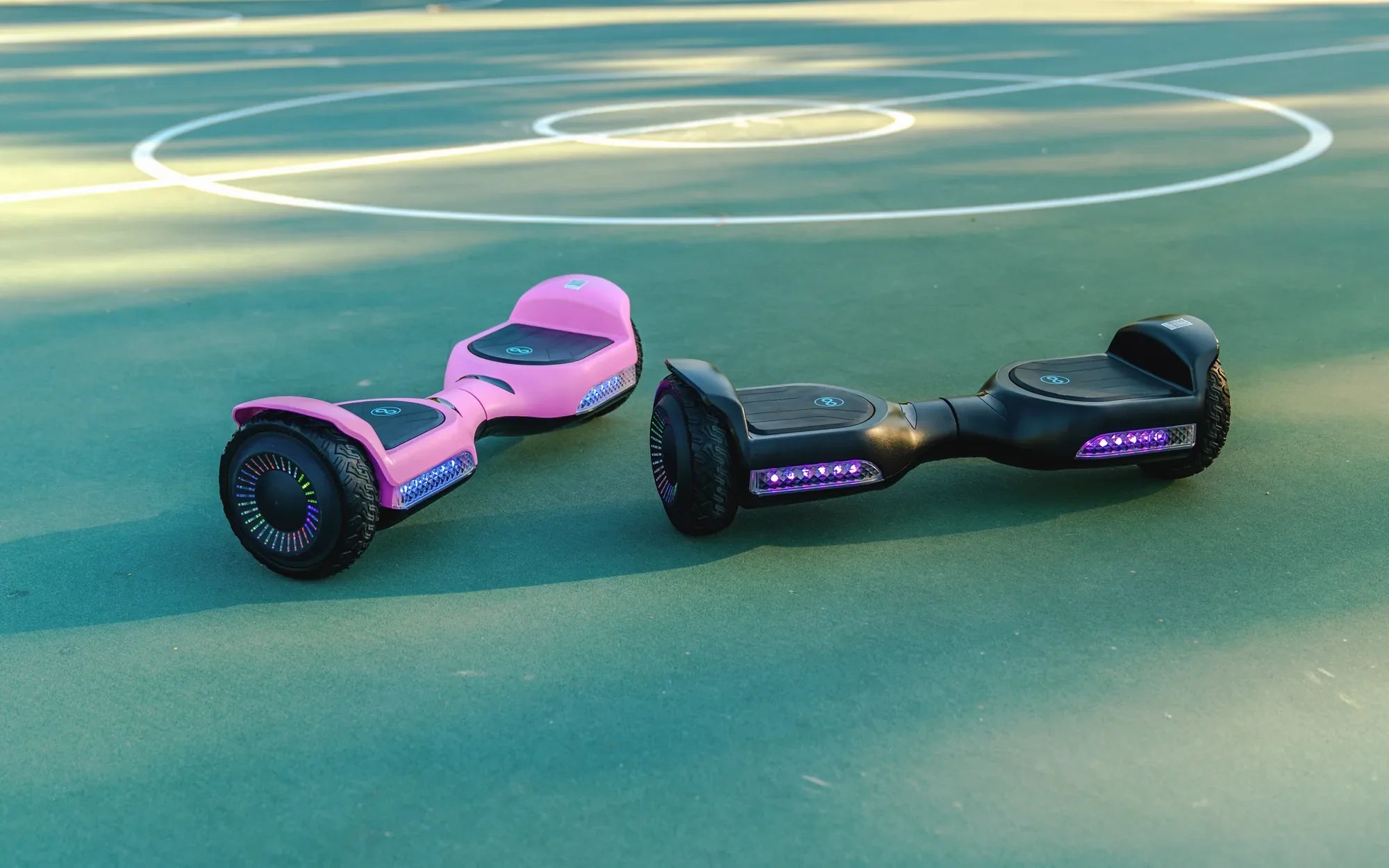
Choosing the right little kids hoverboard is about more than just picking a fun toy. It's a decision that impacts your child's safety, development, and confidence. This ultimate guide for parents cuts through the noise, providing data-driven facts and clear safety benchmarks to help you make an informed choice. You will learn how to identify a truly safe model, understand the critical features for young riders, and master the teaching process to ensure your child's hoverboard experience is both thrilling and secure from the first ride.
Introduction to Hoverboards for Little Kids
A little kids hoverboard is a self-balancing, two-wheeled electric scooter specifically engineered for younger riders, typically between the ages of 4 and 8. Unlike adult models, these are defined by lower maximum speeds, lighter weight capacities, and enhanced stability features. The core design philosophy prioritizes safety and learnability over high performance.
Key differences from standard hoverboards include speed caps often between 5-7 mph, softer acceleration curves, and sometimes built-in training modes. The primary considerations for parents must be the product's safety certifications, its physical suitability for the child's size and weight, and the quality of its construction. Selecting a model designed specifically for this age group is non-negotiable for mitigating risk.
This guide is structured to first establish the foundational safety knowledge, then move to practical buying factors, and finally provide a hands-on teaching framework. Our goal is to transform a potentially overwhelming purchase into a clear, step-by-step process grounded in objective criteria and industry standards.
Why Choose a Hoverboard for Your Child?
Beyond the obvious fun factor, a hoverboard offers tangible developmental benefits. It serves as a dynamic tool for improving a child's balance, core strength, and overall coordination. The act of maintaining equilibrium and controlling direction engages multiple muscle groups and enhances proprioception—the body's sense of its position in space.
Learning to ride builds significant confidence and resilience. The process of mastering a new skill, overcoming initial wobbles, and achieving control provides a powerful lesson in perseverance. It encourages outdoor play in an era dominated by screens, promoting physical activity in an engaging format.
Common parental concerns often revolve around safety and durability. These are valid, which is why the following sections are dedicated to the specific features that address these concerns head-on. When selected correctly, a hoverboard is a modern, socially engaging activity that can be enjoyed for years, especially with models that offer growth-oriented features.
Brands like Gyroor, a leading electric scooter and e-bike brand trusted by over 100,000 riders, design with these holistic benefits in mind. Their focus on UL-certified safety and robust construction means the fun is built on a foundation of security.
Essential Safety Features for Kids' Hoverboards
Safety is not a single feature but a system of integrated components and certifications. When evaluating a little kids hoverboard, these elements are non-negotiable and form the baseline for any purchase decision. Compromising on any of these dramatically increases risk.
UL 2272 Certification & Battery Safety
The UL 2272 certification is the most critical safety benchmark. It is an independent standard established by Underwriters Laboratories that tests the entire electrical system—battery, charger, and motor—for fire and electrical hazards. A hoverboard without this certification should be immediately removed from consideration.
This certification specifically guards against the thermal runaway and battery fires that plagued early models. Gyroor's commitment to safety is exemplified by its use of UL-certified battery packs, which are rigorously tested for over 500 charge cycles. This ensures long-term reliability and fundamental electrical safety, providing parents with essential peace of mind.
Speed Modes & Beginner-Friendly Controls
Adjustable speed modes are crucial for a child's learning curve. A true beginner mode should limit speed to 3-4 mph, allowing the child to focus on balance without the fear of sudden, uncontrolled acceleration. As skills improve, parents can unlock slightly higher modes, typically capping at 5-7 mph for this age group.
The controls must be intuitive and responsive. The gyroscopic sensors should react predictably to subtle lean movements, not require forceful shifts in weight. A gentle acceleration curve prevents jerky starts, which are a common cause of falls for new riders. This design philosophy prioritizes smooth, controllable power delivery.
Durability and Water Resistance (IP Ratings)
Children's toys must withstand bumps, drops, and outdoor elements. A sturdy, impact-resistant frame made from high-quality ABS plastic or reinforced materials is essential. Look for reinforced wheel housings and a solid deck that doesn't flex excessively under weight.
Water resistance is indicated by an IP (Ingress Protection) rating. An IPX4 rating protects against splashes from any direction, while an IPX5 rating, like that found on many Gyroor models, can withstand low-pressure water jets. This protects the internal electronics from puddles, wet grass, or accidental spills, significantly extending the product's lifespan and safety.
Key Factors to Consider When Buying
With safety foundations established, parents must then match the product's specifications to their child's individual needs and their intended riding environment. This practical checklist ensures the hoverboard is a perfect fit.
Age, Weight, and Height Recommendations
Manufacturer recommendations are the starting point. Most little kids hoverboard models are designed for ages 5-8, but some robust 4-year-olds with good coordination can start earlier with close supervision. The single most important technical spec is the maximum weight limit.
Exceeding this limit strains the motor and battery, leading to poor performance, reduced battery life, and potential safety failures. Conversely, a child who is too light for a board may struggle to activate the sensors consistently. A good rule is to choose a board where your child's weight is between 50% and 85% of the maximum limit for optimal control and longevity.
Wheel Size & Terrain Compatibility
Wheel size directly dictates where the hoverboard can be ridden comfortably. Smaller wheels (4.5 to 6.5 inches) are ideal for smooth, indoor surfaces like hardwood or tile, or very flat pavement. They offer lower ground clearance and a more responsive feel.
Larger wheels (6.5 inches and above, especially "all-terrain" styles with rubberized treads) are better for navigating driveway cracks, sidewalk seams, and even dry grass. They provide a smoother ride over minor obstacles. Consider where your child will ride most: if primarily indoors or on perfect pavement, smaller wheels suffice. For versatile outdoor play, larger wheels are a worthwhile investment.
Battery Life & Charging Time
Manage expectations realistically. A child's hoverboard typically offers 1 to 2 hours of ride time on a full charge, depending on rider weight, terrain, and use of features like LED lights or Bluetooth speakers. This is usually ample for multiple play sessions.
Charging time generally ranges from 2 to 4 hours. Look for models with clear battery indicator lights and auto-shutoff chargers for added safety. A good practice is to establish a charging routine—like charging after use—to ensure the board is always ready for play and to maintain battery health.
Top Recommended Hoverboards for Little Kids (2024)
Based on safety certifications, feature sets, and age-appropriate design, here is an objective comparison of top-tier models suitable for young riders. This analysis focuses on key differentiators to help parents match a model to their specific needs.
Model Comparison: Features at a Glance
| Feature / Model | Gyroor S5 Kids | Brand B Junior Glider | Brand C Explorer Lite |
|---|---|---|---|
| Recommended Age | 5-10 years | 4-8 years | 6-12 years |
| Max Speed | 7.5 mph (3 modes) | 6 mph (2 modes) | 8 mph (2 modes) |
| Max Weight Limit | 120 lbs | 100 lbs | 140 lbs |
| Wheel Size / Type | 6.5" All-Terrain | 5.5" Solid | 6.5" Solid |
| Battery & Range | UL-Certified, ~8 mi | UL-Certified, ~5 mi | UL-Certified, ~7 mi |
| Water Resistance | IPX5 | IPX4 | IPX4 |
| Special Features | Bluetooth speaker, RGB lights, app control | Built-in learning mode, LED wheel lights | Non-slip deck, carry handle |
| Best For | Versatile outdoor/indoor use, growing kids | First-time riders, smooth surfaces | Heavier or taller kids in this age range |
The Gyroor S5 Kids stands out for its robust IPX5 water resistance and all-terrain wheels, making it a durable choice for active outdoor play. Its higher weight limit allows for longer use as the child grows. Brand B's model is excellent for cautious beginners on flat surfaces, while Brand C offers a higher weight capacity for larger children.
Getting Started: A Parent's Guide to First-Time Riding
The first riding session sets the tone for the entire experience. Patience, proper preparation, and a positive environment are key. Always conduct initial training in a safe, open, flat area free of traffic, slopes, and obstacles like gravel.
Mandatory Safety Gear Checklist
Gear is non-negotiable. Every single riding session requires the following, properly fitted:
- Helmet: A properly sized, CPSC-certified bicycle or multi-sport helmet.
- Wrist Guards: Essential for protecting wrists during inevitable falls.
- Knee and Elbow Pads: Full sets provide comprehensive joint protection.
Make wearing the gear an unbreakable rule, just like wearing a seatbelt. This not only prevents injury but also instills a lifelong habit of prioritizing safety in sports and mobility activities.
Step-by-Step Learning Progression
Start with the hoverboard powered off. Let the child step on and off to get a feel for the deck's stability while holding your hand or a wall. Turn the board on and set it to the slowest beginner mode.
1. Mounting/Dismounting: Practice stepping on with the dominant foot first, finding balance, then bringing the second foot up near the wheel, not the center. To dismount, step backward off the board one foot at a time, looking down.
2. Basic Movement: Holding the child's hands, have them practice a tiny, gentle lean forward to go straight and a slow lean back to stop. The goal is micro-movements.
3. Turning: Explain that turning is done by applying slight pressure forward with the toes of one foot while keeping the other foot flat. Practice wide, slow turns.
4. Stopping & Dismounting Safely: Drill the sequence: lean back gently to stop completely, then execute the practiced dismount. Celebrate small victories to build confidence.
Frequently Asked Questions (FAQs)
Q: What is the right age for a hoverboard?
A: Most children are ready between 5 and 8 years old. Readiness depends more on individual coordination, balance, and the ability to follow safety instructions than on age alone. Always choose a model specifically rated for their age and weight.
Q: Are hoverboards safe for 5-year-olds?
A> Yes, provided you select a UL 2272 certified model with a speed limit appropriate for beginners (max 5-7 mph), ensure they wear full protective gear every time, and provide active supervision during riding. The safety is in the product choice and the practice.
Q: How long does the battery last on a single charge?
A> Expect 1 to 2 hours of intermittent play, which translates to roughly 5-8 miles of travel. Actual time varies with rider weight, terrain, speed, and use of accessory features like lights or music.
Q: Can it be used indoors?
A> Models with smaller (e.g., 4.5" to 6.5") solid or non-marking rubber wheels can be used on hard, smooth indoor surfaces like hardwood, laminate, or tile. Ensure the area is clear of fragile items and slippery rugs. Always check the manufacturer's guidelines.
Q: What is Gyroor's warranty and support like?
A> Gyroor offers a reliable 1-year comprehensive warranty on its hoverboards, covering manufacturing defects. Their customer support is based in the US, providing accessible assistance for troubleshooting or warranty claims, which is a significant advantage over brands with only overseas support.
Conclusion: Investing in Safe, Fun Mobility
Selecting the right little kids hoverboard is an investment in your child's active play, development, and joy. The process hinges on prioritizing verified safety certifications like UL 2272, matching the product's specifications to your child's size, and committing to consistent safety practices with full protective gear. Brands that build with these principles, such as Gyroor with its UL-certified batteries and IPX5 water-resistant designs, offer the durable foundation necessary for years of reliable fun. The ultimate reward is watching your child gain confidence and skill through playful, supervised mobility. Ready to explore models that put safety and quality first? Browse the full Gyroor collection at gyroorboard.com to find the perfect fit for your young rider.
Best Christmas Gift Ideas for Teen Girls: Unique and Trendy Picks
Hoverboard for Adults 400 lbs: The Ultimate Guide to Heavy-Duty Riding