

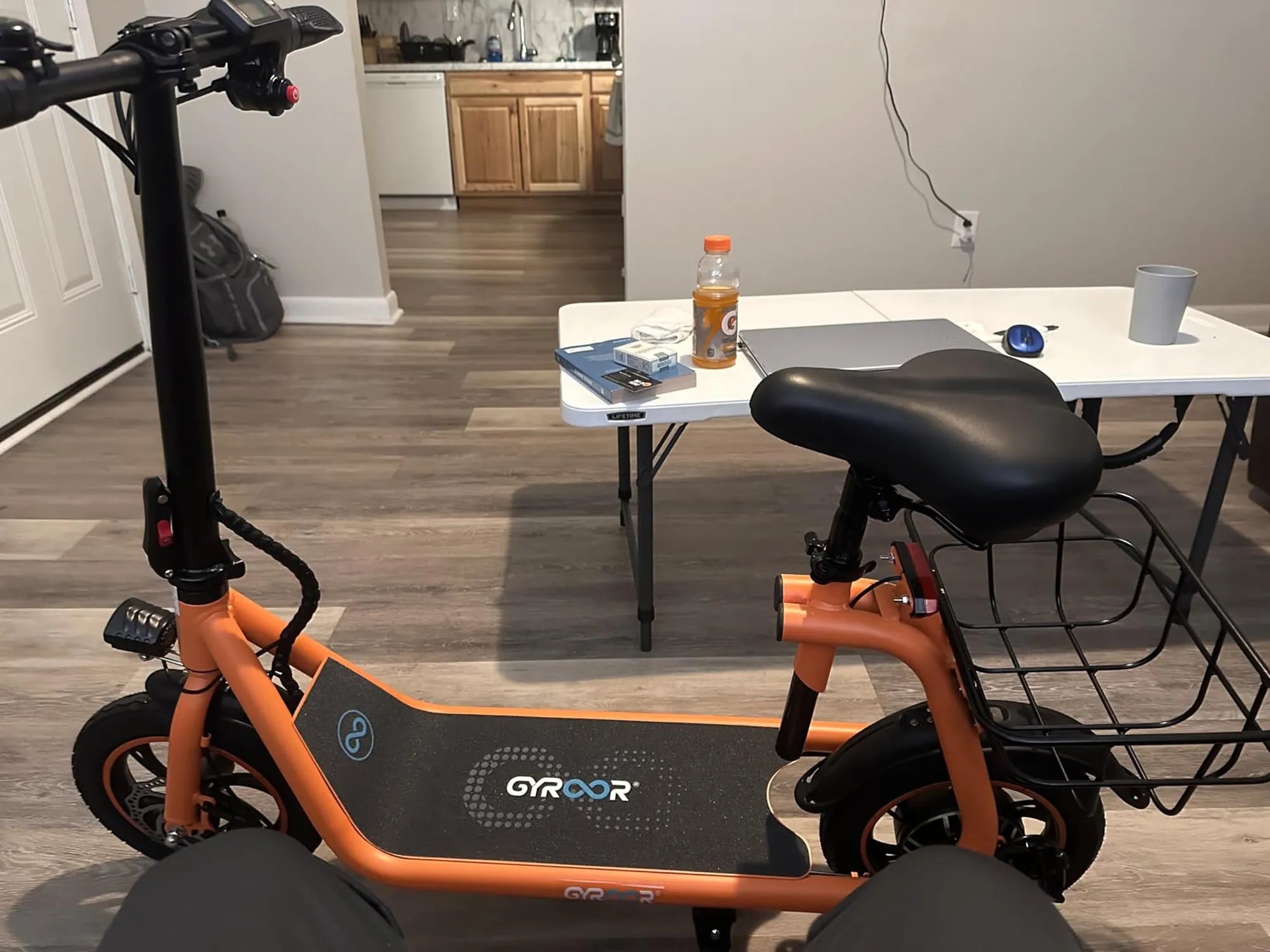
Introduction to Long-Range Electric Scooters
Forget range anxiety. A long-range electric scooter is your ticket to transforming daily commutes, errand runs, and urban exploration. Typically defined by a real-world range of 20 miles or more on a single charge, these machines are engineered for endurance. They move beyond last-mile solutions to become primary vehicles for trips that were once the domain of cars or public transit.
This surge in capability answers a growing demand for efficient, cost-effective, and enjoyable personal transportation. The right long-range scooter isn't just about distance; it's about reliability, safety, and comfort over those miles. Brands like Gyroor design specifically for this purpose, integrating UL-certified batteries and robust warranties to ensure your extended journey is built on a foundation of trust and proven performance.
This guide will dissect the engineering that makes long-range travel possible, teach you to navigate manufacturer claims, and provide a clear roadmap for selecting a scooter that fits your life. Whether your commute is 5 miles or 15, understanding these principles is the first step toward true commuting freedom.
The Anatomy of a Long-Range E-Scooter: Key Components
Extended range isn't magic; it's the result of deliberate engineering choices across several key systems. Understanding these components demystifies specifications and empowers you to make informed comparisons between models.
It's a balancing act between power, weight, efficiency, and durability. A true long-distance performer optimizes each element to work in harmony, ensuring energy is used for propulsion, not wasted on overcoming poor design.
Battery Technology: The Heart of Long Range
The battery is the fuel tank. Its capacity, measured in Watt-hours (Wh), is the primary determinant of potential range. A higher Wh rating generally means more energy stored. For serious commuters, look for batteries in the 500Wh to 1000Wh range.
Beyond capacity, cell quality is paramount. High-grade lithium-ion cells from reputable manufacturers offer better energy density and longevity. Safety is non-negotiable; UL-certification, like that used in Gyroor's battery packs, ensures rigorous testing for overcharge, short circuit, and extreme temperature protection—critical for a component you'll charge daily.
Battery management systems (BMS) are the unsung heroes. A good BMS monitors cell health, balances charge across cells, and regulates power output, all of which protect the battery and maximize its usable lifespan, often rated for 500+ charge cycles.
Motor Efficiency & Power Management
Motor wattage (e.g., 500W, 1000W) indicates power potential, but efficiency dictates how effectively that power converts battery energy into motion. A well-tuned, brushless hub motor provides a strong balance of torque and efficiency.
The electronic speed controller (ESC) is the brain. It manages power delivery from the battery to the motor. Advanced ESCs offer multiple riding modes (Eco, Standard, Sport), allowing you to tailor energy consumption to your needs. Eco mode can extend range by 20-30% by limiting top speed and acceleration.
Regenerative braking can add a small but valuable percentage back to your battery by converting kinetic energy during braking or coasting into electrical energy. While not a range-doubler, it's a hallmark of efficient system design.
Design & Build: Weight, Tires, and Aerodynamics
Every gram counts. A lighter scooter requires less energy to accelerate and climb. However, long-range batteries are heavy, creating a trade-off. High-quality aluminum alloy frames provide strength without excessive weight.
Tires significantly impact rolling resistance. Large, pneumatic (air-filled) tires, typically 10 inches, offer the best comfort and efficiency on varied surfaces. Solid or foam-filled tires eliminate flats but increase rolling resistance and can reduce range.
Aerodynamics play a smaller but noticeable role at higher speeds. A clean deck design and a riding stance that minimizes wind drag can help conserve energy over long, straight stretches.
How to Accurately Estimate Real-World Range
Manufacturer range claims are often based on ideal laboratory conditions: a lightweight rider on flat, smooth pavement at low speed in warm weather. Your reality will differ. Use this framework to estimate your actual range.
Start with the manufacturer's stated range as a theoretical maximum, then apply deductions based on your specific variables. This data-driven approach prevents disappointment and ensures you buy a scooter with ample capacity for your needs.
The Impact of Rider Weight & Terrain
Rider weight (including any backpack) is the single biggest variable after battery capacity. As a rule of thumb, every 25 pounds over the test rider's weight can reduce range by 5-10%. Always check the scooter's maximum load rating.
Terrain is equally critical. Hills consume energy exponentially. A route with constant inclines can easily halve the advertised range. For a hilly commute, prioritize a scooter with a high-torque motor and substantial battery overhead.
| Factor | Impact on Range | Approximate Reduction |
|---|---|---|
| Rider Weight (+50 lbs) | High | 10-20% |
| Hilly Terrain | Very High | 30-50% |
| High Speed (Max vs. Eco) | High | 25-40% |
| Cold Weather (<50°F / 10°C) | Moderate | 15-25% |
| Headwind | Moderate | 10-20% |
Speed, Riding Mode, and Weather Conditions
Speed has an exponential relationship with energy consumption due to increased aerodynamic drag. Riding at 15 mph instead of 25 mph can dramatically extend your range. Consistently using the Eco or Standard mode is the easiest way to guarantee more miles.
Weather is a silent range killer. Cold temperatures (below 50°F/10°C) increase the internal resistance of lithium-ion batteries, reducing their effective capacity. Always allow for less range in winter. Strong headwinds act like constant uphill riding, forcing the motor to work harder.
Riding style matters. Jackrabbit starts from every stoplight drain the battery far faster than smooth, gradual acceleration. Anticipating stops to use regenerative braking also helps conserve energy.
Top Considerations When Choosing Your Long-Range Scooter
With the technical foundation set, your choice becomes about aligning specs with your lifestyle. A long-range scooter is an investment and a daily tool; these factors determine its long-term satisfaction and utility.
Look beyond the range number. A scooter that goes 40 miles but is unsafe, uncomfortable, or breaks down in six months is a poor choice. The best models balance performance with durability and user-centric design.
Prioritizing Safety & Durability for Daily Use
For daily commuting, safety is paramount. A dual braking system—combining electronic/regenerative braking with a mechanical disc or drum brake—provides reliable stopping power in all conditions. Bright front and rear lights, plus side reflectors, are essential for visibility.
Durability hinges on build quality and water resistance. A sturdy, welded frame can handle urban potholes. An IP rating indicates protection against dust and water. An IPX5 rating, like on many Gyroor models, means it can withstand water jets from any direction, making it safe for riding in rain or through puddles.
Reliability is backed by warranty and support. A comprehensive 1-year warranty on the vehicle, like Gyroor offers, signals confidence in the product. Access to responsive customer service and available parts is crucial for a high-use commuter vehicle.
Comfort Features for Extended Rides
Comfort directly affects fatigue. A good suspension system—spring or hydraulic—absorbs vibrations from rough pavement, making a 10-mile ride feel pleasant, not punishing. Large pneumatic tires also contribute significantly to shock absorption.
Deck size and ergonomics matter. A wide, long deck allows for stable foot positioning. The handlebar height and grip comfort should feel natural for your stature. Consider a model with an adjustable handlebar if you share the scooter or want a perfect fit.
Additional features like a clear, bright display, a secure phone mount, or integrated turn signals can enhance the riding experience and safety on longer, more complex routes.
Portability, Warranty, and Support
There's a direct trade-off: more range usually means a heavier battery. A 40-mile scooter can weigh 50-70 lbs. Consider if you need to carry it up stairs or onto public transit. Folding mechanisms should be robust and easy to operate.
A strong warranty is your insurance policy. Look for at least a 1-year warranty covering the frame, motor, and battery. Gyroor's commitment to a 1-year comprehensive warranty and UL-certified batteries exemplifies the standard to seek. Check for a responsive support team, ideally with service centers or efficient parts distribution in your region.
Maximizing Your Scooter's Range and Battery Lifespan
Proper care maximizes both your daily mileage and the years of service from your scooter. These practices protect your investment and ensure consistent performance.
Think of battery care like maintaining a car's engine. Good habits prevent premature degradation, saving you money and hassle in the long run.
Optimal Charging Practices & Storage
Avoid regularly draining the battery to 0%. Lithium-ion batteries prefer shallow cycles. Try to recharge when the battery level drops to 20-30%. Similarly, you don't need to charge to 100% every time for daily use; 80-90% is less stressful on the cells.
Use only the manufacturer-provided charger. Unregulated chargers can damage the BMS and cells. Don't leave the scooter plugged in for days on end after it's fully charged. For long-term storage (over a month), store the scooter with a 50-70% charge in a cool, dry place.
Allow the battery to cool down after a long ride before charging. Avoid charging immediately after riding in very hot conditions.
Routine Maintenance for Peak Efficiency
Weekly or bi-weekly checks keep your scooter running efficiently and safely. Maintain proper tire pressure as recommended in the manual. Under-inflated tires create massive rolling resistance, significantly reducing range.
Regularly inspect and adjust brakes. Dragging brakes create constant resistance. Keep all bolts and fasteners, especially on the folding mechanism and handlebars, tightened to specification. Clean the scooter with a damp cloth, avoiding direct high-pressure water jets on electronic components.
Listen for unusual sounds and feel for changes in performance. Addressing small issues early prevents larger, more expensive problems and ensures your scooter is always ready for a long commute.
Frequently Asked Questions (FAQs)
Q: Can I ride a long-range e-scooter in the rain?
A: It depends on the scooter's IP (Ingress Protection) rating. Models with an IPX4 rating are protected against water splashes from any direction, suitable for light rain. Scooters with an IPX5 rating, like several in Gyroor's lineup, can handle sustained water jets and are safe for riding in steady rain and through puddles. Always avoid deep standing water and reduce speed in wet conditions for safety.
Q: How long does it take to fully charge a high-capacity battery?
A: Charging time depends on battery capacity and charger output. A typical 500Wh-700Wh battery for a 20-30 mile scooter takes 6 to 8 hours with a standard charger. Some models offer fast chargers that can cut this time in half. Always refer to the manufacturer's specifications for accurate charging times.
Q: Is a longer range always better?
A: Not necessarily. More range requires a larger, heavier, and more expensive battery. If your daily commute is 10 miles round-trip, a 20-mile scooter provides a comfortable buffer. A 40-mile scooter adds unnecessary weight and cost. Balance your actual needs with portability and budget.
Q: How much maintenance do electric scooters require?
A: Electric scooters are relatively low-maintenance compared to gas vehicles. Key tasks include checking tire pressure, ensuring brakes function properly, keeping bolts tight, and keeping the scooter clean. Pneumatic tires may need occasional inflation and are susceptible to punctures, which is a consideration versus solid tires.
Q: Are long-range scooters legal to ride everywhere?
A: Laws vary significantly by city, state, and country. Common regulations concern maximum speed (often 15-20 mph on bike paths), motor wattage, minimum rider age, and whether helmet use is required. It is your responsibility to research and comply with all local laws before riding. Typically, a scooter's capability does not affect its legal classification if its top speed is within legal limits.
Conclusion: Empowering Your Journey
Choosing the right long-range electric scooter is an exercise in matching sophisticated engineering with the practical realities of your daily life. It's about trading traffic jams and fuel costs for the quiet, efficient thrill of personal mobility. The freedom of an extended commute is unlocked by understanding the core technology—the synergy of UL-certified batteries, efficient motors, and durable design.
By learning to calculate real-world range and prioritizing safety features like robust braking and water resistance, you invest in a tool built for reliability, not just distance. Brands that stand behind their products with strong warranties and accessible support, like Gyroor with its 1-year coverage and trusted reputation among over 100,000 riders, provide the peace of mind necessary for a vehicle you depend on daily.
Your journey awaits. Armed with this knowledge, you can confidently select a scooter that turns miles into moments of enjoyment and transforms your concept of urban travel. Explore machines designed to go the distance.
Ready to find your perfect long-range electric scooter? Browse the full Gyroor collection, featuring UL-certified, IPX5-rated models built for reliable extended commutes, at gyroorboard.com.
When Were Electric Scooters Invented: A Journey Through Time
Do Electric Scooters Need a License? A Complete Legal Guide