

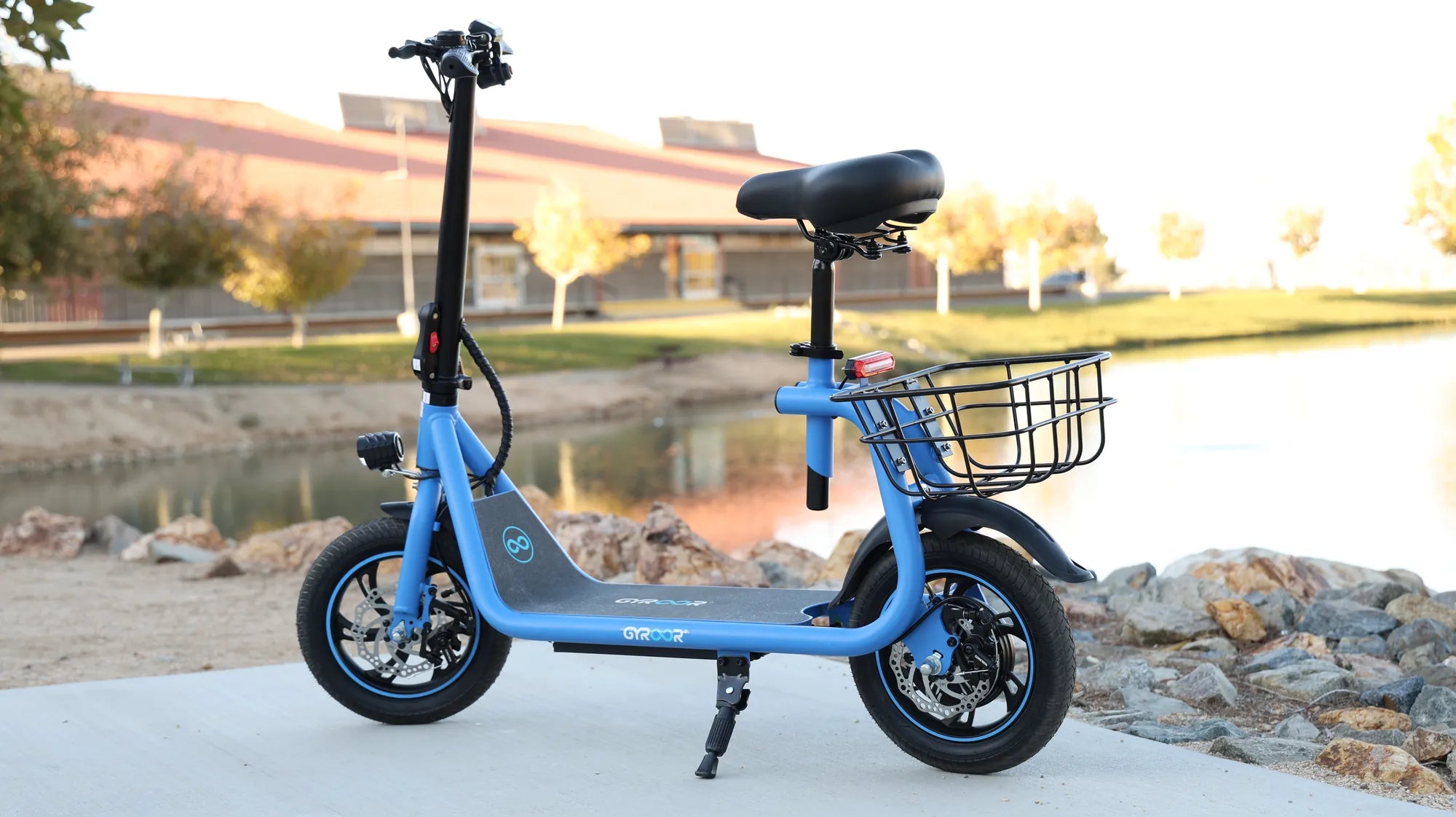
Introduction: Understanding Mobility Scooter Top Speed
When evaluating a mobility scooter, the advertised mobility scooter top speed often grabs attention first. However, this figure represents a governed maximum—a speed limit set by the manufacturer for safety and legal compliance, not an invitation for speed. It's crucial to distinguish these devices from recreational electric scooters or e-bikes; their primary purpose is safe, stable mobility assistance.
This article will dissect what truly determines a scooter's speed, from motor power to legal frameworks. You'll learn why the highest number isn't always the best choice and how to prioritize features that enhance daily independence without compromising safety. We'll explore real-world performance, safety imperatives, and how leading brands engineer for reliability.
The mobility scooter top speed is a critical but nuanced factor. It impacts where you can legally ride, how stable you feel, and whether the scooter can handle your regular routes. Making an informed decision requires looking beyond the spec sheet to understand the complete picture of performance and practicality.
Key Factors That Determine Mobility Scooter Speed
A scooter's maximum speed is the result of an engineered balance between several components. It's not solely about a powerful motor; the electrical system, design class, and operating conditions all play integral roles. Understanding these elements helps explain why two scooters with similar wattage motors can have different real-world performance.
The interplay between these factors means that a scooter's top speed is a system-wide capability. A change in one area, like adding a heavier battery for more range, can influence another, such as acceleration or hill-climbing torque, even if the governed mobility scooter top speed remains the same.
Motor Power and Type
Motor power, measured in watts (W), provides the potential for speed and torque. Common ratings range from 250W for lightweight, portable models to 500W or more for full-size, outdoor scooters. A higher-wattage motor can generally maintain a set speed more easily, especially under load or on an incline.
Most mobility scooters use efficient brushless hub motors mounted directly in the wheels. This design offers smooth, quiet operation and requires less maintenance. The motor's controller is programmed with a speed governor to ensure the mobility scooter top speed does not exceed legal and safety limits, regardless of the motor's potential power.
Battery Voltage and Capacity
The battery pack is the scooter's powerhouse. Voltage (V)—common ratings are 24V, 36V, and 48V—acts like the "pressure" of the electrical system. Higher voltage systems can deliver power to the motor more efficiently, which supports better performance at the scooter's top speed and improves hill-climbing ability.
Battery capacity, measured in amp-hours (Ah), determines range, not directly top speed. However, a high-quality, stable battery is essential for consistent performance. As a battery depletes, voltage can sag, potentially causing a reduction in power and effective speed before the battery is fully drained.
Scooter Class and Intended Use
Mobility scooters are broadly categorized by class, which directly correlates with their designed mobility scooter top speed and where they are meant to be used. Class 2 scooters are typically portable or boot scooters, speed-limited to around 4 mph (6 km/h), and intended for indoor use or short outdoor trips on pavements.
Class 3 scooters are larger, road-legal vehicles when registered and insured in many regions. They have a maximum speed of 8 mph (13 km/h) and are designed for outdoor community use. Their heavier frames, larger wheels, and more powerful motors are built for stability at this higher, yet still legally restricted, pace.
Weight Capacity and Terrain
The combined weight of the rider and any cargo is a major variable. Every scooter has a maximum weight capacity. Operating near or at this limit will reduce acceleration, decrease the effective mobility scooter top speed on slopes, and increase strain on the motor and battery, potentially shortening range.
Terrain is equally important. Pavement, grass, gravel, and slopes all present different levels of resistance. A scooter may reach its governed top speed on a flat, smooth path but will slow significantly on a steep hill. Models with higher torque motors and all-terrain tires are better equipped to maintain speed across varied surfaces.
What is a Safe and Practical Top Speed?
For mobility scooters, safety and practicality are paramount over maximum velocity. The optimal mobility scooter top speed is one that allows for confident, stable operation in the user's typical environments, from crowded supermarket aisles to neighborhood sidewalks. Speed must enhance independence, not create new risks.
Manufacturers and regulators set limits based on physics and public safety. A scooter's design—its wheelbase, center of gravity, and steering geometry—is optimized for stability within a specific speed range. Exceeding this range compromises control, especially during turns or when navigating obstacles.
Stability and Center of Gravity
Mobility scooters have a higher center of gravity than a car or bicycle, with the rider sitting atop the chassis. At higher speeds, centrifugal force during turns increases the risk of tipping. This is why models designed for 8 mph have a wider wheelbase and lower-profile seats than compact 4 mph models.
The practical mobility scooter top speed is therefore tied to its physical stability. A speed that feels comfortable on a straight, empty path can become hazardous when maneuvering around corners, over curb cuts, or on cambered surfaces. Stability is the non-negotiable foundation of safe mobility.
Legal Limits and Public Use
In most jurisdictions, legal limits make the pursuit of high speeds impractical for public use. In the UK and many EU countries, Class 3 vehicles are limited to 8 mph (13 km/h). In the US, while federal law is less specific, local regulations and sidewalk safety norms effectively enforce similar limits, often 4 mph on sidewalks and 8 mph on roadways.
Using a scooter that exceeds these limits on public paths or roads can result in fines, invalidate insurance, and pose a serious safety hazard to the rider and pedestrians. The legally compliant mobility scooter top speed is not a suggestion; it's a mandatory parameter for community integration.
Maneuverability vs. Speed
For daily tasks, low-speed maneuverability is frequently more valuable than high top speed. Navigating through doorways, around tight store displays, or in busy waiting rooms requires precise, slow control. A scooter with a tight turning radius and smooth slow-speed operation offers greater true independence in these scenarios.
This highlights a key insight: the mobility scooter top speed is a ceiling you'll rarely need to reach. The quality of the experience is defined more by how the scooter handles at 2-4 mph—its smooth acceleration, responsive braking, and easy steering—than by its ability to hit 8 mph on a rare straightaway.
Gyroor’s Approach: Balancing Performance, Safety, and Reliability
At Gyroor, a leading electric scooter and e-bike brand trusted by over 100,000 riders, engineering philosophy centers on balanced performance. This means designing mobility scooters that deliver dependable speed where it's useful—like maintaining pace on a gentle hill—while prioritizing safety, durability, and user confidence above all.
This approach recognizes that real-world conditions are variable. A scooter must perform consistently whether it's carrying groceries, navigating a damp path, or being used daily for months on end. Gyroor's commitment to this balance is evident in three core areas of its design and manufacturing.
Engineered for Real-World Conditions (Not Just Max Speed)
Gyroor models are equipped with robust motors (typically in the 300W to 500W range) that provide ample torque. This means the scooter can reliably achieve its Class 3-governed mobility scooter top speed of 8 mph even with a rider at capacity or on a moderate incline, without straining the system.
The focus is on consistent, accessible power rather than an ungoverned maximum. The electronic speed controller is calibrated for smooth acceleration and deceleration, preventing jerky movements that can compromise stability. This results in a riding experience that feels confident and controlled at all times.
Safety First: UL-Certified Batteries and Secure Design
The foundation of safe performance is a safe power source. Every Gyroor mobility scooter uses a UL-certified lithium-ion battery pack. This independent certification means the battery has passed rigorous tests for electrical, mechanical, and environmental safety, reducing risks of overheating or failure.
This is critical for maintaining a stable mobility scooter top speed. A certified battery provides consistent voltage output, ensuring the motor and controller receive clean, reliable power. This prevents sudden drops in performance or unsafe behavior. Combined with a stable, welded steel chassis, it creates a platform where safety is integrated, not an afterthought.
Built for Daily Dependability in All Weather
Reliability means a scooter works when you need it. Gyroor builds all its models with an IPX5 water-resistant rating. This engineering protects the scooter's vital electronics from water spray, meaning light rain or damp ground won't compromise its operation or leave you stranded.
Dependability is also backed by a reliable 1-year warranty with accessible support. This warranty covers defects in materials and workmanship, giving users peace of mind that their investment is protected. A scooter that maintains its performance and integrity over time offers far more value than one with a marginally higher but less reliable top speed.
Data Comparison: Speed vs. Other Critical Features
Choosing a mobility scooter requires evaluating a matrix of features. To make an informed decision, it's helpful to see how mobility scooter top speed compares and relates to other vital characteristics. The following table illustrates typical trade-offs and alignments across common scooter categories.
| Model Type | Typical Top Speed | Key Prioritized Feature | Best For |
|---|---|---|---|
| Compact / Class 2 | 4 mph (6 km/h) | Portability: Lightweight, disassembles for car boot | Indoor/Store Errands, Short Trips |
| Full-Size / Class 3 | 8 mph (13 km/h) | Range & Comfort: Larger battery, suspension, comfy seat | Outdoor Neighborhood Use, Longer Errands |
| All-Terrain / Heavy-Duty | 8 mph (13 km/h) | Hill Grade & Traction: High-torque motor, knobby tires | Varied Terrain, Parks, Unpaved Paths |
Analysis: Why Range, Comfort, and Warranty Often Matter More
As the table shows, top speed is largely a function of class. Once that class is chosen (4 mph for ultra-portability, 8 mph for outdoor use), other features become the primary differentiators. A longer range from a high-capacity battery directly increases how far you can travel independently, often a more pressing concern than speed.
Comfort features like adjustable seats, armrests, and suspension determine how you feel after a 30-minute ride. A comprehensive 1-year warranty, like Gyroor's, is a tangible indicator of the manufacturer's confidence in their product's durability. These factors collectively contribute more to long-term satisfaction and daily utility than an extra 1-2 mph of theoretical speed.
Frequently Asked Questions (FAQ) on Mobility Scooter Speed
Can I modify my mobility scooter to go faster?
It is strongly advised against. Modifying or "de-restricting" a scooter to exceed its designed mobility scooter top speed is dangerous and illegal. It will immediately void the manufacturer's warranty (including Gyroor's 1-year warranty), compromise the scooter's stability and braking systems, and likely render it unlawful for use on public paths or roads. The design integrity is a package not meant to be altered.
Is a mobility scooter advertised at 10 mph safe or legal?
Scooters marketed with top speeds above 8 mph (13 km/h) often exist in a regulatory gray area and may not be classified as mobility aids in many regions. They likely exceed legal limits for sidewalk and road use, potentially requiring registration as a motor vehicle. More critically, their chassis may not be designed with the stability, braking, or lighting required for safe operation at those speeds.
How does riding speed affect my scooter's battery range?
Battery range is inversely related to speed. Operating consistently at the maximum mobility scooter top speed, especially with added weight or on hills, draws more current from the battery and will deplete it much faster than a moderate, variable pace. Manufacturer range estimates are based on ideal conditions and average speeds; real-world range will be lower if you frequently travel at top speed.
Does a more powerful motor always mean a faster top speed?
Not necessarily. A more powerful motor (higher wattage) primarily provides greater torque, which improves acceleration and hill-climbing ability. The actual governed mobility scooter top speed is set by the controller to comply with regulations. So, two 8 mph scooters might have 400W and 500W motors; the 500W model will simply reach and maintain that 8 mph limit more easily on slopes.
Why do some mobility scooters feel unstable at their top speed?
Instability at higher speeds is often a design limitation. Factors like a narrow wheelbase, a high seat, small wheels, or a loose steering mechanism can make a scooter feel less planted. This underscores why choosing a scooter designed for its speed class is crucial. A Class 3 (8 mph) scooter should have a correspondingly stable chassis, which compact Class 2 models lack.
Conclusion: Prioritizing Smart Mobility Over Raw Speed
The pursuit of a higher mobility scooter top speed is often a distraction from the metrics that truly define a great mobility aid: safety, reliability, comfort, and legal compliance. The optimal speed is the one that safely extends your range of independence without introducing risk or anxiety. It is a tool for freedom, not a performance statistic.
True quality in a mobility scooter is demonstrated through rigorous engineering choices—like UL-certified batteries for safety and IPX5 water-resistant construction for all-weather reliability. These features, backed by a strong warranty, ensure the scooter performs consistently day after day, regardless of whether you're traveling at 4 mph or 8 mph.
When selecting your scooter, let safety and dependability guide you. Look for a model whose design inspires confidence, whose specifications match your real-world needs, and whose manufacturer stands behind their product. This approach guarantees that your mobility solution enhances your life sustainably and securely.
Explore a range of thoughtfully engineered mobility solutions designed for real-world performance and safety. Browse the full Gyroor collection at gyroorboard.com to find a scooter that prioritizes your independence and peace of mind.
Mobility Scooter for Sale Cheap: The Ultimate Smart Buyer's Guide
E Bike Levels: The Complete Guide to Pedal Assist Modes