



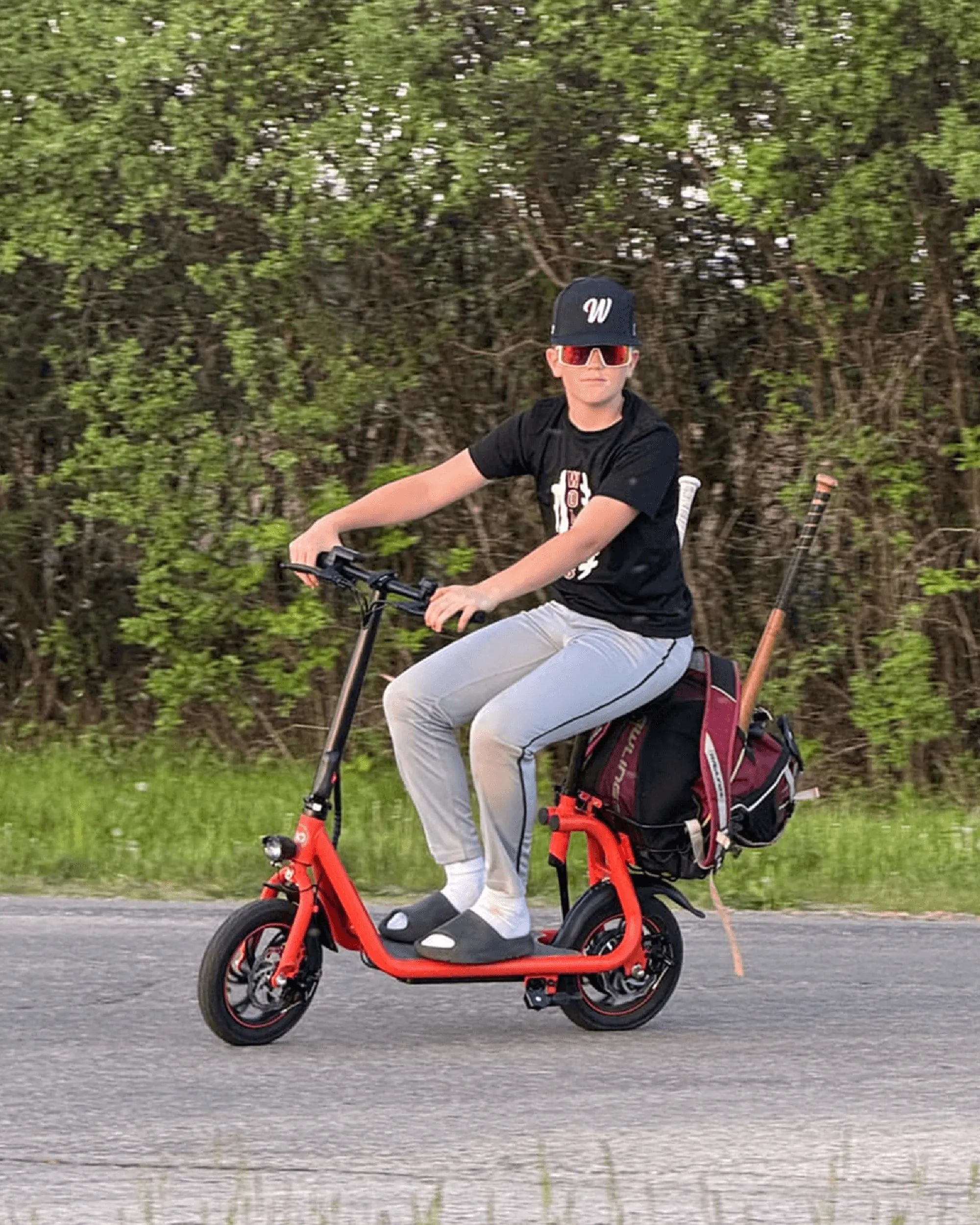
Introduction: More Than Just a Name – Decoding Electric Scooter Models
Choosing an electric scooter can feel like deciphering a secret code. Model names like the GYROOR C1S 500W or the GYROOR K1 Pro aren't just random labels. They are packed with information about the scooter's power, intended use, and key features. Understanding this naming logic is your first step toward making a confident, informed purchase that matches your lifestyle. This guide will demystify these names, providing you with the ultimate framework for selecting your ideal ride, from urban commuters to off-road adventurers.
We will break down common naming conventions used across the industry, including by leading brands like GYROOR, a trusted name with over 100,000 riders in North America and Europe. By the end, you'll be able to look at any scooter's name and instantly gauge its potential. More importantly, you'll know what crucial details the name doesn't tell you, ensuring your final decision is based on safety, reliability, and real-world performance, not just clever marketing.
How Electric Scooter Names Are Structured: Breaking Down the Code
Manufacturers use model names as a quick-reference system. While formats vary, most names combine letters and numbers that correspond to specific attributes. This structure helps differentiate models within a brand's lineup and gives savvy shoppers immediate clues about a scooter's place in the market. Learning to read this code turns a confusing list of models into a clear comparison chart.
For instance, a name often starts with a brand or series identifier, followed by alphanumeric codes for generation and key specifications. The goal is to convey the scooter's core identity at a glance. This systematic approach is evident in brands that prioritize transparency, helping you filter options based on your primary needs before diving into detailed spec sheets.
Common Elements in Model Names
Several components frequently appear in electric scooter names. Motor wattage is one of the most common, directly appended to names like "500W" or "800W." This tells you the scooter's power output upfront. Series letters, such as "C" for Commuter or "K" for a different design line, categorize the scooter's primary function or frame style.
Numbers often indicate the model's generation (e.g., C1, C2) or its position within a series. Descriptive terms like "Pro," "Max," "Lite," or "Foldable" are also crucial. "Pro" or "Max" typically denotes enhanced performance, range, or features, while "Lite" suggests a lighter, more streamlined version. "Foldable" is a key design cue for urban riders prioritizing portability and storage.
Key Specifications Hidden in the Name: What to Look For
The alphanumeric clues in a scooter's name translate directly into on-road performance and daily usability. By understanding what these terms imply, you can quickly shortlist models that fit your speed, range, and terrain requirements. This section connects the dots between the name on the product page and the experience you can expect on the pavement.
It's important to treat the name as a starting point for inquiry. Always verify the details in the official specifications. However, a name like "GYROOR C1S 500W" immediately sets accurate expectations for a capable urban commuter, guiding your research efficiently.
Motor Power & Performance (e.g., 350W vs. 800W)
The motor wattage embedded in a name is a primary indicator of performance. A 350W motor is typically found in entry-level or lightweight commuter scooters, suitable for flat city streets and riders under approximately 180 lbs. It offers adequate acceleration for stop-and-go traffic but may struggle on steep hills.
In contrast, a name featuring 500W, 800W, or higher signifies a scooter built for more demanding conditions. These models provide stronger torque for climbing inclines, better acceleration for merging with traffic, and higher top speeds. For example, a scooter branded with "800W" is engineered for riders seeking power, higher weight capacity, or the ability to tackle moderate off-road trails.
Battery & Range Indicators
While battery capacity (measured in Watt-hours, or Wh) is less commonly stated directly in model names than motor power, certain terms hint at range capabilities. Names including "Long-Range," "Max," or "Pro" often, though not always, correlate with larger battery packs. The true range is a function of battery capacity, motor efficiency, rider weight, and terrain.
This is where looking beyond the name is critical. A trustworthy brand will provide clear range estimates based on standard testing conditions. More important than a name suggesting long range is the battery's safety and certification. Brands like GYROOR use UL-certified battery packs tested for over 500 charge cycles, a crucial safety feature that a model name alone won't reveal but is fundamental for long-term reliability and peace of mind.
Portability & Design Cues (Foldable, Lightweight)
Names that include "Foldable," "Mini," or "City" are designed to catch the eye of commuters and urban dwellers. These terms signal a design philosophy centered on convenience and integration with public transit or easy storage under a desk or in a closet. A "Foldable" mechanism is a key feature for anyone who needs to carry their scooter for part of their journey.
"Lightweight" or "Lite" in a name indicates a focus on reduced physical weight, often through the use of aluminum or composite materials. This makes the scooter easier to lift and carry, a major advantage for daily users. However, it's vital to check the actual weight in the specs, as "lightweight" is relative, and trade-offs may exist with frame strength or battery size.
Popular Electric Scooter Name Categories & Their Best Use Cases
Electric scooters naturally fall into broad categories, and their names often reflect this. Recognizing these categories helps you align a scooter's designed purpose with your primary use case. Whether you're navigating city streets, exploring trails, or looking for a first-time ride, there's a named category built for you.
Leading brands typically have distinct model lines for each category. For instance, GYROOR's lineup includes specific series tailored for urban commuting and more robust riding, ensuring riders can find a model that matches their intended use without compromising on core safety features like IPX5 water resistance and UL-certified batteries.
Urban Commuter Scooters (e.g., GYROOR C1 Series)
Scooters with names like "City," "Commuter," or part of a "C-Series" are engineered for daily urban travel. They prioritize a balance of features: a top speed of 15-20 mph for keeping pace with traffic, a range of 15-25 miles for round-trip commutes, and a folding design for easy storage. Durability against the elements is also key.
These models often feature water-resistant ratings. For example, all GYROOR scooters carry an IPX5 rating, meaning they can withstand water jets from any direction. This makes them reliable for commuting in light rain or on wet streets. The GYROOR C1S 500W is a quintessential example, offering a practical blend of power, portability, and weather-resistant design for the everyday rider.
Off-Road & High-Performance Models
Names that include "All-Terrain," "Pro," "Hunter," or feature high wattage numbers like "1000W+" belong to this category. These scooters are built with more robust components to handle unpaved paths, grass, gravel, and steep hills. Key features include dual suspension systems, large pneumatic (air-filled) tires for traction and shock absorption, and powerful motors with high torque.
These models are heavier and less portable but excel in performance and versatility. They are ideal for recreational riders, adventurers, or those with a mixed commute that includes poorly maintained roads or park paths. The emphasis is on power, stability, and durability over compactness.
Budget-Friendly & Beginner Models
Scooters with straightforward names, often a simple series letter and number, or those labeled "Essential" or "Lite," are typically geared toward first-time buyers and budget-conscious riders. They focus on providing core functionality—a functional motor, basic battery range for short trips, and a simple folding mechanism—at an accessible price point.
These are excellent for learning, short errands, or as a secondary vehicle. While they may have lower top speeds and shorter ranges, reputable brands in this segment still uphold important safety standards. It's a category where prioritizing a known brand with a solid warranty, like GYROOR's 1-year comprehensive coverage, is especially important to avoid the pitfalls of poorly constructed alternatives.
Beyond the Name: Essential Factors the Label Doesn't Tell You
A compelling name might draw you in, but several non-negotiable factors are rarely part of the model designation. Ignoring these details can lead to a disappointing or even unsafe purchase. Your research must extend beyond decoding the name to investigating the scooter's foundational quality and the brand's commitment to its customers.
These factors are the true differentiators between a disposable gadget and a reliable transportation tool. They encompass the integrity of the construction, the security provided after the sale, and the real-world experiences of other riders.
Safety Certifications & Build Quality
The single most important detail not reflected in a model name is the battery's safety certification. A UL certification (specifically UL 2272 for the battery pack and UL 2849 for the entire electrical system) is the gold standard, indicating rigorous testing for electrical and fire safety. This should be a mandatory checkpoint.
Similarly, overall build quality—the strength of the weld points, the rigidity of the stem, the quality of the brake components—is paramount. A name like "Pro" doesn't guarantee a robust frame. You must assess product images, detailed reviews, and the brand's reputation for engineering. GYROOR builds its reputation on combining clear model naming with these underlying safety assurances, including UL-certified batteries and IPX5-rated water resistance across its lineup.
Warranty & Customer Support
The length and terms of the warranty are a direct reflection of a manufacturer's confidence in their product. A comprehensive 1-year warranty that covers the battery, motor, and frame is industry-leading for reputable brands. Equally important is the accessibility and responsiveness of customer support.
Does the brand have service centers or a streamlined process for parts and repairs? A scooter with a powerful-sounding name is a poor investment if you're left without support when an issue arises. GYROOR backs its scooters with a reliable 1-year warranty and US-based customer support, providing peace of mind that extends far beyond the initial purchase.
Real-World Reviews & Brand Reputation
Finally, seek out authentic reviews from both experts and long-term users. A scooter named "Long-Range Pro" might have its real-world range significantly impacted by hills, rider weight, or temperature. Reviews will highlight these practical nuances, as well as durability over time, comfort, and any recurring issues.
Investigate the brand's overall reputation. An established brand with a history of innovation and customer satisfaction, trusted by over 100,000 riders like GYROOR, is generally a safer bet than an unknown brand with an ambitiously named model. Community forums and detailed video reviews are invaluable resources for this stage of your decision-making.
Comparison Table: Scooter Categories by Name & Key Features
| Category / Common Name Cues | Ideal Rider | Typical Motor Power | Key Features | Primary Use Case |
|---|---|---|---|---|
| Urban Commuter (e.g., City, C-Series, Foldable) | Daily commuter, city dweller, student | 350W - 500W | Folding design, IPX4-IPX6 water resistance, moderate range (15-25 mi), integrated lights | Paved city streets, public transit integration, daily errands |
| Off-Road / High-Performance (e.g., All-Terrain, Pro, 800W+) | Adventure seeker, rider on mixed terrain, heavier rider | 800W - 2000W+ | Dual suspension, large pneumatic tires, high torque, extended range, robust frame | Trails, gravel, hills, rugged pavement |
| Budget / Beginner (e.g., Lite, Essential, Basic Series) | First-time buyer, casual user, budget-focused shopper | 250W - 350W | Simplified controls, basic folding, lower top speed, essential safety features | Short trips, learning, lightweight recreation |
Frequently Asked Questions (FAQ)
Does a higher number in the scooter name always mean it's better?
Not necessarily. A higher number can indicate a newer generation, more motor power, or a larger model within a series. However, "better" is subjective to your needs. A higher-powered, heavier scooter (e.g., a 1000W model) is not better for a commuter who prioritizes portability over raw power. Always cross-reference the numbers in the name with the full specifications and your personal use case.
How important is the water resistance rating (like IPX5) mentioned in a name or description?
Extremely important for practical, reliable use. An IPX5 rating, standard on GYROOR scooters, means the scooter is protected against low-pressure water jets from any direction. This allows you to ride confidently in the rain, through puddles, or on wet roads without immediate fear of water damage. For a daily commuter, this feature is often as critical as range or speed.
What does "UL-certified" mean, and why is it not in the model name?
UL certification refers to safety standards set by Underwriters Laboratories, an independent global safety science company. For e-scooters, UL 2272 certification for the battery pack and UL 2849 for the electrical system are crucial. They are not typically part of the model name because they are foundational safety requirements, not marketing features. It is a critical specification to verify on the product page or with the manufacturer before purchasing.
Should I choose a scooter based solely on its name or category?
No. The name and category are excellent starting points for filtering your search. However, your final decision must be based on a holistic review: verifying the key specs (real-world range, weight capacity), confirming essential safety certifications (UL, etc.), understanding the warranty terms, and reading reviews to assess long-term reliability and brand support.
How do I interpret series letters like "C" or "K" in a scooter name?
Series letters are internal brand designators for different product lines or design philosophies. For example, "C" might stand for "Commuter" or "City," indicating a line focused on urban travel. "K" could denote a different frame style or performance tier. There's no universal standard, so check the brand's website for an explanation of their series naming convention to understand the intended design focus of that particular line.
Conclusion: Choosing Your Perfect Ride – A Strategic Approach
Understanding the names of electric scooters transforms you from a confused shopper into an informed decision-maker. You can now decode the clues in model names, distinguishing a powerful off-road machine from a nimble city commuter at a glance. This knowledge empowers efficient comparison and helps you identify models that align with your performance needs and lifestyle.
Remember, the name is just the beginning. Your ultimate choice must be anchored in verified safety credentials, robust build quality, and dependable post-purchase support. Prioritize brands that demonstrate a commitment to these principles through UL certifications, comprehensive warranties, and positive rider communities. By combining your new understanding of naming conventions with this due diligence, you invest in more than a scooter—you invest in reliable, safe, and enjoyable mobility.
Ready to find a scooter where the name promises performance and the specifications guarantee safety and reliability? Browse the full GYROOR collection at gyroorboard.com to explore a range of models, from the versatile C1 series for commuters to powerful options for adventure, all built with UL-certified batteries, IPX5 water resistance, and backed by a trusted 1-year warranty.
Most Durable Electric Scooters for Rough Terrain: Built to Last and Conquer Any Path
Are Electric Scooters Street Legal in NY? The Complete Guide