



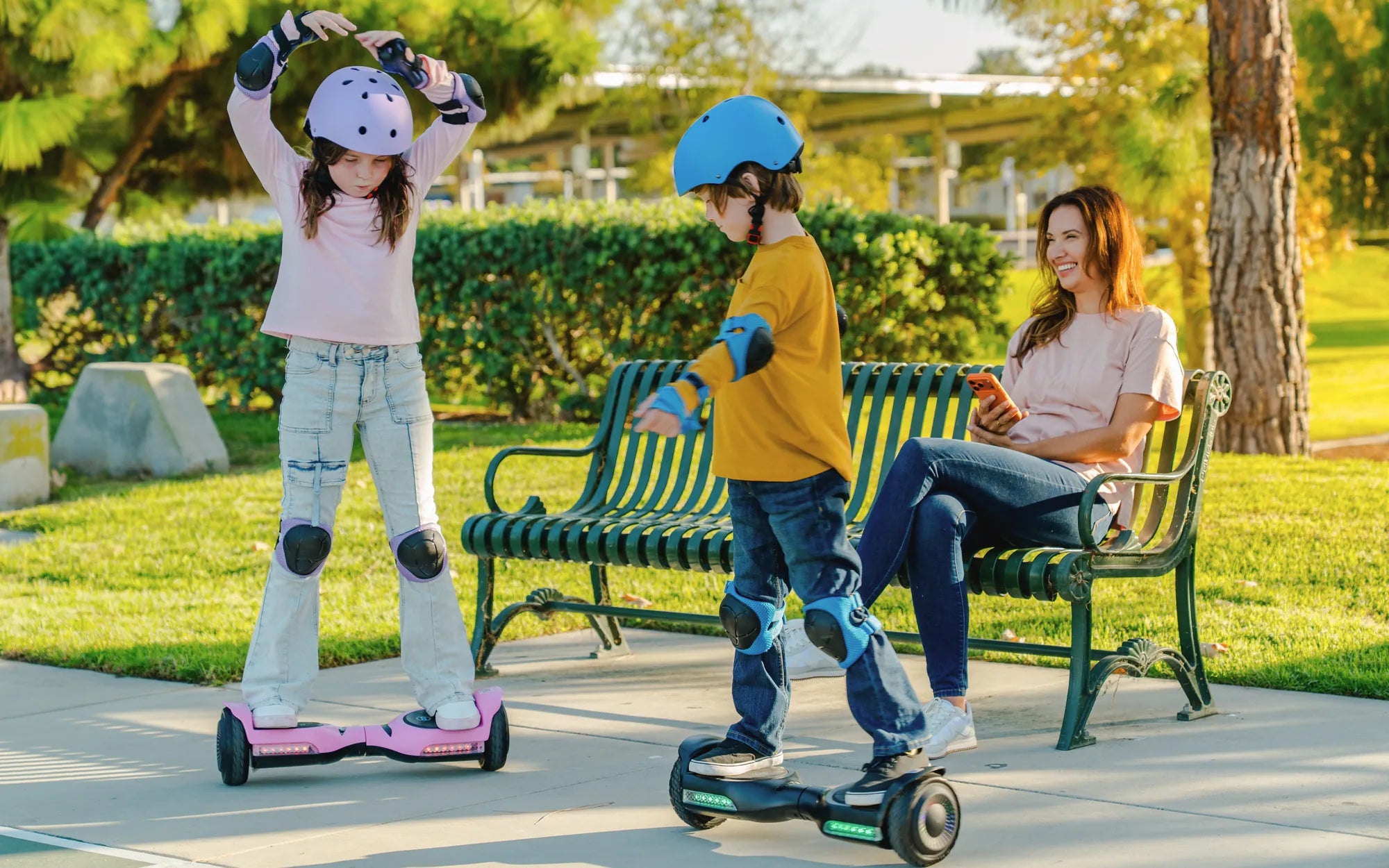
Redefining Off-Road Adventure with Seated Stability
The personal electric vehicle landscape has evolved beyond city sidewalks. For those seeking to traverse dirt trails, grassy fields, and uneven paths, the off-road hoverboard with seat emerges as a revolutionary hybrid. It combines the intuitive, self-balancing mechanics of a hoverboard with the comfort and control of a seated riding position, specifically engineered for challenging terrain.
This vehicle is not a gimmick but a practical tool for adventure and exploration. It answers the demand for a stable, enjoyable way to cover ground where traditional bikes or stand-up scooters might struggle. Brands like Gyroor, a leader in electric scooters and e-bikes trusted by over 100,000 riders, apply their expertise in durable, safe e-mobility to this growing niche.
The core appeal lies in its ability to unlock outdoor spaces with minimal effort. Riders gain access to a unique form of exploration that is both thrilling and accessible. The seated design fundamentally changes the experience, reducing fatigue and increasing confidence on unpredictable surfaces.
This article serves as the definitive guide to the off-road hoverboard with a seat. We will dissect its components, analyze its benefits, and provide the data-driven insights needed to choose a reliable model. From performance specifications to essential safety practices, we cover everything required to make an informed decision for your next adventure companion.
What Is an Off-Road Hoverboard with a Seat? Beyond the Gimmick
An off-road hoverboard with a seat is a powerful, two-wheeled, self-balancing electric vehicle equipped with a dedicated seat attachment. It is designed explicitly for uneven, unpaved surfaces like trails, gravel, grass, and sand. Unlike standard hoverboards meant for smooth pavement, this variant is built with robustness and terrain capability as its primary focus.
The integration of a seat is a critical differentiator. It transforms the riding dynamic from a standing, core-intensive activity into a seated, controlled journey. This design shift expands the vehicle's utility and appeal, making it suitable for longer excursions and a wider range of users, including those who may find balancing on a traditional model challenging.
It is distinct from electric scooters or e-bikes. While some seated scooters exist, the off-road hoverboard operates on a self-balancing gyroscopic system. Riders control speed, direction, and braking through subtle shifts in body weight and pressure on the foot pads, even while seated. This creates a uniquely intuitive and immersive riding experience.
The market for these vehicles is growing as technology improves. Early models faced limitations in power and durability, but modern iterations from established brands feature significant advancements. They offer the reliability needed for genuine outdoor use, moving firmly from novelty to legitimate outdoor recreational vehicle.
Key Components and Design Philosophy
The design of a capable off-road hoverboard with a seat revolves around specific, heavy-duty components working in harmony. Each part is chosen to prioritize stability, traction, and durability on rough ground.
Dual High-Torque Motors: The heart of the system. Each wheel is typically driven by its own motor, often ranging from 500W to 1000W each. High torque is essential for climbing inclines, powering through mud or loose soil, and maintaining control on uneven surfaces.
Large Pneumatic Off-Road Tires: These are not the solid rubber tires of city hoverboards. Off-road models use 10-inch or larger air-filled (pneumatic) tires with deep, rugged tread patterns. They provide essential shock absorption, improve traction, and help roll over obstacles like rocks and roots.
Reinforced Frame and Chassis: The frame must withstand constant vibrations and impacts. It is typically constructed from strengthened aluminum alloy or similar materials. A low center of gravity, aided by the seat position, is crucial for preventing tip-overs during sharp turns or on slopes.
Integrated Seat Post and Saddle: The seat is not an afterthought. It attaches via a sturdy, often adjustable post to a reinforced section of the main frame. The saddle itself is designed for comfort during extended rides, similar to a bicycle seat.
Advanced Gyroscope and Control System: The internal sensor system must be highly responsive and calibrated for the added weight and dynamics of seated riding. It translates lean commands into precise motor adjustments, ensuring smooth acceleration and deceleration.
Why Choose a Seated Off-Road Model? Benefits Over Traditional Stand-Up Versions
The decision to opt for a seated model over a traditional stand-up off-road hoverboard is driven by tangible improvements in comfort, control, and practicality. The seat fundamentally enhances the riding experience for adventure-focused use.
Enhanced Comfort for Longer Rides: Standing on a hoverboard, even on flat ground, engages core and leg muscles continuously. On bumpy trails, this leads to rapid fatigue. A seat allows riders to conserve energy, enabling exploration sessions of 30 minutes to an hour or more without discomfort, vastly expanding your potential adventure radius.
Superior Control and Balance: The seated position offers a more stable platform. With your weight lower and centered, you have a firmer connection to the board. This makes the vehicle significantly easier to learn for beginners and provides expert riders with finer control for navigating technical sections of trail. The risk of being thrown off by an unexpected bump is reduced.
Reduced Rider Fatigue: By eliminating the need for constant muscular stabilization, the seat minimizes physical strain. This means you can focus more on the scenery and the joy of riding, and less on maintaining your posture. It makes the vehicle accessible to a broader age range and fitness level.
Increased Practicality and Utility: A seated hoverboard can function as a legitimate utility vehicle on private property. It's useful for checking fence lines, light trail maintenance, or navigating large campsites. The stable platform can also make it easier to carry a small backpack or other items securely.
Potential for Optimized Range: Because the rider is in a consistent, aerodynamic position and the board operates more efficiently without compensating for a standing rider's micro-movements, some models may achieve a slightly longer range per charge compared to a stand-up version used on the same terrain.
Gyroor's Approach: Engineering for Safety and Durability on Any Terrain
Gyroor's foray into the off-road personal vehicle market is built upon a foundation established with its electric scooters and e-bikes. The brand's core engineering principles—safety, durability, and reliability—translate directly into the demanding context of an off-road hoverboard with a seat.
Safety is paramount when riding on unpredictable terrain. Gyroor ensures this starts with the power source. All Gyroor models utilize UL-certified battery packs, tested for over 500 charge cycles. This certification is critical; it means the battery management system is designed to prevent overheating, overcharging, and short-circuiting, even under the physical stress of off-road vibrations and jolts.
Durability is tested by the elements. An IPX5 water-resistant rating is a key feature. This level of protection means the hoverboard's electrical components can withstand low-pressure water jets from any direction. It protects against splashes from puddles, light rain, and mud, which are inevitable during trail adventures, significantly reducing the risk of water damage.
The brand's commitment is backed by a comprehensive 1-year warranty. This warranty underscores confidence in the product's reliability for adventurous use. For a rider investing in an off-road vehicle, this warranty provides peace of mind, knowing the manufacturer stands behind the durability of the frame, motors, and electronics against defects.
Gyroor's experience in designing for a wide customer base across North America and Europe informs its product development. This translates to vehicles that are not only powerful but also user-friendly, with intuitive controls and built-in safety features like tilt-back warnings at speed limits, which are essential for responsible off-road exploration.
Performance Specs That Matter: What to Look For
Evaluating an off-road hoverboard with a seat requires moving beyond marketing claims to hard performance data. Here are the key specifications that determine real-world capability, with benchmarks for a competent model.
| Specification | Why It Matters | Competent Model Range |
|---|---|---|
| Motor Power (Dual) | Determines torque for hills, mud, and acceleration. | 2x 500W to 2x 1000W |
| Tire Size & Type | Shock absorption and traction on loose surfaces. | 10" or larger, pneumatic (air-filled) |
| Max Incline / Gradeability | Ability to climb hills. Crucial for trail riding. | 25° to 30°+ |
| Range per Charge | Dictates how far you can explore on a single trip. | 15 - 25 miles (terrain dependent) |
| Top Speed | For fun and covering ground; often limited for safety. | 10 - 15 MPH |
| Weight Capacity | Must support rider weight plus any gear. | 220 - 300 lbs |
| Battery Charge Time | Downtime between adventures. | 4 - 6 hours |
| Water Resistance Rating | Protection against trail elements. | IPX4 (splash-proof) minimum, IPX5 ideal |
A model aligning with Gyroor's standards would target the higher end of these ranges, emphasizing robust motors (e.g., 2x 800W), a strong IPX5 rating, and a reliable battery system to ensure consistent performance across the advertised range, even with the added demands of seated off-road use.
Top Use Cases and Adventures: Where Your Seated Hoverboard Excels
The versatility of an off-road hoverboard with a seat unlocks a wide array of environments and activities. It is purpose-built for spaces where traditional vehicles are impractical or too large, offering a silent, electric-powered mode of exploration.
Forest and Park Trails: This is the ideal environment. Well-maintained dirt or gravel paths in state parks, national forests, or local nature reserves become your playground. The seated comfort allows for leisurely enjoyment of the scenery, while the off-road tires handle roots, rocks, and ruts with ease.
Beach and Coastal Paths: Firm, wet sand along the shoreline or dedicated coastal trails are perfect for a seated hoverboard. The wide tires provide stability on semi-soft surfaces. Always check local regulations regarding motorized vehicles on beaches first.
Campgrounds and Large Properties: For camping enthusiasts or those with acreage, it's the ultimate campsite cruiser. Use it to travel from your site to facilities, explore the surrounding campground loops, or efficiently navigate a large rural property for chores or enjoyment.
Snowy Fields (with Caution): With appropriate, deeply treaded tires, a powerful model can handle packed snow or light powder in open fields. This opens up winter exploration possibilities. However, extreme cold reduces battery efficiency, and icy conditions are hazardous.
Outdoor Events and Festivals: On private land hosting large events, these vehicles can provide a fun and efficient way to get around. Their relatively compact size and zero emissions make them suitable for this controlled environment.
Light Utility Work: As mentioned, the stability of the seated model makes it useful for property tasks. It can serve as a quiet, eco-friendly alternative to a gas-powered utility vehicle for checking on animals, inspecting land, or transporting light tools.
Essential Riding Tips and Safety Gear for Off-Road Exploration
Mastering an off-road hoverboard with a seat requires practice and the right protective equipment. Safety is non-negotiable when riding on unpredictable terrain at speed.
Start on Flat, Open Ground: Your first ride should never be on a trail. Find a large, empty, paved parking lot or smooth grassy field. Practice mounting, dismounting, starting, stopping, and making gentle turns while seated. Get accustomed to the sensitivity of the weight-based controls in a safe environment.
Master Seated Balance and Steering: While seated, steering is achieved by leaning your upper body or applying gentle pressure with your legs on the foot pads. Practice figure-eights and sudden stops to build muscle memory. Remember, looking in the direction you want to go helps naturally guide your body.
Gradually Progress to Challenging Terrain: Only after achieving comfort on flat ground should you attempt gentle slopes, then mild off-road conditions like hard-packed dirt. Slowly work up to trails with obstacles. Always walk a new, difficult trail section first to scout for hazards like large holes or drop-offs.
Mandatory Safety Gear: A full-face mountain biking helmet is highly recommended to protect against facial impacts from branches or falls. Always wear knee pads, elbow pads, and sturdy gloves. Wrist guards, while common for skateboarding, can be restrictive for controlling a hoverboard; padded gloves are a better alternative. Wear closed-toe, sturdy shoes.
Ride Within Your Limits and the Environment's: Be aware of battery level and never push so far that you risk running out of power miles from your starting point. Respect trail etiquette, yield to hikers and horses, and avoid environmentally sensitive areas. Never ride on public roads or busy sidewalks where these vehicles are typically not street-legal.
Frequently Asked Questions (FAQ)
Q: Is an off-road hoverboard with a seat difficult to learn?
A: It is generally easier to learn than a stand-up off-road model due to the increased stability provided by the seated position. Most adults can gain basic competency within 30-60 minutes of practice in a safe, open area. Mastery for trail riding requires additional practice to handle uneven terrain confidently.
Q: How does it handle steep hills, mud, and sand?
A: Performance depends on motor power and tire tread. Dual 500W+ motors can typically handle inclines up to 25-30 degrees on dry ground. Deep-tread pneumatic tires provide traction in mud and loose soil. Sand requires wide tires and lower tire pressure; firm wet sand is easier than deep dry sand. Always approach challenging terrain cautiously.
Q: Are these street-legal? Can I ride them on the sidewalk?
A: Laws vary significantly by municipality, state, and country. In most jurisdictions, off-road hoverboards are not legal on public roads, sidewalks, or bike paths. They are designed and intended for use on private property or on designated off-road trails where permitted. Always check and adhere to local regulations.
Q: What is the maintenance routine like?
A: Maintenance is relatively simple but crucial. Regularly check and maintain proper tire pressure (as specified in the manual). Clean the board with a damp cloth after muddy or dusty rides, avoiding direct water jets on seams. Store in a cool, dry place. Follow battery guidelines: avoid full discharges, don't leave it charging unattended for extended periods, and store at a partial charge if not used for weeks.
Q: What is the typical weight and is it portable?
A> Off-road models are heavy due to their robust construction, large motors, and batteries. They typically weigh between 35 and 55 pounds. While they often have a built-in carry handle, they are not easily "portable" in the sense of carrying for long distances. They are best transported in a vehicle to the trailhead or riding location.
Q: Can the seat be removed if I want to stand?
A> On most dedicated models, the seat is a permanent or semi-permanent fixture integral to the frame's design and balance. Some universal aftermarket seat kits exist for standard hoverboards, but for a true off-road model, the design is optimized for seated use. Removing it would compromise the riding geometry and is not recommended.
Your Gateway to Effortless Outdoor Exploration
The off-road hoverboard with a seat stands as a unique and compelling category in personal electric mobility. It successfully bridges the gap between recreational fun and practical utility, offering a stable, comfortable, and exhilarating way to interact with the natural world. By solving the core issues of fatigue and balance associated with stand-up models, it opens up outdoor adventure to a wider audience.
Choosing a model from a brand with a proven track record in durability and safety is the most critical decision. Specifications like UL-certified batteries, IPX5 water resistance, and robust motor power are not just checkboxes—they are the foundation of a reliable adventure companion that won't fail you miles from civilization.
As with any outdoor activity, responsibility is key. Investing in proper safety gear, dedicating time to practice, and respecting the environments you explore will ensure countless hours of enjoyment. This vehicle is more than a toy; it's a key to accessing landscapes with a fresh perspective and a sense of playful freedom.
Ready to discover your next adventure? Explore engineered vehicles built with the safety standards and durable performance that demanding terrain requires. Browse the full Gyroor collection at gyroorboard.com and find the electric companion built to unlock your outdoors.
Pink Hoverboard with Bluetooth: The Ultimate Guide to Stylish and Smart Riding
Good Christmas Gift Ideas for Teen Boys: The Ultimate Guide to 2024