



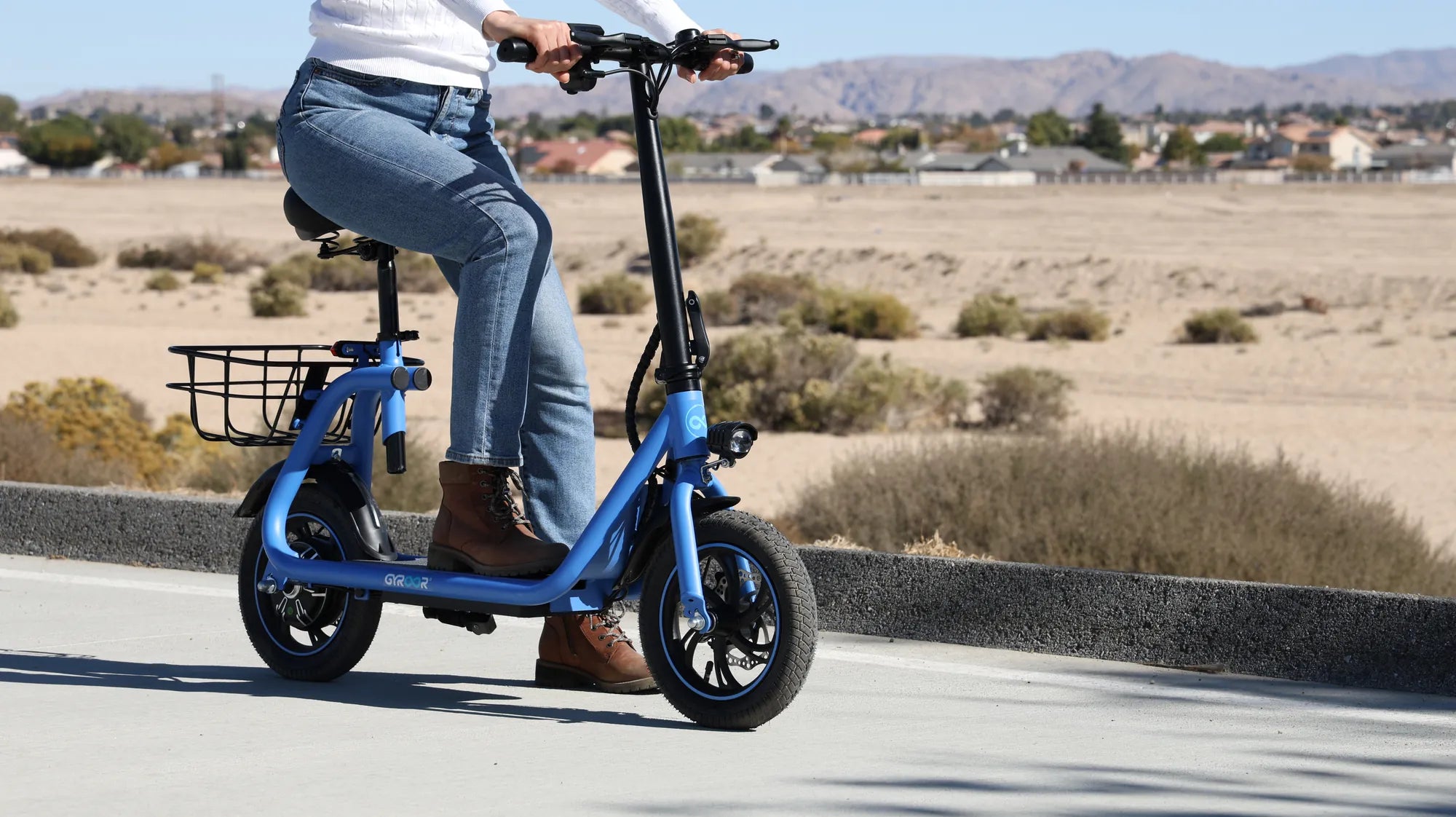
Introduction: Redefining Urban Mobility with Pride Electric Scooters
Urban congestion, rising fuel costs, and environmental concerns are reshaping how adults navigate cities. Pride Electric Scooters for Adults have emerged as the ultimate urban commuting solution, offering a practical, efficient, and enjoyable alternative to traditional transport. This guide examines why these personal electric vehicles are not just a trend but a fundamental shift in urban mobility, providing a reliable way to bypass traffic, reduce expenses, and minimize your carbon footprint. We will reference industry benchmarks, such as those set by leading brands like Gyroor—trusted by over 100,000 riders for UL-certified batteries and robust warranties—to establish what constitutes a quality, safe, and durable scooter for daily adult use.
Why Pride Electric Scooters are the Smart Choice for Adult Commuters
Choosing an electric scooter for your daily commute is a strategic decision with measurable benefits. It transcends mere convenience, impacting your time, finances, and overall quality of life. For adults, a reliable scooter represents a tool for reclaiming control over the daily journey.
The primary advantage is operational efficiency. Unlike public transit with fixed routes and schedules, or cars stuck in gridlock, an electric scooter provides door-to-door autonomy. This translates directly into time saved, which for many commuters can amount to hours per week.
Financially, the savings are substantial when compared to car ownership. The elimination of fuel, parking fees, insurance premiums, and costly maintenance creates a compelling economic argument. Even compared to monthly transit passes, the one-time investment in a quality scooter often pays for itself within a single year.
Beyond logic, there's an undeniable enjoyment factor. The experience of gliding through city streets, feeling the breeze, and engaging with your environment offers a sense of freedom and fun often absent from other forms of commuting. It transforms a chore into a highlight of the day.
Beating Traffic and Saving Time
Traffic congestion is a universal urban challenge. Data from transportation studies consistently show average city driving speeds during peak hours often drop below 15 mph. A Pride electric scooter with a capable motor can easily match or exceed this pace, especially when utilizing bike lanes or paths where legally permitted.
The ability to filter through stationary or slow-moving traffic—where local laws allow—is a game-changer. This point-to-point efficiency eliminates the stop-and-go frustration of car commuting. A 5-mile commute that takes 30 minutes by car in heavy traffic can often be completed in under 20 minutes on a scooter.
This time savings compounds daily. Saving just 20 minutes each way reclaims over 3 hours per week, time that can be reinvested in work, family, or leisure. The scooter’s compact form factor also eliminates time spent searching for parking, further streamlining the journey from origin to destination.
Cost-Effective and Eco-Friendly Transportation
The cost analysis of electric scooter ownership is strikingly favorable. The average cost to operate a standard sedan in the United States exceeds $0.60 per mile when factoring depreciation, fuel, maintenance, and insurance. In contrast, the electricity cost to charge a scooter battery is negligible, often amounting to pennies per charge.
Consider a 10-mile daily round-trip commute. Annual car costs can easily surpass $5,000. A robust Pride electric scooter represents a one-time investment typically between $500 and $1,500, with annual maintenance costs under $100 for tire replacements and minor parts. The payback period is frequently less than 12 months.
Environmentally, the impact is profoundly positive. Electric scooters produce zero direct emissions during operation. Their energy efficiency is exceptional, requiring a fraction of the energy per mile compared to even the most efficient electric car. By choosing a scooter, an individual directly reduces their carbon footprint and contributes to lower urban noise and air pollution.
Key Features to Look for in a Reliable Adult Electric Scooter
Not all electric scooters are built for the rigors of daily adult commuting. Discerning buyers must prioritize specific features that ensure safety, performance, and long-term durability. These components separate a reliable commuting tool from a disposable toy.
The foundation is a robust frame construction, typically from aerospace-grade aluminum alloys, capable of supporting adult weights up to 265 lbs or more. Build quality directly correlates with ride stability and longevity, especially when navigating urban potholes and curbs.
Integration of safety systems is non-negotiable. This includes a comprehensive lighting package (front headlight, rear brake light, and side reflectors) and audible warning devices like a bell or horn. These features are critical for rider visibility and communication in mixed traffic environments.
Finally, consider the user interface. A clear, waterproof display showing speed, battery level, and riding mode is essential. Simple, intuitive controls for power, lights, and braking contribute to a safer, more focused riding experience.
Motor Power, Speed, and Range: Matching Your Commute
Motor performance dictates the scooter's capability. For adult commuters navigating varied urban terrain, a motor in the 350W to 500W range is considered the sweet spot. A 350W motor can handle moderate inclines, while a 500W or dual-motor setup provides confident acceleration and hill-climbing power for cities with steeper gradients.
Top speed should align with local regulations and safety. Most urban areas regulate e-scooters to speeds between 15 and 25 mph. A scooter with a top speed of 19-22 mph offers a balance of legal compliance and practical efficiency, allowing you to keep pace with city traffic flow safely.
Range is the most critical spec for commuters. Manufacturers advertise maximum range under ideal conditions. For real-world planning, assume a 20-30% reduction. Calculate your total daily round-trip distance and add a 30% buffer. If your commute is 8 miles round-trip, seek a scooter with a manufacturer-rated range of at least 15 miles to account for variables like rider weight, hills, temperature, and frequent acceleration.
Safety and Durability: Non-Negotiable Essentials
Safety is paramount. The braking system should be a dual or triple setup, commonly combining an electronic regenerative brake with a mechanical disc or drum brake. This redundancy ensures reliable stopping power in all conditions, including wet weather.
Tire choice significantly affects safety and comfort. Larger, air-filled pneumatic tires (8.5 to 10 inches) provide better shock absorption, traction, and stability over cracks and uneven surfaces than smaller, solid tires. Some models add front or dual suspension to further smooth the ride.
Durability is defined by ingress protection (IP) ratings. For all-weather commuting, an IPX5 rating or higher is essential. This certifies the scooter can withstand water jets from any direction, making it safe to ride in rain or through puddles. Brands like Gyroor build to this IPX5 standard, ensuring core components are protected from the elements.
Battery Safety and Warranty: Investing with Confidence
The battery is the heart of the scooter and the component where safety cannot be compromised. Insist on a scooter that uses UL 2271 or UL 2843 certified lithium-ion battery packs. This independent certification rigorously tests for electrical, mechanical, and environmental safety, drastically reducing any risk of thermal events.
Battery quality also dictates longevity. High-quality cells from reputable manufacturers can sustain 500+ full charge cycles while retaining over 80% of their original capacity. This translates to several years of daily use before noticeable range degradation.
A comprehensive warranty is your protection. Look for a minimum 1-year warranty that covers the battery, motor, and controller. This demonstrates the manufacturer's confidence in their product. A trustworthy warranty, like the industry-standard 1-year coverage offered by established brands, safeguards your investment and provides peace of mind for your daily commute.
Pride Electric Scooters in Action: Ideal Use Cases and Scenarios
The utility of an adult electric scooter extends far beyond a simple home-to-office trip. Its versatility makes it a valuable multi-purpose asset for urban living, replacing numerous short vehicle trips and enhancing personal mobility in various contexts.
As a primary commuting vehicle, it offers unmatched door-to-door efficiency for distances up to 10-12 miles each way. For longer distances, it seamlessly integrates with public transit systems, solving the critical first-and-last-mile challenge that often discourages multimodal travel.
On weekends, the scooter transforms into a tool for leisure and errands. It enables quick trips to local cafes, grocery stores, or friends' houses without the hassle of parking. It also opens up new avenues for urban exploration, allowing riders to cover more ground than walking while remaining connected to their surroundings in a way a car does not permit.
The Last-Mile Champion
The "last-mile problem" refers to the inefficient final leg of a journey from a transportation hub to the ultimate destination. Pride electric scooters are the perfect solution. They can be folded and carried onto a train or bus, then deployed for the final 1-3 miles to the office, home, or appointment.
This multimodal approach combines the long-distance efficiency of mass transit with the personal, flexible mobility of a scooter. It expands the practical radius of every transit station, making public transportation a viable option for more people and reducing reliance on ride-sharing services for short hops.
The key here is portability. A good commuting scooter should feature a reliable, one-step folding mechanism and a manageable weight (ideally under 35 lbs) to facilitate easy carrying for short distances, such as up a flight of stairs or through a train station.
Urban Exploration and Weekend Errands
For weekend errands, an electric scooter with a optional carry bag or sufficient deck space can easily accommodate a grocery run for one or two people. It eliminates the need to use a car for short trips, which are often the least efficient and most polluting due to cold starts and short distances.
Urban exploration becomes an adventure. Riders can navigate through parks with paved paths, along riverfront trails, or through historic districts at a perfect sightseeing pace. The quiet operation of an electric motor allows you to enjoy the city's sounds without the intrusion of a gasoline engine.
This recreational use underscores the scooter's role in promoting a more active and engaged lifestyle. While not strenuous, riding requires balance and core engagement, and it encourages people to spend more time outdoors, reconnecting with their city in a novel and enjoyable way.
Making an Informed Decision: How to Choose Your Perfect Model
Selecting the right Pride electric scooter requires a systematic assessment of your personal needs against the specifications and features available. This decision-making process ensures your chosen model will be a satisfying long-term companion, not a source of compromise or frustration.
Begin by defining your primary use case. Is this purely for a daily commute? Do you need multimodal portability? Will you use it on rough pavement or gentle hills? Your answers will immediately narrow the field, emphasizing factors like range, weight, motor power, and suspension.
Next, establish a realistic budget. While cost is a factor, view your scooter as a transportation investment. Spending slightly more for critical features like a UL-certified battery, better water resistance, and a longer warranty often yields significantly higher value and safety over the product's lifespan.
Finally, research and compare. Read in-depth reviews from trusted sources and actual owners. Pay attention to comments about real-world range, customer service experiences, and long-term durability. This qualitative data is as important as the quantitative spec sheet.
Assessing Your Personal Needs: A Quick Checklist
Answer these questions before you start shopping:
- Daily Distance: What is your total round-trip commute distance? Add 30% as a buffer.
- Terrain: Is your route flat, or does it include hills? Steeper grades demand more motor power (500W+).
- Portability: Will you need to carry the scooter onto public transit or up stairs? Target models under 35 lbs.
- Storage & Charging: Do you have secure indoor storage at both ends of your trip? Where will you plug it in?
- Rider Profile: What is your weight? Ensure the scooter's maximum payload exceeds it comfortably.
- Climate: Will you ride in rain? An IPX5 or higher water-resistance rating is mandatory.
Understanding the Spec Sheet: A Simple Guide
Deciphering technical specifications is crucial. Here’s a plain-English guide to key terms:
- Motor Wattage (W): Indicates power output. Higher wattage (e.g., 500W vs. 350W) means better acceleration and hill-climbing ability.
- Watt-Hours (Wh): A measure of battery capacity (Voltage x Amp-hours). A higher Wh number generally means a longer potential range.
- Torque (Nm): The rotational force of the motor. Higher torque improves starting acceleration and hill performance.
- Payload Capacity: The maximum recommended rider weight. Choose a scooter rated for at least 30-50 lbs more than your weight for safety and longevity.
- IP Rating: Ingress Protection. IPX5 means protected against water jets. The first digit (omitted if X) refers to solid particle protection.
Comparison of Pride Electric Scooter Use Cases
| Primary Use Case | Recommended Motor Power | Key Feature Priority | Ideal Range | Portability Need |
|---|---|---|---|---|
| Short Last-Mile / Multimodal | 250W - 350W | Lightweight Folding, Compact Size | 10-15 miles | High (Easy Carry) |
| Standard Urban Commute (Flat) | 350W - 500W | Reliable Range, Comfort, IP Rating | 15-25 miles | Medium |
| Hilly City Commute / Performance | 500W+ or Dual Motor | High Torque, Strong Brakes, Suspension | 20-30+ miles | Low to Medium |
| Weekend Errands & Recreation | 350W - 500W | Comfort, Stability, Deck Space | 15-20 miles | Low |
Frequently Asked Questions (FAQ) About Adult Electric Scooters
Q1: Are Pride electric scooters legal to ride on roads and bike lanes?
Laws vary significantly by city, state, and country. In most urban areas in the US and Europe, electric scooters are permitted in bike lanes and on roads with speed limits at or below 25-35 mph. They are typically prohibited on sidewalks. Always check your local municipal regulations regarding maximum speed limits, helmet requirements, age restrictions, and where scooters are specifically allowed to operate before riding.
Q2: How long does the battery take to charge, and what is its typical lifespan?
Charging time depends on battery capacity. A standard 36V/10.4Ah battery takes approximately 4-6 hours for a full charge from empty. Lifespan is measured in charge cycles. A quality UL-certified lithium-ion battery, like those used by reputable brands, can deliver 500+ full charge cycles while maintaining over 80% of its original capacity, translating to 2-4 years of daily use with proper care (avoiding full discharges and extreme temperatures).
Q3: What is the recommended maintenance routine for an electric scooter?
Regular maintenance is simple but critical. Perform a pre-ride check of tire pressure, brake function, and light operation. Every few weeks, inspect and tighten bolts (especially on the stem and folding mechanisms). Keep tires inflated to the recommended PSI. Clean the scooter with a damp cloth, avoiding direct water spray on electronic parts. Annually, or after 500 miles, have a professional or skilled individual check brake pad wear, bearing condition, and electrical connections.
Q4: Can they handle hills and slightly rough pavement?
Yes, but capability depends on motor power and design. A scooter with a 500W or larger motor can handle moderate hills (up to 15-20% grade). For consistently hilly terrain, a dual-motor model is recommended. Handling rough pavement is improved by larger pneumatic tires (8.5"+) and front or dual suspension, which absorb vibrations and impacts, providing a safer and more comfortable ride than small, solid tires.
Q5: What safety gear is recommended for adult riders?
A helmet is an absolute necessity; a certified bicycle or multi-impact helmet is the minimum standard. For commuters, consider a full-face helmet for added protection. Other highly recommended gear includes durable gloves, knee and elbow pads, and closed-toe shoes with good grip. High-visibility clothing or reflective accessories are also advised for riding in low-light conditions to ensure you are seen by other road users.
Conclusion: Your Ticket to a Smarter, More Enjoyable Commute
Pride Electric Scooters for Adults represent a logical and liberating evolution in personal urban transportation. By prioritizing key features like UL-certified battery safety, robust motor performance, and all-weather durability, you invest in a tool that delivers daily value through saved time, reduced costs, and enhanced personal freedom. The ultimate urban commuting solution is not just about getting from point A to point B; it's about reclaiming your time, reducing your environmental impact, and rediscovering the joy of moving through your city. As you evaluate your options, let safety certifications, comprehensive warranties, and proven performance guide your decision towards a model that will reliably serve you for years to come.
Ready to transform your daily commute? Explore a curated selection of high-performance, safety-focused electric scooters and e-bikes designed for adult riders. Browse the full Gyroor collection at gyroorboard.com to find your perfect match for urban mobility.
How Fast Do Razor Electric Scooters Go: Speed, Safety, and Performance Explained
Where Can You Buy Electric Scooters? Top Places to Find Your Perfect Ride