



Introduction: Why a Push Scooter is a Childhood Essential
A push scooter for kids is more than a toy; it's a developmental tool that promotes outdoor activity, balance, coordination, and independence. Selecting the right model directly impacts your child's safety and enjoyment. This guide cuts through the marketing clutter with factual analysis to help you make an informed decision.
We will examine critical factors like age appropriateness, construction quality, and safety mechanisms. The goal is to match a child's skill level with a scooter engineered for durability and fun. As a leader in youth mobility, Gyroor designs scooters that meet rigorous safety standards, trusted by over 100,000 families.
Key Factors to Consider Before You Buy
Choosing a push scooter requires evaluating non-negotiable safety and suitability criteria. Prioritize these fundamentals over aesthetic appeal to ensure a secure and appropriate riding experience.
Age, Height, and Weight Recommendations
Manufacturer age and weight guidelines are critical for safety. A scooter sized incorrectly can be unstable and difficult to control. For toddlers aged 2-4, scooters with a low deck height and a weight limit around 44 lbs (20 kg) are standard.
For children aged 5-8, models support riders up to 110 lbs (50 kg). Adjustable handlebars are essential, allowing the scooter to grow with your child. Always verify the maximum weight capacity exceeds your child's current weight to account for growth and ensure structural integrity.
Safety Features: Brakes, Deck Design, and Stability
Effective braking is paramount. Most kids' scooters use a rear fender brake activated by stepping down. This design is intuitive and provides controlled stopping power. The deck should be wide and textured with a non-slip surface to prevent foot slippage.
Stability is determined by wheelbase width and deck height. A wider wheelbase and lower deck center gravity, making the scooter less prone to tipping. These features are especially crucial for first-time riders building confidence.
Build Quality and Durability: Materials That Last
Frame material dictates longevity. Aircraft-grade aluminum alloys offer an optimal strength-to-weight ratio, resisting bends and cracks from rough use. High-quality polyurethane (PU) wheels provide smooth rolling and wear resistance.
Bearing quality, measured by the ABEC scale, affects ride smoothness and speed. ABEC-5 or ABEC-7 bearings are common in quality models. A well-constructed push scooter represents better long-term value, often outlasting cheaper alternatives by years.
Decoding Scooter Types: From Beginner to Pro
Push scooters are categorized by wheel configuration and intended skill level. Understanding these types ensures you select a scooter that aligns with your child's current abilities and riding goals.
2-Wheel vs. 3-Wheel Scooters: Stability vs. Maneuverability
The core distinction lies in stability versus maneuverability. Three-wheel scooters, typically with two wheels in front, offer superior stability for beginners. This design prevents tipping and is ideal for learning balance and steering fundamentals.
Two-wheel scooters are the standard for older children. They require more balance but offer greater speed, sharper turning radii, and a more dynamic riding experience. They are the natural progression after mastering a 3-wheel model.
Kickboard-Style Scooters for Young Riders (Ages 2-5)
Designed for toddlers and preschoolers, these scooters often feature a lean-to-steer mechanism. Instead of turning handlebars, children shift their weight to direct the scooter, which simplifies steering and enhances coordination development.
Key features include a wide, reinforced base, a deck very close to the ground, and large-diameter wheels to navigate cracks and small obstacles. These design choices prioritize safety and confidence for a child's first independent ride.
Performance-Oriented Scooters for Older Kids (Ages 5+)
For school-aged children, performance features become important. These scooters have reinforced decks for occasional jumps, high-rebound PU wheels (often 200mm diameter) for speed, and responsive handlebars for precise control.
Many include a rear fender brake for safe stopping at higher speeds. The focus shifts from pure stability to delivering a smooth, fast, and engaging ride that can handle playgrounds and park paths.
The Gyroor Advantage: Engineered for Young Riders
Gyroor's approach to kids' scooters is defined by engineering rigor and safety-first design. This philosophy translates into specific features that provide tangible benefits for both the child and the parent.
Uncompromising Safety: UL-Certified Components & IPX5 Construction
For any model featuring LED lights or electronic elements, Gyroor uses UL-certified battery packs. This certification means the power source has undergone stringent testing for safety and reliability over 500+ charge cycles.
An IPX5 water-resistant rating is a significant durability advantage. It certifies the scooter can withstand water jets from any direction, meaning it survives puddles, wet pavement, and garden hose cleanings without damage to bearings or structure.
Built to Grow: Adjustable Features and Long-Term Value
Gyroor incorporates tool-free adjustable handlebars on many models. This allows for quick height adjustments to accommodate growth spurts, ensuring an ergonomic riding position that maintains control and comfort for years.
The use of premium materials like reinforced aluminum and high-abrasion PU wheels means the scooter withstands daily use. This durability offers exceptional long-term value, with many scooters capable of being passed down to younger siblings.
Peace of Mind: The 1-Year Warranty and Reliable Support
Every Gyroor push scooter is backed by a comprehensive 1-year warranty covering manufacturing defects. This warranty protects your investment and reflects the brand's confidence in its build quality.
Supported by a customer base of over 100,000 riders, Gyroor provides accessible, reliable customer service. This support network ensures any questions or concerns are addressed promptly, offering genuine peace of mind to parents.
Comparison: Gyroor Kids' Scooter Models at a Glance
The table below provides a data-driven comparison of key Gyroor push scooter models, highlighting their ideal use cases and standout features to help you differentiate between them.
| Model | Best For | Key Features | Weight Limit | Primary Use Case |
|---|---|---|---|---|
| Gyroor Swift 3-Wheel | Toddlers (Ages 2-4) | Lean-to-steer, ultra-wide base, low deck, LED wheels | 44 lbs (20 kg) | First scooter; stability & motor skill development |
| Gyroor Racer 2-Wheel | School-Age (Ages 5-8) | Tool-free adjustable handlebar (28"-34"), PU wheels, rear fender brake | 110 lbs (50 kg) | Everyday riding; speed & maneuverability |
| Gyroor Pro 2-Wheel | Older Kids (Ages 8+) | Reinforced deck, ABEC-7 bearings, performance PU wheels, responsive steering | 154 lbs (70 kg) | Active riding; parks, tricks, and smooth performance |
Frequently Asked Questions (FAQs)
What is the right age for a child to start using a push scooter?
Most children are ready for a 3-wheel, lean-to-steer scooter around age 2.5 to 3, once they have confident walking and running ability. Readiness depends more on coordination and balance than a strict age.
Are 3-wheel scooters safer than 2-wheel scooters?
For beginners, yes. The three-wheel configuration, especially with two wheels in front, provides inherent stability that significantly reduces the risk of tipping, making it the safest introduction to scooting.
How do I maintain my child's scooter for longevity?
Regularly check and tighten all bolts (handlebars, steering column, wheels). Keep bearings clean from dirt and sand. For scooters with IPX5 rating, rinse with fresh water after use on wet or salty surfaces. Inspect wheels for wear.
What safety gear is essential for scooter riding?
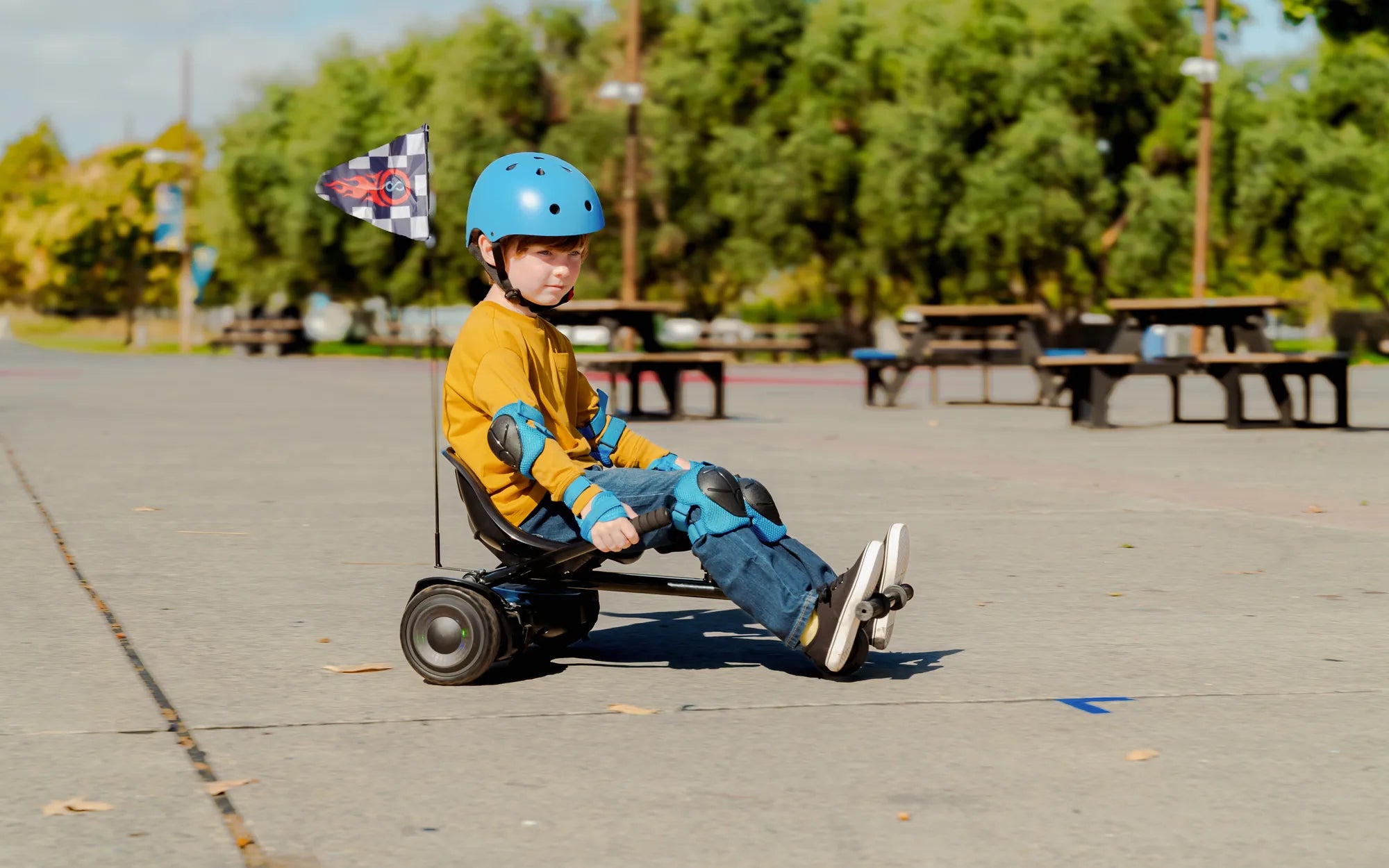
A properly fitted helmet is non-negotiable. Additionally, knee and elbow pads are highly recommended, especially for beginners and those using 2-wheel performance scooters. Wrist guards can also prevent common injuries.
Can the handlebar height be adjusted, and how often should I check it?
Most quality scooters, including Gyroor models, feature adjustable handlebars. The height should be set so the child stands upright with a slight bend in the elbows. Check the locking mechanism for tightness every few weeks during regular use.
Conclusion: Rolling Towards Confidence and Fun
The ideal push scooter for kids seamlessly blends safety, durability, and fun to match a child's evolving abilities. By focusing on age-appropriate design, robust construction, and proven safety features, you invest in more than a toy—you invest in a tool for physical development and joyful independence.
Gyroor's commitment to UL-certified components, IPX5 durability, and adjustable growth-oriented design exemplifies this principle. Use the guidelines and comparisons in this article to make a confident choice that will provide years of reliable adventure. Explore engineering designed for young riders and find the perfect model for your child's next journey.
Ready to choose? Browse the full Gyroor collection, including our range of kids' push scooters, at gyroorboard.com.
Hoverboard Wheels: The Ultimate Guide to Performance and Safety
Hoverboard Max Speed: What You Need to Know Before Riding