

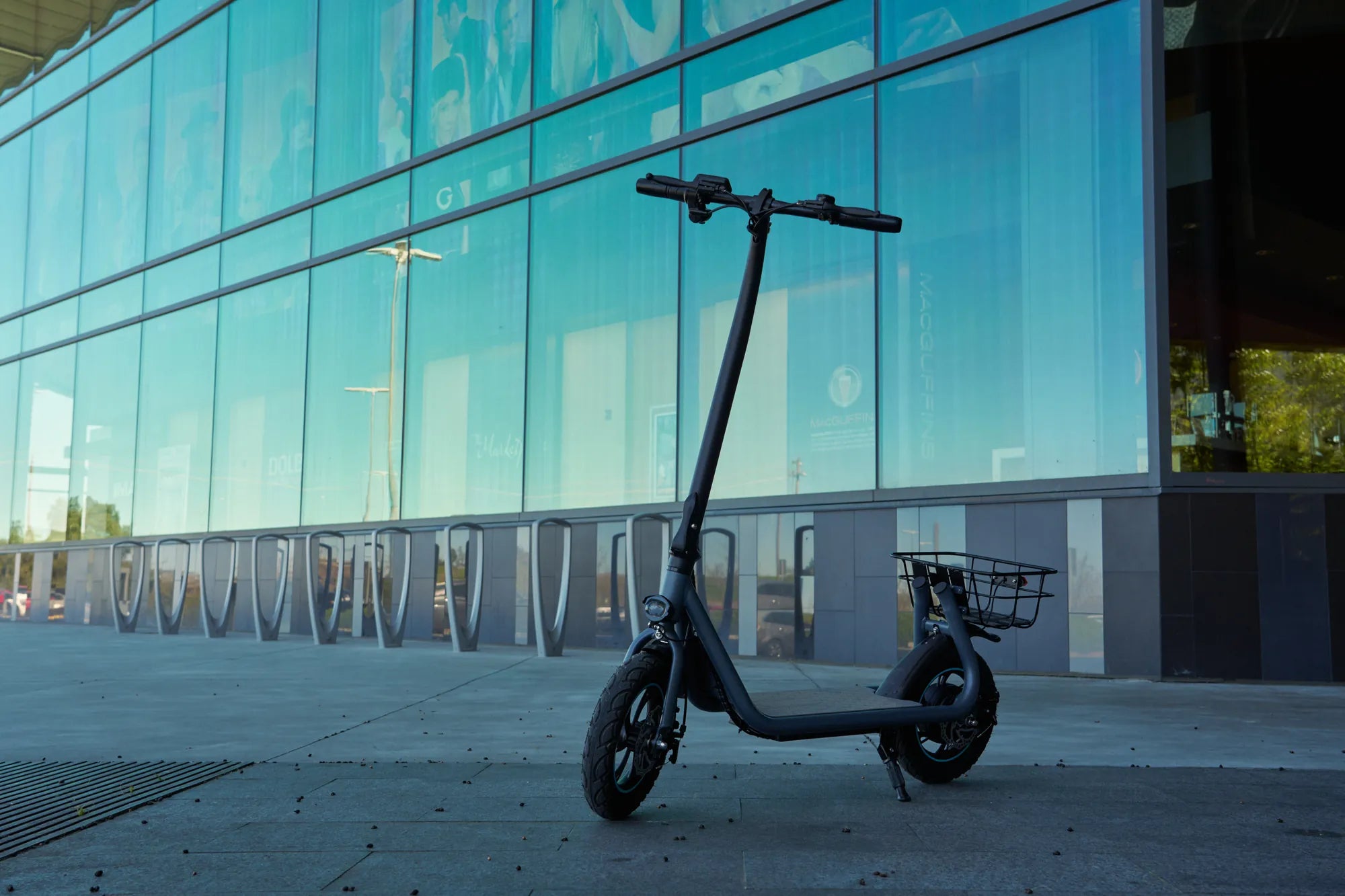
What is a Quick Trike and Why It's Changing Urban Mobility
A quick trike is a three-wheeled electric vehicle, typically configured with two wheels at the front and one at the rear, engineered to deliver unparalleled stability and utility for daily travel. This design fundamentally addresses the primary limitations of traditional two-wheeled electric scooters and bikes: balance anxiety and lack of cargo space. For urban commuters, errand runners, and those seeking a more accessible entry into electric mobility, the quick trike represents a pragmatic evolution, blending the agility of a scooter with the planted confidence of a trike.
The core innovation lies in its geometry. The dual front wheels create a stable triangle with the road, eliminating the need to put a foot down at stops and dramatically reducing the risk of tipping over during low-speed maneuvers or on uneven surfaces. This inherent stability is the cornerstone of its appeal, opening up electric personal transport to a broader demographic who may have been hesitant to try a two-wheeler.
Beyond stability, the platform is designed for practicality. Most models integrate a rear cargo rack, a front basket, or both, transforming the vehicle from a simple commuter into a legitimate car replacement for local trips. Whether it's a grocery run, transporting a work bag and laptop, or carrying parcels, the quick trike handles it with ease. Its rise is directly tied to the growing demand for versatile, sustainable, and cost-effective micro-mobility solutions that fit seamlessly into daily life.
This guide will provide a comprehensive analysis of the quick trike, from its mechanical anatomy to its real-world applications. You will learn how it compares to other electric vehicles, who benefits most from its design, and what critical specifications to evaluate before making a purchase. The goal is to equip you with the knowledge to determine if a quick trike is the smart upgrade for your urban transportation needs.
The Anatomy of a Gyroor Quick Trike: Built for Stability and Performance
Understanding the engineering behind a quality quick trike is key to appreciating its value. Leading brands like Gyroor design these vehicles around a core philosophy of safety, durability, and rider-centric functionality. The construction is more robust than a standard e-scooter, reflecting its role as a daily workhorse rather than a last-mile toy.
The chassis is the foundation. A high-strength steel or aluminum frame forms the stable three-point platform. The two front wheels are typically connected via a steering linkage that ensures they turn in unison, providing predictable handling. This configuration, often called a reverse trike, offers superior straight-line stability and braking performance compared to a single-front-wheel design. The rider's position is upright and commanding, with a low center of gravity that further enhances control.
Key Components Explained
Several critical components define the performance and safety of a modern quick trike. First is the powertrain. A robust rear-hub motor, ranging from 500W to 750W, provides ample torque for hill climbs and acceleration while maintaining a clean front-end design for steering. This motor is paired with a UL-certified lithium-ion battery pack, a non-negotiable safety feature. These batteries undergo rigorous testing for over 500 charge cycles and are built with advanced management systems to prevent overheating, ensuring long-term reliability and peace of mind.
Stopping power is equally crucial. Hydraulic or mechanical disc brakes on all three wheels are standard on performance models, offering consistent, all-weather braking force that is essential for a heavier, cargo-carrying vehicle. Complementing this is the suspension system. Front dual-spring or hydraulic suspension absorbs road imperfections, while a rear shock ensures a comfortable ride even when the cargo rack is loaded.
Practical features complete the package. An IPX5 water-resistant rating protects the electrical components from rain and road spray, making four-season riding a reality. Integrated lighting—bright LED headlights, brake lights, and turn signals—enhances visibility and safety. Finally, the utilitarian aspect is fulfilled with a welded rear rack capable of carrying 55+ lbs and often a front-mounted basket, turning the quick trike into a true utility vehicle.
Quick Trike vs. Traditional E-Scooters and E-Bikes: A Data-Driven Comparison
Choosing the right electric vehicle requires a clear understanding of trade-offs. The quick trike occupies a unique niche between the ultra-portable e-scooter and the traditional e-bike. The following table and analysis break down the key differences to help you match the vehicle to your lifestyle.
| Feature | Quick Trike (2F/1R) | Traditional E-Scooter | Traditional E-Bike |
|---|---|---|---|
| Primary Strength | Stability & Cargo Utility | Portability & Nimbleness | Range & Familiar Form |
| Learning Curve | Very Low (Inherently stable) | Moderate (Requires balance) | Low (Like a bicycle) |
| Cargo Capacity | High (Integrated rack/basket) | Very Low (Rider must carry bag) | Moderate-High (With add-ons) |
| Low-Speed/Stop Stability | Excellent (No need to balance) | Poor (Must put foot down) | Poor (Must put foot down) |
| Footprint & Storage | Larger, may be semi-foldable | Compact, highly foldable | Large, rarely foldable |
| All-Weather Confidence | High (Wide stance, IPX5 rating) | Lower (Narrow tires, less stable) | Moderate (Depends on bike type) |
| Typical Price Range | $$$ (More complex build) | $-$$ (Wide range) | $$-$$$$ (Very wide range) |
The quick trike is the undisputed champion for riders who prioritize stability above all else. Its three-wheeled design eliminates the balancing act required at traffic lights or during slow, crowded path navigation. This makes it ideal for those with mobility concerns or anyone who simply wants a stress-free, confident ride. The built-in cargo solutions are a game-changer for practical daily use, something most e-scooters lack entirely.
However, the trade-off is portability. While some models feature a folding mechanism, a trike will always have a larger footprint and be heavier than a comparable e-scooter. If your commute involves carrying the vehicle onto public transit or storing it in a very tight space, a traditional e-scooter might be more practical. E-bikes, conversely, offer greater range and a more traditional cycling experience but lack the instant, zero-balance stability of a trike and often require additional purchases for cargo capacity.
Who is the Quick Trike For? Ideal Use Cases and Riders
The versatility of the quick trike makes it suitable for a diverse range of riders, but it excels in specific, practical scenarios. It's the vehicle of choice for those who view electric mobility not just as recreation, but as a functional tool for daily life.
The Urban Errand Runner & Grocery Getter
For the individual seeking to reduce car dependency for local trips, the quick trike is a perfect solution. The stable platform allows you to load up the rear rack and front basket with groceries, shopping bags, or even a small pet carrier without worrying about the vehicle becoming unwieldy. The ability to carry a week's worth of groceries or a large laundry basket transforms short car trips into efficient, emission-free errands. It turns the chore of shopping into a pleasant, open-air experience.
The Commuter Seeking All-Weather Confidence
Daily commuters face variable conditions: wet roads, fallen leaves, light gravel, or morning frost. The dual front wheels of a quick trike provide a significant safety advantage in these conditions by resisting slippage and offering a more confident grip. Combined with an IPX5 water-resistant rating that protects the electronics from rain, this makes the trike a reliable four-season commuter. It reduces the "fear factor" associated with two-wheeled vehicles on slick surfaces, ensuring you arrive at work steady and secure.
The Rider Prioritizing Accessibility and Ease of Use
Accessibility is a major, often overlooked, benefit. The step-through frame design common on many models eliminates the need to swing a leg over a high bar. The inherent stability means riders with balance issues, limited core strength, or those who are simply new to powered vehicles can learn to operate it in minutes, not days. This opens up the freedom and joy of electric mobility to older adults, individuals in rehabilitation, or anyone who has been hesitant to try a two-wheeled option. It’s a gateway to independent, active transportation.
What to Look for When Buying Your First Quick Trike: A Buyer's Checklist
Investing in a quick trike requires careful consideration of specifications that directly impact safety, performance, and longevity. Use this checklist to evaluate models and ensure you select a vehicle that meets your needs for years to come.
1. UL-Certified Battery System: This is the most critical safety feature. Insist on a battery pack that is certified by UL (Underwriters Laboratories) or an equivalent international standard. This certification guarantees the battery has passed stringent tests for electrical, mechanical, and environmental safety, drastically reducing fire risk. Gyroor, for instance, uses UL-certified packs tested for 500+ cycles as a core component of their design philosophy.
2. IP Water Resistance Rating: For real-world utility, a rating of IPX5 is a practical minimum. This means the vehicle can withstand water jets from any direction, making it safe to ride in the rain and through puddles. Avoid models with no rating or a low rating (like IPX4), as they are not suited for daily commuting in variable weather.
3. Warranty and Customer Support: A comprehensive warranty is a sign of manufacturer confidence. Look for at least a 1-year warranty covering the frame, battery, and motor. Equally important is accessible customer support and the availability of replacement parts. A brand with a proven track record of supporting over 100,000 riders, like Gyroor, offers significant long-term value.
4. Motor Power and Real-World Range: Match the motor (e.g., 500W, 750W) to your local terrain. Hilly cities demand more torque. Advertised range is often based on ideal conditions; subtract 15-20% for a realistic estimate accounting for cargo, hills, and frequent stops. Ensure the range comfortably covers your typical round-trip distance.
5. Cargo Capacity and Design: Check the maximum weight rating for the rear rack and any front basket. A sturdy, welded rack is preferable to a clamped-on accessory. Consider how you'll secure cargo—are there built-in bungee points or does it require separate straps?
6. Test Ride Considerations: If possible, test ride to assess the turning radius (it will be wider than a scooter), the feel of the stability at low speed, the comfort of the suspension, and the responsiveness of the brakes. The ride should feel confident and planted, not tippy or cumbersome.
Quick Trike FAQ: Your Top Questions, Answered
Q: Do I need a license, registration, or insurance to ride a quick trike?
A: In most regions in North America and Europe, quick trikes that are speed-limited (e.g., to 20 mph / 32 km/h) and have functional pedals or are classified as a low-speed electric bicycle (Class 2) do not require a license, registration, or insurance. However, laws vary by state, province, and country. Always check your specific local regulations before riding.
Q: How does it handle on hills?
A: A quick trike with a 500W or higher motor typically handles moderate hills very well. The rear-wheel drive provides direct power, and the stable platform prevents the front end from lifting. For very steep hills, a 750W motor is recommended. The weight of the trike and cargo will also affect hill-climbing performance.
Q: Can I ride a quick trike on bike paths and multi-use trails?
A: Generally, yes. Since most quality quick trikes are classified similarly to electric bicycles (when speed-limited), they are permitted anywhere a traditional e-bike is allowed. This includes bike lanes, multi-use paths, and most parks. It is always courteous to ride at a safe speed and yield to pedestrians.
Q: Is it difficult to turn or maneuver compared to a two-wheeler?
A: It is different, not necessarily difficult. The turning radius is wider, so U-turns require more space. However, low-speed maneuvering is easier because you don't have to balance. Riders adapt to the steering feel quickly, often within the first few rides. The trade-off is stability for slightly less agility in very tight spaces.
Q: How do I store and transport a quick trike?
A> Many models feature a folding mechanism that collapses the handlebars and sometimes the frame, reducing its footprint for storage in a garage, shed, or apartment. Due to its size and weight, transporting it in a car usually requires a pickup truck, a large SUV, or a hitch-mounted bike rack rated for heavy e-bikes. Consider your storage space before purchasing.
The Future of Urban Mobility and Your Next Step
The quick trike is more than a novelty; it is a mature, purpose-driven answer to the limitations of first-generation electric micro-mobility. It represents a shift towards vehicles designed for practical integration into daily life, prioritizing safety, utility, and accessibility over mere sport or minimalism. For cities aiming to reduce congestion and emissions, stable, cargo-capable vehicles like these are essential components of a sustainable transportation ecosystem.
By offering a confident ride in all weathers, the capacity to replace car trips for errands, and an accessible entry point for a wider population, the quick trike solidifies its role in the future of personal transport. It is the logical choice for the pragmatic rider who values function and reliability alongside the freedom and efficiency of electric power.
If the blend of unwavering stability, practical cargo space, and all-weather capability aligns with your transportation needs, exploring a reputable quick trike is your logical next step. For a range of models built with UL-certified battery safety, IPX5 water resistance, and the robust construction trusted by a global community of riders, you can begin your journey by exploring proven options. Browse the full Gyroor collection at gyroorboard.com to find the reliable electric companion designed for the demands of real-world riding.
Mini Scooter for Toddlers: The Ultimate Guide to Safe, Developmental Fun
3000 Watt E Bike: The Ultimate Guide to High-Power Electric Cycling