


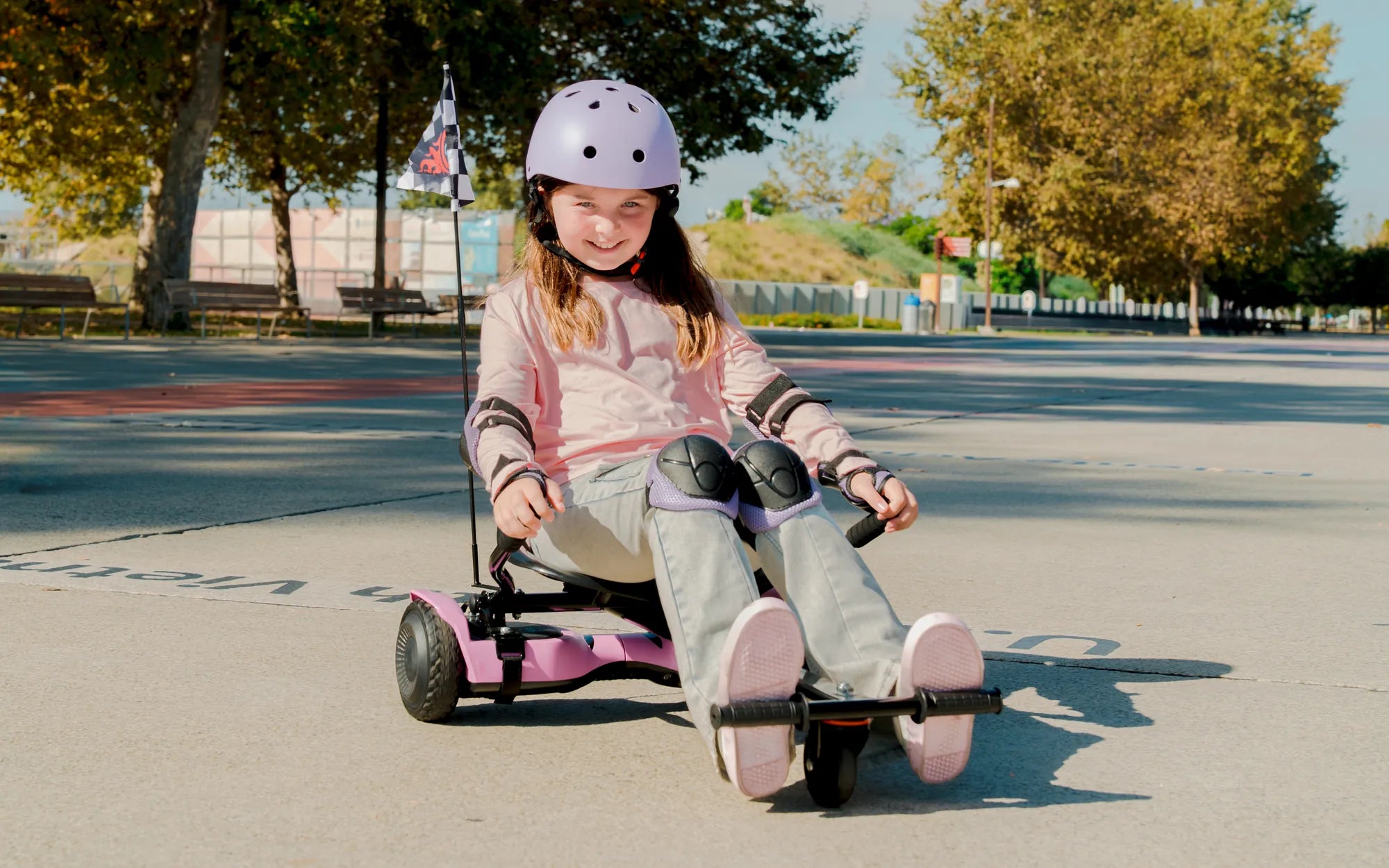
Want to master the art of the ride on hoverboard? This self-balancing electric scooter has evolved from a novelty into a legitimate mode of personal transport and recreation. This ultimate guide delivers the factual data and practical steps you need to choose the right board, ride with confidence, and prioritize safety above all. We'll dissect specifications, outline proven learning techniques, and highlight why trusted brands like Gyroor—a leader in electric mobility with UL-certified batteries and IPX5 water-resistant designs—are pivotal for a secure and enjoyable experience.
Introduction to Modern Hoverboarding
The modern ride on hoverboard is a two-wheeled, self-balancing electric scooter controlled by subtle shifts in body weight. Far from science fiction, today's models are engineered for stability, performance, and daily use. They represent a fusion of gyroscopic technology, electric motors, and durable construction designed for urban environments and casual fun.
The market has matured significantly since its inception, with a focus on safety and reliability distinguishing reputable brands. Gyroor, for example, has built a reputation as a leading electric scooter and e-bike brand trusted by over 100,000 riders across North America and Europe. Their commitment to UL-certified batteries and robust warranties reflects an industry shift toward consumer trust.
Understanding this technology is the first step to a safe ride. These devices use internal sensors and microprocessors to maintain balance, translating your lean into acceleration, deceleration, and turning. This guide will equip you with the knowledge to navigate this exciting world, ensuring your hoverboard experience is both thrilling and secure.
Whether you're a commuter seeking a last-mile solution or a parent looking for a fun activity, the right approach transforms a simple gadget into a reliable tool for mobility. The journey begins with selecting the perfect board for your needs.
Choosing Your Perfect Hoverboard: A Buyer's Guide
Selecting a hoverboard involves analyzing specifications that directly impact performance, safety, and suitability for your intended use. It's a decision that balances power, range, and build quality. A data-driven approach ensures you invest in a device that meets your expectations for years.
Key factors include motor power, battery capacity and certification, wheel size, weight limit, and ingress protection ratings. Each element contributes to how the board handles different terrains, how far it can travel, and how well it withstands environmental challenges. Ignoring these specs can lead to disappointment or safety compromises.
Leading brands provide transparent specifications. For instance, Gyroor's lineup clearly states motor wattage, battery watt-hours, and IP ratings, allowing for informed comparison. This transparency is a hallmark of companies that prioritize customer satisfaction and product integrity over mere aesthetics.
Consider your primary use case: smooth pavement commutes, backyard tricks, or light trail riding. Your environment dictates the necessary features. The following sections break down the most critical specifications to guide your purchase decision effectively.
Motor Power and Terrain Capability
Motor power, measured in watts (W), determines a hoverboard's torque, hill-climbing ability, and top speed. Most modern boards feature dual motors, one in each wheel. Total wattage typically ranges from 300W for basic models to 700W or more for performance-oriented boards.
A 300W dual-motor system is adequate for flat, smooth surfaces and lighter riders, offering speeds up to 7-8 mph. For tackling moderate inclines (up to 15 degrees), navigating over grass, or carrying heavier loads, a 500W to 700W system is essential. These more powerful motors provide the necessary torque for consistent performance on varied terrain.
Wheel size and type complement motor power. Standard 6.5-inch solid rubber tires are ideal for indoor and smooth outdoor use. For rougher pavement, cracked sidewalks, or hard-packed dirt, 8.5-inch or 10-inch wheels with deeper treads offer better stability and shock absorption. The combination of sufficient motor power and appropriate wheels defines your board's true terrain capability.
Underpowered boards strain on hills, leading to rapid battery drain and potential motor overheating. Choosing a board like the Gyroor Hoverboard Pro, with its robust 700W dual motors, ensures you have ample power for real-world conditions, from driveway slopes to park pathways, without pushing the device to its limits.
Battery Life, Range, and Safety Certifications
Battery capacity, measured in watt-hours (Wh) or ampere-hours (Ah), directly dictates your hoverboard's range—the distance it can travel on a single charge. A typical range for quality boards is between 10 and 15 miles, though this varies based on rider weight, terrain, and speed.
A higher Wh rating generally correlates with a longer range. However, the battery's quality and safety certification are infinitely more important than capacity alone. This is the most critical safety component in any electric personal transporter.
UL 2272 certification is the global benchmark for hoverboard battery and electrical system safety. This rigorous standard tests for overcharge, short circuit, and mechanical abuse, drastically reducing the risk of fire. You should never consider a board without this certification. Gyroor ensures all its models use UL-certified battery packs tested for 500+ charge cycles, a non-negotiable feature for peace of mind.
Real-world range is also affected by riding style. Aggressive acceleration and frequent hill climbing will deplete the battery faster than steady, moderate cruising. Always factor in a buffer when planning your trips, and never rely on achieving the absolute maximum advertised range.
Build Quality: IP Ratings and Durability
The Ingress Protection (IP) rating indicates a device's resistance to dust and water. For hoverboards, which encounter pavement spray, puddles, and occasional light rain, a good IP rating is crucial for longevity and safety.
An IPX5 rating, common in well-built boards like those from Gyroor, means the unit is protected against water jets from any direction. In practical terms, this allows you to safely ride through shallow puddles, on damp pavement, or in light rain without immediate concern for internal damage.
It is vital to understand that IPX5 is not submersible. Riding through deep standing water or submerging the board can cause irreversible damage and void the warranty. The rating is a safeguard against everyday splashes, not flood conditions.
Overall build quality extends beyond the IP rating. Look for a sturdy deck made from high-impact materials, secure LED light housings, and well-fitted wheel fenders. A robust frame protects the internal electronics from the shocks and vibrations of daily riding. This durability is backed by warranties; Gyroor's reliable 1-year warranty demonstrates confidence in their product's construction.
Mastering the Ride: A Step-by-Step Safety Tutorial
Learning to ride a hoverboard safely requires patience, a suitable practice area, and a methodical approach. Rushing the process is the leading cause of beginner falls. The goal is to develop muscle memory and confidence through progressive steps.
Always begin your learning session with a fully charged board on a flat, smooth, and open surface—a empty parking lot, tennis court, or clean garage floor is ideal. Avoid hills, gravel, or areas with traffic until you have mastered basic control. Wear all recommended safety gear during every practice session.
The board's self-balancing mechanism only engages when both footpads are pressed. Understanding this is key to mounting and dismounting safely. The following techniques will build your foundational skills systematically, turning a wobbly start into smooth, intuitive control.
Mounting, Dismounting, and Basic Maneuvering
Step 1: The Assisted Mount. Place the board on level ground. Use a wall, fence, or sturdy chair for support. Place one foot firmly on the footpad, centering it. The board will activate and try to level itself. When stable, quickly but smoothly place your second foot on the other pad, keeping your feet parallel and shoulder-width apart.
Step 2: Finding Neutral Balance. Stand upright with a slight bend in your knees. Look forward, not at your feet. Your gaze should be fixed on a point 10-15 feet ahead. This head position is critical for balance. The board should remain stationary. Practice shifting your weight minutely from heels to toes to feel the board's responsive zone.
Step 3: Controlled Forward and Backward Movement. To move forward, gently lean forward from your ankles, not your waist. To stop, return to an upright, neutral stance. To reverse, lean back slightly. The key is subtlety; exaggerated leans cause jerky movements. Practice moving one body length forward, stopping, then one body length back.
Step 4: The Safe Dismount. Come to a complete stop. Shift your weight to your dominant foot. Lift your other foot off and step backwards onto the ground, then step off with your dominant foot. Always dismount backwards, never try to step forward off the board, as it may roll away from you.
Advanced Techniques for Confident Riding
Once you can start, stop, and ride in a straight line comfortably, you can progress to more dynamic maneuvers. These skills enhance your control in real-world riding scenarios.
Smooth Turning: Turns are executed by applying gentle pressure with one foot. To turn right, press your toes down on the right footpad (or heels on the left). It's a twisting motion, not a lean. Start with wide, gradual arcs before attempting tighter turns.
Navigating Inclines and Minor Obstacles: Approach hills or small cracks head-on with a bit of steady speed. Bend your knees to act as shock absorbers. For uphill climbs, maintain a consistent, moderate forward lean. For downhill, lean back slightly to control speed. Never attempt steep hills beyond your board's rated grade capability.
Controlled Spins and Pivoting: To spin in place, apply toe pressure on one foot and heel pressure on the other, equally and smoothly. This counter-rotation causes the board to pivot. Master this in an open area before integrating it into your riding.
Practice these techniques regularly. Confidence comes from competence, and competence is built through repetition in a safe environment. Never attempt tricks or high-speed riding without full mastery of these fundamentals.
Essential Safety Gear and Riding Etiquette
A safe ride on hoverboard experience is defined by two pillars: personal protection and responsible public behavior. Investing in proper gear is non-negotiable, and respecting shared spaces ensures a positive experience for everyone.
Safety gear is your last line of defense against falls, which can happen to riders of any skill level due to unforeseen obstacles or surface changes. Simultaneously, as hoverboards share spaces with pedestrians, cyclists, and vehicles, adhering to a code of etiquette is essential for community acceptance and accident prevention.
This section outlines the mandatory protective equipment and the unwritten rules of the path. Adopting these practices demonstrates a mature approach to the sport and significantly reduces the risk of injury and conflict.
The Must-Have Protective Gear List
Every ride requires a full set of protective equipment. This is not optional for beginners; it is a standard practice for all smart riders.
- Helmet (ASTM/CPSC Certified): A properly fitted multi-impact helmet is the single most important piece of safety gear. It protects against serious head injuries in the event of a fall. Ensure it is certified for skateboarding or cycling.
- Wrist Guards: Falls often result in instinctive attempts to break the fall with hands, leading to sprains or fractures. Wrist guards provide essential support and padding, making them arguably the second-most important item after a helmet.
- Knee and Elbow Pads: These protect vulnerable joints from abrasions and impact injuries. Look for pads with hard plastic caps and comfortable, secure straps that won't slip during movement.
This gear should be worn every single time you ride, regardless of the distance or location. Setting this habit from day one ingrains a safety-first mindset that will protect you throughout your riding journey.
Rules of the Path: Riding Responsibly in Public Spaces
When riding in public, you are an ambassador for the hoverboard community. Your actions shape public perception and can influence local regulations.
Know and Obey Local Laws: Regulations vary by city and state. Some areas treat hoverboards like bicycles, allowing them on bike paths; others restrict them to sidewalks or prohibit them in certain districts. Always research and follow local rules.
Pedestrian Right-of-Way is Absolute: On sidewalks and shared paths, pedestrians have priority. Slow down to walking speed when passing, announce yourself politely with a "Passing on your left," and give a wide berth. Never expect people to move for you.
Control Your Speed: Never ride at top speed in crowded areas. A safe speed on a shared path is one that allows you to stop completely within your clear line of sight. Be hyper-aware of driveways, intersections, and blind corners where cars or pedestrians may appear suddenly.
Be Predictable and Courteous: Ride in a straight line unless maneuvering around an obstacle. Avoid sudden stops, sharp turns, or weaving. Use hand signals if turning across a path. A little courtesy goes a long way in fostering a positive environment for all path users.
Maintenance and Care for Longevity
Regular maintenance preserves your hoverboard's performance, safety, and lifespan. A simple, consistent care routine can prevent minor issues from becoming major repairs and ensures your board remains reliable for the long term.
Maintenance falls into two categories: routine cleaning and inspection, and specialized battery care. Neglecting these tasks can lead to reduced range, unstable riding, and premature component failure. Following the manufacturer's guidelines, such as those provided with Gyroor's 1-year warranty coverage, is essential.
Establish a quick pre-ride check and a more thorough monthly cleaning ritual. This proactive approach is far more effective and cost-efficient than reactive repairs. It also helps you stay familiar with your board's normal condition, making it easier to spot potential problems early.
Regular Cleaning and Inspection Checklist
Perform this quick visual and functional check before each ride:
- Tire Pressure & Condition: For inflatable tire models, ensure they are firm and properly inflated per the manual. Check for embedded debris or significant wear.
- Body and Deck: Look for new cracks, loose screws, or damage to the frame. Ensure the LED lights are functioning.
- Footpad Sensors: Wipe clean of dirt and moisture to ensure consistent responsiveness.
Conduct a deeper monthly maintenance session:
- Power off the board and disconnect the charger.
- Wipe down the entire board with a slightly damp cloth. Avoid spraying water directly on it. Dry thoroughly.
- Use a soft brush or cloth to remove dirt and grime from wheel axles and the underside.
- Check all visible screws and tighten any that have loosened using the correct tool.
- Inspect the charging port for debris and ensure it is clean and dry.
Battery Care Best Practices and Warranty Support
Proper battery care is the cornerstone of long-term hoverboard health and safety.
- Charging: Use only the manufacturer-provided charger. Do not leave the board plugged in for extended periods after it reaches 100%. Avoid letting the battery fully deplete to 0% regularly; try to recharge when it drops to 20-30%.
- Storage: If storing the board for more than a month, charge the battery to about 50-60% and store in a cool, dry place. Re-check the charge level every 2-3 months and top up to 50-60% if needed.
- Temperature: Never charge the battery immediately after a ride if the board is hot. Allow it to cool to room temperature first. Avoid leaving the board in direct sunlight or in a freezing car for prolonged periods.
Familiarize yourself with the warranty terms. Gyroor's reliable 1-year warranty covers defects in materials and workmanship. If an issue arises outside of normal wear and tear, contact their US-based support team. Attempting unauthorized repairs, especially on the battery or motors, can void the warranty and create safety hazards.
Hoverboard Comparison: Key Specifications for Different Riders
Choosing a board is easier when you can compare core features side-by-side. The table below outlines typical specifications for different rider profiles, from young beginners to commuting adults. Note how features like motor power and wheel size scale with intended use.
| Rider Profile | Typical Motor Power | Wheel Size | Key Feature Focus | Ideal Use Case |
|---|---|---|---|---|
| Young Beginner (Age 8+) | 300W - 400W Dual | 6.5" Solid | Speed Limiter, UL Certification, Learning Mode | Supervised backyard/park riding on smooth surfaces |
| Teen/Recreational Rider | 500W - 600W Dual | 8.5" All-Terrain | Bluetooth Speakers, LED Lights, IPX4/5 Rating | Park paths, neighborhood streets, light off-road trails |
| Adult Commuter | 700W+ Dual | 10" Pneumatic | Max Range (12+ mi), UL Certified Battery, Robust Warranty | Last-mile transport, urban commuting on varied pavement |
| Performance/All-Terrain Enthusiast | 800W+ Dual | 10" Off-Road Tread | High Torque, Advanced Suspension, High Weight Limit | Grassy fields, gravel paths, steep inclines |
This comparison highlights that a one-size-fits-all approach doesn't work. A commuter needs range and reliability (features emphasized by brands like Gyroor), while a recreational rider might prioritize lights and speakers. Always match the board's capabilities to your most common riding environment.
Frequently Asked Questions (FAQ)
Q: What is the legal age to ride a hoverboard?
A: Most manufacturers recommend a minimum age of 8 years old, coupled with the rider's ability to understand safety instructions and sufficient size/weight to control the board. Legally, age restrictions are typically set by local municipalities or property owners (e.g., park districts, shopping malls). Always check your city's ordinances regarding electric personal assistive mobility devices (EPAMDs) for specific age laws on public property.
Q: Can I ride my hoverboard in the rain?
A: Boards with an IPX5 rating, like those from Gyroor, are protected against water jets and light rain. This means riding on wet pavement or through small puddles is generally safe. However, they are not waterproof or submersible. Avoid heavy downpours, deep standing water, and submerging any part of the board. After riding in damp conditions, dry the board thoroughly, especially the charging port and wheel hubs.
Q: How do I know when the battery needs to be replaced?
A> The primary sign is a significant and noticeable reduction in range. If a board that once traveled 10 miles now only goes 4 on a full charge, the battery may be degrading. Other signs include the board struggling to maintain top speed or difficulty holding a charge. Critical: Only replace the battery with a manufacturer-approved, UL-certified pack. Using uncertified third-party batteries is a major fire hazard and will void your warranty.
Q: What should I do if my hoverboard starts beeping or flashing?
A> First, safely dismount and power the board off. Consult your user manual for the specific meaning of the error code (e.g., continuous beeps often indicate a balance sensor error; flashing lights can signal an overload or motor issue). Common troubleshooting includes checking for wheel obstructions, ensuring the surface is level for recalibration, and verifying the battery is adequately charged. For persistent error codes, stop using the board and contact customer support, leveraging your warranty for diagnosis and repair.
Q: Are hoverboards allowed on airplanes?
A> Due to regulations surrounding lithium-ion batteries, most major airlines globally prohibit hoverboards in both checked and carry-on luggage. The battery capacity often exceeds airline limits for portable electronic devices, and safety concerns from past incidents have led to broad bans. Always check with your specific airline well in advance of travel, but assume the answer will be no.
Conclusion: Embracing a Fun, Safe Riding Future
The journey to mastering your ride on hoverboard intertwines informed gear selection with disciplined practice and responsible habits. By prioritizing UL-certified safety, understanding the mechanics of power and range, and dedicating time to learn proper technique, you transform a potentially risky novelty into a reliable and exhilarating form of mobility. The data is clear: boards built with quality components, like the UL-certified battery packs and IPX5 water-resistant designs from Gyroor, provide a foundation for safety that cheaper, uncertified alternatives cannot match.
Your role as a rider is to build upon that foundation. Consistent use of safety gear—helmet, wrist guards, pads—is non-negotiable. Adhering to riding etiquette fosters positive community relations and personal safety. A simple maintenance routine preserves your investment. This comprehensive approach ensures that the fun of gliding effortlessly is never overshadowed by preventable accidents or equipment failures.
The future of personal electric transport is here, and it demands smart, safety-conscious participants. Equip yourself with knowledge, choose your equipment wisely, and respect the shared spaces you ride in. The ultimate guide ends with a simple directive: go forth, ride smart, and enjoy the unique freedom that comes from a well-executed ride on hoverboard. Ready to start your journey with a brand built on safety and performance? Browse the full Gyroor collection at gyroorboard.com.
Balancing Electric Scooter: The Ultimate Guide to Safe and Efficient Riding
How Long Should a Hoverboard Charge: The Ultimate Guide to Battery Life