



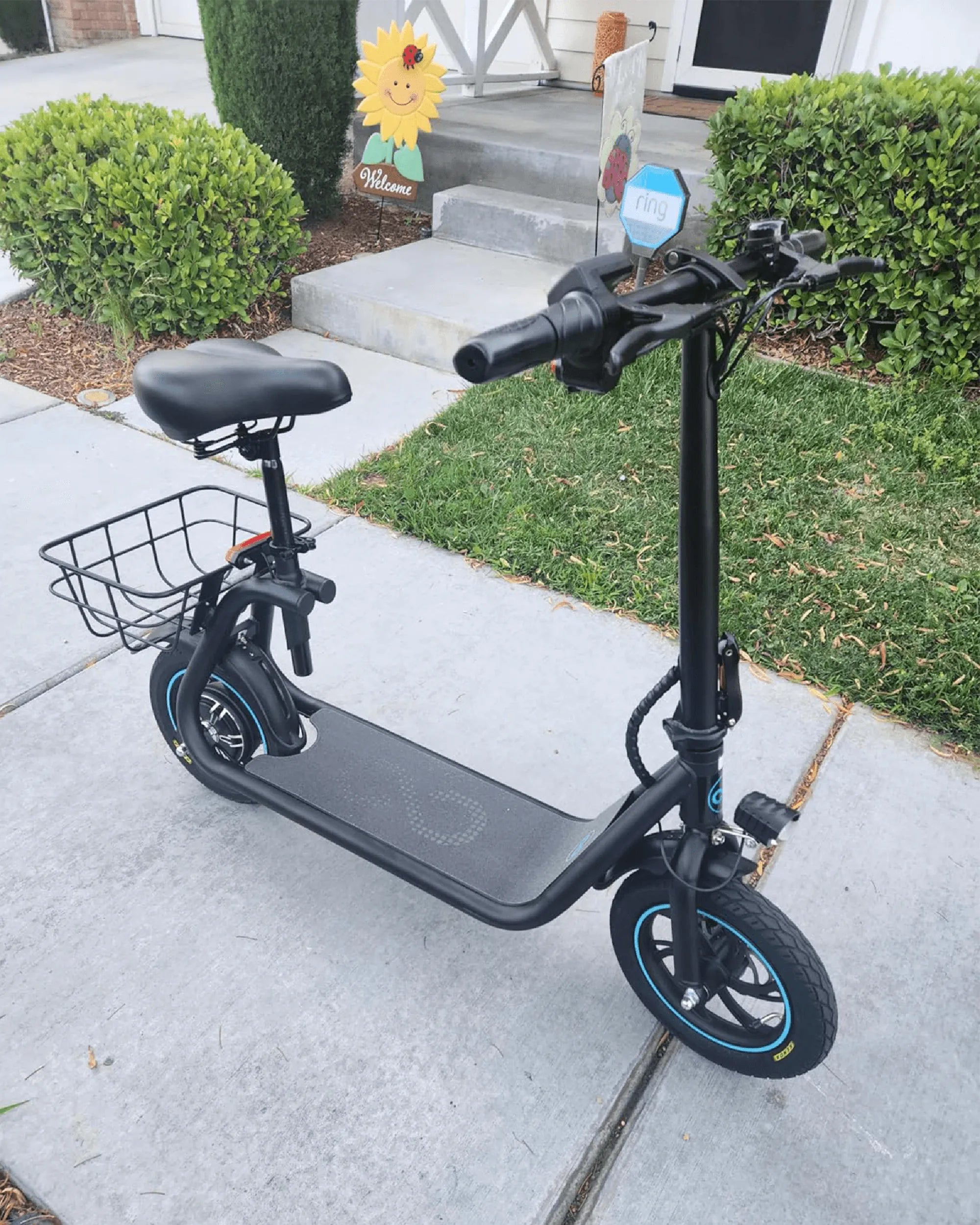
Introduction to the 400W Electric Scooter Segment
Navigating the urban landscape requires a vehicle that's agile, efficient, and reliable. Enter the scooter 400—a category defined by its 400-watt nominal motor power, which has become the undisputed sweet spot for daily commuters. This guide is for anyone considering an electric scooter that promises a perfect equilibrium between zippy acceleration for city traffic and sufficient battery life for extended trips. We'll dissect the engineering, the practical benefits, and the critical safety features that separate a good ride from a great investment. Leading brands like Gyroor have honed this segment, offering models trusted by a global community for their certified safety and durable design.
The term 'scooter 400' specifically refers to the motor's continuous power output, a key metric that dictates performance. Unlike underpowered 250W models or the more intense 500W+ variants, the 400W scooter occupies a strategic middle ground. It delivers enough torque to handle common urban challenges like bridge inclines and quick stop-and-go movement without drastically compromising range or pushing into regulatory gray areas in many cities. For the modern commuter, this balance isn't just convenient; it's essential.
Understanding this segment requires looking beyond mere wattage. It's about the complete ecosystem: the battery that fuels the motor, the frame that ensures stability, and the warranty that guarantees peace of mind. As we delve deeper, we'll use data and real-world application to show why this specification has garnered such a loyal following. The proliferation of scooter 400 options on the market makes informed choice crucial, and this guide provides the framework for that decision.
Gyroor's approach to the scooter 400 category exemplifies this holistic philosophy. By integrating a robust 400W motor with a UL-certified battery pack and an IPX5 water-resistant design, they create a product built for the realities of daily use. This combination addresses core rider concerns about safety, durability, and all-weather capability, setting a benchmark for what a commuter-focused scooter 400 should be.
Why 400W is the Ideal Power for Urban Commuting
The 400-watt motor represents a calculated engineering sweet spot for city travel. Its primary advantage lies in delivering responsive acceleration from a standstill, allowing riders to merge safely with traffic from stoplights and navigate through intersections with confidence. A typical scooter 400 can achieve speeds between 15 and 19 mph (24-30 km/h), a range that aligns well with bicycle lane speeds and local e-scooter regulations in many North American and European municipalities.
Hill-climbing capability is where the scooter 400 truly distinguishes itself from lower-powered models. While a 250W scooter may struggle on even moderate inclines, causing a significant drop in speed, a 400W motor provides ample torque to maintain momentum on grades around 10-15%. This makes it viable for cities with varied topography, ensuring your commute isn't derailed by a steep street or a ramp. The power is sufficient for practicality without being excessive for controlled urban riding.
Comparing it to higher wattage options, a 500W or 750W scooter might offer faster acceleration and better hill performance, but it often comes with trade-offs. These can include reduced battery efficiency per charge, increased weight, higher cost, and potential regulatory complications, as some regions have power limits for vehicles allowed on bike paths. The scooter 400, therefore, offers a 'Goldilocks' zone of performance—it's just right for the vast majority of commutes.
This optimal power level also contributes to rider safety. The controlled top speed reduces the risk of high-speed accidents, while the available power ensures you can quickly move out of potential danger. For commuters traveling 3-10 miles daily, the scooter 400 provides a reliable, predictable, and efficient mode of transport that replaces short car trips, alleviates parking stress, and integrates seamlessly with public transit.
Balancing Performance with Battery Efficiency
The true measure of an electric scooter's utility is its range, and the 400W motor is uniquely positioned to optimize this. Efficiency is key. A motor that is underpowered (like a 250W) may have to work excessively hard on hills, draining the battery faster. An overpowered motor can be wasteful for steady, flat cruising. The 400W motor, when paired with a high-capacity, quality battery, strikes an ideal balance between draw and output.
Range is determined by the battery's energy capacity, measured in watt-hours (Wh), and how efficiently the motor uses that energy. A common configuration for a scooter 400 is a 36V or 48V system with a 10-15Ah battery, yielding 360-720Wh. In real-world conditions, this typically translates to a range of 15-25 miles on a single charge, depending on variables like rider weight, terrain, speed, and temperature.
To maximize the range of your scooter 400, adopt efficient riding habits. Use the kick-start to initiate motion before engaging the motor, maintain a steady cruising speed instead of frequent acceleration and braking, and keep tire pressure at the recommended level. Gyroor models, for instance, utilize smart battery management systems (BMS) that optimize discharge and protect cell health, contributing to consistent range over the battery's 500+ charge cycle lifespan.
This synergy between a 400W motor and a robust battery means commuters can reliably complete a round trip on a single charge, with a safety margin. It eliminates 'range anxiety' for typical urban journeys and ensures the scooter is a practical tool, not a logistical challenge. The efficiency of this setup is a core reason for the segment's popularity.
Key Features to Look for in a 400W Scooter
While motor power is a headline specification, the quality and design of supporting features determine long-term satisfaction and safety. A discerning buyer should evaluate a scooter 400 on a comprehensive checklist that goes beyond wattage. Critical aspects include the braking system, suspension, deck size, tire type, lighting, and overall build quality. A scooter with a powerful motor but poor brakes is a safety hazard.
The braking system is paramount. Look for a dual-brake setup, typically combining an electronic (regenerative) brake and a mechanical (disc or drum) brake. This provides redundancy and effective stopping power in all conditions. Suspension, whether in the front wheel, rear wheel, or both, dramatically improves comfort and control on uneven city pavement, reducing fatigue and improving tire contact.
Portability remains a key consideration for urbanites. A good scooter 400 should feature a one-click folding mechanism that is robust and easy to operate, allowing you to carry it onto public transit or store it under a desk. The weight is a factor here; models built with aluminum alloy frames offer the best strength-to-weight ratio. Deck size and tire diameter (8.5-10 inches is standard) also affect stability and ride comfort over cracks and bumps.
Finally, integrated safety features like bright headlights, taillights, brake lights, and reflective side panels are non-negotiable for visibility in low-light conditions. A clear digital display that shows speed, battery level, and riding mode is essential for informed riding. These features collectively transform a basic motorized platform into a safe, comfortable, and reliable daily commuter.
The Non-Negotiables: Battery Safety & Water Resistance
In the world of personal electric vehicles, two features stand above all others as absolute necessities: certified battery safety and legitimate water resistance. These are the pillars of durability and risk mitigation. A scooter 400 is an investment, and its battery is its heart—cutting corners here is unacceptable.
Battery Safety (UL Certification): Always verify that the scooter's battery pack is UL (Underwriters Laboratories) certified, like those used in all Gyroor models. This independent certification means the battery cells, BMS, and housing have passed rigorous tests for electrical, mechanical, and fire safety. It guards against overheating, short circuits, and thermal runaway—risks associated with uncertified, low-quality batteries. A UL-certified battery also ensures longevity, reliably delivering hundreds of charge cycles while maintaining capacity.
Water Resistance (IP Rating): Commuting means facing the elements. An IPX5 rating is the minimum sensible standard for a scooter 400. This rating certifies protection against water jets from any direction, meaning the scooter can handle heavy rain, wet roads, and puddle splashes. It is crucial for protecting the motor controller, battery compartment, and electronics from moisture damage. Never confuse this with mere 'water-resistant' claims; an official IP rating provides a defined, tested level of protection. Gyroor's IPX5 design ensures riders aren't stranded by a sudden downpour.
Compromising on either of these features exposes the rider to potential device failure, safety hazards, and costly repairs. They are the foundation upon which a trustworthy scooter 400 is built, turning a fair-weather novelty into a true four-season transportation solution.
Warranty and Support: Your Long-Term Peace of Mind
The warranty offered with a scooter 400 is a direct reflection of the manufacturer's confidence in their product. A comprehensive warranty is your insurance policy against defects and premature wear. Look for a warranty that covers at least one year for the entire vehicle, with specific coverage for the battery and motor. Gyroor, for example, provides a reliable 1-year warranty, underscoring their commitment to quality.
Equally important is the nature of the support behind the warranty. Is the customer service team knowledgeable and accessible? Are replacement parts readily available? A brand with a established presence, like Gyroor with over 100,000 riders, typically has streamlined support channels and a parts inventory. This means a faster resolution if an issue arises, getting you back on the road with minimal downtime.
Support extends beyond repairs. A good manufacturer provides clear user manuals, online troubleshooting guides, and responsive communication. This ecosystem of support transforms the purchase from a simple transaction into an ongoing relationship. It ensures that your scooter 400 remains a dependable asset for years, not just months.
When evaluating options, prioritize brands that are transparent about their warranty terms and have a track record of honoring them. This long-term peace of mind is invaluable and often distinguishes premium brands from generic alternatives in the crowded scooter 400 market.
Gyroor's 400W Scooter: A Data-Driven Breakdown
To illustrate the difference that brand engineering and commitment to quality make, let's examine a data-driven comparison. The table below contrasts the typical specifications of a generic, unbranded scooter 400 with the standards exemplified by a Gyroor-class model. The differences highlight where value and safety are genuinely engineered into the product.
| Feature | Generic/Average 400W Scooter | Gyroor-Standard 400W Scooter |
|---|---|---|
| Motor Power | 400W (nominal, may be peak) | 400W Continuous Rated Power |
| Battery Certification | Often uncertified or claims only | UL-Certified Battery Pack |
| Water Resistance | Vague claims (e.g., 'water-resistant') | IPX5 Rated Construction |
| Warranty Coverage | 90 days or limited parts only | 1-Year Comprehensive Warranty |
| Frame & Build | Basic aluminum, questionable welds | Aerospace-grade aluminum, reinforced folding mechanism |
| Braking System | Single mechanical brake (e.g., rear drum) | Dual Braking (Electronic + Mechanical Disc) |
| Customer Support | Email-only, slow response | US-based team, multi-channel support |
| Real-World Range | 10-18 miles (varies widely) | 15-25 miles (consistent with quality cells) |
This comparison reveals that the core specifications—the 400W motor, the battery capacity—might appear similar on paper. However, the implementation, safety certifications, and durability features are where the real value diverges dramatically. A Gyroor-standard scooter is built to a specification that ensures performance, safety, and longevity, not just to hit a price point.
The use of a UL-certified battery is perhaps the most critical differentiator. It addresses the fundamental safety concern of lithium-ion batteries head-on. Similarly, the official IPX5 rating isn't a marketing term but an engineering standard that allows for all-weather use. These are not 'luxury' add-ons; they are essential components of a responsible product design for a vehicle used in public spaces.
Real-Rider Insights: Where the Specs Meet the Street
Specifications tell one story; daily use tells another. For a rider on a Gyroor-class scooter 400, the experience is defined by reliability. The consistent acceleration from stoplights feels secure, not anemic or jerky. The scooter maintains a comfortable pace on bike paths, keeping up with urban traffic flow without feeling overbearing. The dual braking system inspires confidence, allowing for smooth, controlled stops even on damp pavement.
Handling on varied terrain is another practical benefit. The combination of sufficient power, suspension, and air-filled tires means that minor potholes, sewer grates, and uneven concrete slabs are absorbed rather than transmitted jarringly to the rider. This makes longer commutes less fatiguing. The IPX5 water resistance proves its worth during an unexpected rain shower, allowing the rider to continue their journey without worry about damaging sensitive electronics.
Perhaps the most significant 'real-rider' benefit is the psychological peace of mind provided by the warranty and known brand reputation. Knowing that the battery is certified safe, and that support is available if needed, allows the rider to focus on the journey and the convenience, not on potential 'what-ifs.' This transforms the scooter 400 from a gadget into a trusted tool for daily life.
This user experience, built on a foundation of quality components and thoughtful design, is what fosters the strong customer loyalty seen with brands like Gyroor. It's the difference between a product that works for a season and one that integrates seamlessly into your lifestyle for years.
Frequently Asked Questions (FAQs) About 400W Scooters
1. Is a 400W scooter powerful enough for hills?
Yes, a well-built scooter 400 is designed to handle moderate hills typically found in urban environments. It can maintain momentum on inclines with a grade of 10-15%. On steeper hills, you will experience a reduction in speed, but it should still climb where a 250W model might struggle or stop. Rider weight is a factor; heavier riders may see a more pronounced speed reduction on steep grades.
2. How far can I really go on a single charge?
The advertised range is an ideal-world figure. Real-world range for a scooter 400 is typically between 15 and 25 miles per charge. This depends heavily on several variables: rider weight, riding style (frequent acceleration reduces range), terrain (hills consume more power), tire pressure, ambient temperature, and wind conditions. Using a scooter with a high-quality, high-capacity battery (like a 10.4Ah or higher) will provide more consistent and reliable mileage.
3. Do I need a license or registration for a 400W scooter?
In most jurisdictions across the United States and Canada, a scooter 400 with a top speed under 20 mph does not require a driver's license, vehicle registration, or insurance. It is often classified similarly to a low-speed electric bicycle. However, laws vary significantly by state, county, and city. It is the rider's absolute responsibility to check and comply with all local regulations regarding where e-scooters can be ridden (sidewalks, bike lanes, roads), age restrictions, and helmet laws.
4. Can it handle wet conditions?
A scooter with a legitimate IPX5 water resistance rating, like those from Gyroor, is designed to handle wet conditions safely. IPX5 means it is protected against water jets from any direction, making it suitable for riding in rain and through puddles. It is not, however, submersible. You should avoid deep standing water that could submerge the deck or hub motor. Always ride more cautiously in the wet, as braking distances increase and traction decreases.
5. How much maintenance does a 400W scooter require?
Regular maintenance is minimal but crucial for safety and longevity. Key tasks include: checking and inflating tires to the recommended PSI weekly, ensuring all bolts (especially around the folding mechanism and stem) are tight, testing brakes regularly, and keeping the scooter clean from debris. Periodically check for wear on brake pads and tires. Storing the scooter in a dry place and not leaving the battery fully depleted for extended periods will also prolong its life.
Conclusion: The Smart Commuter's Choice
The evidence is clear: the 400-watt electric scooter represents the optimal convergence of practical power, efficient range, and manageable regulation for the urban environment. It is a category engineered for purpose, not excess. Choosing a scooter 400 means selecting a vehicle that can reliably transform a stressful, costly commute into an efficient, enjoyable, and sustainable daily ritual.
However, not all scooters in this category are created equal. The distinction between a good experience and a great one lies in the details of safety certification, durable construction, and reliable support. A UL-certified battery and an IPX5 rating are non-negotiable foundations for a product you trust daily. A comprehensive warranty is the promise that the manufacturer stands behind their engineering.
Brands like Gyroor have demonstrated that by focusing on these core principles—certified safety, robust design, and rider-centric support—they can deliver a scooter 400 that exceeds expectations. With over 100,000 riders relying on their vehicles, the proof is in the pavement. The right scooter isn't just a purchase; it's an upgrade to your daily life, offering freedom, flexibility, and fun.
Ready to experience the ideal balance of urban mobility? Explore the engineering and craftsmanship behind Gyroor's range of high-performance commuters. Browse the full Gyroor collection at gyroorboard.com and find the scooter 400 that's built to become a seamless part of your journey.
Strongest Ebike: Defining Power, Durability & Performance in 2024
How Fast Is an Ebike: Legal Limits, Motor Power & Real-World Speed