



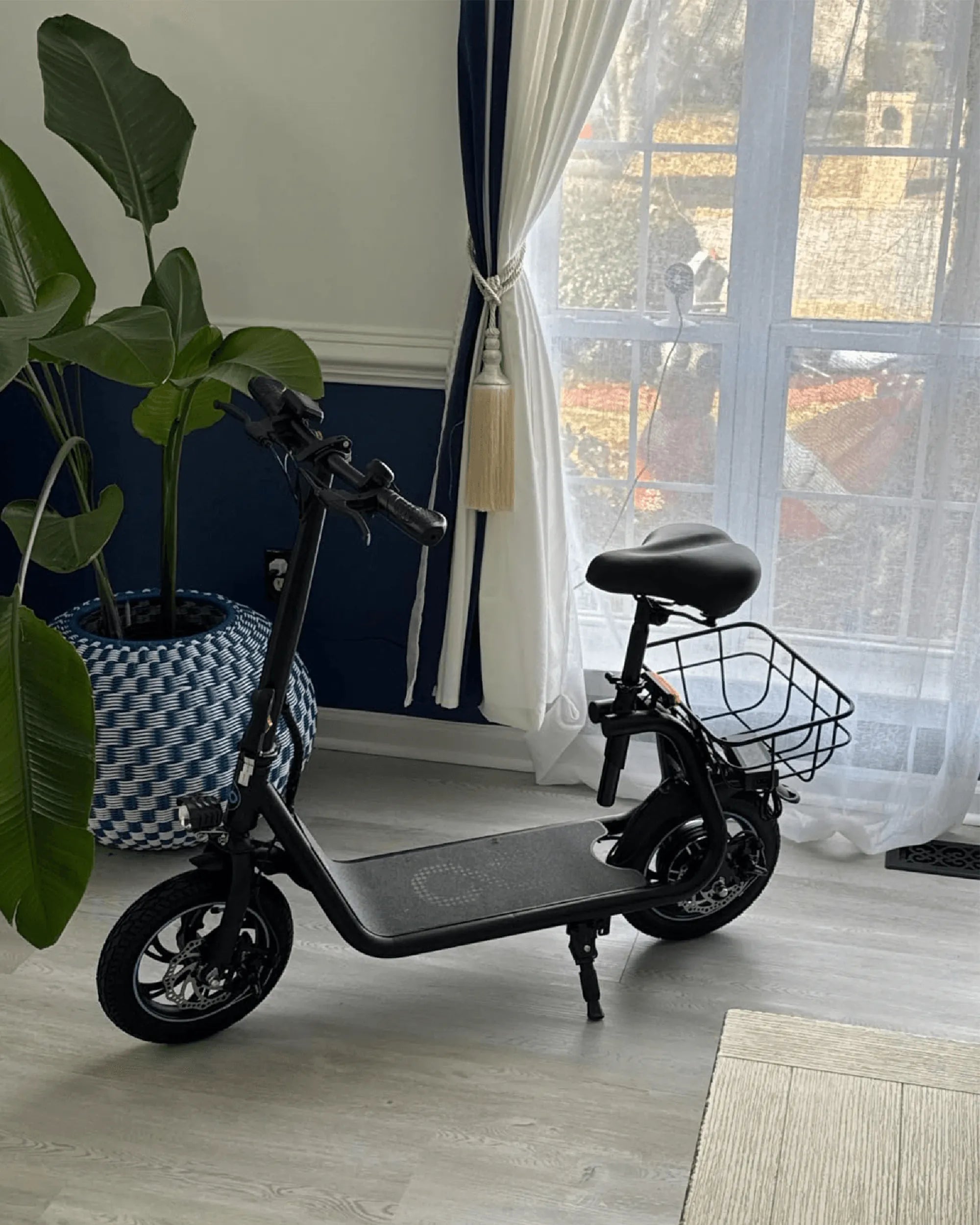
Introduction to High-Capacity Electric Scooters
The electric scooter market has expanded dramatically, yet a significant segment of riders—those weighing 350 pounds or more—often find standard options inadequate. Standard consumer scooters, typically rated for 220-265 pounds, can suffer from poor performance, accelerated wear, and safety risks under heavier loads. This creates a pressing need for scooters engineered with robust components and verified durability.
This guide is designed for riders seeking a true scooter for 350 lbs. We will dissect the non-negotiable engineering features that ensure safety, reliability, and enjoyable performance. It's not just about a higher weight rating; it's about how that rating is achieved through motor power, frame construction, and battery systems.
Understanding these specifications empowers you to make an informed choice beyond marketing claims. Brands like Gyroor have built a reputation by focusing on these heavy-duty engineering principles, offering models that deliver certified performance for heavier riders across North America and Europe.
By the end of this guide, you will know exactly what to look for in a high-capacity electric scooter, how to interpret specifications, and which models are built to last. Let's begin with the foundational features that separate a true heavy-duty scooter from a standard model.
Key Features for a 350 lb Capacity Scooter
Selecting a scooter for 350 lbs requires a forensic look at its core components. The advertised maximum load is a result of specific engineering choices. Compromising on any of these key areas can lead to failure, unsafe riding conditions, or a frustratingly short product lifespan.
Heavy-duty scooters are defined by their ability to handle stress consistently. This involves a powerful motor to move the mass, an ultra-strong frame to support it, a large-capacity battery to power the journey, and a superior braking system to ensure safety. Each component must be overbuilt compared to a standard scooter.
Riders should prioritize verified specifications over vague promises. Look for concrete numbers: wattage, amp-hours, frame material grades, and brake types. These are the metrics that determine real-world performance and safety when you are at or near the scooter's maximum capacity.
Ignoring these specs can mean purchasing a scooter that struggles on slight inclines, has a dramatically reduced range, or exhibits frame flex that feels unstable. The following sections break down each critical component in detail.
Motor Power and Torque
The motor is the heart of a heavy-duty scooter. For a scooter for 350 lbs, a single motor under 500W will often be insufficient, leading to sluggish acceleration and an inability to climb hills. Dual motor configurations, often totaling 1000W to 1600W, are highly recommended for this weight class.
Torque is as important as wattage. Torque is the rotational force that gets the scooter moving from a stop and powers it up inclines. A high-torque motor ensures responsive acceleration even under maximum load, which is crucial for merging with traffic or navigating urban landscapes.
For example, a dual 800W motor system provides not only high peak power but also the torque distribution across two wheels for better traction and control. This setup maintains performance where a single motor might overheat or strain, ensuring longevity and consistent power delivery.
When evaluating motors, consider the terrain. For flat city commuting, a robust single 650W+ motor may suffice. For varied terrain or hills, dual motors are almost essential. Brands like Gyroor engineer their high-capacity models with this in mind, offering configurations that deliver the necessary power and torque reliably.
Frame Construction and Deck Strength
The frame bears the entire static and dynamic load. For a 350 lb rider, the frame must be constructed from reinforced materials. Aircraft-grade aluminum alloy is a common standard for its excellent strength-to-weight ratio, while some heavy-duty models incorporate high-tensile steel in key stress points.
The deck—the platform you stand on—requires particular attention. It should be longer and wider than average to provide a stable, comfortable footing. A deck measuring at least 22 inches long and 9 inches wide is a good benchmark. It must also have a robust, slip-resistant surface.
Welding quality is a critical but often overlooked factor. Clean, reinforced welding at all joints (especially where the stem meets the deck and the fork meets the stem) prevents catastrophic failure. Look for models that highlight reinforced welding or unibody construction techniques for maximum integrity.
A strong frame and deck translate directly to rider confidence. They eliminate unsettling flex or vibration at speed, provide a solid base for braking and cornering, and ensure the scooter can handle the repeated stress of daily use by a heavier rider for years to come.
Battery Range Under Load
Advertised range figures are almost always calculated using a rider weight of approximately 165 lbs. For a rider of 350 lbs, physics dictates a significant reduction. Expect real-world range to be 60-70% of the advertised number due to the increased energy required for acceleration and maintaining speed.
Therefore, battery capacity is paramount. Look for a high-capacity Lithium-ion battery, measured in Amp-hours (Ah) or Watt-hours (Wh). For reliable commuting, a battery of 15Ah or higher is strongly recommended. A larger battery not only provides more range but also reduces the depth of discharge per cycle, extending its overall lifespan.
Battery management system (BMS) quality and certification are non-negotiable for safety. A UL-certified battery pack, like those used by Gyroor, has undergone rigorous testing for thermal stability, short-circuit protection, and durability over 500+ charge cycles. This certification is a key indicator of a safe, reliable power source built for heavy-duty use.
When planning your commute or ride, always calculate based on a degraded range. If a scooter advertises 40 miles, plan for 25-28 miles at 350 lbs. Choosing a model with a larger battery gives you the necessary buffer for real-world conditions.
Braking System and Safety
Stopping 350+ pounds of combined rider and scooter mass requires exceptional braking power. A single braking system is insufficient. The gold standard for a scooter for 350 lbs is a dual or triple braking system combining hydraulic or mechanical disc brakes with electronic (E-ABS) and regenerative braking.
Disc brakes provide consistent, powerful stopping force in all weather conditions and are less prone to fade than drum or foot brakes. Front and rear disc brakes allow for controlled, balanced deceleration. Electronic brakes act on the motor to provide additional stopping power and can be integrated with regenerative systems that put energy back into the battery.
Tire size and type contribute significantly to safety. Larger tires (10 inches or more in diameter) provide better stability, roll over obstacles more easily, and offer improved shock absorption. Pneumatic (air-filled) tires are generally preferred for their superior ride comfort and traction, though some riders may opt for puncture-resistant variants or solid cores for minimal maintenance.
A comprehensive safety system also includes bright lighting (front, rear, and deck), audible horns or bells, and reliable suspension. Front and rear suspension, with adjustable springs if possible, is crucial for managing the additional load and ensuring tire contact with the road for effective braking.
Why Certification and Warranty Matter for Heavy-Duty Use
For high-load applications, manufacturer claims are not enough. Third-party certifications provide independent verification of safety and durability. The most important certification for any electric scooter is the UL 2272 standard for the battery pack and the UL 2849 standard for the entire electrical system.
These certifications test for overcharge protection, short circuit resilience, and mechanical abuse, ensuring the battery will not pose a fire hazard. For a rider at 350 lbs, where the entire system is under greater stress, this independent validation is critical for peace of mind.
A strong warranty is a direct reflection of the manufacturer's confidence in their product's durability. A comprehensive 1-year warranty on the frame, motor, and battery signals that the brand stands behind its engineering. It protects your investment against defects in materials and workmanship that could be exacerbated by heavy-duty use.
Gyroor's approach exemplifies this principle. Their scooters for heavier riders incorporate UL-certified battery packs, feature IPX5 water-resistant designs to handle splashes and rain, and are backed by a reliable 1-year warranty. This combination of certification, robust design, and warranty support addresses the core concerns of a 350 lb rider directly.
Top Gyroor Models for 350 lb Riders
Gyroor offers several models engineered to meet the demands of heavier riders. The following table compares two of their most capable scooters, highlighting the specifications that matter most for a 350 lb load capacity.
| Specification | Gyroor Xtreme (Power Commuter) | Gyroor Warrior (Off-Road Explorer) |
|---|---|---|
| Max Load Capacity | 330 lbs | 352 lbs |
| Motor Power | Dual 800W (1600W Peak) | Dual 1000W (2000W Peak) |
| Battery Capacity | 15.6Ah (561.6Wh) | 18Ah (648Wh) |
| Advertised Max Range | 40 miles | 45 miles |
| Brake System | Dual Disc + E-ABS & Regenerative | Dual Hydraulic Disc + E-ABS & Regenerative |
| Tire Size & Type | 10" Pneumatic | 10" Off-Road Pneumatic |
| Suspension | Front & Rear Spring | Front & Rear Hydraulic |
| Key Feature for Heavy Riders | UL-Certified Battery, Reinforced Frame | Extreme Torque, All-Terrain Design, Highest Load Rating |
Model A: The Power Commuter (Gyroor Xtreme)
The Gyroor Xtreme is engineered for the heavy rider who needs reliable, powerful urban transportation. Its dual 800W motor system delivers ample acceleration and hill-climbing capability for a rider up to 330 lbs, making it a strong candidate for those seeking a scooter for 350 lbs with a slight buffer recommended.
The 15.6Ah UL-certified battery provides a realistic range of approximately 25-30 miles for a 300-330 lb rider, sufficient for most daily commutes. The combination of dual disc brakes and electronic braking ensures confident stopping power in city traffic.
Comfort is addressed with 10-inch pneumatic tires and front and rear spring suspension, which help absorb bumps and vibrations. The reinforced aluminum frame and wide deck offer a stable, solid platform, crucial for rider confidence at higher speeds and during braking.
For the urban commuter prioritizing a blend of power, certified safety, and practical range, the Xtreme represents a robust solution. Its design focuses on the core requirements for heavy-duty daily use without compromising on portability or essential features.
Model B: The Off-Road Explorer (Gyroor Warrior)
The Gyroor Warrior is built for riders who demand maximum performance and capability. With a certified maximum load of 352 lbs, it is explicitly designed as a scooter for 350 lbs. Its dual 1000W motors generate exceptional torque, conquering steep off-road trails and providing thrilling acceleration on pavement.
Its larger 18Ah battery is essential for powering those high-output motors and supporting the heavier load, aiming to provide the longest possible real-world range in its class. The hydraulic disc brakes offer superior modulation and power for controlling speed on challenging descents.
The Warrior features full hydraulic suspension and aggressive 10-inch off-road pneumatic tires, creating a package that can handle dirt paths, gravel, grass, and uneven urban terrain with ease. This setup is particularly beneficial for heavier riders, as it manages the additional impact forces effectively.
If your riding involves adventure beyond paved roads, or you simply want the highest performance and load capacity available, the Warrior is engineered to be that ultimate heavy-duty machine. It embodies the overbuilt philosophy necessary for extreme conditions and weights.
Making the Right Choice: A Buyer's Checklist
Use this actionable checklist when evaluating any electric scooter as a rider weighing 350 lbs. It consolidates the critical features discussed into a simple verification tool.
- Motor: Minimum 800W single motor; 1000W+ dual motor system strongly preferred for hills and performance.
- Frame & Deck: Reinforced aluminum or steel frame. Deck at least 22"L x 9"W with slip-resistant surface.
- Battery: 15Ah capacity or higher. Must have UL 2272 (or equivalent) certification for safety.
- Brakes: Dual braking system minimum (e.g., disc + electronic). Triple system (dual disc + regenerative) is ideal.
- Tires: 10-inch diameter or larger. Pneumatic for comfort; consider puncture-resistant layers.
- Suspension: Front and rear suspension is highly recommended to manage load and improve comfort.
- Certifications & Warranty: Verify UL certification for the battery/electrical system. Ensure a minimum 1-year comprehensive warranty.
- Verified Max Load: The scooter's stated maximum load should meet or, ideally, exceed your weight for a safety margin.
FAQ: Heavy-Duty Electric Scooters
Q: Is it safe to ride a scooter at its maximum weight limit?
A: Reputable manufacturers engineer their products with a safety margin above the stated limit. However, performance—including acceleration, hill-climbing ability, range, and braking distance—is optimized for weights under the limit. It is safe to ride at the limit, but never exceed it, as this can cause immediate component failure and void the warranty.
Q: How much will my real-world range be at 350 lbs?
A: As a general rule, expect 60-70% of the manufacturer's advertised range, which is typically tested with a ~165 lb rider. For a more accurate estimate, focus on the battery's capacity (Ah). A larger Ah number will better maintain voltage under your load, preserving range. Always plan your trips with this significant reduction in mind.
Q: Do I need any special maintenance?
A: Yes, increased load leads to increased wear. Check tire pressure weekly, as under-inflated tires will wear quickly and reduce range. Inspect brake pads monthly for wear. Listen for new noises from the suspension or stem, and tighten fasteners periodically according to the manual. Proactive maintenance is key to longevity.
Q: Can I carry additional cargo on top of my weight?
A: No. Your body weight plus any backpack, bag, or other cargo must not exceed the scooter's maximum load capacity. The limit is for the total dynamic weight on the scooter. Exceeding it stresses the frame, motor, and brakes beyond their design parameters, creating a safety risk.
Q: Are there specific riding techniques for heavier riders?
A: Yes. Adopt a wider, more balanced stance on the deck. Brake earlier and more gradually to account for increased momentum. Avoid sharp turns at high speed. When going over bumps, bend your knees to act as additional suspension. Most importantly, always wear a helmet and appropriate protective gear.
Conclusion: Confidence on Two Wheels
Finding the right scooter for 350 lbs is an exercise in prioritizing engineering over aesthetics. The specifications covered here—powerful dual motors, reinforced frames, high-capacity certified batteries, and robust braking systems—are the pillars of safe and enjoyable heavy-duty riding. By focusing on these tangible metrics, you can cut through marketing and select a scooter built for durability.
Brands that invest in third-party certifications and stand behind their products with strong warranties demonstrate a commitment to the safety and satisfaction of all riders, including those at higher weights. This commitment is what transforms a purchase from a gamble into a reliable investment in personal mobility.
Whether your goal is efficient urban commuting or weekend trail exploration, the technology exists to support you securely. Informed purchasing decisions based on the checklist and data provided will lead you to a scooter that delivers performance, reliability, and freedom.
Explore engineering-driven models designed for performance under load. Browse the full Gyroor collection at gyroorboard.com to discover scooters built with the certifications, power, and durability that riders weighing 350 lbs can trust.
Ebike for Sale NYC: The 2024 Ultimate Buyer's Guide for Urban Riders
How to Fix a Mobility Scooter: A Comprehensive DIY Troubleshooting Guide