

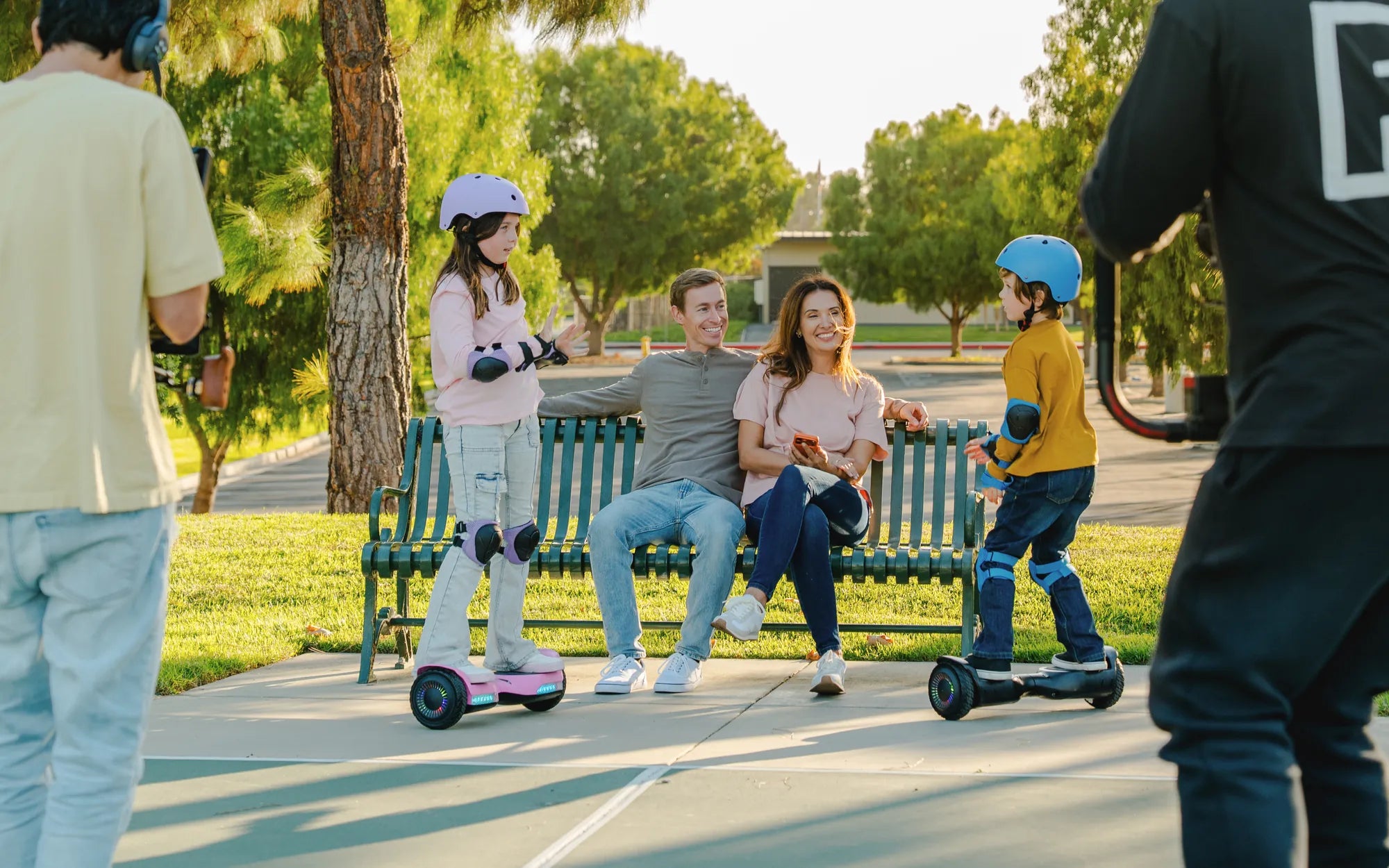
Introduction: Why the Right Scooter Matters for Your 8-Year-Old
Choosing a scooter for kids 8 years old is about more than just picking a toy. It's selecting a tool for development, independence, and outdoor adventure. At eight, children refine motor skills, seek greater autonomy, and build social confidence through play. The right scooter supports this growth by being safe, durable, and appropriately challenging.
This guide cuts through the noise to focus on factual specifications and safety engineering. We will analyze the key features that differentiate a quality ride from a subpar one. As a leading brand trusted by over 100,000 families, Gyroor designs with these principles at its core, ensuring every ride balances exhilaration with security.
You will learn to evaluate motor specs, battery safety, construction materials, and braking systems. Our goal is to equip you with the knowledge to make an informed choice that matches your child's skill level and your family's lifestyle. Let's begin the journey to finding the ideal scooter for kids 8 years and beyond.
Key Features to Evaluate: Beyond Just Wheels and Handlebars
Selecting a scooter requires a technical eye. The specifications directly impact safety, enjoyment, and longevity. Parents should move beyond aesthetics and focus on performance data and build quality.
Key metrics include motor wattage, battery certification, frame material, and weight capacity. These elements work together to define the scooter's capability. A well-matched scooter feels like an extension of the rider, promoting control rather than intimidation.
We will break down each component in the following sections. Understanding these features allows you to compare models objectively. This knowledge is power when navigating the vast market of kids' electric scooters.
Motor Power & Speed: Finding the Safe "Sweet Spot"
Motor power, measured in watts (W), dictates acceleration and hill-climbing ability. For an 8-year-old, a motor between 80W and 150W is typically sufficient. This range provides enough power for neighborhood inclines without excessive, unsafe speed.
Speed is the most critical safety consideration. A maximum speed of 10 mph (16 km/h) is widely recommended as a safe ceiling for this age group. Models with multiple speed modes (e.g., beginner: 5 mph, advanced: 10 mph) are ideal. They allow skill progression while keeping initial rides manageable and safe.
Parental control via a companion app is a valuable feature for setting and locking maximum speed. This ensures the scooter grows with the child's competence. The goal is controlled fun, not raw velocity.
Battery Life & Range: Matching Power to Playtime
Battery capacity, measured in watt-hours (Wh) or ampere-hours (Ah), determines how far your child can ride. For typical use, expect a realistic range of 6 to 10 miles on a single charge. This supports extended play sessions without frequent recharging.
Battery safety is paramount. Always prioritize models with UL-certified battery packs. This certification means the battery has undergone rigorous testing for overcharge protection, short-circuit prevention, and thermal stability. Gyroor exclusively uses these certified packs, a non-negotiable for peace of mind.
Charge time is another practical factor. Most kids' scooter batteries fully charge in 3 to 5 hours. Teach your child to plug in the scooter after use, so it's always ready for the next adventure.
Build Quality & Durability: Withstanding the Test of Play
The frame material is the scooter's skeleton. Aircraft-grade aluminum alloy is the standard for quality. It offers an excellent strength-to-weight ratio, making the scooter sturdy yet light enough for a child to maneuver and carry if needed.
Always check the maximum weight limit. A robust scooter for an 8-year-old should support at least 120 lbs. This provides a significant safety buffer above the average child's weight, ensuring structural integrity.
Weather resistance is crucial for real-world use. An IPX5 water-resistant rating, as found on Gyroor models, means the scooter can withstand water jets from any direction. It can handle wet pavement, puddles, and light rain, protecting the electrical components from damage.
Wheel Size & Terrain: Smooth Rides on Favorite Routes
Wheel size and type define ride comfort and terrain capability. For 8-year-olds, wheels between 8.5 and 10 inches in diameter are common. Larger wheels roll over cracks and small obstacles more easily, providing a smoother ride.
There are two main tire types: air-filled (pneumatic) and solid rubber. Pneumatic tires offer superior shock absorption and grip, ideal for varied surfaces like asphalt and packed dirt. Solid rubber tires are maintenance-free, never go flat, and are best for perfectly smooth pavement.
Consider your child's primary riding environment. For sidewalks and park paths, larger pneumatic tires enhance comfort. For smooth driveway and cul-de-sac use, durable solid tires may be perfectly adequate.
Safety First: Non-Negotiable Features for Peace of Mind
Safety engineering is the most critical aspect of any kids' product. A well-designed scooter incorporates multiple layers of protection to prevent accidents and minimize injury. This section details the essential safety features that should be on your checklist.
From reliable braking to enhanced visibility, each component plays a role. Brands like Gyroor build safety into the foundation of their design, reflected in certifications and warranty support. Never compromise on these elements for the sake of a lower price.
Braking Systems: Reliable Stopping Power Explained
Effective braking is non-negotiable. The most common systems for kids' scooters are electronic (e-brakes), disc brakes, and foot brakes. Each has distinct advantages for young riders.
Electronic brakes engage the motor to slow the scooter, often activated by a lever on the handlebar. They provide smooth, progressive stopping power. Disc brakes offer strong, consistent performance in various weather conditions. A rear foot brake, where the rider presses down on a fender, is a simple, reliable mechanical backup.
The best setups often combine two systems, such as an electronic front brake and a mechanical rear foot brake. This redundancy ensures that if one system fails, another is available. Teach your child to use both brakes gently for controlled stops.
Stability & Control: Design Elements that Build Confidence
Stability begins with the deck. A wider, longer deck (approximately 15" x 5") gives an 8-year-old a secure, comfortable footing. High-quality grip tape is essential to prevent feet from slipping during acceleration or braking.
Handlebar height should be adjustable to match your child's growth. Properly positioned handlebars (around chest height) allow for an upright, controlled riding posture. Textured rubber grips prevent hands from sliding, even when sweaty.
A lower center of gravity, achieved through smart battery placement, makes the scooter less tippy. These design choices reduce the learning curve and help build a rider's confidence from the very first ride.
Lights & Visibility: Being Seen for Safe Adventures
Visibility is a critical, often overlooked, safety layer. A bright front headlight (LED preferred) is essential for seeing the path ahead in lower light. It also makes your child visible to others.
A rear brake light that illuminates when slowing down alerts pedestrians and cyclists from behind. Additional side or deck LEDs significantly increase the rider's profile at night. Reflectors on the wheels and frame provide passive visibility from all angles when light shines on them.
Even with built-in lights, supplement with high-visibility clothing or reflective gear for any ride near dusk or dawn. Making your child as visible as possible is a simple, effective safety upgrade.
The Gyroor Advantage: Engineered for Young Riders
While many brands compete in the kids' scooter market, specific engineering choices create a tangible difference in safety and durability. Gyroor's design philosophy centers on certifications, real-world testing, and long-term reliability that parents can trust.
These are not just marketing claims but measurable standards. They translate directly to a lower risk of malfunction, greater durability against the elements, and assured support throughout ownership. This section explains the core advantages that set a benchmark for the category.
UL-Certified Battery Packs: The Core of Trustworthy Power
The UL certification mark on a battery pack is a vital indicator of safety. It signifies that the battery has been tested by Underwriters Laboratories, an independent global safety science company, for specific hazard risks.
These tests simulate extreme conditions, including overcharging, short-circuiting, and exposure to high temperatures. A certified pack is engineered with protection circuits to prevent thermal runaway—a leading cause of battery fires. Gyroor's commitment to using only UL-certified batteries in all models eliminates a major safety variable for parents.
IPX5 Water Resistance: Ready for Real-World Fun
An IPX5 rating provides a defined level of protection against water ingress. The "5" means the scooter's electrical components can withstand low-pressure water jets (6.3mm nozzle) from any direction without harmful effects.
In practice, this means the scooter is protected during common scenarios: riding through a unavoidable puddle, getting caught in a light rain shower, or being washed down with a hose (avoiding direct high-pressure spray on connectors). This engineering extends the scooter's lifespan and ensures consistent performance in typical outdoor conditions.
1-Year Warranty & Support: Investing with Confidence
A comprehensive warranty is a brand's promise behind its product. Gyroor's standard 1-year warranty covers defects in materials and workmanship, providing a significant safety net for your investment.
This warranty, backed by accessible customer support, means you have recourse if an issue arises. It reflects confidence in the product's durability. When combined with a library of tutorial videos and clear documentation, it creates a ownership experience focused on long-term satisfaction and safety.
Making the Final Choice: Your Family's Checklist
With the technical knowledge in hand, the final step is synthesis. Use this actionable checklist to prioritize features based on your child's unique profile, your local environment, and your specific needs. This turns data into a confident decision.
Start by assessing your child's riding experience and temperament. Then, consider where they will ride most often. Finally, align these factors with the scooter's specifications to find the perfect match.
For the First-Time Rider: Prioritizing Stability and Control
If your 8-year-old is new to electric scooters, the primary goal is building confidence. Prioritize models with a beginner speed mode (5-7 mph), a wide deck for stable footing, and intuitive braking. A lighter overall weight makes the scooter easier to handle and recover from a wobble.
Look for scooters with a gradual acceleration curve to prevent jerky starts. Parental controls for locking speed are highly valuable here. The initial experience should be about mastering balance and control in a very safe, limited performance envelope.
For the Confident Explorer: Balancing Power and Advanced Features
For a child with previous riding experience, you can consider scooters that offer more range and slightly higher top speeds (capped at 10 mph). Features like enhanced suspension (spring or rubber in wheels) become more valuable for handling varied terrain like park paths.
Brighter lighting systems support longer adventures. A longer battery range (closer to 10 miles) allows for extended exploration without range anxiety. The focus shifts to adventure-ready durability and features that support more independent, longer-duration use.
Comparison Table: Key Specifications at a Glance
| Feature | Entry-Level / First-Time Rider | Intermediate / Confident Explorer | Why It Matters |
|---|---|---|---|
| Motor Power | 80W - 100W | 120W - 150W | Determines acceleration and hill capability. More power isn't always better for beginners. |
| Max Speed | 5-7 mph (with lockable mode) | Up to 10 mph (with multiple modes) | Safety is paramount. Controlled speed allows for skill-appropriate challenges. |
| Battery & Range | 6-8 mile range | 8-10+ mile range | Matches scooter endurance to playtime. UL certification is mandatory for both. |
| Braking System | Electronic + Foot Brake | Disc + Electronic or Dual System | Redundant systems ensure reliable stopping power in all conditions. |
| Tire Type | Shock-absorbent Solid Rubber | Pneumatic (Air-Filled) | Solid tires are maintenance-free; pneumatic tires offer a smoother ride on bumps. |
| Key Feature Focus | Lightweight, Wide Deck, Parental Controls | Longer Range, Enhanced Lights, IPX5 Rating | Aligns scooter capabilities with the rider's experience and typical use case. |
FAQ: Quick Answers for Parents
Q: What is the appropriate speed for an 8-year-old?
A: A maximum speed of 10 mph is the recommended safe limit. Scooters with multiple speed modes are ideal, starting as low as 5 mph for beginners. Parental controls that allow you to set and lock the maximum speed provide an additional layer of safety.
Q: How long does the battery typically last, and how do I maintain it?
A: A quality battery should provide 6-10 miles per charge and retain good capacity for 2-3 years with proper care. Follow the manufacturer's charging instructions, avoid leaving the scooter fully depleted for long periods, and store it in a cool, dry place. Using only the provided UL-certified charger is crucial.
Q: Is assembly difficult?
A> Most quality scooters, including those from Gyroor, arrive 90% assembled. Typically, you only need to attach the handlebar to the stem and tighten a few bolts with the provided tools. The process usually takes 10-15 minutes with clear, step-by-step instructions.
Q: What safety gear is absolutely essential?
A> A properly fitted CPSC-certified bicycle helmet is non-negotiable for every ride. We strongly recommend a full set of protective gear: knee pads, elbow pads, and durable gloves. Wrist guards are particularly valuable as falls often involve putting hands out.
Q: Can my child ride this scooter to school or in the street?
A> Local laws vary greatly. Most municipalities prohibit electric scooter use on public roads for children under a certain age (often 12-16). They are typically intended for use on private property, sidewalks (where permitted and with extreme caution for pedestrians), and bike paths. Always check your city's specific ordinances regarding micromobility devices.
Conclusion: The Path to Confident, Joyful Rides
Selecting the ideal scooter for kids 8 years old is a meaningful decision that fosters independence, physical activity, and joy. By focusing on data-driven features—controlled motor power, UL-certified batteries, robust braking, and durable, water-resistant construction—you invest in safe, lasting fun. This scooter for kids 8 years guide underscores that the best choice balances capability with appropriate limits, allowing your child's confidence to grow at a safe pace.
Remember, the right scooter is an engine for adventure, built on a foundation of uncompromising safety. Prioritizing brands that transparently adhere to rigorous standards, like Gyroor with its UL and IPX5 certifications, provides the peace of mind that lets the fun take center stage. Equip your young rider with knowledge, proper safety gear, and a scooter engineered for their world.
Ready to explore models that put safety and performance first? Browse the full Gyroor collection at gyroorboard.com to find the perfect ride designed for your child's next adventure.
Electric Hoverboard Australia: The Ultimate Guide to Riding Safely and Stylishly
How Long Does a Hoverboard Charge Last? A Complete Guide to Battery Life