


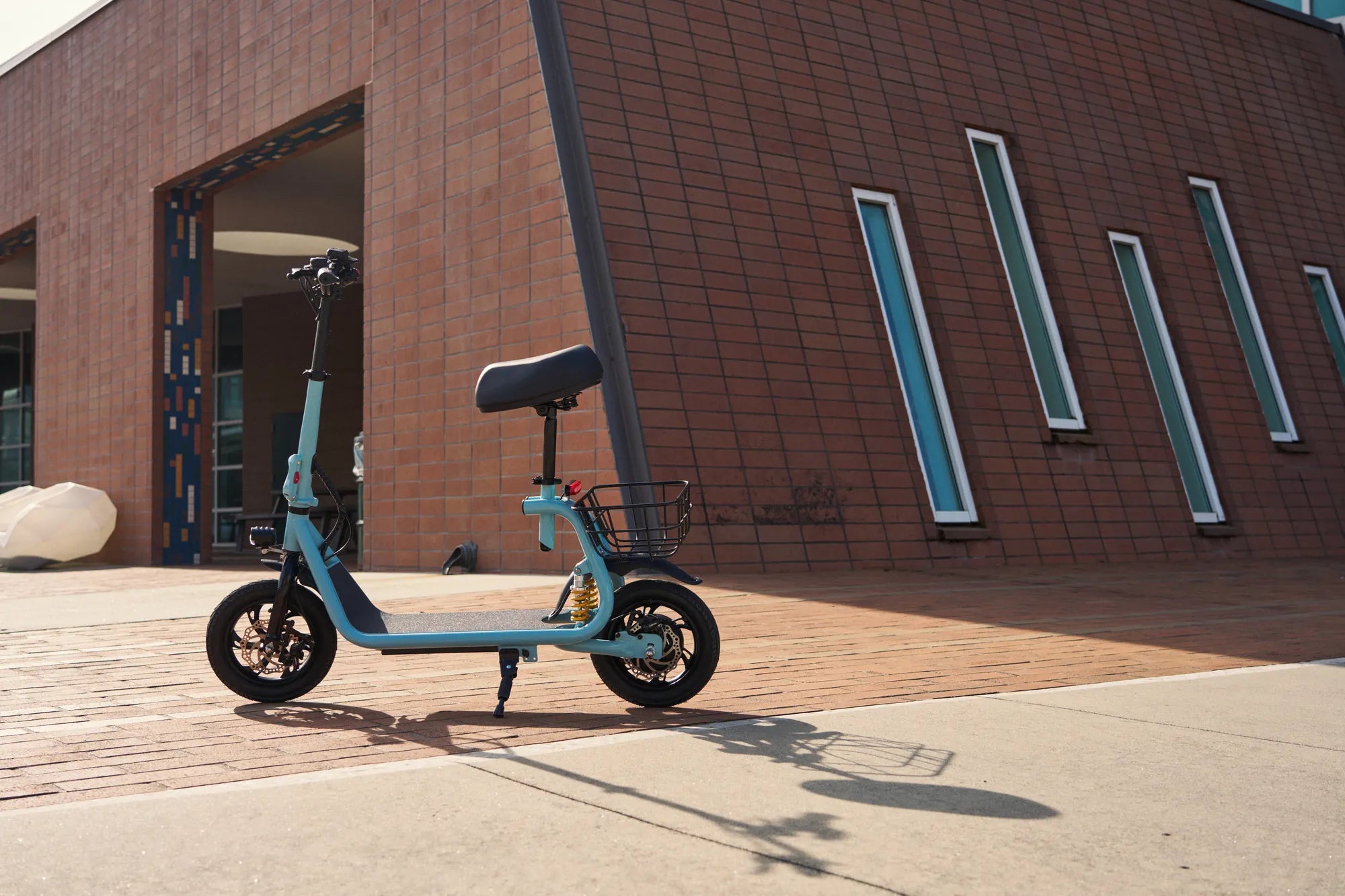
Introduction: Understanding the Front Wheel of Your Electric Scooter
The front wheel of your electric scooter is the linchpin of your entire riding experience. It is the primary point of contact with the road, responsible for steering, initial braking, shock absorption, and maintaining critical traction. A well-maintained scooter front wheel directly translates to predictable handling, enhanced safety, and superior comfort. This guide will dissect every component and function, providing you with the knowledge to maximize performance and longevity.
Riders often focus on battery range or top speed, neglecting the fundamental mechanics that enable those features. The front wheel's condition impacts everything from your scooter's agility in traffic to its stability at higher speeds. Understanding its role is the first step toward becoming a more informed and safer rider.
We will explore the anatomy of the front wheel, from tire compound to hub design. You'll learn how different configurations affect your commute. Practical maintenance checklists and troubleshooting advice will empower you to perform routine care confidently.
By the end, you'll see the scooter front wheel not just as a rotating part, but as a sophisticated system integral to your scooter's DNA. This knowledge is essential for anyone from daily commuters to weekend enthusiasts who rely on their electric scooter for efficient, enjoyable transportation.
The Anatomy of a Scooter Front Wheel: More Than Just a Tire
A modern electric scooter front wheel is a carefully engineered assembly. Its core components work in unison to deliver a safe and responsive ride. The main parts include the tire, the inner tube (in pneumatic setups), the rim, the hub assembly, and the axle.
The tire provides the crucial interface with the ground. Its tread pattern, rubber compound, and width determine grip levels on various surfaces. Beneath it, in many models, lies an inner tube that holds pressurized air, acting as the primary suspension element.
The rim, typically made from aluminum alloy for a balance of strength and lightness, is the structural foundation that holds the tire. The hub is the central component that houses the bearings and, on some models, the front motor. The axle is the solid rod that passes through the hub and attaches the entire wheel to the scooter's fork.
Each component must meet precise specifications. For instance, brands like Gyroor engineer their wheels as complete systems, ensuring compatibility and optimal performance across their lineup of UL-certified electric scooters and e-bikes.
Tubeless vs. Pneumatic Tires: What's Best for Commuting?
The choice between air-filled (pneumatic) and airless (tubeless or solid) tires is a fundamental one for commuters. Pneumatic tires, which use an inner tube, are the traditional choice. They offer superior shock absorption, providing a noticeably smoother ride over cracks and bumps.
This comfort comes from the air cushioning effect, which also improves traction by allowing more of the tire's surface area to conform to the road. The main drawback is susceptibility to punctures, though modern tire sealants and puncture-resistant liners can mitigate this risk.
Airless or solid tires eliminate the fear of flats entirely. They are typically made from a dense foam or rubber compound. While supremely reliable in terms of never going flat, they transmit far more road vibration to the rider, leading to a harsher ride and increased fatigue on longer journeys.
For the urban commuter navigating mixed surfaces, a high-quality pneumatic tire often provides the best balance. The comfort and grip outweigh the minimal maintenance required for periodic pressure checks. Gyroor models often feature robust, wide pneumatic tires that are optimized for this daily use case.
Rim Material and Design: Impact on Durability and Weight
The rim's construction directly influences the scooter's durability, weight, and handling characteristics. Most quality electric scooters use rims made from aluminum alloys, such as 6061-T6. This material offers an excellent strength-to-weight ratio, resisting deformation from impacts better than plastic while remaining relatively light.
Rim design also plays a role. 'Mag' style rims, which are cast or forged as a single solid piece, are common. They are very strong, provide a modern aesthetic, and are easy to clean. Spoked wheels, while less common on scooters, can offer weight savings and a degree of flex that absorbs minor impacts.
The rim's width is equally important. A wider rim can support a wider tire, which increases contact patch and stability. However, it may also add slight rolling resistance. Manufacturers like Gyroor select rim dimensions that complement their tire and motor specifications to ensure balanced performance.
A bent rim is a serious issue, causing wheel wobble and uneven tire wear. Investing in a scooter with a well-built rim from a reputable brand is a proactive step toward long-term reliability and consistent handling.
Key Functions: Why Your Front Wheel is Crucial for Safety and Control
The scooter front wheel is not a passive component; it is an active safety system. Its primary functions are steering, providing initial braking force, absorbing road shocks, and maintaining traction. A failure or deficiency in any of these areas can compromise control and lead to an accident.
When you turn the handlebars, the front wheel changes the scooter's direction. The precision and feedback of this action depend on the wheel's alignment, bearing smoothness, and tire grip. Any slop or resistance in the system makes the scooter feel vague or unresponsive.
In braking, especially with front-disc brake systems, the front wheel handles the majority of the stopping power. Effective braking requires the tire to maintain a firm grip on the pavement without skidding. A worn tire or incorrect pressure drastically increases stopping distance.
Finally, as the first point of contact with road irregularities, the front wheel's ability to dampen shocks protects both the scooter's frame and the rider. This reduces fatigue and helps keep the tire in consistent contact with the ground for better overall control.
Steering Precision and Handling Dynamics
Steering feel is a direct result of front-wheel geometry and condition. Key factors include wheel size, tire pressure, and the quality of the wheel bearings. A larger diameter wheel, such as a 10-inch, will generally provide more stability in a straight line and roll over obstacles more easily than an 8-inch wheel.
Tire pressure is a critical tuning variable. Over-inflation makes the tire feel hard and skittish, reducing grip and transmitting more shock. Under-inflation causes sluggish steering, increases rolling resistance, and risks damaging the rim on potholes. Adhering to the manufacturer's recommended PSI range is essential.
The wheel bearings, housed within the hub, allow for smooth, friction-free rotation. High-quality, sealed bearings (a standard in Gyroor scooters) prevent dirt and water ingress. Worn bearings create play or a grinding sensation, leading to imprecise steering and potential safety issues.
Understanding these dynamics allows you to diagnose handling quirks. A scooter that pulls to one side, for example, could indicate a pressure imbalance, a misaligned wheel, or a sticking brake caliper—all issues centered on the front wheel assembly.
The First Line of Defense: Shock Absorption and Ride Comfort
Urban landscapes are filled with expansion joints, potholes, and uneven pavement. The front wheel is your first and most important line of defense against these disturbances. On scooters without a dedicated front suspension, the tire itself is the sole shock absorber.
A pneumatic tire works by compressing the column of air inside it upon impact. This compression absorbs energy that would otherwise travel up the fork and into your hands and arms. The correct tire pressure maximizes this effect; too much air leaves no room for compression, turning your ride into a vibrating ordeal.
On models equipped with a front suspension fork, the wheel and tire work in tandem with the spring or elastomer system. The tire handles high-frequency small bumps, while the suspension manages larger impacts. This layered approach is why suspension-equipped scooters, like several in Gyroor's performance lines, offer notably plush ride quality.
Maintaining this shock-absorbing capability is a matter of safety. A worn-out or under-inflated tire bottoms out on impacts, potentially causing a loss of control or damage to the rim. Regular inspection of the front tire's condition and pressure is a non-negotiable aspect of scooter upkeep.
Maintenance and Troubleshooting: Keeping Your Front Wheel in Top Shape
Proactive maintenance of your scooter front wheel is simple, fast, and the most effective way to ensure safety and extend the component's life. A basic routine, performed regularly, can prevent minor issues from becoming major repairs or roadside failures.
This process involves visual inspection, pressure checks, and functional tests. It requires minimal tools: a tire pressure gauge, a set of hex keys or wrenches (depending on your axle), and a clean rag. Setting aside five minutes before a weekly ride can save hours of hassle later.
The goal is to catch problems early. A slow leak is easier to address than a sudden flat. A slightly loose axle nut is a simple tighten, whereas a fully dislodged wheel is a catastrophic failure. This section provides a actionable checklist and solutions for common problems.
Adhering to a maintenance schedule also helps you become intimately familiar with your scooter's normal sounds and feels. You'll be able to detect subtle changes that indicate wear, allowing you to address them before they affect your ride.
Regular Inspection Checklist: What to Look For
Perform this quick visual and physical check before extended rides or on a weekly basis for frequent commuters. First, examine the tire tread for embedded debris like glass or nails, and check for signs of excessive or uneven wear. Balding tread significantly reduces wet-weather grip.
Next, check tire pressure with a reliable gauge. Do not rely on a thumb test. Inflate to the PSI range printed on the tire sidewall or in your Gyroor scooter's manual—typically between 40-50 PSI for commuter models. Pressure naturally decreases over time, so consistent checks are vital.
Lift the front of the scooter and spin the wheel. Watch for any side-to-side wobble indicating a bent rim or an improperly seated tire. Listen for grinding or scraping noises from the hub. Finally, grasp the wheel at the top and bottom and try to rock it; any noticeable play suggests loose axle nuts or worn bearings.
Inspect the brake disc (if equipped) for warping or excessive wear, and ensure the brake caliper is aligned and not rubbing against the disc when released. A consistent, light scraping might be normal, but a heavy drag indicates an issue.
Common Front Wheel Issues and How to Fix Them
Persistent Wobble: If the wheel wobbles while spinning, first ensure the tire is properly seated on the rim and inflated. If the wobble remains, the rim is likely bent. Minor bends can sometimes be trued by a professional, but significant damage requires rim replacement. Using genuine Gyroor replacement parts ensures perfect fit and performance.
Grinding Noises from the Hub: This usually points to failed or contaminated bearings. Sealed bearings are not user-serviceable. If your scooter is within its 1-year warranty period, contact Gyroor support. If not, a bike shop can typically press in new, high-quality replacements.
Slow Leaks or Flat Tires: For tubed tires, submerge the inflated tube in water to find the bubbling puncture. Patch kits are a temporary fix; replacing the inner tube is more reliable. For tubeless tires, a tire sealant can often plug small punctures. Always identify and remove the cause of the puncture (e.g., a thorn) before repairing.
Loose Feeling in Steering: This is often caused by a loose axle nut or stem clamp. Refer to your manual for proper torque specifications and tighten securely. Over-tightening can damage bearings, so follow guidelines carefully. If tightening doesn't resolve the issue, the headset bearings may need adjustment.
Cleaning and Bearing Care for Longevity
Keeping your front wheel clean prevents grime from accelerating wear on moving parts. After riding in wet or dirty conditions, wipe down the wheel, tire, and fork with a damp cloth. Avoid high-pressure water sprays directly on the hub or axle, as they can force water past seals.
For the hub area, a soft brush can dislodge caked-on mud. The focus is on preventing abrasive particles from entering the bearing seals. Gyroor scooters' IPX5 water-resistant rating protects the electrical connections in motorized hubs, but mechanical care is still required.
Modern scooter wheels almost universally use sealed, cartridge-style bearings. They are lubricated at the factory and designed to be replaced as a unit when they fail. Signs of failure include roughness when spinning, audible grinding, or lateral play. There is no routine "lubrication" for these sealed units.
The best bearing care is preventive: avoid submerging the wheel, clean it gently, and don't subject it to impacts that can dent races or crack seals. Quality bearings, like those specified by reputable brands, are engineered for thousands of miles of reliable service.
Upgrades and Compatibility: When to Consider a New Front Wheel
There are several scenarios where upgrading or replacing your scooter's front wheel is a logical step. These include switching to a different tire type for seasonal or terrain changes, upgrading to a larger wheel size for comfort, or replacing a damaged component with a higher-performance aftermarket part.
An upgrade might involve moving from a standard street tire to a more aggressive, treaded tire for light off-road use. Conversely, a commuter might seek a tire with better puncture protection or a softer compound for improved wet-weather grip. The front wheel is often the easiest place to start such experimentation.
Replacement is necessary when components are worn beyond repair or damaged in an accident. It is crucial to understand that not all wheels are interchangeable. Using an incompatible wheel can lead to handling instability, brake failure, or damage to the scooter's fork and electronics.
For most riders, the safest and most straightforward path is to use Original Equipment Manufacturer (OEM) parts. Gyroor, for example, designs its wheels as integrated systems, ensuring all specifications—from axle dimensions to motor connectors—are perfectly matched to their scooter models.
Choosing a Replacement: Ensuring a Perfect Fit for Your Gyroor Scooter
Selecting the correct replacement front wheel requires matching several key specifications. First is the wheel diameter (e.g., 8.5", 10"). Second is the axle diameter and type—whether it's a solid axle secured with nuts or a quick-release system. The width of the hub (the distance between the fork dropouts) must also match.
For scooters with front disc brakes, the brake rotor mounting pattern (typically a 6-bolt or center-lock standard) and diameter (e.g., 120mm) must be compatible. If the front wheel contains a motor, the connector type and wire gauge are absolutely critical; a mismatch here can cause electrical failure.
The simplest way to guarantee a perfect fit is to order the replacement part directly using your scooter's specific model number. Gyroor's customer service and parts department can provide the exact OEM wheel assembly, ensuring seamless integration and preserving the scooter's warranty on other components.
Attempting to fit a generic or third-party wheel, especially on a motorized front hub, risks voiding warranties and creating significant safety hazards. The investment in a certified part is an investment in continued reliability and peace of mind.
The Impact of Wheel Size on Performance: 8-inch vs. 10-inch
Wheel size is a primary determinant of a scooter's ride character. The industry commonly uses 8-inch to 10-inch diameters for commuter and performance models. The choice involves a classic trade-off between agility and stability/comfort.
8-inch to 8.5-inch Wheels: These smaller wheels are often found on ultra-portable and lighter-weight scooters. They offer very quick steering response, making the scooter feel nimble in tight spaces. The drawback is a smaller contact patch and less ability to roll over obstacles. Cracks and bumps are felt more directly, and stability at higher speeds can be slightly reduced.
10-inch Wheels: Becoming the standard for premium commuter and all-terrain models, 10-inch wheels provide a significantly smoother ride. Their larger diameter allows them to bridge gaps and roll over imperfections with less disruption. They offer a larger contact patch for better braking and cornering grip, and generally inspire more confidence at speeds above 15 mph.
The following table summarizes the key differences:
| Feature | 8-inch / 8.5-inch Wheel | 10-inch Wheel |
|---|---|---|
| Agility & Maneuverability | Excellent; very quick steering | Good; stable but slightly slower to turn |
| Ride Comfort | Fair; more impacted by small bumps | Very Good; rolls over obstacles easily |
| High-Speed Stability | Good | Excellent |
| Acceleration (with equal motor power) | Slightly quicker off the line | Slightly slower due to greater rotational mass |
| Typical Use Case | Last-mile, ultra-portable, urban weaving | Longer commutes, mixed terrain, priority on comfort |
Gyroor's lineup includes models with both size profiles, allowing riders to choose based on their primary use case. The larger 10-inch pneumatic tires on models like the Gyroor C1 series are explicitly designed for commuting comfort and all-around capability.
FAQ: Front Wheel Questions, Answered
Q: How often should I check my scooter's front tire pressure?
A: For optimal performance and safety, check the pressure before every significant ride, or at minimum, once a week. Air permeates through rubber over time, and temperature changes affect pressure. Riding on under-inflated tires is a leading cause of premature wear and rim damage.
Q: Can I put a different brand of tire on my Gyroor scooter's front wheel?
A: Technically, if the tire size (diameter and width) and valve type match exactly, it may fit. However, for optimal safety and performance, we strongly recommend using Gyroor-certified replacement tires. Our tires are engineered to match the load rating, traction profile, and rim width of our specific models, ensuring the designed handling characteristics and water-resistance integrity are maintained.
Q: What does a wobbly front wheel indicate?
A: A wobble can have several causes. First, check tire pressure and ensure the tire is evenly seated on the rim. If the wobble persists while spinning the lifted wheel, the rim is likely bent from an impact. A wobble that only occurs under weight could indicate a loose axle, worn bearings, or even a damaged fork. Diagnose by lifting the wheel and checking for play.
Q: Is the front wheel on a Gyroor scooter waterproof?
A: The electrical components within a motorized front hub are protected by the scooter's overall IPX5 water-resistance rating, meaning they can withstand low-pressure water jets from any direction. However, the tire, tube, and mechanical bearings are not "waterproof" in the same sense. You can ride in wet conditions confidently, but standard tire and maintenance practices apply. Avoid deep puddles that could submerge the hub.
Q: My front wheel makes a clicking noise with each rotation. What's wrong?
A: A rhythmic click is often a simple fix. It could be a piece of debris stuck in the tread, a damaged tire carcass, or, on disc brake models, a bent brake rotor rubbing against the caliper or a sensor. Inspect the tire first, then spin the wheel while observing the brake disc clearance. If the noise is coming from the hub itself, it may indicate a more serious bearing issue.
Conclusion: Rolling Forward with Confidence
Your scooter's front wheel is a masterpiece of functional engineering, responsible for the fundamental sensations of riding: control, stability, and connection to the road. By understanding its anatomy—from the grip of the tire to the precision of the hub bearings—you transform from a passive rider into an informed owner.
Regular maintenance is not a chore but a brief ritual that guarantees safety and preserves your investment. The simple acts of checking pressure, inspecting for wear, and listening for unusual sounds are the most effective ways to prevent breakdowns and ensure every journey is as smooth as the first.
When considering changes or facing repairs, prioritize compatibility and quality. Choosing OEM parts from your manufacturer, such as Gyroor, ensures that the sophisticated balance of your scooter's design is maintained. This commitment to using certified components supports the long-term reliability that over 100,000 riders trust.
Your adventure on two wheels begins where rubber meets road. Equip yourself with knowledge, perform routine care, and choose parts that match your scooter's pedigree. For a full range of electric scooters and e-bikes built with this level of integrated, reliable engineering—featuring UL-certified batteries, IPX5 water-resistant designs, and a robust 1-year warranty—explore the complete collection. Browse the full Gyroor collection at gyroorboard.com and ride with confidence.
Small Trike: The Ultimate Guide to Stability, Utility & Electric Power
12v Scooter Battery Near Me: The Ultimate Local Buying & Installation Guide