



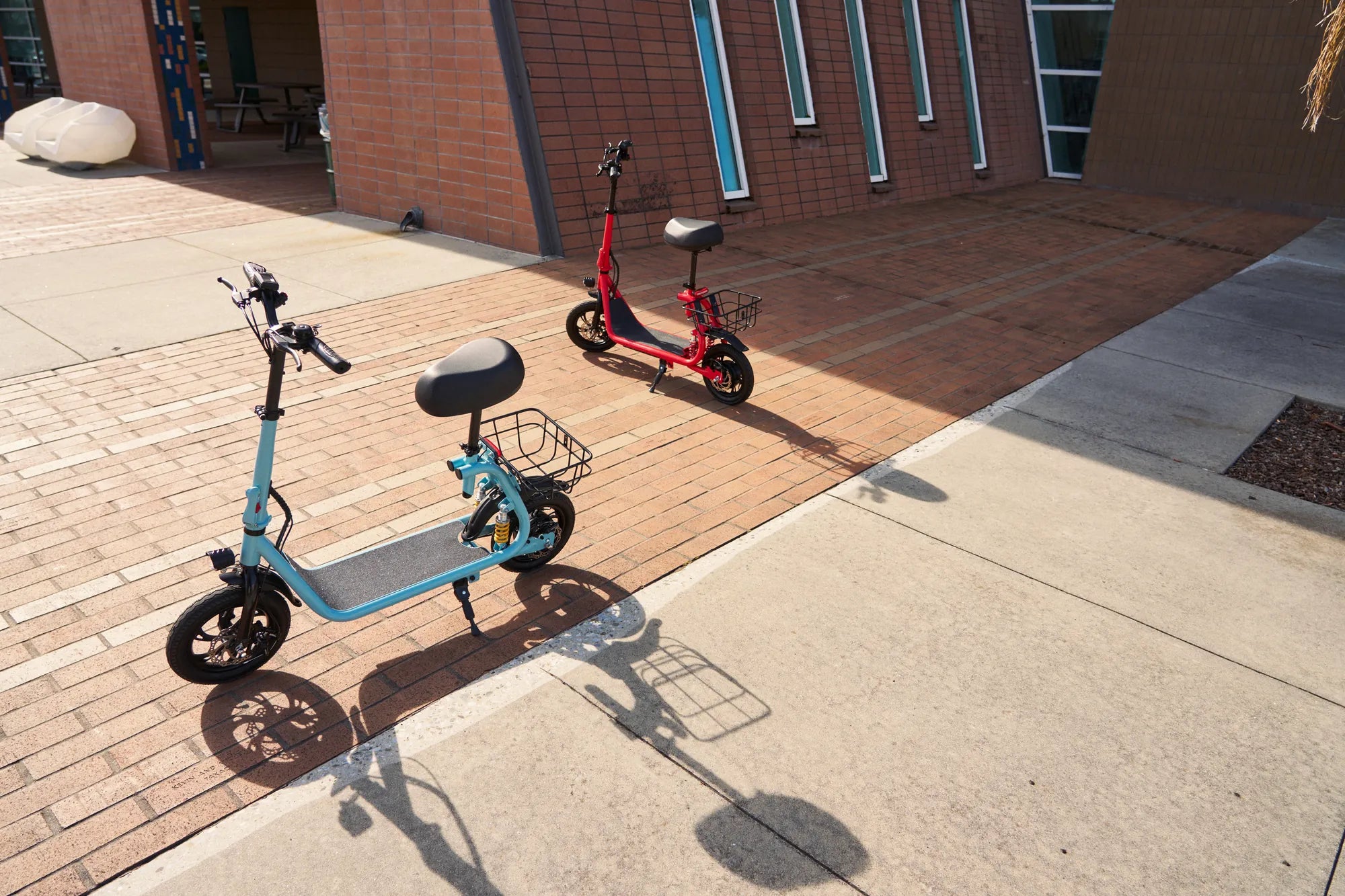
How much should you really pay for an electric scooter? The scooter price range is vast, stretching from a couple of hundred dollars to several thousand, creating a confusing landscape for buyers. This variation isn't arbitrary; it directly reflects differences in performance, safety, durability, and overall riding experience. This guide will demystify the electric scooter price range, providing you with the data and framework needed to invest confidently in a scooter that matches your lifestyle, without overspending or compromising on critical features.
You'll learn what defines budget, mid-range, and premium scooter categories. We'll analyze the core components—battery, motor, and build quality—that dictate cost. Furthermore, we'll explore the true cost of ownership beyond the sticker price and provide a practical guide to matching your needs with the right investment. As a leader in personal electric mobility, Gyroor offers UL-certified, reliable options across this spectrum, trusted by over 100,000 riders.
Breaking Down the Electric Scooter Price Spectrum
The electric scooter market is segmented into three primary tiers, each defined by a combination of price, performance, and intended use. Understanding these categories is the first step in navigating the scooter price range effectively. The jump from one tier to the next represents significant upgrades in core technology and rider experience.
At the lowest end, you find basic models focused on short-distance convenience. The middle tier offers the best balance of features and value for most daily commuters. The high end delivers specialized performance for demanding riders. Your ideal category depends entirely on your primary use case, required range, and desired comfort.
The Budget Tier: Under $500
In the budget scooter price range, typically under $500, you are purchasing a tool for very specific, limited scenarios. Expect maximum speeds capped around 15-18 mph and real-world ranges between 10 and 15 miles per charge. These models often feature simpler, less powerful motors (250W-350W) and smaller battery packs.
Build materials lean toward heavier steel frames and may include solid or honeycomb tires to eliminate punctures, often at the expense of ride comfort due to minimal or no suspension. Features are basic: mechanical disc or drum brakes, simple LED displays, and essential lights. This tier is ideal for last-mile commuting on very smooth surfaces, casual recreational rides in flat areas, or as a first scooter for younger riders.
The trade-offs are clear. You sacrifice range, speed, hill-climbing ability, and often long-term durability. Batteries may use lower-grade cells without major safety certifications, potentially affecting lifespan. For a reliable, safe, and enjoyable commute longer than a few miles, investing beyond this initial scooter price range is usually advisable.
The Mid-Range Sweet Spot: $500 to $1,200
The $500 to $1,200 scooter price range is widely considered the sweet spot for serious commuters and regular riders. This is where you find the optimal blend of performance, safety, and value. Scooters in this category transform the riding experience from a novelty into a legitimate transportation solution.
Key upgrades include more powerful motors (350W-500W continuous), enabling speeds of 19-25 mph and much better hill-climbing capability. Battery capacity increases significantly, offering realistic ranges of 20 to 40 miles. Build quality improves with lighter, stronger aluminum alloy frames, better IP water-resistance ratings (like IPX4 or IPX5), and pneumatic (air-filled) tires for improved comfort and traction.
Enhanced features become standard: brighter integrated lighting systems, digital displays showing speed and battery level, electronic braking systems (E-ABS) combined with disc brakes, and often some form of suspension—either spring-based or hydraulic—to smooth out urban terrain. Brands like Gyroor compete strongly here, offering models with UL-certified battery packs, robust warranties, and reliable performance that justify the investment.
The Premium & Performance Tier: $1,200 and Above
Beyond $1,200, the scooter price range enters the domain of high-performance and specialized machines. These scooters are engineered for speed enthusiasts, off-road adventurers, or commuters who demand the utmost in range and comfort. The cost is driven by top-tier components and advanced engineering.
Performance specs are substantial: dual motor setups (500W x2 or more) for explosive acceleration and all-wheel-drive capability, top speeds exceeding 30-40 mph, and massive batteries delivering 50 to 70+ miles of range. Frames utilize aerospace-grade aluminum or carbon fiber for strength and lightness. Suspension systems are sophisticated, often featuring dual spring or hydraulic setups front and rear.
Additional premium features include advanced rider aids like customizable power modes, regenerative braking, turn signals, full-color TFT displays, and superior waterproofing (IPX6 or higher). This tier is for the dedicated rider who views their scooter as a primary vehicle for long-distance travel or challenging terrain, where performance and durability are non-negotiable.
Key Factors That Directly Impact Scooter Price
Understanding what drives the scooter price range requires a look under the deck. The cost difference between a $300 and a $1,500 model isn't arbitrary; it's a direct reflection of the quality, capacity, and technology of its core components. By knowing what you're paying for, you can make informed value judgments.
Every dollar in the scooter price range is allocated to the motor system, the energy source, the physical structure, and the electronic controls. Higher investment typically yields better materials, more rigorous testing, advanced safety features, and greater engineering refinement. Let's break down the primary cost centers.
Battery: The Heart and the Major Cost Center
The battery pack is the single most expensive component in any electric scooter, often constituting 25-40% of the total manufacturing cost. Three factors primarily determine its price and quality: capacity, cell brand/quality, and safety certifications. Capacity, measured in Watt-hours (Wh), directly dictates range. A larger Wh rating means a higher cost.
More critically, the quality of the lithium-ion cells inside (from brands like LG, Samsung, or Panasonic versus generic cells) affects performance, longevity, and safety. High-quality cells maintain voltage better, endure more charge cycles (500+ is standard for good cells), and have a lower risk of failure. This is where safety certifications like UL 2271 become paramount.
A UL-certified battery, like those used in all Gyroor scooters, has undergone rigorous testing for electrical, mechanical, and environmental safety. This certification is an investment in risk mitigation, protecting against fire hazards and ensuring long-term reliability. While it adds to the upfront scooter price range, it provides immense value in safety and peace of mind over the scooter's lifespan.
Motor and Performance Specifications
The motor is the engine of your scooter, and its specifications are a key determinant of performance and price. Motor power is advertised in watts, but you must distinguish between peak wattage (a burst rating) and continuous wattage (sustainable power). A scooter with a 500W continuous motor is significantly more capable than one with a 500W peak motor.
Higher continuous wattage translates to better acceleration, higher top speed, and, most importantly, the ability to climb steeper hills without slowing to a crawl. Motor type also matters; brushless hub motors are standard for their efficiency and low maintenance. The move to dual motors, a feature in premium scooters, essentially doubles the power and cost, providing exceptional torque and all-wheel-drive traction for off-road or high-performance use.
Build Quality, Durability, and Warranty
The scooter's chassis and components determine its durability, ride quality, and safety in everyday use. A frame made from aircraft-grade aluminum alloy is lighter, stronger, and more corrosion-resistant than one made from basic steel, but it's also more expensive. The quality of welding, fastener types, and bearing seals all contribute to the build cost.
Water resistance, indicated by an IP rating, is a crucial durability feature. An IPX5 rating (like Gyroor's standard) means the scooter can withstand water jets from any direction, making it safe to ride in rain or through puddles. Achieving this requires careful engineering of seals and gaskets. Finally, a comprehensive warranty (e.g., 1 year on the vehicle, 6 months on the battery) reflects the manufacturer's confidence in their product. A strong warranty, backed by accessible customer support, adds tangible value and reduces long-term ownership risk, justifying a position in a higher scooter price range.
The True Cost of Ownership: Beyond the Sticker Price
The initial purchase price is only part of the financial story. The true cost of owning an electric scooter includes maintenance, repairs, accessories, and potential replacement parts over its usable life. A cheaper scooter with a low upfront cost can become expensive if it requires frequent repairs or an early battery replacement.
Consider ongoing costs like tire replacements (pneumatic tires wear out or get punctures), brake pad changes, and occasional part repairs. Higher-quality scooters in the mid and premium scooter price range often use more durable components that last longer and are easier to service, reducing long-term maintenance costs. Availability of spare parts and service guides is also a factor tied to brand reputation.
The Value of Safety Certifications and Reliable Support
Investing in a scooter with verified safety features like a UL-certified battery is not an optional extra; it's a critical part of protecting your total investment. A battery failure can be dangerous and total the scooter. Reliable customer support ensures that if an issue arises, you have a path to resolution without exorbitant third-party repair bills.
Brands that stand behind their products with clear warranties and responsive service add significant value. This ecosystem of safety and support, exemplified by Gyroor's commitment to UL certification and a 1-year warranty, provides long-term peace of mind that isn't reflected in a simple spec sheet but is crucial to a positive ownership experience.
Making the Smart Investment: Aligning Budget with Need
Navigating the scooter price range successfully means starting not with a budget, but with a clear assessment of your needs. Ask yourself: What is my primary use case? What is my daily or weekly mileage? What are my route's terrain and hill grades? Do I need to carry it upstairs or onto public transit?
For a smooth, sub-5-mile urban commute, a capable mid-range scooter is ideal. For a student navigating a large campus with some hills, a robust budget or entry-level mid-range model may suffice. For a rider replacing a car for a 15-mile round-trip commute with steep hills, investing in the higher end of the mid-range or a premium model is necessary. Matching the scooter's core capabilities to your non-negotiable requirements ensures you spend money where it matters most.
Scooter Price Range Comparison Table
| Price Tier | Typical Range | Typical Top Speed | Motor Power | Key Features | Best For |
|---|---|---|---|---|---|
| Budget (Under $500) | 10-15 miles | 15-18 mph | 250W-350W (Peak) | Solid tires, basic brakes, simple display, steel frame. | Short, flat trips; first-time riders; very light use. |
| Mid-Range ($500 - $1,200) | 20-40 miles | 19-25 mph | 350W-500W (Continuous) | Pneumatic tires, suspension, disc brakes, IPX5 water resistance, UL battery (e.g., Gyroor). | Daily commuting, reliable urban transportation, regular riders. |
| Premium ($1,200+) | 40-70+ miles | 25-40+ mph | 500W+ Dual Motors | Advanced suspension, premium materials, high-capacity battery, advanced displays & features. | Long-distance commuting, off-road, performance enthusiasts. |
Frequently Asked Questions (FAQ)
1. Is a more expensive electric scooter always better?
Not necessarily. "Better" is defined by your specific needs. A $3,000 high-performance off-road scooter would be a poor choice for a smooth two-mile campus commute—it's overkill, heavy, and less portable. The goal is to find the best scooter for your specific use case within your budget. A well-chosen mid-range scooter often represents the best overall value for most riders.
2. What are the hidden costs I should budget for?
Beyond the scooter itself, you should budget for essential safety gear, primarily a high-quality helmet ($50-$150). A good U-lock or chain lock ($30-$80) is crucial for security. You may also want gloves, a phone mount, or a carrying bag. Maintenance costs include periodic tire inner tube replacements ($10-$20 each), brake pad changes ($15-$30 per set), and potential repair labor if you cannot DIY.
3. How long do electric scooter batteries typically last?
The lifespan is measured in charge cycles. A quality battery with name-brand cells can typically retain 80% of its original capacity after 500 full charge cycles. For a rider using half their range daily, this translates to roughly 2-3 years of use before noticeable range degradation. Proper care (avoiding full discharges, not storing at 0% charge, keeping it cool) extends lifespan.
4. Can I save money by buying a used electric scooter?
Buying used can offer savings but carries significant risk, especially regarding the battery's health, which is expensive to replace. Without warranty coverage, you assume all repair costs. If considering used, prioritize models from reputable brands, ask for detailed usage history and battery cycle count if possible, and inspect it thoroughly in person before purchase.
5. How does Gyroor's pricing compare, given its features?
Gyroor positions itself competitively in the mid-range scooter price range, offering a compelling value proposition. By incorporating premium safety features like UL 2271 certified battery packs and IPX5 water resistance as standard, along with a robust 1-year warranty, Gyroor delivers long-term reliability and peace of mind that is often found only in more expensive models. This focus on certified safety and durability provides high overall value for commuters.
Investing in Your Ride: A Final Takeaway
Navigating the electric scooter price range is about making an informed investment in your mobility, safety, and enjoyment. By understanding the tiers—from budget convenience to premium performance—and the core components that drive cost, you can cut through marketing noise. Focus on your actual needs: the range you require, the terrain you face, and the safety features you cannot compromise on, like a UL-certified battery.
A higher initial investment in a well-built scooter from a reputable brand often leads to lower long-term costs and a vastly superior riding experience. It's about finding the right tool for your journey. Explore a range of options designed with this balance in mind. Browse the full Gyroor collection at gyroorboard.com to find a reliable scooter that matches your lifestyle and budget, backed by the safety and support trusted by a global community of riders.
Lightweight Fat Tire Ebike: The Ultimate Guide to Capability Without the Bulk
Trike Tires: The Ultimate Guide to Stability, Safety, and Performance