


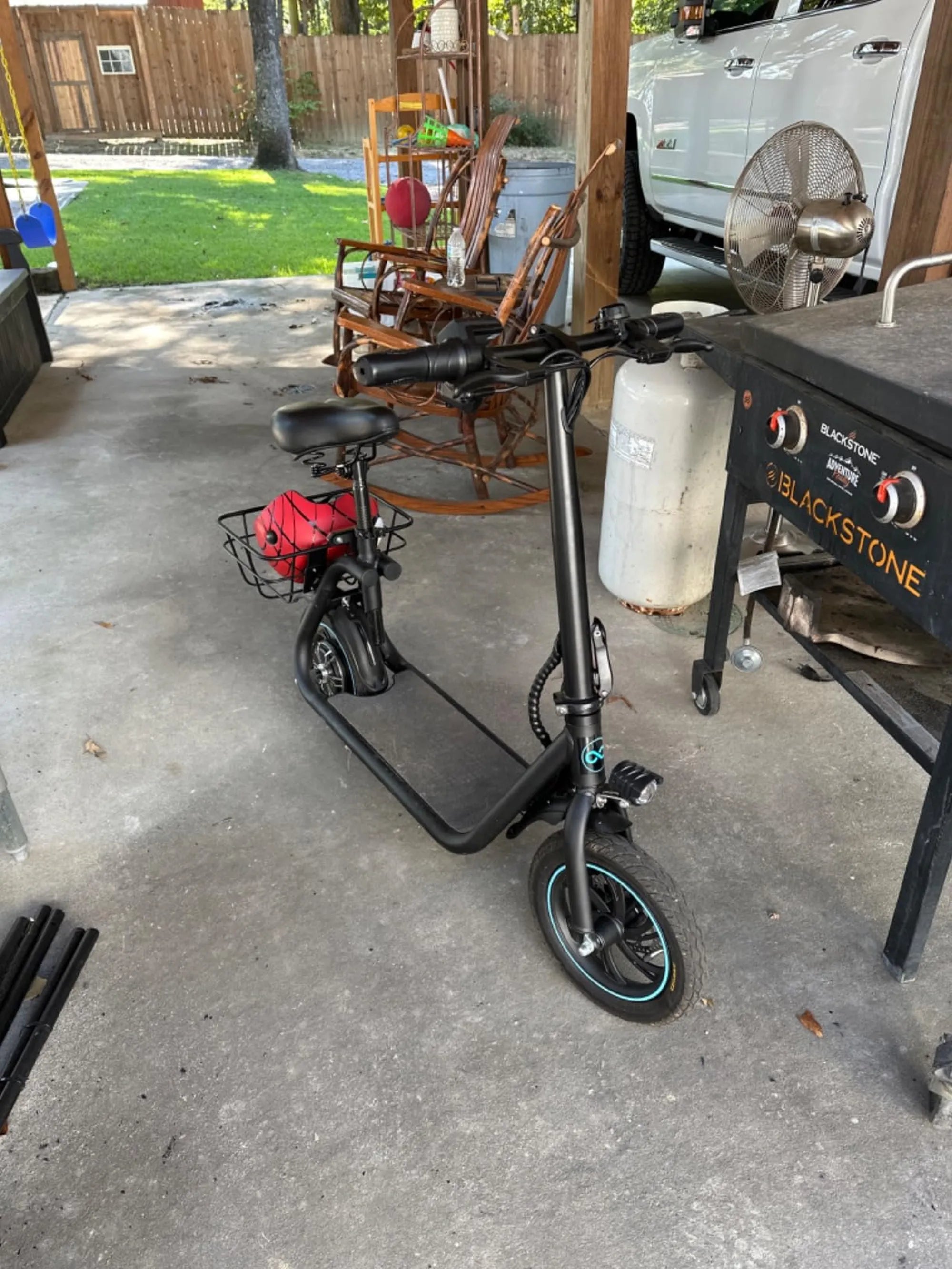
Introduction: The Rise of the Family-Friendly Electric Scooter
The electric scooter has evolved from a niche gadget for solo commuters into a versatile tool for shared urban mobility. A scooter with a back seat fundamentally changes the equation, transforming a personal vehicle into a practical solution for short-distance travel with a companion. This innovation caters directly to parents needing a quick school run option, couples running errands, or friends commuting together, offering a compelling alternative to a second car or crowded public transport.
This shift represents a maturation of the micro-mobility market. Riders are no longer just seeking thrill; they demand utility, reliability, and safety for more than one person. The integration of a dedicated passenger seat is not merely an accessory but a design philosophy that necessitates a stronger frame, more powerful motor, and enhanced stability systems. It’s a vehicle built for responsibility.
Choosing the right two-rider scooter requires careful consideration. This guide will provide a comprehensive, data-driven analysis of what makes a scooter with a back seat safe, comfortable, and practical. We will dissect key specifications, compare essential features, and highlight the engineering that separates a true passenger-ready scooter from a standard model with an add-on.
By the end of this article, you will know exactly what to look for, understand the performance trade-offs, and be equipped to make an informed purchase that ensures safety and enjoyment for both rider and passenger. The journey beyond solo riding starts here.
Why Choose a Scooter with a Back Seat? Key Benefits Unveiled
The primary advantage of a scooter with a back seat is unparalleled practicality for daily life. It turns a simple commute into a shared errand runner. Parents can effortlessly drop off or pick up an older child from school, friends can travel together to a local cafe, and couples can handle weekend grocery trips without relying on a car. This utility directly translates to cost savings on fuel, parking, and public transit fares.
Beyond economics, these scooters foster connection. The shared experience of a scooter ride, whether for a commute or a leisurely cruise through the park, creates moments of bonding that are lost in separate vehicles. It encourages conversation and shared enjoyment of the outdoors, making short trips more memorable and enjoyable for both individuals involved.
Furthermore, a scooter with a back seat often enhances cargo capacity. The passenger area isn't just for people; it can securely hold groceries, a backpack, or other items when riding solo. This dual-purpose functionality maximizes the vehicle's value, making it a true multi-tool for urban living. The stability required for a passenger also typically results in a smoother, more confident ride even when you're alone.
Finally, opting for a two-rider electric scooter is an environmentally conscious choice. By enabling two people to travel via a single, efficient electric vehicle, you effectively double the per-trip emissions savings compared to a car. It’s a small but meaningful step towards reducing urban congestion and your carbon footprint, all while enjoying the freedom of micro-mobility.
Safety First: Essential Features for Two-Rider Scooters
Safety is the non-negotiable cornerstone of any passenger scooter. Not all electric scooters are designed to handle the dynamic forces of a second rider. A proper scooter with a back seat must have an extended and reinforced deck. This provides stable footing for both riders, preventing awkward, unbalanced stances that can lead to loss of control.
The braking system is critically important. Dual braking—typically a combination of electronic (regenerative) and mechanical (disc or drum) brakes—is essential. The added weight of a passenger increases stopping distance significantly; a robust, redundant braking system is mandatory for safe, controlled deceleration in all conditions, especially on declines.
Lighting and visibility are paramount. The scooter should feature bright front headlights, rear brake lights, and side reflectors. Some advanced models include integrated turn signals. This ensures the larger vehicle profile is clearly visible to cars, cyclists, and pedestrians, reducing the risk of collisions, particularly at dusk or night.
Adhering to manufacturer-specified weight and age limits is a fundamental safety practice. Exceeding the maximum load capacity stresses the frame, motor, and brakes, leading to premature failure and hazardous situations. Passengers should be old enough to understand and follow instructions, hold on securely, and keep their feet on the footrests throughout the ride.
Comfort and Stability: Engineering for a Smooth Ride for Two
Comfort for two riders is achieved through deliberate engineering. A longer wheelbase—the distance between the front and rear axles—is the most critical factor for stability. It reduces the "twitchy" feeling and minimizes the impact of weight shifts from the passenger, making the scooter easier to control at speed and during turns.
Suspension systems move from a luxury to a necessity. Dual spring or hydraulic suspension, often with adjustable preload, is required to absorb road imperfections for both riders. Without adequate suspension, bumps and cracks are transmitted directly through the frame, causing discomfort and potentially unsettling the scooter's balance, especially with a passenger.
The seat design itself is crucial. It should be padded, ergonomically contoured, and provide a non-slip surface. Ideally, both the rider and passenger seats are integrated into the scooter's design for optimal weight distribution and secure mounting. A flimsy, aftermarket seat bolted on can create a dangerous pivot point.
Finally, wider tires (often 10 inches in diameter or more) provide a larger contact patch with the ground. This improves traction and further enhances stability under the combined weight of two riders. Pneumatic (air-filled) tires generally offer a better ride quality than solid tires by absorbing minor vibrations, contributing to overall comfort.
Key Specifications to Compare When Shopping
Selecting the right model requires a methodical comparison of hard data. Key specifications directly determine whether a scooter will meet your needs for two-rider use. Focusing on these metrics will help you filter out underpowered or poorly constructed options and identify models built for the task.
The motor's continuous power rating, measured in watts (W), is more important than peak power. A motor with a minimum of 500W continuous power is generally recommended for two riders, especially in areas with hills. This ensures adequate torque for acceleration and maintaining speed without straining the motor to its thermal limits.
Battery capacity, measured in watt-hours (Wh), dictates range. However, the advertised range is almost always for a single, light rider under ideal conditions. With a passenger, expect a 30-50% reduction. Therefore, a scooter claiming a 25-mile range for one rider might realistically deliver 12-17 miles for two, depending on weight and terrain.
Maximum load capacity is a definitive spec. A quality two-rider scooter should have a combined weight limit of at least 330 lbs (150 kg). This provides a safe margin for an adult rider and a teen or another adult passenger. The scooter's own weight is also a factor for portability; models between 50-70 lbs offer a balance of stability and manageability.
Physical dimensions are practical considerations. Deck length should be ample for two pairs of feet, and the wheelbase should be visibly longer than a standard commuter scooter. The handlebar height and seat positioning should allow both riders to assume a natural, comfortable posture without crowding.
| Specification | Minimum for Two Riders | Ideal / Recommended | Why It Matters |
|---|---|---|---|
| Motor (Continuous) | 500W | 600W - 800W+ | Provides torque for hills and acceleration with combined weight. |
| Battery Capacity | 10Ah (≈360Wh) | 13Ah (≈468Wh) or more | Compensates for the 30-50% range reduction with a passenger. |
| Max Load Capacity | 300 lbs (136 kg) | 330-400 lbs (150-180 kg) | Ensures structural safety and performance within design limits. |
| Braking System | Dual Brakes (e.g., disc + e-brake) | Front & Rear Disc Brakes + Regenerative | Critical for safe stopping distances with increased momentum. |
| Suspension | Front Spring | Dual Hydraulic or Spring Suspension | Absorbs shocks for passenger comfort and maintains tire contact. |
| Wheelbase | ~40 inches | 42+ inches | Longer base dramatically improves stability with a passenger. |
The Power & Range Equation: What You Need for Two Riders
The relationship between motor power, battery capacity, and real-world performance becomes exponentially more important with a passenger. A 350W scooter may suffice for a solo rider on flat ground, but it will struggle significantly with two people, especially on any incline. The motor will work harder, drain the battery faster, and may overheat.
For reliable two-rider performance, a 600W to 800W continuous motor is a sweet spot. This power band provides confident acceleration from a stop and the ability to maintain a cruising speed of 15-20 mph even with a combined weight near the scooter's limit. It also reduces strain on the motor, contributing to its long-term durability.
Battery technology is equally critical. A high-capacity lithium-ion battery from a reputable brand is essential. Look for batteries with UL certification, like those used by Gyroor, which have undergone rigorous testing for safety, performance, and longevity (typically rated for 500+ charge cycles). This certification is a key indicator of quality and reduced risk.
When estimating range, use this rule of thumb: take the manufacturer's single-rider range estimate and multiply it by 0.6. For a scooter advertised at 30 miles, plan for an 18-mile real-world range with a passenger. Factors like rider weight, hill frequency, temperature, and riding style (aggressive acceleration) will further influence this number. Always err on the side of caution.
Durability and Warranty: Signs of a Quality Build
Durability in a two-rider scooter is tested at every weld and connection point. The frame material is the first indicator of quality. Aircraft-grade aluminum alloys (like 6061-T6) offer an excellent strength-to-weight ratio, resisting flex and fatigue from the constant stress of carrying two people over urban terrain.
Water and dust resistance, indicated by an IP rating, are vital for all-weather reliability. An IPX5 rating, common in Gyroor models, means the scooter can withstand low-pressure water jets from any direction. This protects the electrical components, motor, and battery from rain, puddles, and street spray, ensuring the scooter remains safe and functional.
The quality of components—such as brake calipers, suspension springs, and throttle mechanisms—should feel solid and precise. Loose fittings, plastic gears in high-stress areas, or thin-gauge metal are red flags. A well-built scooter has a cohesive, robust feel that inspires confidence.
A comprehensive warranty is the manufacturer's vote of confidence in its product. A trustworthy brand will offer at least a 1-year warranty covering the frame, motor, and battery. This protects your investment and signals that the company stands behind its engineering. Always read the warranty terms to understand what is and isn't covered.
Introducing the Gyroor Family: Engineered for Shared Journeys
Gyroor has established itself as a leader in the electric mobility space by prioritizing safety, reliability, and thoughtful design—principles that align perfectly with the demands of a scooter with a back seat. Trusted by over 100,000 riders across North America and Europe, the brand's focus on UL-certified batteries, IPX5 water-resistant construction, and a robust 1-year warranty directly addresses the heightened needs of two-rider transportation.
The engineering philosophy behind Gyroor's passenger-ready models starts with a reinforced frame architecture. These scooters are designed from the ground up to handle dynamic loads, not adapted from solo commuter designs. This results in a balanced riding platform where the center of gravity and weight distribution are optimized for stability with a passenger.
Every Gyroor scooter destined for two riders incorporates the critical safety features discussed: powerful dual braking systems, comprehensive lighting packages, and suspension tuned for comfort under load. The integration of the seat is seamless, ensuring it is a structural part of the scooter's integrity rather than an afterthought.
By choosing a brand like Gyroor, riders gain access to proven technology and a customer support network. The average 4.5/5 customer rating reflects satisfaction not just with performance, but with durability and post-purchase service. For a purchase as significant as a family mobility solution, this peace of mind is invaluable.
Model Spotlight: Gyroor C1 & F1 Pro – Designed for Two
The Gyroor C1 exemplifies the family-oriented scooter with a back seat. It features a powerful 500W peak motor (350W continuous) paired with a 7.5Ah battery, providing a stable and reliable ride for an adult and child on flat to moderately hilly terrain. Its key strength lies in its design: a long, integrated deck with a dedicated rear footplate and a comfortable, padded seat for the passenger.
For those seeking more power and range for two adult riders, the Gyroor F1 Pro is a standout option. It is equipped with a robust 600W motor (450W continuous) and a larger 10.4Ah battery. This combination delivers the torque needed for hills and a longer usable range, making it suitable for shared commutes or longer recreational trips.
Both models showcase Gyroor's commitment to safety and comfort. They feature front and rear shock absorption, 10-inch pneumatic tires for a smooth ride, and a bright LED headlight with brake light functionality. The F1 Pro adds a digital display showing speed, battery level, and riding mode, allowing the rider to manage performance easily.
The construction quality is immediately apparent, with a solid folding mechanism and high-grade materials throughout. The IPX5 rating ensures worry-free riding in various weather conditions. These models demonstrate how specific engineering choices—like motor sizing, battery capacity, and frame geometry—come together to create a safe and enjoyable two-rider experience.
Practical Rider's Guide: Tips for Safe and Legal Two-Up Scootering
Before your first ride with a passenger, the absolute first step is to research local laws. Regulations for electric scooters, especially regarding passengers, vary dramatically by city, county, and state. Some jurisdictions explicitly prohibit passengers, while others may have age restrictions or require additional equipment like a dedicated passenger seat and footrests. Ignorance of the law is not a valid defense.
Safety gear is non-negotiable for both individuals. A properly fitted helmet is mandatory for the rider and the passenger. Consider additional protective equipment such as knee and elbow pads, especially for new passengers. High-visibility clothing or vests can significantly increase your visibility to drivers, making every ride safer.
Practice mounting, riding, and dismounting in a safe, empty area like a parking lot. The passenger should mount first and settle into the seat, holding onto the rider or designated handles. The rider then mounts, ensuring both feet are firmly planted. Dismount in reverse order: rider first, then passenger. This prevents the scooter from becoming unbalanced.
Adjust your riding style for the added weight. Accelerate and brake more gradually and smoothly. Anticipate stops further in advance. Take corners more slowly and deliberately, as the higher center of gravity and increased mass will affect handling. Avoid sudden maneuvers. Regularly check tire pressure and ensure all bolts (especially on the seat and handlebars) are tight as part of your pre-ride routine.
Frequently Asked Questions (FAQ)
Q: Is it legal to ride an e-scooter with a passenger?
A: Legality is entirely dependent on local regulations. There is no universal law. You must check the specific rules in your city, county, and state. Some areas allow it only on private property, some have age requirements for the passenger, and many prohibit it entirely on public roads and bike paths. Always verify before riding.
Q: What is a safe age for a scooter passenger?
A> There is no official "safe age," but common sense and manufacturer guidelines apply. Passengers should be old enough to understand and follow safety instructions, hold on securely throughout the ride, keep their feet on the footrests, and not make sudden movements. This typically means older children and teenagers. Always adhere to the scooter's stated weight and age limits.
Q: How much does passenger weight affect speed and range?
A> The effect is significant. Expect reduced acceleration, a lower achievable top speed (particularly on inclines), and a substantially decreased range. As a general estimate, with a passenger, you can expect a 30-50% reduction in the scooter's maximum advertised range. Heavier combined weight will result in performance closer to the 50% reduction mark.
Q: Can I add a third-party seat to any scooter?
A> This is strongly discouraged. Scooters are engineered as complete systems. Adding a non-approved seat can compromise the structural integrity of the deck or stem, dangerously alter the center of gravity and handling, and almost certainly void the manufacturer's warranty. Only use seats and accessories specifically designed and approved by the scooter's manufacturer.
Q: How do I maintain a scooter used by two people?
A> Increased load means increased wear. Perform more frequent maintenance checks: tire pressure weekly, brake pad inspection monthly, and periodic tightening of all bolts and fasteners. Keep the battery charged between 20-80% for optimal longevity, and store the scooter in a dry, temperate place. Following the manufacturer's maintenance schedule is crucial for safety and durability.
Redefining Short Trips Together
A well-engineered scooter with a back seat is more than a vehicle; it's a tool for shared experience and practical urban living. It transforms micro-mobility from a solitary activity into a connected, efficient, and enjoyable solution for pairs and small families. The freedom to travel together, bypass traffic, and enjoy the outdoors adds a new dimension to daily routines.
The key to a positive experience lies in prioritizing safety and quality. Choosing a scooter built from the ground up for two riders—with a powerful motor, large battery, robust frame, dual brakes, and proper suspension—is an investment in peace of mind. Brands that stand behind their products with strong warranties and use certified components, like Gyroor, offer the reliability needed for this responsible form of transport.
By understanding the specifications, respecting the limits of the machine and the law, and practicing safe riding habits, you can unlock the full potential of two-rider electric scooting. It represents a smart, sustainable, and fun step forward in personal transportation.
Ready to explore journeys together? Discover scooters designed for safety, comfort, and shared adventures. Browse the full Gyroor collection, featuring UL-certified, passenger-ready models, at gyroorboard.com.
4.00-10 Scooter Tire: The Complete Guide to Safety, Performance & Selection
Electric Trike Adult White Near Me: Your Ultimate Guide to Finding a Stable, Stylish Ride