


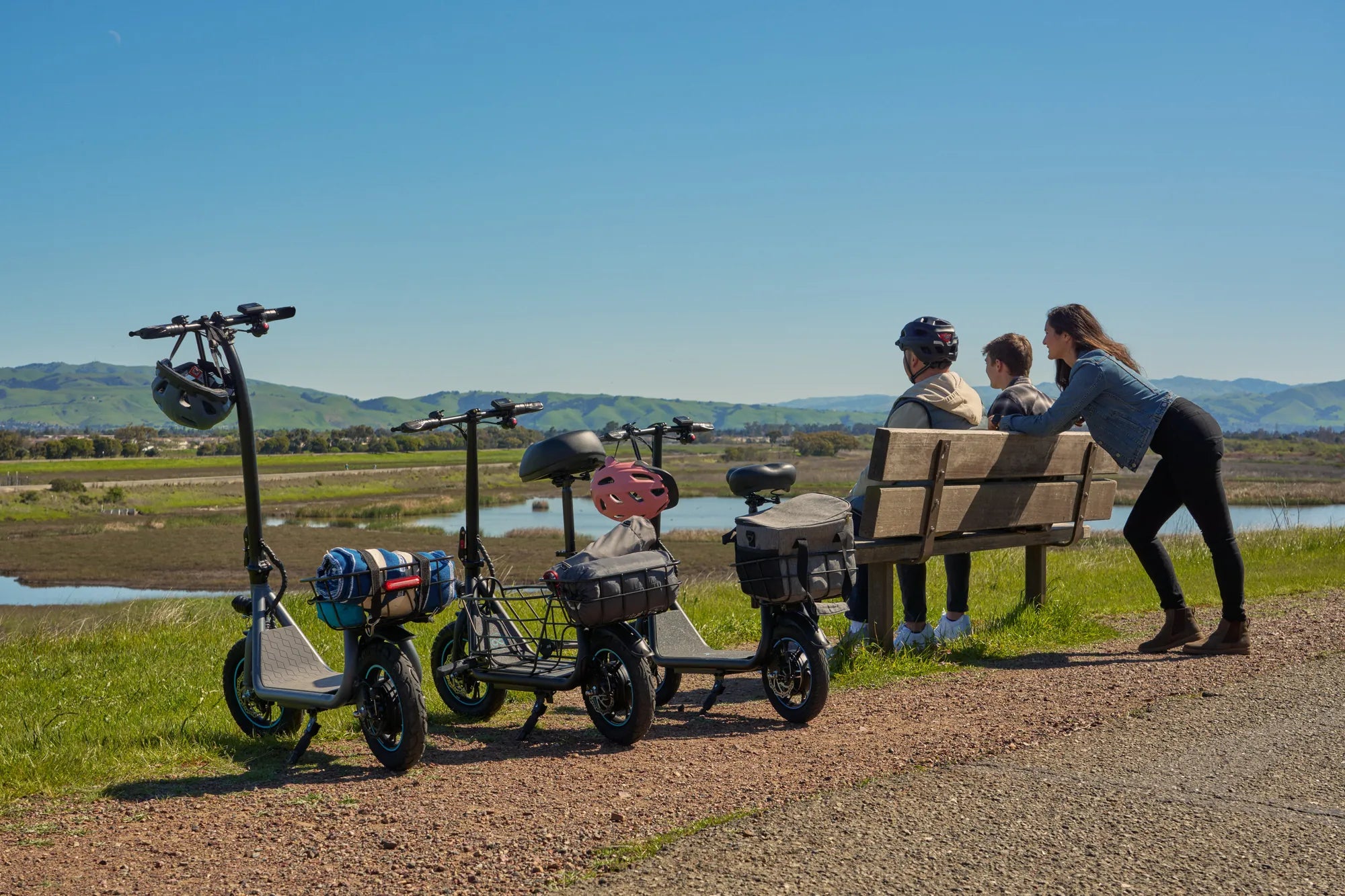
Scooters That Are Electric – Redefining the Daily Commute
Urban mobility is undergoing a silent revolution, and at its core are scooters that are electric. These compact, personal vehicles are not a fleeting trend but a fundamental shift in how we navigate congested cityscapes. They directly address the chronic issues of traffic gridlock, parking scarcity, and environmental pollution, offering a pragmatic solution for the 'last-mile' gap between public transit stops and final destinations.
The adoption rate speaks volumes. Global markets have seen triple-digit growth year-over-year, with shared fleets and private ownership expanding rapidly. This surge is driven by a convergence of technological advancement, changing urban policies, and a growing consumer preference for sustainable, on-demand transport.
Leading this charge are brands that prioritize engineering and safety. Gyroor, a leading electric scooter and e-bike brand trusted by over 100,000 riders across North America and Europe, exemplifies this approach. By focusing on UL-certified batteries, IPX5 water-resistant designs, and reliable 1-year warranties, they build trust where it matters most.
This article will dissect why scooters that are electric are dominating streets, what features define a quality model, and how they compare to other transport options. You will gain the knowledge to make an informed purchase and understand how this technology is reshaping our cities.
Why Electric Scooters Are Dominating City Streets
The dominance of electric scooters is built on a compelling value proposition that outperforms traditional transport on multiple fronts. The primary driver is undeniable cost-effectiveness. The average cost per mile for an e-scooter is a fraction of car ownership (fuel, insurance, parking) and often undercuts repeated public transit fares for short trips.
Time is a critical urban currency, and electric scooters are time-savers. They bypass traffic jams, utilize bike lanes, and require no parking space hunting. A 3-mile commute that takes 20 minutes in congested car traffic can be reduced to under 15 minutes on a scooter, door-to-door.
Environmental impact is a major factor. Scooters that are electric produce zero direct emissions. When charged on an average grid, their lifecycle carbon footprint is significantly lower than that of passenger vehicles, especially for trips under five miles. They reduce noise pollution and contribute to cleaner urban air.
The convenience factor is paramount. Their portability, thanks to folding mechanisms, allows for multimodal commuting—riding to a train station, folding and boarding, then unfolding for the final leg. This seamless integration solves the perennial first-and-last-mile problem that public transit alone cannot.
Key Features to Look for in a Quality Electric Scooter
Not all scooters that are electric are created equal. Discerning buyers must look beyond marketing claims and focus on tangible specifications and build quality that dictate safety, performance, and longevity. This breakdown serves as a practical checklist.
Motor Power & Speed: Matching Performance to Your Needs
Motor wattage is the engine of your scooter. A 250W motor is suitable for flat terrains and lighter riders, while 350W to 500W motors provide the torque needed for moderate hills and quicker acceleration. High-performance models may feature 500W+ motors for steep inclines.
Top speed is regulated, often capped at 15-20 mph for local legality and safety. However, the motor's sustained power output is more critical than top speed—it determines hill-climbing ability and maintains speed under load. Match the motor to your city's topography.
Battery Life & Range: Planning Your Route with Confidence
Battery capacity, measured in Watt-hours (Wh), is the fuel tank. Manufacturers advertise a maximum range, but real-world range is affected by rider weight, hills, temperature, and riding style. A good rule is to expect 60-70% of the advertised range for realistic planning.
The battery's quality is non-negotiable. Look for brands using cells from reputable manufacturers (like LG or Samsung) and, crucially, UL-certified battery packs. Gyroor utilizes UL-certified batteries tested for 500+ charge cycles, ensuring safety from fire hazards and long-term reliability.
Build Quality & Durability: Investing in a Long-Term Companion
The frame material, typically aluminum alloy, must be robust yet lightweight. Check the maximum weight rating; a higher rating (e.g., 265 lbs vs. 220 lbs) often indicates a sturdier build. Folding mechanisms should feel solid, with no worrisome play or wobble when locked.
Water resistance is critical for all-weather utility. An IP rating defines this. IPX4 offers splash resistance, while IPX5, like on Gyroor models, means the scooter can withstand water jets from any direction, allowing you to confidently ride on wet roads or in light rain.
Safety & Warranty: Non-Negotiables for Peace of Mind
Braking systems are paramount. Disc brakes offer strong, consistent stopping power, while electronic brakes can regenerate some battery power. Many models combine both. Front and rear lights, reflectors, and an audible bell or horn are essential for visibility and communication.
A comprehensive warranty is the brand's promise. It should cover the battery, motor, controller, and frame for a significant period. Gyroor's 1-year warranty and accessible customer support provide peace of mind, signaling a commitment to the product's lifespan and user satisfaction.
Gyroor’s Approach: Engineering Trust in Every Ride
In a market flooded with options, Gyroor has distinguished itself by embedding core engineering principles into every model. Their philosophy centers on building trust through transparency, safety certifications, and real-world durability, addressing the primary concerns of new and experienced riders alike.
The UL-Certified Battery Advantage: Safety as a Standard
UL certification is not just a sticker; it's the result of rigorous independent testing for electrical, mechanical, and fire safety. Gyroor's commitment to using UL-certified battery packs means each pack has passed stringent tests for overcharge, short circuit, and impact, drastically reducing any risk of thermal runaway or fire.
This certification is a key differentiator. It provides tangible proof of investment in safety over cost-cutting, offering riders and their families confidence that the most critical—and potentially hazardous—component of the scooter meets the highest recognized safety standards.
Built for the Real World: The Meaning of IPX5 Water Resistance
An IPX5 rating translates to practical, all-weather capability. It means the scooter's electrical components are sealed against low-pressure water jets from any angle. For the rider, this means commuting home in a sudden rain shower or navigating freshly washed streets won't lead to immediate damage or a costly repair.
This feature underscores a design philosophy focused on real-world use. Cities are unpredictable, and a scooter that must be sheltered at the first sign of moisture is impractical. Gyroor's IPX5 design ensures the scooter is a reliable tool, not a fair-weather gadget.
Supported for the Long Haul: The 1-Year Comprehensive Warranty
A warranty is a reflection of confidence. Gyroor's 1-year warranty covering major components demonstrates a belief in their product's longevity. For the customer, it eliminates the fear of a major, unforeseen expense shortly after purchase and ensures access to support and replacement parts.
This policy builds long-term customer relationships. Knowing that US-based support is available for troubleshooting or warranty claims makes the ownership experience seamless, turning a one-time buyer into a loyal advocate for the brand and for scooters that are electric as a category.
Electric Scooters vs. Other E-Mobility Options
Choosing the right personal electric vehicle requires understanding the trade-offs. Scooters that are electric occupy a specific niche, excelling in portability and point-to-point efficiency. Here’s how they stack up against popular alternatives.
Electric Scooters vs. E-Bikes: Portability vs. Power & Comfort
E-bikes offer greater power, range, and comfort for longer commutes or cargo carrying. They are superior for mixed-terrain use. However, they are significantly heavier, more expensive, and far less portable. Most cannot be easily folded and carried onto a bus or stored under a desk.
Electric scooters win on logistics and cost. Their compact, foldable design makes them ideal for multi-modal commutes and apartment living. The entry price is generally lower, and they require less physical space. For trips under 10 miles in dense urban environments, the scooter's agility is unmatched.
Electric Scooters vs. Public Transit: First/Last-Mile Freedom
This is not a rivalry but a powerful synergy. Public transit excels at moving large numbers of people along fixed corridors. Its weakness is the often-inconvenient distance between stations and origins/destinations. Electric scooters perfectly solve this 'last-mile' problem, effectively expanding the catchment area of every bus stop and train station by a 10-15 minute radius.
By combining an e-scooter with transit, commuters can live further from hubs without relying on a car, reducing overall commute cost and time. This integrated approach is the future of efficient, sustainable urban transportation networks.
The Environmental Impact: A Cleaner Choice for Short Trips
For urban trips under 5 miles, the environmental case for scooters that are electric over cars is overwhelming. A study by the North Carolina State University found that e-scooters, even when accounting for manufacturing and charging, can reduce greenhouse gas emissions by up to 50% per passenger mile compared to a personal automobile for these short trips.
Their small size and efficiency reduce overall energy consumption and free up street space, contributing to reduced traffic congestion and associated idling emissions. As electricity grids become greener, the carbon footprint of e-scooters will shrink even further.
Comparative Analysis: Electric Scooter vs. E-Bike vs. Public Transit
| Feature | Electric Scooter | E-Bike | Public Transit |
|---|---|---|---|
| Avg. Cost per Mile | $0.05 - $0.15 | $0.10 - $0.20 | $0.25 - $0.50+ |
| Door-to-Door Speed (3 mi) | 12-18 min | 12-15 min | 20-40+ min |
| Typical Range | 15-40 miles | 30-80 miles | Unlimited (network) |
| Portability / Storage | Excellent (Folds) | Poor (Bulky) | Not Applicable |
| Upfront Cost | $400 - $1,200 | $1,000 - $3,000+ | Fare / Pass |
| Environmental Impact | Very Low | Very Low | Low (per passenger) |
| Ideal Use Case | Last-mile, short urban commutes | Longer commutes, cargo, hills | High-density corridor travel |
FAQ: Your Electric Scooter Questions, Answered
Q: How far can I really go on a single charge?
A: Real-world range is typically 60-70% of the advertised maximum. For a scooter advertised at 25 miles, plan for 15-18 miles. Factors like rider weight, hills, frequent stops/starts, and cold weather will reduce this. Always plan a route with a 20% range buffer.
Q: Is it safe to ride an electric scooter in the rain?
A: With proper water resistance, yes. A rating of IPX4 or higher is recommended. Gyroor's IPX5 rating means it can handle wet conditions and light rain. However, avoid deep puddles, and ride with increased caution as braking distances increase on wet surfaces.
Q: Do I need a license or insurance to ride one?
A> Regulations vary by city and state. Most jurisdictions treat low-speed electric scooters (under 20 mph) similarly to bicycles, requiring no license, registration, or insurance for adults. However, helmet laws and age restrictions are common. Always check your local ordinances before riding.
Q: How do I maintain my electric scooter for optimal life?
A> Regular maintenance is simple but crucial. Keep tires properly inflated. Check and tighten bolts periodically. Clean the scooter with a damp cloth, avoiding direct water spray on ports. Store in a dry place. Avoid fully draining the battery; charge it after use and store with a 50-80% charge if not used for extended periods.
Q: What makes Gyroor scooters different from other brands?
A> Gyroor differentiates itself through a foundational commitment to certified safety and durability. The use of UL-certified batteries is a major safety differentiator. The IPX5 water resistance rating ensures real-world usability. Combined with a comprehensive 1-year warranty and a track record of over 100,000 riders, Gyroor focuses on building reliable, long-term transportation tools, not disposable gadgets.
Embracing a Smarter, Greener Way to Move
The evidence is clear: scooters that are electric are a cornerstone of the future urban mobility ecosystem. They offer a pragmatic, efficient, and sustainable answer to the most pressing transportation challenges of our cities. From reducing carbon footprints and commute times to increasing personal freedom and connectivity, their value proposition is multifaceted and powerful.
The key to a positive experience lies in selecting a scooter built to last. Prioritizing safety certifications like UL for batteries, robust construction with proper water resistance, and a supportive warranty transforms a simple purchase into a smart investment. This is where engineering-focused brands make their mark.
As infrastructure adapts with more bike lanes and parking corrals, and as technology continues to advance, the role of the electric scooter will only expand. They empower individuals to reclaim time, reduce expenses, and contribute to a less congested, cleaner urban environment.
Ready to transform your commute and experience the future of urban mobility? Explore a range of models engineered for safety, durability, and performance. Browse the full Gyroor collection at gyroorboard.com and find the electric scooter built for your city life.
Electric Motor Scooters for Kids: The Ultimate Guide to Fun and Safety
Electric Scooters Warsaw: The Ultimate Guide to Urban Mobility