



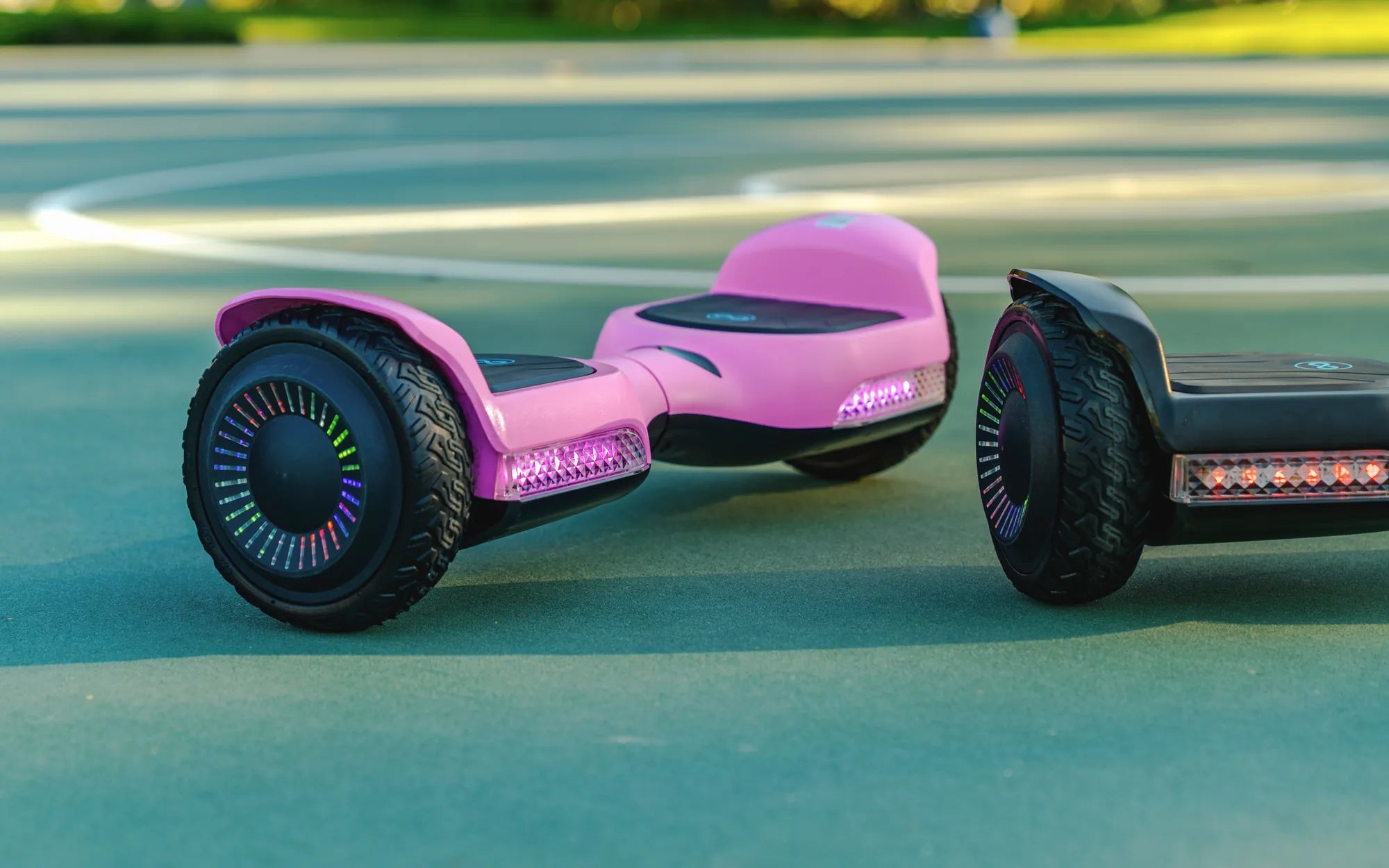
Introduction to Self-Balancing Scooters: Beyond the Hype
A self-balancing scooter is a compact, electric personal transporter that uses gyroscopic sensors and accelerometers to maintain stability. By detecting subtle shifts in a rider's weight, the internal computer adjusts motor power to move forward, backward, or turn. This technology has evolved from a novelty gadget into a legitimate solution for short-distance commuting, campus travel, and recreational fun.
The core appeal lies in its intuitive, hands-free operation and extreme portability. Modern devices fall into two primary categories: two-wheeled "hoverboard" styles and single-wheeled electric unicycles. Each offers a distinct riding experience, but both share the fundamental principle of gyroscopic self-balancing. This guide will use the term self balancing scooter key to refer to the essential knowledge needed to master this technology.
As the market matured, brands like Gyroor have emerged by focusing on engineering and safety, moving the category beyond its early growing pains. With over 100,000 riders trusting their products across North America and Europe, the focus has shifted to reliability, certified components, and practical performance for daily use.
Why Choose a Self-Balancing Scooter? Key Benefits for Modern Commuters
For urban dwellers and students, the self-balancing scooter solves the "last-mile" problem efficiently. Its compact form factor allows it to be carried onto public transit, stored under a desk, or navigated through crowded pedestrian areas where bicycles and traditional e-scooters struggle. The operating cost is minimal, often just pennies per charge, making it an economically sound alternative to ride-sharing or driving for short trips.
Compared to other micro-mobility options, self-balancing scooters offer a unique blend of portability and fun. An electric kick scooter may fold, but a hoverboard is often lighter and more maneuverable at low speeds. An e-bike provides greater range and speed but requires dedicated parking and is far less portable. The learning curve, once conquered, leads to an incredibly fluid and engaging riding experience that feels more like an extension of the body than a vehicle.
Environmentally, these devices are a clean alternative for short journeys. With zero direct emissions and high energy efficiency, they represent a conscious step towards reducing urban congestion and carbon footprint. For many, the self balancing scooter key benefit is reclaiming time and adding enjoyment to routine commutes.
The Gyroor Difference: Safety and Reliability Engineered In
In a market historically plagued by safety concerns, Gyroor's approach is defined by rigorous standards. The most critical component is the battery. Every Gyroor model uses a UL-certified battery pack, tested for over 500 charge cycles. This certification is a non-negotiable safety benchmark, drastically reducing risks associated with thermal runaway and ensuring long-term performance stability.
Real-world conditions demand durability. An IPX5 water-resistance rating means a Gyroor scooter can withstand water jets from any direction, protecting the electronics from puddles, wet roads, and light rain. This engineering focus extends to the motor controllers and frame construction, designed for daily use. Furthermore, a robust 1-year warranty and accessible customer support provide peace of mind, ensuring the rider's investment is protected.
This commitment positions Gyroor not as a generic option, but as a brand for riders who prioritize verified safety and dependable performance. Understanding this difference is a crucial part of the self balancing scooter key to making a smart purchase.
How to Choose Your Self-Balancing Scooter: A 5-Point Buyer's Checklist
Selecting the right model requires moving beyond marketing claims to examine concrete specifications. This five-point framework focuses on performance, practicality, and paramount safety features to match the device to your specific lifestyle and terrain.
Motor Power & Speed: Matching Performance to Your Needs
Motor wattage, typically ranging from 250W to 800W for consumer models, directly impacts torque and hill-climbing ability. A 250W motor may suffice for a lightweight rider on flat pavement, but a 500W+ dual-motor system is essential for tackling moderate inclines or carrying a heavier rider. Advertised top speeds (often 7-12 mph) are best considered in context; real-world speed is affected by weight, slope, and battery level.
For commuters navigating city streets with gentle slopes, a dual-motor system with at least 400W total power offers a good balance of performance and efficiency. The self balancing scooter key here is to match motor power to your weight and the steepest incline on your regular route to avoid underperformance.
Battery Life & Range: Planning Your Real-World Commute
Battery capacity, measured in Watt-hours (Wh), is a more reliable indicator than "max range" claims. A higher Wh rating generally means a longer potential distance. However, advertised maximum ranges are achieved under ideal lab conditions. A practical rule is to expect 60-70% of the claimed range when accounting for rider weight, frequent stops/starts, and hills.
For example, a scooter with a 36V, 4.4Ah battery (158 Wh) might claim 10 miles, but a 180 lb rider may achieve 6-7 miles. For a reliable 5-mile round-trip commute, a battery with at least 200 Wh is advisable. Always prioritize models with certified battery packs for safety and longevity.
Portability & Weight: The Carry-On Factor
If you plan to carry your scooter onto a bus, up stairs, or into an office, weight is a primary concern. Hoverboard-style models typically weigh between 22 and 30 lbs. Some feature integrated carry handles or even telescoping luggage-style handles for easier transport. Lighter models often have smaller batteries, so this is a trade-off between portability and range.
Assess your physical ability to carry the device comfortably. The self balancing scooter key question is: can you manage this weight for the distance you'll need to carry it? A few extra pounds can make a significant difference in daily usability.
Tire Type & Size: Solid vs. Pneumatic for Your Terrain
Tires define ride comfort and suitability for terrain. Solid (airless) tires are puncture-proof and require zero maintenance, making them ideal for smooth urban sidewalks and indoor use. However, they transmit more vibration from cracks and rough pavement.
Pneumatic (air-filled) tires, often 8.5 or 10 inches in diameter, provide a noticeably smoother ride by absorbing bumps and are better for grass, gravel, or uneven paths. The trade-off is the need to periodically check air pressure and the slight risk of a flat. Your local terrain dictates the best choice.
Safety Features & Certifications: The Non-Negotiables
This is the most critical section of the checklist. First, verify UL certification for the entire device (UL 2272), not just the battery. This standard ensures electrical and fire safety. Second, an IP rating for water and dust resistance is essential; IPX4 is a minimum for splash resistance, while IPX5 offers better protection. Third, examine build quality: sturdy footpads, a robust frame, and reliable LED lights for visibility.
Features like Bluetooth speakers or app connectivity are secondary. The foundational self balancing scooter key is purchasing a device built to rigorous safety standards, ensuring it's a tool for fun, not a hazard.
| Feature | Entry-Level / Casual Use | Commuter / Daily Use | Performance / All-Terrain |
|---|---|---|---|
| Motor Power | 250W - 400W (Single/Dual) | 500W+ (Dual Motor) | 700W+ (Dual Motor High-Torque) |
| Battery (Typical Range) | 120-160 Wh (~6-9 mi) | 200-300 Wh (~10-15 mi) | 300+ Wh (~15-20 mi) |
| Weight | 22 - 25 lbs | 25 - 28 lbs | 28 - 32 lbs |
| Tire Type | 6.5" - 8.5" Solid | 8.5" - 10" Pneumatic | 10"+ Pneumatic, All-Terrain Tread |
| Key Certifications | UL 2272, IPX4 | UL 2272, IPX5 | UL 2272, IPX5 or higher |
Mastering the Ride: A Step-by-Step Guide to Using Your Scooter Safely
Begin in a safe, open, flat area like an empty parking lot or smooth pavement. Ensure the scooter is fully charged. Power on the device and wait for the gyroscope to initialize (indicated by a leveling sound or steady lights). Always wear a helmet, wrist guards, and knee/elbow pads during the learning phase.
Mounting is the first hurdle. Place the scooter on the ground and hold onto a stable support like a wall or railing. Step on with one foot, keeping it centered on the footpad. The scooter may wiggle—this is normal as it balances. Once stable, gently step on with your second foot. Stand upright with knees slightly bent, looking forward, not down at your feet.
To move forward, lean forward slightly from your ankles, not your waist. To slow down or move backward, lean back gently. Sharp leans cause abrupt acceleration or braking. To turn, apply subtle pressure forward with the toes of one foot while easing pressure on the heel of the same foot. Practice these movements slowly. Dismount by stepping off backwards one foot at a time, regaining your balance on the ground before powering off.
The self balancing scooter key to proficiency is gradual practice. Spend your first few sessions simply getting comfortable with mounting, balancing stationary, and making tiny forward movements. Avoid wet roads, sand, and steep slopes until you have mastered basic control on dry, flat ground.
Maintenance 101: Keeping Your Self-Balancing Scooter in Top Shape
Regular maintenance ensures safety, performance, and longevity. For pneumatic tires, check air pressure weekly with a gauge, inflating to the PSI specified in the manual (usually 35-50 PSI). Proper inflation prevents rim damage and improves battery efficiency. Wipe down the scooter with a damp cloth after riding in dusty or wet conditions, avoiding direct water jets on the charging port.
Battery care is crucial. Use only the provided charger. Avoid draining the battery completely; recharge when it drops to 20-30%. Do not leave the scooter plugged in continuously for days after it's fully charged. For long-term storage (over a month), charge the battery to about 60% and store in a cool, dry place.
Monthly, inspect the scooter for loose screws, cracks in the frame or footpads, and worn tire tread. Listen for unusual grinding or clicking noises from the wheel hubs. Following these simple steps is the self balancing scooter key to avoiding major repairs and ensuring your device remains a reliable companion for years.
Frequently Asked Questions (FAQ)
Q: Are self-balancing scooters legal on sidewalks and roads?
A: Laws vary significantly by city, state, and country. Typically, they are treated similarly to electric kick scooters. Many jurisdictions allow them on sidewalks and bike paths at speeds under 10-15 mph, but prohibit them on roads with speed limits over 25-35 mph. Always check your local ordinances before riding in public spaces.
Q: How long does the battery last before needing replacement?
A> A quality, UL-certified battery like those used by Gyroor is rated for 500+ full charge cycles. With typical use (a partial charge every few days), this can translate to 2-4 years before a noticeable reduction in capacity. Proper charging habits significantly extend this lifespan.
Q: Can I ride in the rain with an IPX5 rating?
A: An IPX5 rating means the scooter is protected against water jets, making it safe to ride through puddles and in light to moderate rain. However, it is not waterproof for submersion. Avoid deep standing water, and always dry the scooter, especially the charging port, after riding in wet conditions.
Q: What is the learning curve like for a beginner?
A> Most adults can learn the basics of mounting, dismounting, and moving in a straight line within 30-60 minutes of practice in a safe area. Achieving confident, fluid turning and handling minor obstacles usually takes a few hours of total practice over several days. Patience and protective gear are essential.
Q: What is the maximum weight limit for these scooters?
A> Weight limits are model-specific but generally range from 220 lbs to 265 lbs for standard commuter models. Exceeding this limit stresses the motors, battery, and frame, leading to premature failure, reduced range, and potential safety issues. Always adhere to the manufacturer's specified limit.
Conclusion: Your Journey to Effortless Mobility Starts Here
Choosing and mastering a self-balancing scooter is an investment in a more efficient and enjoyable mode of transport. The journey begins with prioritizing verified safety certifications, realistic performance specs, and reliable construction. By using the self balancing scooter key principles outlined—focusing on motor power, battery reality, portability, tire choice, and non-negotiable safety features—you can select a device that truly fits your life.
Brands that engineer for durability, like Gyroor with its UL-certified batteries and IPX5 water resistance, provide the foundation for worry-free riding. The initial learning period pays dividends in newfound mobility, turning tedious short trips into moments of effortless fun. Remember that consistent, simple maintenance will protect your investment and ensure peak performance season after season.
Ready to experience the fusion of cutting-edge gyroscopic technology and practical urban transport? Explore a range of models built with safety and reliability as the core design philosophy. Browse the full Gyroor collection at gyroorboard.com to find the perfect ride for your next adventure.
Hoverboard Balancing Scooter: The Future of Personal Transportation
Cute Christmas Gift Ideas for Girls That Will Make Their Holiday Magical