



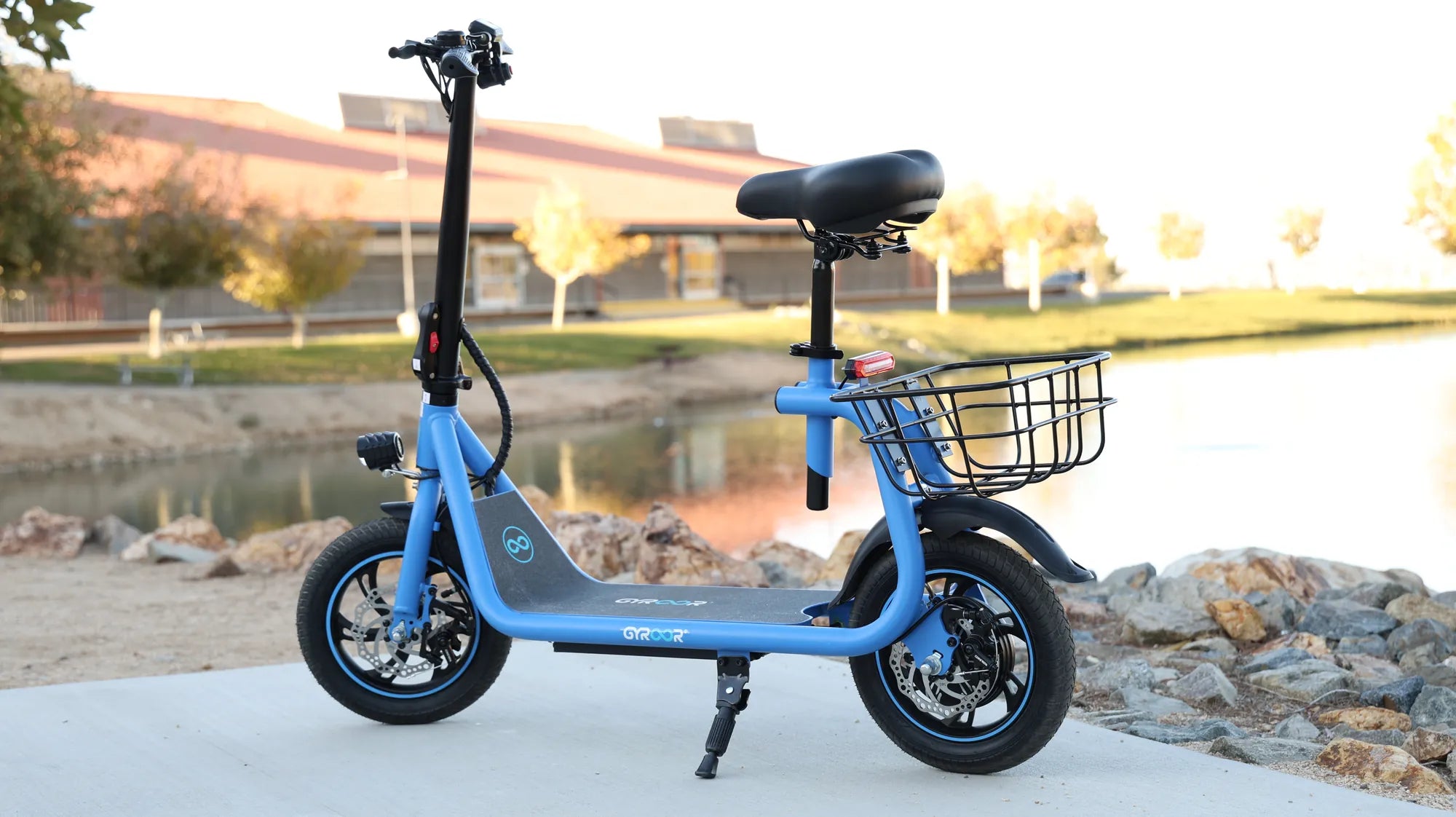
Urban mobility is at a breaking point. Gridlocked traffic, soaring fuel prices, and environmental concerns are pushing commuters to seek smarter alternatives. Enter Simple Energy electric scooters: the future of urban mobility. This isn't just about replacing a gasoline engine with a battery; it's a fundamental rethinking of personal transport through integrated smart technology, rider-centric design, and sustainable principles. This article deconstructs the Simple Energy phenomenon, examining the core tech that sets it apart, its performance in real cityscapes, and its compelling value compared to traditional options. As a leader in the micro-mobility space, Gyroor recognizes this shift towards intelligent, certified, and connected riding as the definitive direction for the industry.
What Sets Simple Energy Scooters Apart? Core Philosophy & Technology
Simple Energy distinguishes itself by moving beyond basic specifications to create a cohesive, intelligent ecosystem. The focus is on seamless integration, where hardware and software work in concert to enhance every aspect of the ride, from planning to parking.
The Intelligent Battery and Power Ecosystem
At the heart of the Simple Energy experience is a sophisticated battery system. Utilizing high-energy-density lithium-ion cells managed by an advanced Battery Management System (BMS), these scooters optimize for both range and battery longevity. The BMS provides critical protections against overcharging, deep discharge, and temperature extremes, ensuring safety and consistent performance. Many models feature swappable battery designs, enabling extended range for longer commutes and eliminating downtime through quick swaps.
This contrasts sharply with older e-scooter designs that use simpler, less managed battery packs, which can degrade faster and offer less predictable range. The smart charging technology often supports fast charging, significantly reducing the time needed to get back on the road.
A Fully Connected Riding Experience
Connectivity is a cornerstone of the Simple Energy proposition. Through a proprietary smartphone app, riders gain access to a suite of features that transform the scooter from a simple vehicle into a connected device. Key functionalities include detailed ride analytics (speed, distance, battery consumption), customizable performance modes, and GPS-based anti-theft tracking with geofencing alerts.
Perhaps most innovatively, the platform supports Over-the-Air (OTA) updates, allowing the manufacturer to roll out new features, performance tweaks, and security enhancements directly to the scooter long after purchase. This future-proofs the investment and creates a continuously improving product.
Ergonomic and Sustainable Design Principles
The design language of Simple Energy scooters prioritizes clean, minimalist aesthetics that blend into urban environments. Beyond looks, ergonomics are meticulously considered. Adjustable handlebars, optimally placed foot decks, and intuitive control layouts reduce rider fatigue. The build often incorporates sustainable materials, such as recycled aluminum alloys and responsibly sourced plastics, aligning the product with the eco-conscious values of its users.
The design is not just about sustainability but also durability, with robust frames engineered to withstand the rigors of daily city use while maintaining a sleek profile that appeals to modern commuters.
Performance Meets Practicality: Real-World Urban Riding Scenarios
Technical specs only tell part of the story. The true test of an electric scooter is how it handles the chaotic, demanding environment of a modern city.
Navigating City Streets: Range, Speed, and Agility
Advertised range figures are typically based on ideal laboratory conditions. Simple Energy scooters are engineered for real-world variability. A model rated for 50 miles may deliver a practical 35-40 miles under mixed conditions of stop-and-go traffic, moderate inclines, and varying rider weights. This remains more than sufficient for the vast majority of urban commutes.
Top speeds are appropriately capped for urban safety, often around 15-25 mph, providing a swift alternative to cars without becoming a hazard. The compact wheelbase and responsive steering allow for exceptional agility, enabling riders to navigate through traffic snarls and tight bike lanes with confidence.
Conquering Urban Terrain: Hill Climb and Suspension
City landscapes are rarely flat. A capable commuter scooter must handle bridges, overpasses, and steep streets. Simple Energy models typically feature high-torque hub motors that provide ample power for climbing grades of 15-20% without a significant drop in speed. This is a critical differentiator from underpowered budget scooters that struggle on any meaningful incline.
To manage potholes, curbs, and uneven pavement, a robust suspension system is essential. Most Simple Energy scooters employ a combination of front and rear suspension—either spring-based or hydraulic—to absorb shocks. This maintains stability, improves rider comfort, and protects the scooter's core components from impact damage.
Integrated Safety and Stability Systems
Safety is engineered into every ride. Braking systems are often dual or triple, combining electronic regenerative braking with mechanical disc or drum brakes for reliable stopping power in all weather conditions. Bright, automatic LED headlights and taillights ensure visibility day and night.
Wide, air-filled or high-quality solid tires provide better traction and shock absorption than cheap, narrow solid tires. Some advanced models may include stability control or traction management systems that modulate power output on slippery surfaces, preventing wheel spin and enhancing control.
Simple Energy vs. The Competition: A Data-Driven Comparison
To understand the value proposition, a clear comparison against other market segments is necessary.
The Feature-to-Cost Analysis
The table below compares a typical Simple Energy mid-range model against a common budget option and a high-performance competitor, based on generalized market data.
| Feature | Simple Energy Model | Budget Competitor | High-Performance Competitor |
|---|---|---|---|
| Real-World Range | 35-40 miles | 10-15 miles | 40-50 miles |
| Max Speed | 22 mph | 15 mph | 28 mph |
| Motor Power | 500W (Peak 800W) | 250W | 1000W |
| Smart Features (App, GPS, OTA) | Fully Integrated | None | Basic App Only |
| Suspension | Front & Rear Hydraulic | None or Basic Spring | Dual Suspension |
| Approx. Price Point | $$$ (Mid-Premium) | $ (Entry-Level) | $$$$ (Premium) |
This comparison shows Simple Energy occupying a strategic 'sweet spot,' offering a balanced package of sufficient performance, advanced smart features, and robust build quality at a price that delivers strong value, avoiding the compromises of budget models and the excessive cost of extreme performance machines.
The Eco & Economic Advantage: Total Cost of Ownership
The financial argument is compelling. Compared to a gasoline-powered vehicle, the savings are substantial. The electricity cost to charge an e-scooter is a fraction of the cost of gasoline—often just a few cents per charge. Maintenance is drastically simpler and cheaper: no oil changes, spark plugs, or complex engine diagnostics.
When compared to daily use of ride-sharing apps or public transit fares, an e-scooter can pay for itself within several months. For a commuter spending $10-$15 daily on rideshares, a $1,500 scooter has a break-even point of just 4-6 months. After that, the commute becomes nearly free, offering unparalleled personal convenience and time savings.
The Gyroor Perspective: Why Innovation Like Simple Energy Matters
As an established brand trusted by over 100,000 riders, Gyroor views the rise of brands like Simple Energy as validation of critical industry trends that benefit all consumers.
Prioritizing Certified Safety and Reliability
The emphasis on smart Battery Management Systems and durable construction aligns perfectly with Gyroor's core principles. Safety certifications, like the UL certification for batteries that Gyroor employs across its lineup, are non-negotiable for responsible brands. They prevent fire risks and ensure long-term reliability. Similarly, robust water-resistant designs (like IPX5 ratings) that Simple Energy highlights are essential for a vehicle meant for daily use in all weather. This shared focus on certified safety elevates the entire market.
The Inevitable Shift to Connected, Future-Proof Rides
The integration of app-based control, diagnostics, and anti-theft features is not a gimmick; it's the new standard. Gyroor's own development in connected riding experiences confirms that consumers expect their vehicles to be as smart as their phones. OTA updates, in particular, represent a paradigm shift, turning a scooter into a platform that improves over time. This direction, championed by innovators, pushes the entire industry towards higher quality, greater customer satisfaction, and products that retain their value and relevance for years.
Addressing Common Concerns: Maintenance and Durability
Prospective buyers often worry about the longevity and upkeep of a technologically advanced vehicle.
Routine maintenance for a Simple Energy scooter is straightforward. Key tasks include regularly checking and maintaining proper tire pressure, ensuring brake pads are not worn, and keeping the chassis clean from debris. The electronic systems are largely sealed and require minimal user intervention.
Durability is built into the design. The use of aerospace-grade aluminum alloys, reinforced folding mechanisms, and quality solder points on electronic components ensures the scooter can handle daily commutes. The water-resistant rating protects against rain and puddle splashes, a common point of failure in poorly built models. Following basic care guidelines significantly extends the scooter's operational life well beyond the warranty period.
The Urban Ecosystem: Integration and Etiquette
Adopting an e-scooter means becoming part of a new urban mobility layer.
Successful integration requires understanding local regulations, which vary by city regarding where you can ride (bike lanes vs. roads) and park. Responsible riding etiquette is paramount: controlling speed on crowded sidewalks (or avoiding them altogether where prohibited), using audible signals or bells, and yielding to pedestrians.
Parking should be considerate; always use designated areas if available and never block pathways, ramps, or building entrances. Using the scooter's integrated locking features or a secondary U-lock secures your investment and prevents clutter. Being a conscientious rider promotes positive perceptions and helps ensure continued access to urban spaces for all micro-mobility users.
Frequently Asked Questions (FAQ)
What is the real-world range of a Simple Energy scooter on a single charge?
While official figures are based on optimal conditions, real-world range depends on rider weight, terrain, temperature, and riding style. For most mid-range models, you can reliably expect 70-80% of the advertised range. A scooter rated for 45 miles will typically achieve 30-35 miles in mixed urban use, which covers multiple days of average commuting.
How does the smart connectivity enhance the riding experience and security?
The app transforms the scooter into a customizable, secure device. Riders can track detailed trip history, adjust acceleration sensitivity, and activate a walking mode for easy maneuvering. For security, the integrated GPS allows real-time tracking on a map, sends movement alerts if the scooter is disturbed, and can even disable the motor remotely in case of theft, making the scooter far less attractive to thieves.
Are Simple Energy scooters suitable for beginner riders?
Absolutely. Many models feature beginner or eco modes that limit speed and smooth out acceleration, providing a gentle learning curve. The intuitive controls, stable deck design, and essential safety features like responsive brakes make them accessible. It is always recommended to practice in a safe, open area before navigating traffic.
What does the warranty and after-sales service network look like?
Simple Energy typically offers a comprehensive warranty, often covering the frame for 1-2 years, the battery for 1 year (or a specific number of charge cycles), and the motor for 1 year. They usually support a network of authorized service centers in major cities and offer direct support for parts and troubleshooting. Always verify the specific warranty terms at the point of purchase.
How does the cost compare to using ride-sharing apps daily?
The economics are decisively in favor of ownership. A daily round-trip commute via rideshare can easily cost $20-$30. A $1,500 premium e-scooter pays for itself in 2-3 months of avoided rideshare fees. Beyond the break-even point, your daily commute cost drops to mere pennies for electricity, representing massive annual savings and granting you ultimate scheduling freedom.
Your Next Step Towards Smarter Urban Mobility
Simple Energy electric scooters: the future of urban mobility is not a distant concept—it's available today. They represent a mature, intelligent, and economically superior solution to the chronic problems of city travel. By combining smart technology with practical, durable design, they offer a liberation from traffic, high costs, and carbon emissions. The trends they embody—connectivity, certification, and consumer-centric design—are the very benchmarks that forward-thinking brands like Gyroor are built upon. Evaluate your daily commute. Calculate the cost, the time, and the frustration. Then, take the logical next step: explore how a technologically advanced electric scooter can redefine your relationship with the city. Discover the range of innovative, UL-certified, and reliable options available to start your journey.
Browse the full Gyroor collection at gyroorboard.com
Are Electric Scooters Street Legal in Michigan? What You Need to Know
Electric Scooters Norwich: The Future of Urban Mobility