



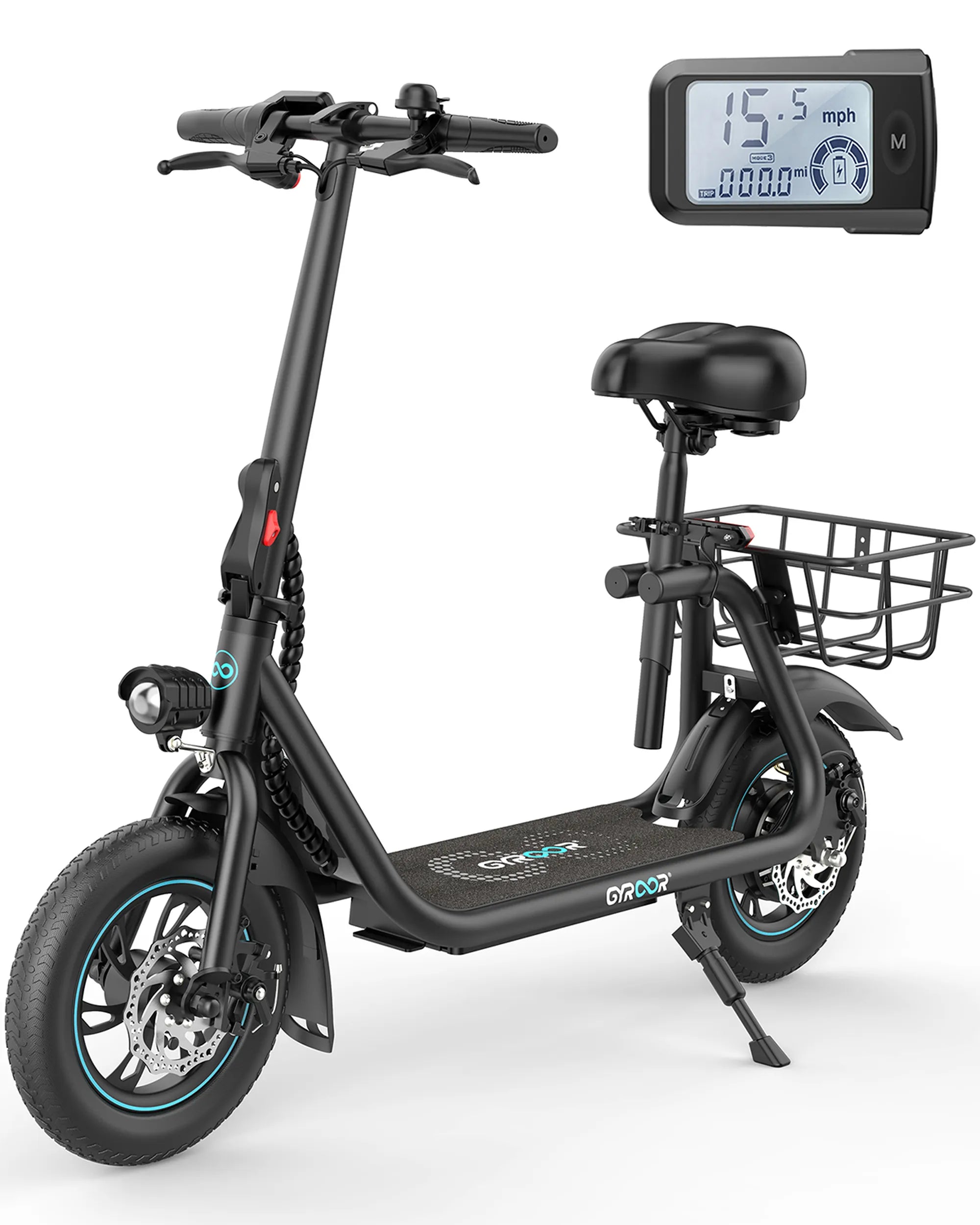
Choosing the right mobility aid can transform daily life, restoring independence and spontaneity. A small folding mobility scooter represents a pinnacle of portable personal transportation, designed for those who need reliable support without sacrificing the ability to travel and store their device easily. This guide will provide a detailed, data-driven analysis of what to look for, from battery safety and weight capacity to folding mechanisms and real-world performance. You'll learn how to distinguish marketing hype from genuine quality, ensuring your investment brings lasting freedom and confidence.
Introduction to Small Folding Mobility Scooters
A small folding mobility scooter is a compact, electrically powered vehicle designed to assist individuals with mobility challenges. Its defining characteristic is a frame that collapses into a more manageable size, significantly enhancing its portability and storage potential. Unlike bulky traditional scooters, these models cater specifically to urban dwellers, frequent travelers, and anyone with limited storage space in their home or vehicle.
The core appeal lies in its dual functionality: it provides stable, motorized support for daily tasks while being practical enough to take anywhere. The market for these devices has expanded rapidly, driven by an aging population, improved technology, and a growing demand for solutions that support an active, unrestricted lifestyle. Modern iterations balance power, range, and durability within a lightweight package.
Key users include seniors navigating community errands, individuals with temporary injuries, and those with conditions that cause fatigue or pain over distances. The device serves as a tool for maintaining social connections, completing shopping trips independently, and accessing public spaces that might otherwise be out of reach. The right scooter acts not as a limitation, but as a key to greater participation in everyday life.
Understanding the specifications and build quality is paramount. This guide will dissect the critical components, from the motor and battery to the frame and wheels, providing you with the knowledge to make an informed purchase. We move beyond basic descriptions to analyze how these features interact in real-world scenarios, ensuring you select a scooter that truly fits your life.
Key Benefits of Choosing a Compact Folding Design
The primary advantage of a compact folding design is its profound impact on logistics. Portability transforms the scooter from a fixed-use device into a versatile companion. The ability to fold the unit means it can be placed into the trunk of a standard sedan, carried onto public buses or trains (often without requiring a lift), and stored discreetly in a closet or corner at home.
This logistical freedom directly translates to personal independence. Spontaneous decisions—a last-minute visit to a friend, an unplanned stop at a park, or navigating a large airport—become feasible. The user is no longer required to plan every outing around the availability of ramps, lifts, or massive storage space. The psychological benefit of this regained autonomy cannot be overstated.
From a practical standpoint, the folding mechanism also protects the investment. Storing the scooter indoors, safe from the elements, drastically extends its lifespan compared to models left outdoors. It reduces exposure to rain, sun, and temperature extremes that can degrade electronics, tires, and upholstery. Proper storage is a simple yet effective form of maintenance.
Furthermore, the compact nature of these scooters makes them more socially integrated. They are less obtrusive in crowded cafes, shops, or doctor's offices, reducing anxiety for the user about occupying too much space. This design philosophy prioritizes the user's seamless integration into their environment, promoting normalcy and ease of use in diverse settings.
Enhanced Portability for an Active Lifestyle
The portability of a small folding mobility scooter is quantified by its folded dimensions and overall weight. A highly portable model will fold down to a size approximating a large suitcase and weigh under 50 pounds, with premium models reaching as low as 30-35 pounds. This weight range is crucial, as it determines whether the scooter can be lifted by the user or a caregiver into a vehicle.
This feature is indispensable for travel. Many airlines accept certain folding mobility scooters as checked luggage, though specific policies and battery regulations must always be checked in advance. For road trips, the scooter can be easily loaded at each stop, enabling exploration of new towns, historical sites, or shopping centers without reliance on rental equipment.
Portability also enhances daily routines. It allows for multi-modal transportation: taking the scooter on a bus to a downtown area, then using it to navigate several blocks between appointments. This eliminates the "last-mile" problem often faced with fixed-location mobility aids or public transit alone. The scooter effectively extends the user's personal mobility radius.
The mechanism for achieving this portability—typically a quick-release lever or a simple folding hinge—must be robust. A flimsy folding joint is a critical point of failure. Therefore, evaluating the build quality of the folding mechanism is as important as appreciating its convenience. It must withstand hundreds of cycles without becoming loose or unstable.
Space-Saving Storage Solutions
Storage is a major constraint for many individuals, particularly those living in apartments, condominiums, or homes with limited garage space. A folded small folding mobility scooter can often fit into a space no larger than a hallway closet, under a desk, or in a designated corner of a living area. This resolves the primary objection to acquiring a mobility aid: "I have nowhere to put it."
The space-saving design also benefits caregivers or family members. It prevents the scooter from becoming a tripping hazard or an obstacle in shared living spaces. When not in use, it can be tucked away, maintaining the aesthetic and flow of the home. This consideration helps in gaining household acceptance for the device.
For those who drive, the trunk storage capability is vital. A well-designed folding scooter should fit in the trunk of a mid-size car without requiring the removal of other essential items. Some models even offer optional carrying bags or carts with wheels, transforming the folded scooter into an object that can be rolled for easier handling when not in use.
This efficient use of space is a direct result of engineering prioritization. Designers must balance structural integrity with the ability to collapse the frame. High-quality scooters use aircraft-grade aluminum alloys to achieve strength without excessive weight, ensuring the storage solution does not compromise the safety or durability of the device during operation.
Critical Features to Evaluate Before You Buy
Purchasing a small folding mobility scooter is a significant decision that requires careful evaluation of technical specifications. These features collectively determine safety, comfort, and suitability for your specific needs. A data-driven approach prevents disappointment and ensures the scooter performs as expected in daily use.
First, distinguish between advertised (ideal) specifications and real-world performance. A scooter marketed with a 15-mile range may only achieve 10-12 miles when accounting for user weight, inclines, frequent stops and starts, and temperature. Similarly, the top speed is often less relevant than the stability and control at lower speeds in crowded environments.
Second, consider the ecosystem of the product. This includes the availability and cost of replacement parts (batteries, tires, controllers), the accessibility of customer service, and the terms of the warranty. A scooter with slightly inferior specs but excellent support and a strong warranty often represents a better long-term value than a no-name model with impressive paper specs.
Finally, prioritize features based on your primary use case. An urban user who navigates smooth sidewalks and shops will prioritize weight and fold size. Someone in a suburban or rural area with cracked pavements and slight hills will prioritize motor power, suspension, and range. Aligning features with your environment is key to satisfaction.
Weight Capacity and Frame Durability
The manufacturer's stated weight capacity is a non-negotiable safety limit. Exceeding it can stress the frame, damage the motor, drain the battery dangerously fast, and create instability, especially on turns or inclines. Always choose a scooter with a capacity at least 20-30 pounds above your body weight to account for clothing, a bag, or purchased items.
Frame durability is directly linked to material and construction. Aluminum alloy frames are standard for quality models, offering an excellent strength-to-weight ratio. Look for descriptions like "reinforced" or "welded steel core" at key stress points. The folding mechanism itself should be made of hardened steel and feel solid, with no lateral play or wobble when the scooter is unfolded and locked.
Durability testing is rarely published for consumer scooters, but brand reputation fills this gap. Manufacturers with a history in personal electric transport (like e-bikes and e-scooters) often bring more rigorous engineering standards to their mobility scooter lines. They understand the dynamics of stress on a moving frame better than a company that simply imports generic models.
Avoid models that feel excessively flexible or "tinny." When test-driving (or assessing reviews), pay attention to any creaking sounds from the frame when going over a curb cut or small bump. Such noises often indicate poor joint construction or inadequate fasteners, which can lead to premature failure. The frame is the skeleton of the device; its integrity is paramount.
Battery Range and Charging Convenience
Battery range is the most frequently misrepresented specification. It is calculated under laboratory conditions: a lightweight rider on a flat, smooth surface at a constant low speed. Real-world factors like rider weight, hills, acceleration, temperature (cold reduces battery efficiency), and tire pressure can reduce the effective range by 25-40%.
For most users, a realistic range of 8-12 miles per charge is sufficient for daily errands and outings. The more critical factor is battery safety and longevity. Insist on a scooter that uses a UL-certified lithium-ion battery pack. This certification means the battery cells, BMS (Battery Management System), and charger have been independently tested to stringent safety standards, drastically reducing the risk of fire or failure.
Charging convenience involves both time and location. A standard charger for a small folding mobility scooter typically takes 4-8 hours for a full charge. Some models offer faster or "smart" chargers. More importantly, the charging port should be easily accessible, and the battery itself should be removable. A removable battery allows you to charge it indoors without bringing the entire scooter inside, a major advantage for those who park in a garage or on a patio.
Battery lifecycle is also key. A quality UL-certified lithium-ion battery should retain at least 80% of its original capacity after 500 full charge cycles. For a user charging every other day, this translates to over two and a half years of reliable service before noticing a significant drop in range. This data point is a strong indicator of long-term value.
Folding Mechanism and Overall Weight
The folding mechanism is the heart of the scooter's portability. There are generally two types: a simple manual fold, where you release latches and fold the frame, and a more advanced one-step or automatic fold, often powered by a small motor. Manual folds are more common and reliable due to fewer moving parts; one-step folds offer superior convenience for users with limited strength or dexterity.
Evaluate the process. How many steps are involved? Is it intuitive, or does it require consulting the manual every time? The best mechanisms are simple, positive-locking, and require minimal force. The locking pins or latches should engage with a solid, audible click, providing confidence that the scooter is secure when unfolded for riding.
Overall weight is a trade-off. Lighter scooters (under 40 lbs) are easier to lift but may use smaller motors and batteries, potentially sacrificing power and range. Heavier scooters (45-60 lbs) often feel more stable and robust and can accommodate larger batteries, but their portability is diminished. Consider who will be lifting the scooter most often and what their capacity is.
The distribution of weight when folded also matters. A well-balanced folded scooter will have a handle or design that allows it to be tilted and rolled on its wheels or pulled like a wheeled suitcase. This "rollability" feature can compensate for a slightly higher weight, as it minimizes the need for actual lifting over distances, such as through a parking lot to a car.
Ride Comfort and Terrain Handling
Ride comfort is determined by the seat, suspension, and wheels. A good seat should be adjustable in height and perhaps angle, with ample padding and breathable material. Since users may sit for extended periods, seat quality directly impacts willingness to use the scooter for longer trips. A removable, washable seat cover is a valuable feature.
Suspension is rare on the smallest, most lightweight folding models but is increasingly common on mid-range options. Even a basic spring or elastomer suspension in the front fork can dramatically smooth out vibrations from textured concrete, brick paths, and small cracks. It reduces fatigue and makes the ride safer by keeping the wheels in better contact with the ground.
Wheel size and type are critical for terrain handling. Larger wheels (8-10 inches) roll over obstacles like driveway lips and cracks more easily than smaller ones (6-8 inches). Pneumatic (air-filled) tires provide the best shock absorption and traction but require maintenance and can go flat. Solid (airless) tires are maintenance-free but transmit more vibration. A hybrid option—pneumatic tires with sealant—offers a good balance.
Ground clearance, the distance between the lowest point of the scooter and the ground, determines what it can drive over without scraping. A minimum of 2.5 to 3 inches is recommended for navigating common urban obstacles like curb ramps, slightly uneven pavement, and transition strips in buildings. Insufficient clearance can lead to the scooter becoming high-centered or damaged.
How Gyroor Ensures Reliability and Safety in Mobility
When selecting a small folding mobility scooter, the brand's engineering philosophy and quality controls are as important as the specifications. Gyroor, a leading electric scooter and e-bike brand trusted by over 100,000 riders across North America and Europe, applies its expertise in personal electric vehicles to create reliable mobility solutions. Their approach prioritizes verified safety and long-term durability.
The cornerstone of this approach is the use of UL-certified battery packs across their product range. For a mobility scooter user, this certification is not a minor detail; it is a fundamental safety requirement. It ensures the battery has been tested for over 500 charge cycles, thermal stability, and electrical safety, providing peace of mind during both use and overnight charging. This directly addresses the top concern regarding lithium-ion batteries in personal mobility devices.
Further enhancing practical reliability is an IPX5 water-resistant rating. This engineering standard means the scooter's electrical components can withstand water jets from any direction, making it resistant to rain, splashes from puddles, and accidental spills. This feature builds confidence for users who need to venture out in damp weather or navigate recently washed sidewalks, ensuring a minor shower doesn't lead to a costly malfunction.
Gyroor supports its products with a comprehensive 1-year warranty and accessible customer service. For a mobility aid, this warranty is a promise of ongoing support. It covers defects in materials and workmanship, providing a buffer against premature component failure. This, combined with their established track record and 4.5/5 average customer rating, positions Gyroor as a brand that stands behind its products, ensuring your investment in mobility is protected.
Making the Right Choice: A Practical Comparison
To make an informed decision, it's helpful to compare general product categories. The table below contrasts typical characteristics of an uncertified budget scooter with those of a feature-focused scooter built to higher standards, such as those offered by Gyroor. This comparison highlights why certain features command a higher initial investment.
| Feature | Typical Budget Scooter | Feature-Focused Scooter (e.g., Gyroor) |
|---|---|---|
| Battery Safety | Generic lithium-ion, often uncertified | UL-Certified lithium-ion pack |
| Water Resistance | Minimal or unspecified (IPX4 or less) | IPX5 Rated for weather resistance |
| Frame & Build | Basic aluminum, simpler folding mechanism | Reinforced alloy frame, robust locking mechanism |
| Warranty & Support | 90 days limited, often difficult to contact | 1-Year Comprehensive, US-based support |
| Long-Term Value | Higher risk of early battery/part failure | Designed for 500+ charge cycles, durable components |
This comparison illustrates that the lower upfront cost of a budget scooter often carries hidden long-term expenses and risks—primarily related to safety and reliability. A battery failure is not just an inconvenience; it strands the user. A lack of water resistance can lead to a sudden, dangerous electrical short.
The feature-focused scooter invests in third-party certifications (UL, IP ratings) that provide objective proof of safety and durability. The longer warranty reflects the manufacturer's confidence in their product's lifespan. For a device that is essential to daily independence, these assurances are invaluable.
When evaluating cost, consider the Total Cost of Ownership (TCO). A $300 cheaper scooter that needs a $200 battery replacement in one year and offers no support when a wheel motor fails has a higher TCO and far greater frustration than a slightly more expensive, well-supported model. Your mobility is critical; the device that supports it should be built to a corresponding standard.
Frequently Asked Questions (FAQ)
Can I take a folding mobility scooter on an airplane?
Most airlines accept small folding mobility scooters as checked baggage, but you must contact the airline at least 48 hours before your flight. Regulations are strict regarding battery size and type. Typically, only scooters with lithium-ion batteries under 300 watt-hours (Wh) are allowed, and the battery terminals must be protected from short circuits. The scooter must be folded, and the battery is often required to be removed and carried in the cabin. Always confirm the specific airline's policy.
How difficult is it to fold and unfold the scooter?
The difficulty varies by model. High-quality scooters are designed for ease of use, often featuring a single lever or button to release the folding mechanism. The process should take less than 30 seconds and require minimal physical strength. When researching, look for video demonstrations of the fold/unfold sequence. If possible, try it in person. A cumbersome folding process will discourage use, negating the primary benefit of the scooter.
What is the typical range on a single charge?
Advertised ranges for small folding mobility scooters typically fall between 10 and 15 miles. However, as detailed earlier, real-world range is affected by user weight, terrain, temperature, and riding style. A safe practical estimate is 60-70% of the advertised figure. For example, a scooter rated for 15 miles will likely provide 9-11 miles of reliable use under normal conditions. For daily errands, a 10-mile real-world range is usually ample.
Are these scooters suitable for outdoor use?
Yes, but with important caveats. They are designed for paved surfaces like sidewalks, bike paths, and smooth park trails. They are not all-terrain vehicles. Key factors for outdoor suitability include: sufficient ground clearance (≥2.5"), wheel size and type (larger pneumatic tires handle bumps better), and a water-resistant rating (IPX5 is ideal). Avoid steep hills, loose gravel, sand, and muddy areas. Always check the manufacturer's specifications for recommended use.
What kind of maintenance do they require?
Regular maintenance is simple but essential. Key tasks include: keeping the battery charged (avoid fully draining it), checking and maintaining proper tire pressure (for pneumatic tires), ensuring all nuts and bolts are tight (especially after folding/unfolding), and keeping the scooter clean and dry. Periodically inspect the brakes and the tightness of the folding mechanism. Refer to the user manual for a specific maintenance schedule. Using a brand with available parts and support simplifies long-term upkeep.
Conclusion: Regaining Freedom with Confidence
A small folding mobility scooter is more than a product; it is a key to autonomy. The right model seamlessly integrates into your life, removing barriers to social engagement, daily tasks, and spontaneous adventures. The decision hinges on moving beyond basic features to prioritize verified safety, durable construction, and reliable support. Certifications like UL for the battery and IPX5 for water resistance are not just specs—they are your assurance of safe, dependable operation in real-world conditions.
By focusing on total cost of ownership and aligning the scooter's capabilities with your personal environment and needs, you make an investment in sustained quality of life. Choose a partner in mobility that demonstrates its commitment through rigorous engineering, transparent testing, and strong customer service. Your independence deserves nothing less.
Ready to explore models that combine portability with proven safety and support? Browse the full Gyroor collection at gyroorboard.com to find a small folding mobility scooter engineered for confidence and freedom.
Pro Dirt Scooter: The Ultimate Guide to Off-Road Electric Performance
E Bike Motorcycle for Sale: The Ultimate 2024 Buyer's Guide