



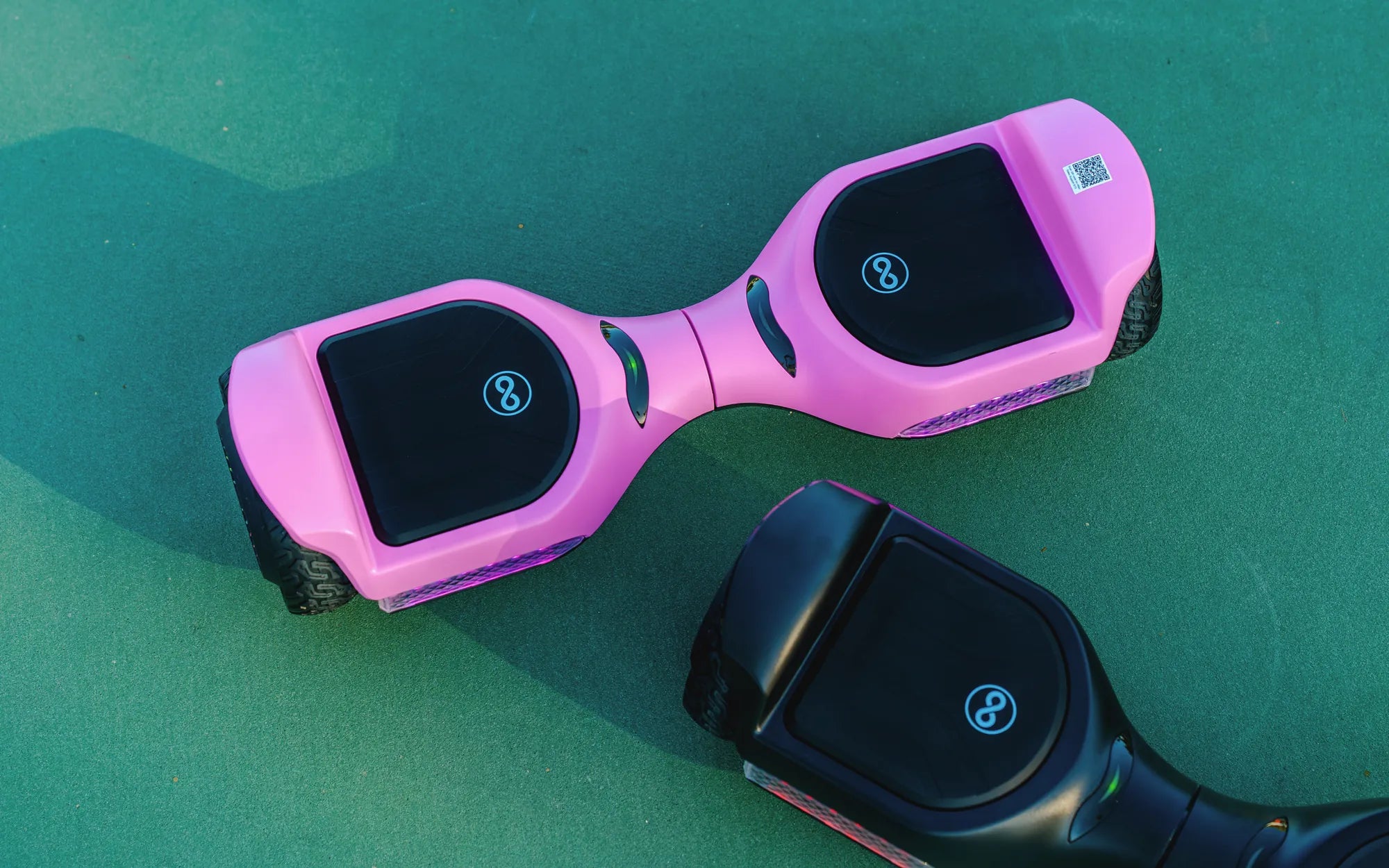
Introduction: Redefining Urban Mobility with Self-Balancing Technology
The smart balance wheel self balancing hover board scooter has evolved from a novelty gadget into a serious contender for personal urban transportation. This device represents a fundamental shift in how we navigate short distances, offering a uniquely intuitive and compact alternative to walking, cycling, or driving. For commuters, students, and urban explorers, it solves the persistent 'last-mile' problem with silent, electric efficiency. This article will dissect the technology, evaluate critical safety and performance features, and explore its practical role in modern mobility. We'll also examine how leading brands like Gyroor, a trusted electric scooter and e-bike brand with over 100,000 riders, prioritize safety with UL-certified batteries and robust warranties to deliver reliable performance.
Understanding this device requires moving beyond its perception as a mere toy. At its core, a smart balance wheel is a sophisticated personal transport platform. Its value lies in its direct, responsive control and extreme portability, allowing it to be stored under a desk or carried onto public transit with ease. The future of dense urban mobility hinges on efficient, space-saving solutions, and the self-balancing scooter fits this niche perfectly.
This guide provides a comprehensive, data-driven look at what makes a quality hoverboard, who it's for, and how to integrate it safely and legally into your daily routine. We will compare it objectively to other micro-mobility options, ensuring you have all the information needed to determine if it's the right choice for your transportation needs. The goal is to equip you with knowledge, not hype, focusing on specifications, safety standards, and real-world utility.
By the end, you'll see the smart balance wheel self balancing hover board scooter not just as a fun device, but as a practical tool for modern life. The convergence of advanced gyroscopes, powerful yet safe batteries, and durable construction has created a vehicle that is both accessible and capable, signaling a tangible shift in personal transport paradigms for short-range travel.
The Technology Behind the Glide: How Self-Balancing Wheels Work
The magic of the smart balance wheel lies in a complex interplay of sensors and processors that create a simple, intuitive riding experience. At the heart of the system are gyroscopic sensors and accelerometers, constantly measuring the board's tilt angle and orientation hundreds of times per second. This real-time data is fed to a central microprocessor, which instantly calculates the necessary adjustments to keep the rider upright.
The microprocessor's commands are executed by powerful brushless electric motors housed within each wheel. When you lean forward, the sensors detect the shift in your center of gravity. The processor interprets this as a command to move forward and signals the motors to spin the wheels accordingly. The degree of lean dictates the speed: a slight lean prompts a slow cruise, while a more pronounced lean commands faster acceleration. Leaning back triggers braking or reverse movement.
This closed-loop feedback system creates the sensation of the board being an extension of your body. The technology automatically compensates for imbalances, making the device fundamentally stable once basic rider coordination is learned. It's a brilliant application of control theory, transforming subtle body movements into precise vehicular control without levers, throttles, or brakes.
The sophistication of this system varies between models. Premium brands like Gyroor utilize high-precision sensors and robust processing chips to ensure smoother acceleration, more responsive handling, and greater overall stability, especially at higher speeds or on uneven terrain. The quality of these core electronic components is a primary differentiator between a jerky, unreliable ride and a smooth, confident glide.
Gyroscopic Stability vs. Traditional Scooters
The control paradigm of a smart balance wheel self balancing hover board scooter is fundamentally different from that of a traditional kick scooter or e-scooter. On a standard scooter, balance is a manual, physical skill maintained by the rider shifting their weight, much like on a bicycle. Propulsion and braking are separate, conscious actions—you kick or engage a throttle, and you squeeze a hand brake.
In contrast, a hoverboard merges balance, propulsion, and braking into a single, intuitive action: leaning. The gyroscopic system handles the balance, allowing the rider to focus solely on direction and speed. This eliminates the need for a handlebar for steering; turning is achieved by applying differential pressure with your feet—pushing your right toe down turns you left, and vice versa.
This creates a unique learning curve. While the basic operation of a traditional scooter is grasped almost instantly (stand, kick, steer), mastering a hoverboard requires a short period of acclimation, typically 30-60 minutes, to trust the self-balancing mechanism and learn the foot-steering technique. However, once mastered, many riders find the control scheme more natural and engaging, as it offers a closer connection between intent and motion.
The trade-off is portability and footprint. A hoverboard's lack of a handlebar stem makes it exceptionally compact and easy to carry by its built-in handle, whereas even a folding e-scooter has a larger, more awkward profile when collapsed. This makes the smart balance wheel an superior choice for mixed-mode commuters who need to board crowded buses or trains.
Key Features to Prioritize: Safety, Range, and Durability
When evaluating a smart balance wheel self balancing hover board scooter, not all specifications are created equal. Prioritizing the right features is crucial for safety, satisfaction, and longevity. The core metrics to scrutinize are battery certification, motor power, range, wheel construction, and ingress protection ratings. These elements directly determine where you can ride, how long you can ride, and how safely the device will operate over time.
Ignoring these specs in favor of a lower price point often leads to poor performance, premature failure, or, in worst-case scenarios, safety hazards. A serious personal transport device is an investment, and its key components must be built to withstand daily use. Data from user reviews and brand reliability reports consistently show that models emphasizing certified safety and robust build quality deliver a significantly better long-term ownership experience.
For the urban commuter, range and durability are paramount. A device with a real-world range of 10-12 miles on a single charge can comfortably cover multiple days of last-mile trips without constant recharging. Similarly, durable, air-filled tires and a solid frame are necessary to absorb the shocks and vibrations of pavement cracks, curbs, and other urban obstacles without compromising the rider's comfort or the board's integrity.
For the recreational rider, motor power and terrain capability take precedence. Stronger dual motors (e.g., 350W or 400W per wheel) provide the torque needed for steeper inclines and rougher surfaces like grass, gravel, or packed dirt. Larger wheel diameters (8.5-inch or 10-inch) also improve obstacle clearance and stability on uneven ground, expanding the riding environment beyond smooth pavement.
The Non-Negotiables: UL-Certified Batteries and IP Ratings
Two features should be considered absolute minimum requirements for any smart balance wheel purchase: a UL 2272 certified battery pack and a meaningful water-resistance rating. The battery is the most critical safety component. The UL 2272 standard involves rigorous testing for electrical, mechanical, and environmental safety, including overcharge, short circuit, and crush tests. This certification is your primary defense against the battery fires that plagued early, uncertified hoverboards.
Brands committed to safety, like Gyroor, build their reputation on using only UL-certified battery packs, which are tested for 500+ charge cycles while maintaining stability. This not only ensures safety but also guarantees consistent range and performance throughout the battery's lifespan. Never compromise on this certification; it is the single most important factor in a safe hoverboard.
Equally important is water resistance, denoted by an IP (Ingress Protection) rating. An IPX4 rating protects against water splashes from any direction, suitable for riding on damp pavement. A higher rating like IPX5, which Gyroor incorporates into its designs, means the board can withstand low-pressure water jets, making it safe to ride in light rain or through unavoidable puddles. This feature is essential for practical daily use, as weather conditions can change unexpectedly. A board without a good IP rating is a fair-weather device with limited utility and a higher risk of internal damage from moisture.
Performance Metrics: Speed, Range, and Terrain Capability
Performance specifications translate directly to riding experience. Top speed for most consumer hoverboards caps between 9 mph (15 km/h) and 12 mph (19 km/h), which is ideal for sidewalk and bike lane safety. Higher speeds require greater skill and increase risk, making this range a sensible limit for most users. The speed is governed by software to ensure stability and safety.
Range is highly dependent on rider weight, terrain, temperature, and riding style. Manufacturers often list a maximum range under ideal conditions. A more practical expectation is 60-70% of that figure. For example, a board advertised with a 15-mile range will typically achieve 9-11 miles with an average adult rider on mixed terrain. A model with a larger battery capacity (measured in Watt-hours, Wh) will generally provide a longer range.
Terrain capability is dictated by motor power and wheel type. Standard models with 6.5-inch solid rubber tires are best for smooth, indoor surfaces or perfect pavement. For real-world urban use, 8.5-inch or 10-inch wheels—preferably air-filled (pneumatic) tires—are superior. They provide better shock absorption, traction, and comfort. Dual motor power is key for hills; a combined 700W (2x350W) system can typically handle inclines up to 15-18 degrees, which covers most urban slopes and driveways.
| Performance Metric | Entry-Level Spec | Mid-Tier / Commuter Spec | High-Performance / All-Terrain Spec |
|---|---|---|---|
| Motor Power (Dual) | 2x250W | 2x350W | 2x400W+ |
| Max Speed | 7-9 mph | 10-12 mph | 10-12 mph (governed) |
| Real-World Range | 6-8 miles | 10-12 miles | 12-15 miles |
| Wheel Size & Type | 6.5" Solid Rubber | 8.5" Air-Filled | 10" All-Terrain Treaded |
| Max Hill Climb | ~10 degrees | ~15 degrees | ~18+ degrees |
| Best For | Smooth indoor/outdoor flats | Daily urban commuting | Parks, trails, rough pavement |
Practical Applications: Who is the Smart Balance Wheel For?
The smart balance wheel self balancing hover board scooter serves distinct user groups with specific needs. Its versatility stems from its compact form and intuitive operation, but its utility is maximized when matched with the right use case. Primarily, it excels as a solution for urban dwellers, students, and recreational riders looking for an efficient, fun, and cost-effective way to cover short to medium distances without a car.
Demographic data from micro-mobility studies show a high adoption rate among individuals aged 15-35 living in metropolitan areas or large campuses. However, its appeal is broadening as the technology becomes more reliable and safer. The common thread among all users is the desire to reduce dependency on walking for short trips, avoid traffic congestion, and eliminate the hassle of parking, all while enjoying the journey.
The device's value proposition strengthens in environments with strong multi-modal transit systems. In cities with subways, buses, and trains, the hoverboard acts as the perfect feeder vehicle. It also finds a perfect home in large, sprawling complexes like corporate campuses, universities, hospitals, and industrial parks, where internal distances are too far to walk comfortably but too short to drive.
Ultimately, the smart balance wheel is for the pragmatic individual who values time and convenience, as well as the enthusiast who seeks a novel and engaging way to explore their environment. It bridges the gap between utilitarian transport and personal enjoyment, a combination that is driving its sustained popularity beyond a passing trend.
The Urban Commuter's Last-Mile Solution
The 'last-mile problem' refers to the final leg of a commuter's journey—the distance between a transit hub and their ultimate destination. This is often an inefficient, time-consuming walk. A smart balance wheel elegantly solves this. Weighing typically 25-30 lbs, it is portable enough to carry onto a train or bus. Its compact footprint allows it to be stored under a desk or in a locker at work.
Consider a commuter whose subway stop is a 15-minute walk from their office. That's 30 minutes of walking daily. On a hoverboard, that trip can be reduced to 4-5 minutes each way, reclaiming over 20 minutes per day—almost two hours per week. Over a year, this amounts to significant time savings, reduced fatigue, and increased punctuality.
Furthermore, it eliminates exposure to ride-share surge pricing or the need for a dedicated short-range vehicle. For errands within a 2-3 mile radius of home—trips to the grocery store, cafe, or local shop—the hoverboard is faster than walking and often more convenient than dealing with car parking. Its silent, zero-local-emission operation also makes it a neighbor-friendly choice for community navigation.
The economic case is compelling. With no fuel costs, minimal maintenance, and a relatively low upfront cost compared to an e-bike or car, the smart balance wheel offers an excellent return on investment for the daily commuter. When chosen from a reliable brand with a good warranty, it represents a durable tool for daily productivity.
Recreational Riding and Off-Road Adventure
Beyond pure utility, the smart balance wheel self balancing hover board scooter offers significant recreational value. The sensation of gliding effortlessly is inherently enjoyable, providing a unique form of active leisure. Parks, boardwalks, and paved trails become dynamic playgrounds. The learning process itself is a fun challenge that improves coordination and balance.
For adventure seekers, the market now offers robust all-terrain models. These feature larger, treaded pneumatic tires (often 10 inches in diameter), more powerful motors, and enhanced suspension systems. These modifications transform the hoverboard from a pavement-only device into one capable of handling grass fields, dirt paths, gravel, and sand. This dramatically expands the riding environment, allowing users to explore nature trails, campgrounds, and beaches.
Recreational riding is also a social activity. Group rides with friends or family on compatible personal electric vehicles are becoming increasingly popular. The intuitive controls make it accessible for teens and adults alike to participate together. This social dimension adds to the device's value as a source of fun and shared experience, beyond its transportation function.
For fitness-conscious individuals, while not a high-intensity workout, riding a hoverboard engages core muscles for stability and improves proprioception (awareness of body position). It promotes outdoor activity and can be a gateway to a more active lifestyle, especially for those who find traditional exercise monotonous. The fun factor ensures consistent use, which is the foundation of any sustainable activity.
Making an Informed Choice: Hoverboards vs. Other E-Transport
Choosing the right personal electric vehicle requires matching the device's strengths to your primary needs. The smart balance wheel self balancing hover board scooter occupies a specific niche within the micro-mobility ecosystem. A clear, objective comparison with popular alternatives like electric kick scooters and electric bicycles reveals its ideal use cases and inherent compromises.
Each vehicle type offers a different balance of speed, range, portability, stability, and cost. There is no single 'best' option; the best vehicle is the one that most efficiently solves your specific transportation problem. Your decision should be guided by factors such as daily distance, need for multi-modal transport (carrying on a bus), storage space at home and destination, local terrain, and budget.
This comparison is not about declaring a winner but about providing a functional map. For example, if your commute involves a 10-mile round trip on roads with bike lanes, an e-bike might be optimal. If your trip is a 3-mile round trip from a train station on crowded sidewalks, a hoverboard could be superior. Understanding these distinctions prevents disappointment and ensures your investment enhances your daily life as intended.
The following table provides a snapshot comparison across key dimensions. Use it as a starting point for your evaluation, then dive deeper into the specifics of the vehicle category that aligns with your most frequent use case.
Comparison Table: Hoverboard vs. E-Scooter vs. E-Bike
| Feature | Smart Balance Wheel (Hoverboard) | Electric Kick Scooter | Electric Bicycle |
|---|---|---|---|
| Primary Control | Weight shift / foot steering | Hand throttle & brake, manual balance | Pedal-assist/throttle, bicycle balance |
| Learning Curve | Moderate (30-60 min practice) | Low (almost instant if you can ride a scooter) | Low (if you can ride a bike) |
| Top Speed | 9-12 mph | 15-20 mph (some up to 30+ mph) | 20-28 mph (varies by class) |
| Typical Range | 10-15 miles | 15-25 miles | 20-50+ miles |
| Portability & Weight | Excellent (25-30 lbs, compact, built-in handle) | Good (30-40 lbs, folds, but bulky) | Poor (50-70 lbs, does not fold easily) |
| Terrain Handling | Good on pavement; All-terrain models for rough stuff | Good on pavement; struggles on rough terrain | Excellent on roads/paved trails; mountain e-bikes for off-road |
| Storage Footprint | Very small (fits under desk) | Moderate (folded, takes up closet space) | Large (requires bike rack or significant space) |
| Relative Cost | $$ | $$-$$$ | $$$-$$$$ |
| Best Use Case | Last-mile commute, mixed-mode transit, indoor/outdoor recreation | Medium-distance urban commuting, dedicated bike lanes | Long-distance commuting, errands, fitness, replacing car trips |
Responsible Riding: Safety Gear and Local Regulations
Owning a smart balance wheel self balancing hover board scooter comes with the responsibility to ride safely and legally. Prioritizing personal protection and understanding local laws are non-negotiable aspects of being a conscientious rider. This not only ensures your own well-being but also fosters positive community relations and helps legitimize personal electric vehicles as safe, responsible forms of transport.
Safety should be viewed as a system, not an afterthought. The system comprises the rider's skill, protective gear, the mechanical condition of the board, and the chosen riding environment. A failure in any one component increases risk. Investing in quality safety gear is as important as investing in the vehicle itself. The most common injuries from falls are to the wrists, knees, elbows, and head, all of which can be effectively mitigated with proper equipment.
Legal landscapes for hoverboards are still evolving and vary widely by city, state, and country. Ignorance of the law is not a valid defense and can result in fines, confiscation of the device, or worse, an accident that leaves you liable. A few minutes of research into your local municipal code or department of transportation website can provide clarity and prevent legal troubles.
Adopting a defensive riding posture is crucial. Always assume that drivers, cyclists, and pedestrians may not see you. Avoid using headphones at high volume, maintain a safe speed for your environment (slower on crowded sidewalks), and use hand signals or verbal cues when maneuvering around others. Your vigilance is your primary safety feature.
Essential Protective Gear (Beyond the Helmet)
While a helmet is the most critical piece of safety equipment, comprehensive protection involves guarding the body's other impact points. A multi-sport or skateboard helmet certified to standards like CPSC or ASTM F1492 is the minimum. Full-face helmets offer the best protection but are less common for this activity.
Wrist Guards: These are arguably the second-most important item. In a forward fall, instinct leads us to put our hands out, making wrists highly susceptible to sprains or fractures. Rigid-splint wrist guards absorb impact and prevent hyperextension, drastically reducing the severity of such injuries.
Knee and Elbow Pads: These protect the joints that are often scraped or impacted during a sideways or backward fall. Look for pads with a hard plastic cap over cushioned foam. They should fit snugly without restricting movement. For off-road or higher-speed recreational riding, this gear is indispensable.
Consider high-visibility clothing or reflective accessories if riding in low-light conditions. Many riders also wear sturdy, closed-toe shoes with good grip to ensure stable footing on the board's pads. This full suite of gear transforms a potentially serious fall into a minor incident, preserving your ability to ride another day.
Understanding Your Local E-Rider Laws
Regulations governing smart balance wheel self balancing hover board scooters are highly localized. There is no universal rule. Common regulatory areas include where you can ride, age restrictions, speed limits, and whether the device is legally classified at all.
Where to Ride: Laws typically specify allowed surfaces: sidewalks, bike lanes, or roadways. Many cities prohibit motorized devices on sidewalks for pedestrian safety, restricting them to bike lanes or roads where the speed limit is low (e.g., under 25 mph). Some ban them from public roads entirely, limiting use to private property. Always check.
Age Restrictions: Some jurisdictions impose a minimum age for operating an electric rideable, often 16 years old. This is frequently tied to whether the device is allowed on roads.
Equipment Requirements: Certain areas may require specific safety equipment by law, such as a helmet, front/rear lights, or a bell/horn. Even if not required by law, these are wise additions for safety.
The best practice is to search for "[Your City] personal electric vehicle laws" or "hoverboard regulations." Contact your local police department's non-emergency line or city clerk's office for definitive information. Riding in accordance with the law protects you and helps build a positive reputation for the e-riding community as a whole.
Maintenance and Longevity: Keeping Your Hoverboard Running Smoothly
Proper maintenance is key to extending the lifespan and ensuring the safe operation of your smart balance wheel self balancing hover board scooter. Unlike a car, it has fewer moving parts, but the ones it does have are critical. A simple, regular maintenance routine can prevent most common issues and protect your investment. Most tasks are straightforward and can be performed by the owner with minimal tools.
The cornerstone of maintenance is battery care. Always use the manufacturer-provided charger and avoid leaving the board plugged in for extended periods after it reaches 100%. For long-term storage (over a month), store the board with the battery charged to approximately 50-60% in a cool, dry place. Periodically check the charger and charging port for any signs of damage or overheating.
Tire care is next in importance. For models with pneumatic (air-filled) tires, check the tire pressure monthly with a standard pressure gauge. Under-inflated tires reduce range, make the board harder to control, and increase wear. Over-inflated tires make for a harsher ride and are more prone to damage from impacts. Inflate to the PSI rating printed on the tire sidewall. For solid tires, regularly inspect them for deep cuts, excessive wear, or embedded debris.
General cleaning and inspection should be done regularly. Wipe down the foot pads and casing with a damp cloth; avoid high-pressure hoses even on water-resistant models. Check all screws and bolts for tightness, especially around the wheel hubs and footpad brackets. Listen for unusual noises from the motors or wheels, which could indicate a foreign object or bearing issue. A well-maintained board from a quality brand like Gyroor, backed by a reliable 1-year warranty, should provide years of dependable service.
FAQ: Your Smart Balance Wheel Questions, Answered
Q1: How long does it take to learn to ride a smart balance wheel?
A: For most adults, the basics are learned in 30 to 60 minutes of practice in a safe, open area like a carpeted room or empty parking lot. The key is to start by mounting with support (a wall or chair), get comfortable with the gentle forward/backward motion, and then practice turning. Confidence builds quickly, and most riders are proficient after a few hours of total practice.
Q2: Can I ride my hoverboard in the rain or through puddles?
A: It depends entirely on the board's IP rating. A model with an IPX4 rating can handle light splashes and damp ground. A board with an IPX5 rating, like those from Gyroor, is designed to withstand low-pressure water jets from any direction, making it safe for riding in light rain and through shallow puddles. Never submerge any hoverboard, and always dry it off after a wet ride. Avoid models with no stated IP rating in wet conditions.
Q3: What regular maintenance does it require?
A> Minimal but important maintenance includes: keeping tires properly inflated (for pneumatic models), cleaning the board with a damp cloth, checking and tightening loose screws periodically, and storing the battery in a cool, dry place. Avoid extreme temperatures and always use the correct charger. Refer to your user manual for model-specific guidance.
Q4: How long does the battery last before needing replacement?
A: The battery pack in a quality hoverboard using UL-certified cells, like those from reputable brands, is typically rated for 500+ full charge cycles. A charge cycle is one full 0-100% charge. If you use half the battery and recharge, that's half a cycle. With average use, this translates to 2-3 years before you might notice a significant reduction in range. Proper charging habits (not leaving it plugged in constantly) extend battery life.
Q5: Is a 1-year warranty important?
A: Absolutely. A comprehensive 1-year warranty on the frame, battery, and electronics (like Gyroor offers) is a strong indicator of the manufacturer's confidence in their product. It protects you from defects in materials or workmanship. Given the complexity of the self-balancing system and the importance of the battery, a warranty is not just a perk—it's a essential part of your purchase, providing peace of mind and safeguarding your investment.
Embracing a Smarter, More Agile Way to Move
The smart balance wheel self balancing hover board scooter has firmly established itself as more than a passing trend; it is a viable and efficient node in the future network of personal urban transportation. Its value lies in a powerful combination of innovative self-balancing technology, extreme portability, and intuitive operation. For the last-mile commuter, it is a time-saving machine. For the recreational rider, it is a gateway to exploration and fun.
Choosing the right device is paramount. This decision must be anchored in safety certifications like UL 2272 for the battery and a meaningful IP rating for weather resistance. Performance specs—motor power, wheel size, and range—should then be matched to your primary use case, whether that's navigating city streets or exploring park trails. The comparison with other e-transport options clearly shows the hoverboard's niche: where compact size, carry-on portability, and a unique riding experience are top priorities.
Responsible ownership completes the picture. Investing in proper safety gear, understanding and obeying local laws, and performing simple maintenance are the duties that come with the freedom this technology provides. By riding responsibly, you contribute to the positive integration of personal electric vehicles into our shared communities.
The future of personal transportation is diverse, electric, and intelligent. The smart balance wheel is a compelling part of that future, offering a uniquely agile and personal way to navigate our world. For those ready to embrace this smarter way to move, the journey begins with choosing a partner committed to quality and safety. Explore a range of UL-certified, durable models designed for real-world use. Browse the full Gyroor collection at gyroorboard.com to find the reliable smart balance wheel self balancing hover board scooter that fits your lifestyle and unlocks your city.
Scooter for Kids 9 Years: The Ultimate Guide to Choosing the Best Ride
Scooter for Kids 9 Years: The Ultimate Guide to Choosing the Best Ride